The UK is preparing to do something fans have begged for and secondary platforms have dreaded for years: ban the resale of tickets above face value. The plan, expected to be announced formally within days, would make the UK one of the toughest anti-scalping jurisdictions in the world. After a decade of explosive profiteering on sites like Viagogo and StubHub, the UK government has decided the resale marketplace needs a reset.
This move delivers on a major campaign promise from the 2024 Labour manifesto and comes on the heels of an unusually unified push from the artist community. More than 40 major artists — including Dua Lipa, Coldplay, Radiohead, Robert Smith, Sam Fender, PJ Harvey, The Chemical Brothers, and Florence + The Machine — signed an open letter urging Prime Minister Sir Keir Starmer to “stop touts from fleecing fans.” (“Touts” is British for “scalpers” which includes resellers like StubHub.). Sporting groups, consumer advocates, and supporter associations quickly echoed the call.
Under the reported proposal, tickets could only be resold at face value, with minimal, capped service fees to prevent platforms from disguising mark-ups as “processing costs.” This is a clear rejection of earlier floated compromises such as allowing resale up to 30% over face value which consumer groups said would simply legitimize profiteering.
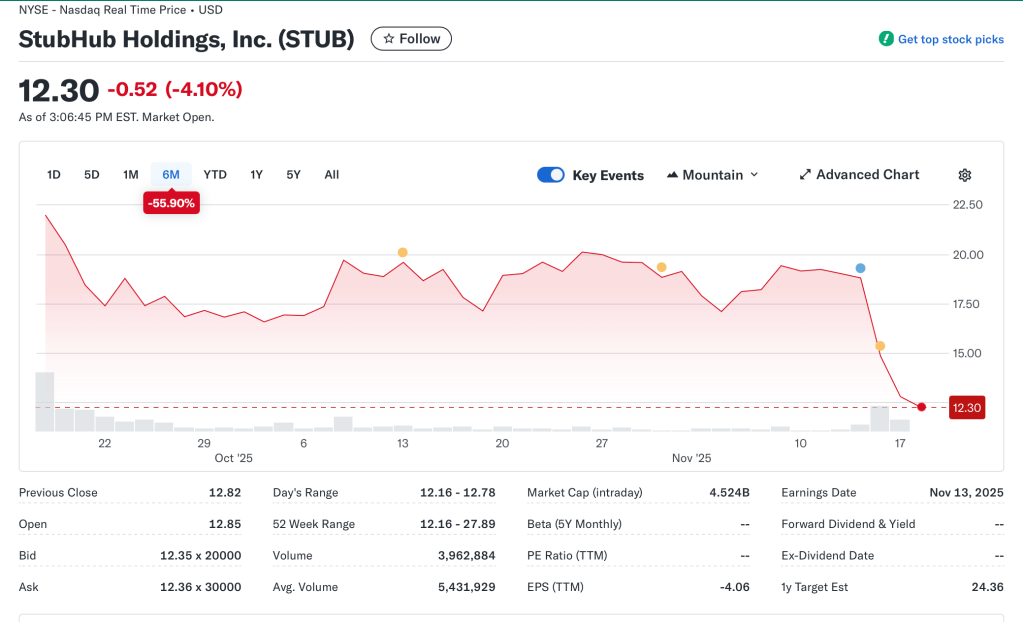
Secondary platforms reacted instantly. Reuters reports that StubHub’s U.S.-listed parent lost around 14% of its market value on the news, compounding a disastrous first earnings report. As CNBC’s Jim Cramer put it bluntly: “It’s been a bust — and when you become a busted IPO, it’s very hard to change the narrative.” The UK announcement didn’t just nudge the stock downward; it slammed the door on the rosy growth story StubHub’s bankers were trying to sell. Readers will know just how broken up I am about that little turn of events.
Meanwhile, the UK Competition and Markets Authority has opened investigations into fee structures, “drip pricing,” and deceptive listings on both StubHub and Viagogo. Live Nation/Ticketmaster welcomed the move, noting that it already limits resale to face value in the UK.
One important nuance often lost in the public debate: dynamic pricing is not part of this ban — and in the UK, dynamic pricing isn’t the systemic problem it is in the U.S. Ticketmaster and other platforms consistently tell regulators that artists and their teams decide whether to use dynamic pricing, not the platforms. More importantly, relatively few artists actually ask for it. Most want their fans to get in at predictable, transparent prices — and some, like Robert Smith of The Cure, have publicly rejected dynamic pricing altogether.
That’s why the UK’s reform gets the target right: it goes after the for-profit resale economy, not the artists. It stops arbitrage without interfering with how performers choose to price their own shows.
The looming ban also highlights the widening gap between the UK and the U.S. While the UK is about to outlaw the very model that fuels American secondary platforms, U.S. reform remains paralyzed by lobbying pressure, fragmented state laws, and political reluctance to confront multimillion-dollar resale operators.
If the UK fully implements this reform, it becomes the most significant consumer-protection shift in live entertainment in more than a decade. And given the coalition behind it — artists, fans, sports groups, consumer advocates, and now regulators — this time the momentum looks hard to stop.
 Music Tech Solutions