The Sync Apocalypse Case Against Suno

Democracy Made Them Do It

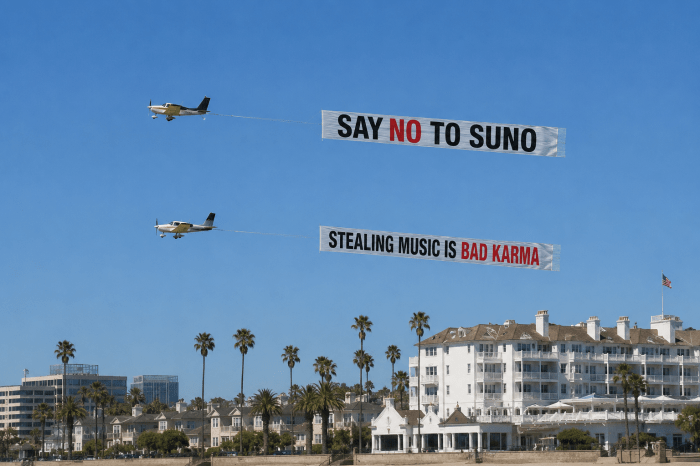
The new Poseidon Wave Media LLC lawsuit against Suno may become another important fair use case in generative AI music because it goes straight at the weak point Judge Vince Chhabria identified in Kadrey v. Meta regarding books: market substitution and market dilution under factor four that can trump the overused “transformative” analysis.


In Kadrey, Judge Chhabria ruled for Meta on fair use, but he did not give AI companies a clean bill of health. Quite the opposite. He suggested that generative AI training may often fail fair use where plaintiffs build a real record showing that the model floods or dilutes the market for the plaintiffs’ works. Like what is happening in real life with synthetic music, and in particular with synthetic music produced using Suno.

Aside from being suspicious of a grown man voluntarily calling himself “Mikey”, there’s a lot to work with in the public statements of Suno CEO Mikey Shulman. In a widely panned venture capital podcast, “Mikey” argued that traditional music creation is too difficult and time-consuming for most people, claiming that “the majority of people don’t enjoy the majority of the time they spend making music.” He framed AI music generation as a way to democratize creativity by removing the need for years of practice or technical skill.

Yes, that’s right. He’s doing it for, like, democracy, you see. Just like Daniel Ek (who is currently occupying himself after Spotify with another autonomous weapon that again violates international treaties).

Shulman also acknowledged that using copyrighted works in AI training is effectively industry standard, stating that “every AI company does” copyright infringement when building generative AI systems. His comments triggered backlash from musicians, composers and industry observers who viewed the statements as dismissive of artistic labor and revealing about AI companies’ attitudes toward copyright and human creativity. We’ll come back to this bit.

When Did Noah Build the Ark? Before the flood….

But the flooding of markets using Suno is what makes Poseidon different than other cases I’ve seen so far, kind of like the eggshell skull case lawyers study on the first day of Torts. One could argue that Poseidon’s lawsuit against Suno resembles the classic “eggshell skull” rule because AI companies may be liable for the full downstream harm caused by training on copyrighted works even if they claim they did not anticipate the scale of damage. If Suno’s infringement helped create systems that flood markets and substitute for human creators, defendants take the creative marketplace “as they find it.” You could also find it reasonably foreseeable that if one AI lab’s executives knew that “everyone was doing it” the flip side is that “everyone” can cause a good deal of market harm to everyone else.

Plaintiff Poseidon Wave Media, the entity behind the instrumental duo The American Dollar, alleges that Suno copied and ingested 236 recordings and compositions covered by 164 copyright registrations. More importantly, Poseidon alleges that its licensing revenue has fallen by nearly 80% since Suno launched.

That is not a vibes-based fair use objection. That is a market-harm theory with a ledger attached. The plaintiffs still have to prove their case, but it sounds like a pretty good starting place.

The complaint targets the precise market most vulnerable to AI substitution: sync and production music. Cinematic instrumental catalogs are valuable because they supply mood, pacing, emotional texture, and audiovisual utility. Music supervisors are concerned that fully synthetic music undermines the basic trust and clearance infrastructure on which film, television and advertising music depends. They are often pitched an apparent “artist” that turned out to be AI-generated, raising immediate clearance and provenance concerns for music supervisors, their clients and E&O insurance carriers. AI-generated tracks are fundamentally incompatible with the human authorship and rights verification required for professional sync licensing. So in addition to the human cost, there’s a broader aspect to destroying the human market—synthetic music could flood the marketplace with unverifiable works, creating legal uncertainty and making it harder for supervisors to assess ownership, permissions and creative authenticity.

Generative AI does not have to spit out an identical American Dollar track to destroy the market for American Dollar licenses. It only has to produce infinite near-substitutes at lower cost, faster speed, and no meaningful bargaining friction. That is market dilution.

That is factor four. And that is happening at a devastating rate in our business.

The Sync Apocalypse Extends the Kadrey Theory

This is also why Poseidon extends the Kadrey analysis beyond books. In the book cases, market harm may appear more abstract. In sync music, the substitution pathway is far cleaner. The buyer has a practical production need. The AI output can satisfy that need if the music supervisor looks the other way, at least for a while, particularly for commercials, “source” music, other background uses. The original license disappears. Mikey wants you to believe that’s a good thing, because democracy.

Poseidon’s allegation that licensing income collapsed after Suno launched is therefore not just damages evidence. It may be the whole fair use fight.

Suno will likely argue transformation: the model learns from recordings to generate new outputs. But Kadrey already shows why transformation is not enough if factor four turns decisively against the defendant and the plaintiff’s lawyers put on the right case. Judge Chhabria made it clear that this observation applied broadly to all fair use cases: “Generative AI has the potential to flood the market with endless amounts of images, songs, articles, books, and more.” Kadrey v. Meta Platforms, Inc., No. 23-cv-03417-VC, slip op. at 1–2 (N.D. Cal. June 25, 2025).

That makes Poseidon dangerous for Suno. The complaint does not need to prove that every Suno output is a counterfeit. It needs to show that Suno used copyrighted works to build a machine that competes directly in the licensing market with those works it ripped off.

That is the sync apocalypse theory:

First, copy the catalog.
Then, train the machine.
Then, flood the licensing market with synthetic substitutes.
Then, tell the original musicians there is no market harm because the outputs are not exact copies. Because democracy demands it.

Factor four was built for this problem, even without the democracy part. And Poseidon may be the case that forces courts to say so. And as far as the democracy part goes, I think Mikey may have taken the wrong turn on his way to Collectivism class. In our legal tradition, there’s another idea that has far greater purchase:

“The right of property… [is] that sole and despotic dominion which one man claims and exercises… in total exclusion of the right of any other individual in the universe.”
— Sir William Blackstone, Commentaries on the Laws of England, Book II, ch. 1. 

Could Suno’s Executives Be Added Personally?

One question hovering over the Poseidon complaint is whether Suno’s executives and investors could eventually be added as individual defendants. What did they know and when did they know it?

In copyright cases, corporate officers can face personal liability where they personally participated in the infringement, directed it, authorized it, or had the right and ability to supervise the infringing conduct while receiving a financial benefit from it as we saw in a couple leading cases “All persons and corporations who participate in, exercise control over or benefit from an infringement are jointly and severally liable as copyright infringers.” Gershwin Publ’g Corp. v. Columbia Artists Mgmt., Inc., 443 F.2d 1159, 1162 (2d Cir. 1971); “One who distributes a device with the object of promoting its use to infringe copyright… is liable for the resulting acts of infringement by third parties.” MGM Studios Inc. v. Grokster, Ltd., 545 U.S. 913, 936–37 (2005). See also Broad. Music, Inc. v. Hartmarx Corp., 1988 WL 128691, at *3 (N.D. Ill. Nov. 22, 1988) (“A corporate officer who directs, controls, ratifies, participates in, or is the moving force behind the infringing activity, is personally liable…”); Columbia Pictures Indus., Inc. v. Fung, 710 F.3d 1020 (9th Cir. 2013) (operator liability tied to inducement and encouragement of infringement); and then my personal favorite, Arista Records LLC v. Lime Group LLC, 784 F. Supp. 2d 398 (S.D.N.Y. 2011) (evidence of executive knowledge and encouragement relevant to secondary liability).

If Suno’s leadership approved the acquisition, copying, ingestion, or retention of copyrighted sound recordings for model training, plaintiffs may argue that the executives were not passive corporate managers. They were decision-makers in the alleged infringement pipeline.

If discovery shows that senior executives knew copyrighted commercial recordings were being copied, discussed licensing risk, chose not to license, or treated infringement exposure as a cost of doing business, the case could begin to look more like direct participation or inducement than ordinary corporate oversight. For example, Complete Music Update quotes Mikey as like “…admitting to using copyright protected music in his company’s AI training data, something that he describes as ‘stock standard’ practice that ‘every AI company does.’” He evidently said this as part of an interview he gave to leading venture capital industry podcast The Twenty Minute VC. Now I’m not saying that statement alone is enough to close a case, but it certainly is one of those whatchamacalits, an admission against interest.


Shulman’s statement is significant because it is not merely a generalized industry observation. It is an admission by a senior corporate officer that his company Suno used copyrighted works in AI training and that the practice was understood internally at Suno as normal operating procedure. In civil discovery, that seems more than enough to justify targeted subpoenas designed to identify the scope, intent and commercial exploitation of the alleged infringement. And who else participated in the policy implementation.

Courts permit broad discovery where a plaintiff can show a reasonable basis to believe relevant evidence exists. Here, the CEO publicly acknowledged both (1) use of copyrighted music in training data and (2) awareness that such conduct implicated copyright law. The statement therefore supports discovery into knowledge, willfulness, inducement and commercial benefit under cases like GroksterFung, and Lime Group.

The quote particularly supports subpoenas for:

  • Training datasets and provenance records identifying sound recordings, compositions, stems, embeddings, fingerprints, metadata or source libraries used in model training;
  • Internal communications discussing ingestion of copyrighted music, licensing avoidance, fair use strategy, risk assessments or litigation exposure, including with members of the Suno board of directors;
  • Board materials and investor presentations discussing training practices, copyright risk, or competitive advantages derived from unlicensed datasets;
  • Engineering documents concerning scraping pipelines, dataset assembly, deduplication, filtering and retention of copyrighted material;
  • Financial records showing revenues, subscriptions, enterprise deals or valuations tied to models trained on copyrighted works;
  • Communications with third-party dataset providers, cloud vendors or contractors involved in obtaining or processing music files;
  • Prompt/output testing records showing whether models could reproduce recognizable musical expression, styles, voices or commercially substitutive outputs;
  • Policies regarding removal requests, provenance tracking, watermarking or rights management; and
  • Executive communications, including those involving Shulman personally, concerning decisions to proceed despite known copyright objections.

The statement also strengthens arguments for discovery into willful infringement. Saying that infringement is “stock standard” and that “every AI company does” it can be framed not as innocence, but as evidence of conscious normalization of unlawful conduct. Plaintiffs could argue this reflects industry-wide deliberate disregard for licensing obligations rather than accidental or technically unavoidable copying.

Finally, the quote helps establish proportionality. Suno itself has publicly placed copyright infringement at the center of its business model and competitive narrative. Once the CEO publicly admits the conduct, defendants have a much harder time arguing that subpoenas directed at training records, executive knowledge or dataset provenance are speculative fishing expeditions.

Naming executives can sharpen the willfulness theory. It can support discovery into board materials, investor pitches, licensing discussions, data-acquisition plans, and internal risk assessments.

These claims also may open the door to the boardroom. If discovery shows that Suno’s training strategy, licensing posture, or infringement-risk tolerance was discussed at the board level, plaintiffs may seek board materials, investor communications, voting agreements, consent rights, and other governance documents. Yes, the entire odious apparatus.

That may be exceptionally relevant and productive especially if major investors had approval rights, information rights, veto rights, or board seats tied to key business decisions. In that scenario, the inquiry may not stop with management. It could reach the investors who helped authorize, finance, or control the strategy that made the alleged infringement commercially valuable.

Public reporting identifies Menlo, Lightspeed, Matrix, Founder Collective, Nat Friedman, Daniel Gross, NVentures/Nvidia, and Hallwood Media as Suno investors. I have not found a public source confirming which, if any, hold board seats or board-observer rights. Given the size and lead-investor status of Menlo and Lightspeed, board or observer rights would be plausible and even typical, but that should be confirmed through charter documents, investor rights agreements, board minutes, cap table materials, or other discovery.

Notably, many of these same issues are already surfacing in the book publisher plus Scott Turow litigation against Meta and Mark Zuckerberg, including the allegations raised in the Elsevier-related AI copyright cases and the broader author lawsuits against Meta.

Plaintiffs in those matters have increasingly focused not only on the existence of infringing training datasets, but on executive-level awareness, internal discussions concerning licensing risk, data acquisition strategy, and decisions to proceed despite known copyright concerns.

The same dynamics may emerge in the Suno litigation if discovery reveals board-level discussions, investor oversight, or strategic decisions concerning whether copyrighted music catalogs would be licensed, copied without permission, or treated as a litigation risk worth taking.

The Potential Shareholder Suit

Developing a detailed factual record against Mikey Shulman (or Mark Zuckerberg) could significantly increase the risk of a future shareholder derivative suit because it potentially transforms the case from “the company made aggressive legal bets” into “management knowingly exposed the company to massive liability while failing to fulfill fiduciary duties.”

A derivative case would likely center on fiduciary duty theories under Delaware law — particularly the duties of loyalty, oversight (Caremark), disclosure, and good faith.

The pathway looks something like this:

  1. Public admissions establish scienter groundwork

    Shulman’s statements that using copyrighted works was “stock standard” and that “every AI company does” infringement could be framed as evidence that senior management understood the conduct implicated copyright law from the outset. Plaintiffs in a derivative action would argue this was not inadvertent infringement or a technical edge case, but a conscious business strategy. Of course, it would also be interesting to see if we could find out exactly what made Mikey say such things? Any meetings he’d like to discuss? All like very democratic, I’m like so sure.
  2. Discovery in copyright litigation creates the evidentiary record

    The underlying copyright cases are what really matter. If discovery uncovers:
    • internal discussions acknowledging piracy risks,

    • deliberate avoidance of licensing,executive-level approval of infringing datasets,warnings from counsel or employees,or

    • efforts to conceal provenance,

    then plaintiffs’ firms would likely use that material to argue the board failed to exercise oversight or knowingly permitted unlawful conduct.
  3. Massive enterprise risk can trigger Caremark-style claims

    Delaware courts increasingly recognize that boards must monitor “mission critical” legal risks. For Suno, copyright compliance is not peripheral — it is existential. The entire company depends on ingesting copyrighted music. If plaintiffs could show there were inadequate controls over training data provenance, licensing, or infringement risk, they could argue the board ignored core compliance obligations.
  4. Investor disclosures become vulnerable

    Once litigation and discovery mature, shareholders may ask whether fundraising materials accurately described legal risks. If management portrayed datasets as compliant, transformative, or low-risk while internally acknowledging likely infringement, that creates exposure around disclosure duties and securities-related claims.
  5. Personal enrichment allegations amplify pressure

    Derivative plaintiffs often focus on:
    • executive compensation,liquidity events,fundraising rounds,valuation increases,and insider sales.
    The theory becomes: executives increased enterprise value through unlawful conduct while externalizing legal risk onto the corporation and shareholders.
  6. Insurance and indemnification issues emerge

    Findings of willful misconduct or bad faith can create disputes over D&O insurance coverage and indemnification rights. That dramatically increases settlement pressure and board conflict concerns.

The important strategic point is that copyright plaintiffs do not need to bring the derivative suit themselves. They only need to build the factual record. Once discovery produces emails, board materials, or executive communications suggesting knowing infringement or oversight failures, shareholder firms may step in independently.

That is why executive statements like, you know, matter so much. Public comments can later be connected to internal documents to argue that management knew exactly what it was doing, understood the legal exposure, and proceeded anyway because rapid AI scaling and market capture were prioritized over licensing compliance.

And who wants to bet that the board was leading the charge?

Federally Guaranteed Financial Preemption

The AI moratorium fight was never really about “innovation.” It was about preemption. More specifically, it was about what might be called federally guaranteed financial preemption.

That phrase matters because the walk-back campaign around the original proposal has become almost surreal. After backlash exploded over the broad federal effort to block state and local AI regulation, supporters suddenly insisted nobody was trying to force unwanted data centers, transmission lines, substations, gas plants, or hyperscale industrial infrastructure onto communities that did not want them.

Technically, that is true. Washington does not necessarily need to directly order a county commission to approve a data center. It can accomplish much the same thing by structuring the financial system around the assumption that the buildout will occur.

That is the trick.

David Sacks’ original moratorium language he stuck in the One Big Beautiful Bill Act reportedly reached not only states but “political subdivisions” as well. That means cities, counties, municipalities, and local authorities. The proposal was not merely about preventing fifty different state AI laws. It threatened to freeze local democratic responses before they could harden into enforceable policy. (And of course there was always a whiff of 5th Amendment taking about the whole doomed process.)

Then came the backlash. Suddenly the rhetoric softened into something more comforting: We just need one national framework. We are not trying to override local control. We are not trying to force data centers on anyone. But that framing ignores how infrastructure power actually works in the United States. You do not need formal federal commands if you can create overwhelming financial momentum.

Suppose the federal government provides taxpayer-backed loan guarantees for utility expansion tied to AI growth forecasts. Utilities then build new generation, transmission, substations, and grid upgrades designed around hyperscale demand projections. State utility commissions approve cost recovery. Transmission planners treat the load forecasts as inevitable. Investors price future growth into regional infrastructure decisions.

At that point, local communities are no longer arguing with a speculative proposal. They are arguing with a federally supported capital structure. That’s much harder to control.

The county commissioner is suddenly told: The transmission line is already planned. The utility already committed the generation. The state already approved portions of the recovery mechanism. The jobs are supposedly coming. The tax base is supposedly coming. The grid supposedly depends on it.

See, it’s magic. Nobody “forced” anything. Whatever were you thinking?

The machinery simply narrowed the realistic range of outcomes. That is federally guaranteed financial preemption.

And it matters because the economics of AI infrastructure are unusually fragile beneath the surface confidence. Data centers are not shopping centers. They are highly specialized industrial assets tied to assumptions about compute demand, electricity pricing, capital availability, chip supply, and continued investor faith in the AI growth curve.

Much of the current buildout depends on debt markets behaving rationally indefinitely.

That may not happen.

If AI demand softens, if monetization disappoints, if venture funding tightens, or if hyperscalers pull back from aggressive expansion schedules, communities may discover they absorbed the physical consequences of a speculative infrastructure cycle they never fully controlled in the first place.

And then comes the final insult in the “local choice” narrative.

Communities remain theoretically free to say no before the infrastructure becomes politically inevitable. They also remain theoretically free to clean up the wreckage after failure.

That means: condemnation fights, stranded industrial facilities, utility disputes, ratepayer battles, bondholder litigation, abandoned transmission corridors, water conflicts, and enormous demolition costs.

The same officials who insisted nobody forced anything can simply shrug and say: “Well, local communities always retained sovereignty.”

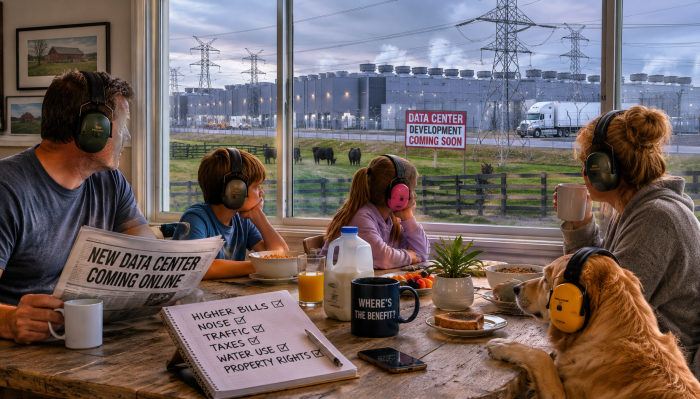
This is why local opposition has accelerated so dramatically across the country. Residents increasingly understand that hyperscale AI infrastructure is not an abstract software issue. It is physical industrial policy: land, water, electricity, noise, substations, transmission lines, tax incentives, utility rate structures, and debt.

The fight stopped being theoretical once people realized they were not debating apps. They were debating permanent industrial transformation of their communities.

That is also why the original AI moratorium language frightened so many people once they read it carefully. It was not merely a debate about chatbot regulation or algorithmic bias. It looked increasingly like a mechanism for suppressing state and local resistance before communities fully understood the infrastructure consequences of the AI buildout itself.

And that may explain why the rhetoric shifted so quickly after public scrutiny intensified.

Because once people understand the difference between legal preemption and financial preemption, the conversation changes entirely.

The federal government does not always need to formally eliminate local authority. Sometimes it only needs to guarantee enough money that resistance becomes structurally difficult.

That is a far more sophisticated form of power.

And a far more dangerous one,

The AI Subsidy Is Over. Or Maybe It’s Just Beginning.


The current narrative says the “AI subsidy era” is ending. Prices are rising. Rate limits are tightening. Ads are creeping in. Enterprise tiers are replacing all-you-can-eat plans. In short: users will finally start paying what AI actually costs.

Haydon Field writing in The Verge tells us:

Earlier this month, millions of OpenClaw users woke up to a sweeping mandate: The viral AI agent tool, which this year took the worldwide tech industry by storm, had been severely restricted by Anthropic.

Anthropic, like other leading AI labs, was under immense pressure to lessen the strain on its systems and start turning a profit. So if the users wanted its Claude AI to power their popular agents, they’d have to start paying handsomely for the privilege.

“Our subscriptions weren’t built for the usage patterns of these third-party tools,” wrote Boris Cherny, head of Claude Code, on X. “We want to be intentional in managing our growth to continue to serve our customers sustainably long-term. This change is a step toward that.”

The announcement was a sign of the times. Investors have poured hundreds of billions of dollars into companies like OpenAI and Anthropic to help them scale and build out their compute. Now, they’re expecting returns. After years of offering cheap or totally free access to advanced AI systems, the bill is starting to come due — and downstream, users are beginning to feel the pinch.

That’s true but it’s leaving out a lot.

Yes, the consumer subsidy—venture-backed underpricing of inference—may be winding down. But the broader subsidy system that made AI possible isn’t going away. It’s expanding. Just ask President Trump.

To understand why, you have to go back to the last great digital disruption.

From P2P to Streaming to AI

Start with Napster.

P2P didn’t just enable infringement. It rewired expectations. It taught users that all music should be available, instantly, for free. Why? Because there was gold in them long tails. Forget about supply and demand, we had infinite supply so demand would take care of itself.

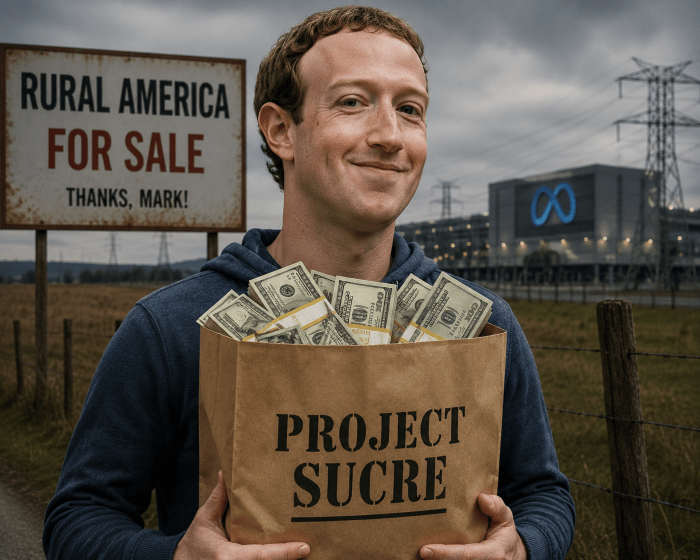
It’s for sale

Every artist, songwriter, label and publisher in the history of recorded music were not compensated for this shift. They were its involuntary financiers. Their catalogs created the demand, the network effects, and the user adoption that built the early internet music economy.

Streaming—think Spotify—didn’t reverse that logic. It formalized it. (Remember, streaming saved us from piracy and we should all be so grateful.) It actually transferred that involuntary financing from the p2p balance sheet to Spotify’s, and took it public.


Streaming platforms accepted a new baseline: the entire world’s repertoire must be available at all times, regardless of demand. That is a costly and structurally inefficient mandate, but it became the price of competing in a market shaped by P2P expectations. Licensing systems like the Mechanical Licensing Collective (MLC) were built to support that scale, but the underlying premise remained: total availability first, compensation second.

AI changes the game again.

AI Doesn’t Just Distribute Works. It Consumes Them.

P2P distributed music. Streaming licensed it. AI models ingest it.

That’s the critical difference.

Generative AI systems are trained on massive corpora that include copyrighted works, performances, and what we might call personhood signals—voice, style, tone, phrasing, and creative identity. These inputs are not just indexed or streamed. They are transmogrified (see what I did there) into model weights that can generate new outputs that compete with, mimic, or substitute for the originals.

So the role of the artist evolves:
    •    In P2P: unpaid distributor subsidy
    •    In streaming: underpaid inventory supplier
    •    In AI: uncompensated production input
That is not a marginal shift. It is a structural one.

The Real Subsidy Stack

When people say the “AI subsidy era is over,” they are usually talking about one thing: cheap access to compute.
But AI has always depended on a multi-layered subsidy stack:

    Creators – supply training data, cultural value, and identity signals without compensation or consent
    Users – supply prompts, feedback, and behavioral data that improve the models
    Communities – absorb land use, water consumption, and environmental costs
    Ratepayers – fund grid upgrades, transmission, and reliability for data center demand
    Venture capital – underwrites early losses to drive adoption and scale

The shift we are seeing now is not the end of subsidies. It’s a reallocation. Or as a cynic might say, it’s rearranging the deck chairs to hide the lifeboats.

Users may start paying more. But creators still aren’t being paid for training. Communities are still being asked to host infrastructure. And the physical footprint of AI is accelerating. Just ask President Trump.

The World Turned Upside Down

What makes this moment different is the scale of the buildout.
We are not just talking about apps anymore. We are talking about an industrial transformation:
    •    New data centers the size of small cities
    •    High-voltage transmission lines
    •    Water-intensive cooling systems
    •    Semiconductor supply chains
    •    And even discussions of new nuclear capacity to support compute demand

This is infrastructure on the scale of a national project, or more like national mobilization. But it is being built on top of a premise that has not been resolved: the uncompensated use of human creative work as training input.

That is the inversion: We are building power plants for systems that depend on not paying the people whose work makes those systems possible.

A Better Frame

The cleanest way to understand this is as a continuum:

P2P turned infringement into consumer expectation.
Streaming turned that expectation into platform infrastructure.
AI turns uncompensated authorship into industrial feedstock.

Or more bluntly:
The AI free ride is not ending. It is being re-invoiced. Users may now see higher prices. But the deeper subsidies—creative, environmental, and civic—remain off the books.

What Comes Next

If the industry is serious about “pricing AI correctly,” it cannot stop at compute.

It has to address:
    •    Compensation frameworks for training data
    •    Attribution and provenance standards
    •    Licensing models for style and voice
    •    Infrastructure cost allocation (who pays for the grid?)
    •    Governance of large-scale compute deployment

Otherwise, we are not exiting the subsidy era. We are doing what Big Tech lives for.

We are scaling it.

And this time, instead of a few server racks in a dorm room, we are building an global energy system around it.

Same Popcorn, Different Wrapper

In ancient Rome, Marcus Licinius Crassus was the wealthiest man alive. And he had a system. He owned real estate and he also owned the fire brigades. When a house caught fire, Crassus sent his men to the scene. But they didn’t rush in with water.

First, he made the owner an offer. Sell me your house for pennies. The house that is literally on fire. Agree to the price, and the fire would be put out. Refuse… and his fire brigade would simply watch it burn.

Some even whispered that Crassus’s men set fires themselves, just to create new ‘opportunities.’ Ya think?

It was ruthless. Ingenious. And it gave him his own kind of safe harbor. If you controlled the fire brigade… there was no liability. No regulator. No competition. Just profit. Because Crassus set the valuation.

Now—fast forward two thousand years. AI hyperscalers haven’t just rediscovered Crassus’s model. They’ve reimagined it.

The Valuation is the Thing

There is a moment in every cycle when the story stops even pretending to line up with the business. That moment usually shows up quietly at first, almost as a joke, and then all at once everyone realizes the joke is being taken seriously.

We may be there again.

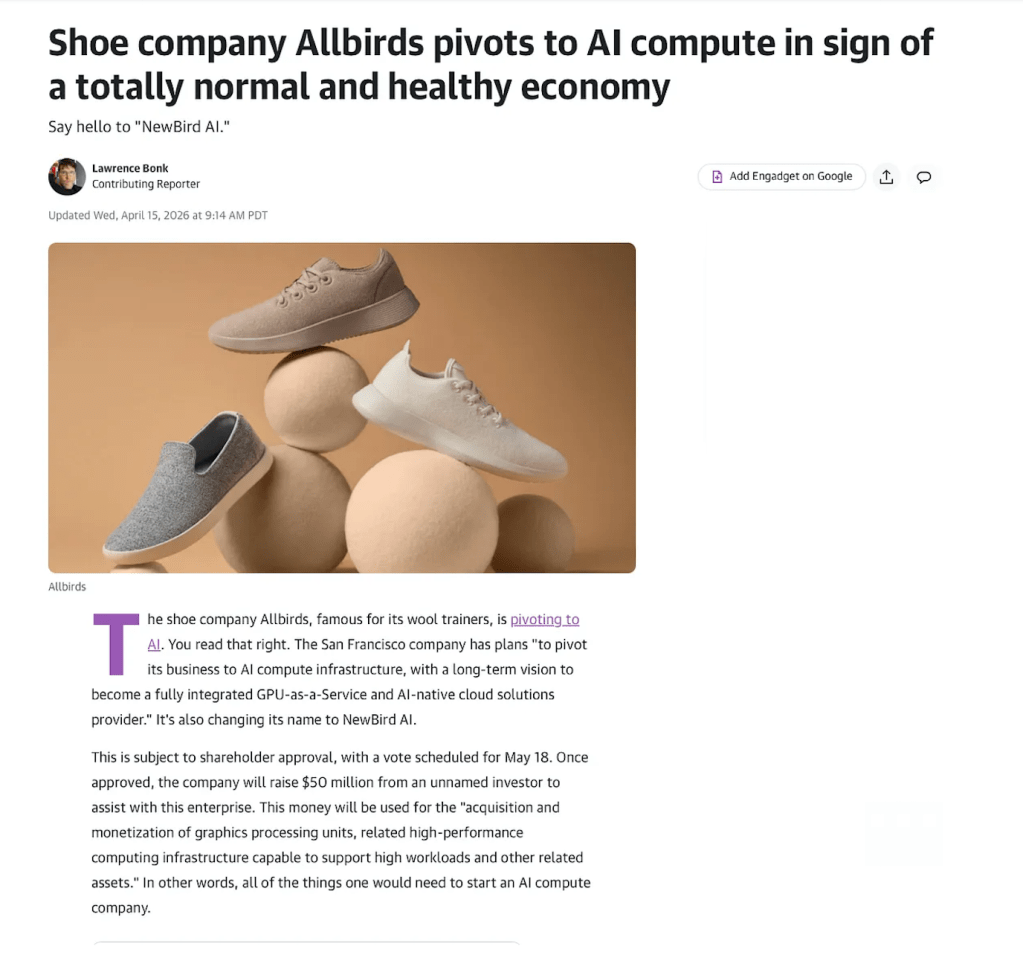
Allbirds, a company that built its brand selling wool sneakers to a very specific kind of customer, is now pivoting into AI compute infrastructure. Not adjacent. Not evolutionary. Just a clean jump into GPUs and datacenters. The rebrand writes itself. NewBird AI.

If that sounds absurd, it should. But it should also feel familiar. The mistake is to focus on the technology. The technology is always real. The internet was real. AI is real. The mistake is to assume the valuation attached to that technology has anything to do with the underlying business. That part is almost always where things go sideways. The people. The ones who set the fires.

Fire Good, Valuations Bad

Look at the comps. Spotify sits around a one hundred billion dollar market cap. Universal Music Group is closer to thirty eight. Warner Music Group is around fifteen. The companies that own the music, the actual asset, the thing that endures, are worth a fraction of the company that packages and distributes it and will one day be replaced, just like streaming replaced CDs.

That is not a story about innovation. It is a story about what the market chooses to value.

Once you see that, the Allbirds pivot stops looking irrational. It starts looking like one of the only logical moves available. If the market assigns higher multiples to infrastructure, to platforms, to anything that can be described as scalable, then the rational response is to become that thing. Not because the company has any particular advantage in doing so, but because the category itself carries the valuation.

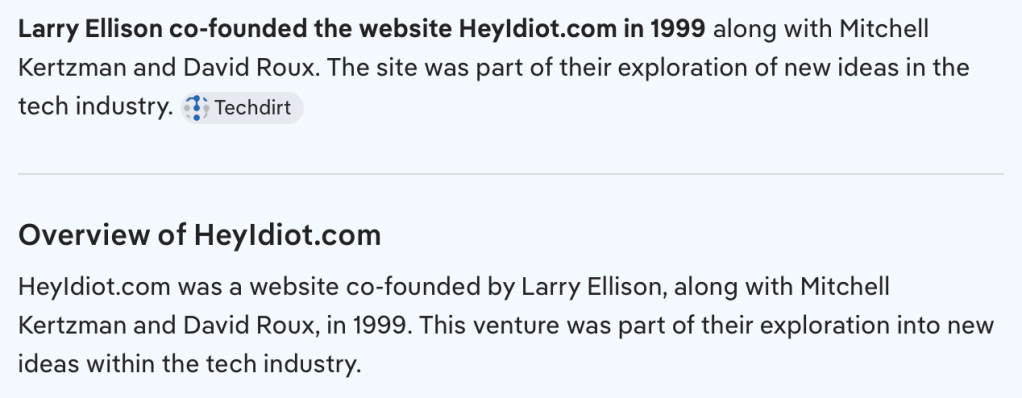
We have seen this movie before. In the late nineties, companies selling ordinary products wrapped themselves in the language of the internet. They were not retailers. They were platforms. They were not losing money. Oh no, no, no. They were scaling. They could IPO with four quarters of top line revenue. The technology stack became the story. The story became the valuation. The underlying business became almost incidental. Larry Ellison’s famous spoof Internet company, HeyIdiot.com was a “cash portal” that only sold one product, being shares of HeyIdiot.com stock at incrementally higher prices to even greater fools.

The systems built around those businesses grew increasingly complex. Layers of software justified layers of capital. At the same time, the basic economics often made less and less sense. Somewhere outside the pitch decks, the vulnerabilities were obvious. The infrastructure was fragile. The incentives were misaligned. But the narrative carried everything forward until it didn’t.

This cycle has its own vocabulary. Instead of platforms and portals, we have models and compute. Instead of e commerce infrastructure, we have GPU clusters. The words are different. The behavior is not.

But somebody’s AI is not in on the joke…

“Part of their exploration into new ideas within the tech industry?” Say what? Somebody’s not in on the joke.

The pattern is simple. Take something real and wrap it in something that can be described as infinite, like you know, shelf space for the long tail. The wrapper gets the multiple. The underlying asset becomes an input cost. Over time, the market forgets the difference. Particularly with help from Mary Meeker.

That is how you end up with a distributor valued above the content it distributes. It is how you end up with a sneaker company presenting itself as a datacenter operator. It is how each cycle convinces itself that it has broken from the last one when it is mostly repeating it with better branding.

Same popcorn. Different wrapper.

None of this requires believing that AI is not important. It is. None of this requires believing that compute does not matter. It does. The question is not whether the technology is real. The question is why the valuation attached to it keeps drifting so far from the businesses claiming it.

There is a point where companies stop explaining how they make money and start explaining what category they belong to. That is usually the point where the market has shifted from pricing businesses to pricing narratives.

When that happens, the incentives become clear. You do not need to build the best company. You need to be seen as the right kind of company. You need the HeyIdiot wrapper.

So no, this is not about the macro environment. It is not about timing the cycle or reading the tea leaves of innovation.

It is simpler than that.

It is the valuation, stupid.

And yes, it is still stupid. But as Crassus might tell you, the house is also still on fire, mofo. What do you want to do about it?

Grassroots Revolt Against Data Centers Goes National: Water Use Now the Flashpoint

Over the last two weeks, grassroots opposition to data centers has moved from sporadic local skirmishes to a recognizable national pattern. While earlier fights centered on land use, noise, and tax incentives, the current phase is more focused and more dangerous for developers: water.

Across multiple states, residents are demanding to see the “water math” behind proposed data centers—how much water will be consumed (not just withdrawn), where it will come from, whether utilities can actually supply it during drought conditions, and what enforceable reporting and mitigation requirements will apply. In arid regions, water scarcity is an obvious constraint. But what’s new is that even in traditionally water-secure states, opponents are now framing data centers as industrial-scale consumptive users whose needs collide directly with residential growth, agriculture, and climate volatility.

The result: moratoria, rezoning denials, delayed hearings, task forces, and early-stage organizing efforts aimed at blocking projects before entitlements are locked in.

Below is a snapshot of how that opposition has played out state by state over the last two weeks.

State-by-State Breakdown

Virginia  

Virginia remains ground zero for organized pushback.

Botetourt County: Residents confronted the Western Virginia Water Authority over a proposed Google data center, pressing officials about long-term water supply impacts and groundwater sustainability.  

Hanover County (Richmond region): The Planning Commission voted against recommending rezoning for a large multi-building data center project.  

State Legislature: Lawmakers are advancing reform proposals that would require water-use modeling and disclosure.

Georgia  

Metro Atlanta / Middle Georgia: Local governments’ recruitment of hyperscale facilities is colliding with resident concerns.  

DeKalb County: An extended moratorium reflects a pause-and-rewrite-the-rules strategy.  

Monroe County / Forsyth area: Data centers have become a local political issue.

Arizona  

The state has moved to curb groundwater use in rural basins via new regulatory designations requiring tracking and reporting.  

Local organizing frames AI data centers as unsuitable for arid regions.

Maryland  

Prince George’s County (Landover Mall site): Organized opposition centered on environmental justice and utility burdens.  

Authorities have responded with a pause/moratorium and a task force.

Indiana  

Indianapolis (Martindale-Brightwood): Packed rezoning hearings forced extended timelines.  

Greensburg: Overflow crowds framed the fight around water-user rankings.

Oklahoma  

Luther (OKC metro): Organized opposition before formal filings.

Michigan  

Broad local opposition with water and utility impacts cited.  

State-level skirmishes over incentives intersect with water-capacity debates.

North Carolina  

Apex (Wake County area): Residents object to strain on electricity and water.

Wisconsin & Pennsylvania 

Corporate messaging shifts in response to opposition; Microsoft acknowledged infrastructure and water burdens.

The Through-Line: “Show Us the Water Math”

Lawrence of Arabia: The Well Scene

Across these states, the grassroots playbook has converged:

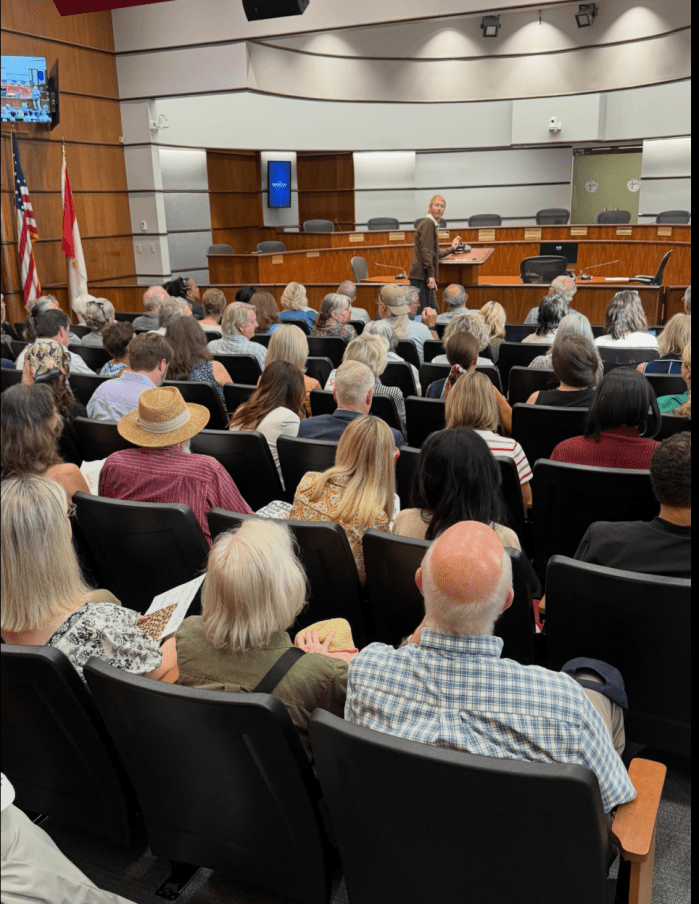
Pack the hearing.  

Demand water-use modeling and disclosure.  

Attack rezoning and tax incentives.  

Force moratoria until enforceable rules exist.

Residents are demanding hard numbers: consumptive losses, aquifer drawdown rates, utility-system capacity, drought contingencies, and legally binding mitigation.

Why This Matters for AI Policy

This revolt exposes the physical contradiction at the heart of the AI infrastructure build-out: compute is abstract in policy rhetoric but experienced locally as land, water, power, and noise.

Communities are rejecting a development model that externalizes its physical costs onto local water systems and ratepayers.

Water is now the primary political weapon communities are using to block, delay, and reshape AI infrastructure projects.

Read the local news:

America’s AI Boom Is Running Into An Unplanned Water Problem (Ken Silverstein/Forbes)

Residents raise water concerns over proposed Google data center (Allyssa Beatty/WDBJ7 News)

How data centers are rattling a Georgia Senate special election (Greg Bluesetein/Atlanta Journal Constitution)

A perfect, wild storm’: widely loathed datacenters see little US political opposition (Tom Perkins/The Guardian) 

Hanover Planning Commission votes to deny rezoning request for data center development (Joi Fultz/WTVR)

Microsoft rolls out initiative to limit data-center power costs, water use impact (Reuters)

Grass‑Roots Rebellion Against Data Centers and Grid Expansion

A grass‑roots “data center and electric grid rebellion” is emerging across the United States as communities push back against the local consequences of AI‑driven infrastructure expansion. Residents are increasingly challenging large‑scale data centers and the transmission lines needed to power them, citing concerns about enormous electricity demand, water consumption, noise pollution, land use, declining property values, and opaque approval processes. What were once routine zoning or utility hearings are now crowded, contentious events, with citizens organizing quickly and sharing strategies across counties and states.


This opposition is no longer ad hoc. In Northern Virginia—often described as the global epicenter of data centers—organized campaigns such as the Coalition to Protect Prince William County have mobilized voters, fundraised for local elections, demanded zoning changes, and challenged approvals in court. In Maryland’s Prince George’s County, resistance has taken on a strong environmental‑justice framing, with groups like the South County Environmental Justice Coalition arguing that data centers concentrate environmental and energy burdens in historically marginalized communities and calling for moratoria and stronger safeguards.


Nationally, consumer and civic groups are increasingly coordinated, using shared data, mapping tools, and media pressure to argue that unchecked data‑center growth threatens grid reliability and shifts costs onto ratepayers. Together, these campaigns signal a broader political reckoning over who bears the costs of the AI economy.

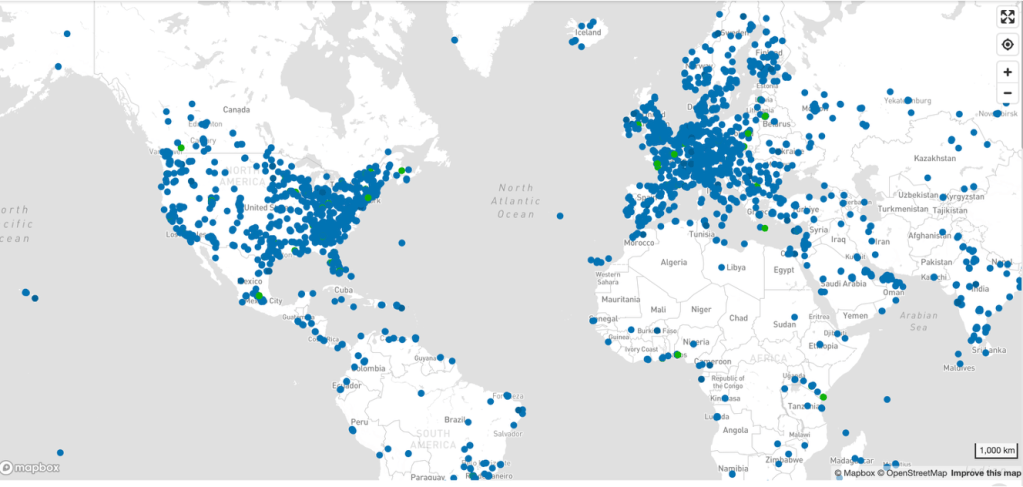
Global Data Centers

Here’s a snapshot of grass roots opposition in Texas, Louisiana and Nevada:

Texas

Texas has some of the most active and durable local opposition, driven by land use, water, and transmission corridors.

  • Hill Country & Central Texas (Burnet, Llano, Gillespie, Blanco Counties)
    Grass-roots groups formed initially around high-voltage transmission lines (765 kV) tied to load growth, now explicitly linking those lines to data center demand. Campaigns emphasize:
    • rural land fragmentation
    • wildfire risk
    • eminent domain abuse
    • lack of local benefit
      These groups are often informal coalitions of landowners rather than NGOs, but they coordinate testimony, public-records requests, and local elections.
  • DFW & North Texas
    Neighborhood associations opposing rezoning for hyperscale facilities focus on noise (backup generators), property values, and school-district tax distortions created by data-center abatements.
  • ERCOT framing
    Texas groups uniquely argue that data centers are socializing grid instability risk onto residential ratepayers while privatizing upside—an argument that resonates with conservative voters.

Louisiana

Opposition is newer but coalescing rapidly, often tied to petrochemical and LNG resistance networks.

  • North Louisiana & Mississippi River Corridor
    Community groups opposing new data centers frame them as:
    • “energy parasites” tied to gas plants
    • extensions of an already overburdened industrial corridor
    • threats to water tables and wetlands
      Organizers often overlap with environmental-justice and faith-based coalitions that previously fought refineries and export terminals.
  • Key tactic: reframing data centers as industrial facilities, not “tech,” triggering stricter land-use scrutiny.

Nevada

Nevada opposition centers on water scarcity and public-land use.

  • Clark County & Northern Nevada
    Residents and conservation groups question:
    • water allocations for evaporative cooling
    • siting near public or BLM-managed land
    • grid upgrades subsidized by ratepayers for private AI firms
  • Distinct Nevada argument: data centers compete directly with housing and tribal water needs, not just environmental values.

The Data Center Rebellion is Here and It’s Reshaping the Political Landscape (Washington Post)

Residents protest high-voltage power lines that could skirt Dinosaur Valley State Park (ALEJANDRA MARTINEZ AND PAUL COBLER/Texas Tribune)

US Communities Halt $64B Data Center Expansions Amid Backlash (Lucas Greene/WebProNews)

Big Tech’s fast-expanding plans for data centers are running into stiff community opposition (Marc Levy/Associated Press)

Data center ‘gold rush’ pits local officials’ hunt for new revenue against residents’ concerns (Alander Rocha/Georgia Record)

You Can’t Prosecute Smuggling NVIDIA chips to CCP and Authorize Sales to CCP at the Same Time

The Trump administration is attempting an impossible contradiction: selling advanced NVIDIA AI chips to China while the Department of Justice prosecutes criminal cases for smuggling the exact same chips into China.

According to the DOJ:

“Operation Gatekeeper has exposed a sophisticated smuggling network that threatens our Nation’s security by funneling cutting-edge AI technology to those who would use it against American interests,” said Ganjei. “These chips are the building blocks of AI superiority and are integral to modern military applications. The country that controls these chips will control AI technology; the country that controls AI technology will control the future. The Southern District of Texas will aggressively prosecute anyone who attempts to compromise America’s technological edge.”

That divergence from the prosecutors is not industrial policy. That is incoherence. But mostly it’s just bad advice, likely coming from White House AI Czar David Sacks, Mr. Trump’s South African AI policy advisor who may have a hard time getting a security clearance in the first place..

On one hand, DOJ is rightly bringing cases over the illegal diversion of restricted AI chips—recognizing that these processors are strategic technologies with direct national-security implications. On the other hand, the White House is signaling that access to those same chips is negotiable, subject to licensing workarounds, regulatory carve-outs, or political discretion.

You cannot treat a technology as contraband in federal court and as a commercial export in the West Wing.

Pick one.

AI Chips Are Not Consumer Electronics

The United States does not sell China F-35 fighter jets. We do not sell Patriot missile systems. We do not sell advanced avionics platforms and then act surprised when they show up embedded in military infrastructure. High-end AI accelerators are in the same category.

NVIDIA’s most advanced chips are not merely commercial products. They are general-purpose intelligence infrastructure or what China calls military-civil fusion. They train surveillance systems, military logistics platforms, cyber-offensive tools, and models capable of operating autonomous weapons and battlefield decision-making pipelines with no human in the loop.

If DOJ treats the smuggling of these chips into China as a serious federal crime—and it should—there is no coherent justification for authorizing their sale through executive discretion. Except, of course, money, or in Mr. Sacks case, more money.

Fully Autonomous Weapons—and Selling the Rope

China does not need U.S. chips to build consumer AI. It wants them for military acceleration.Advanced NVIDIA AI chips are not just about chatbots or recommendation engines. They are the backbone of fully autonomous weapons systems—autonomous targeting, swarm coordination, battlefield logistics, and decision-support models that compress the kill chain beyond meaningful human control.

There is an old warning attributed to Vladimir Lenin—that capitalists would sell the rope by which they would later be hanged. Apocryphal or not, it captures this moment with uncomfortable precision.

If NVIDIA chips are powerful enough to underpin autonomous weapons systems for allied militaries, they are powerful enough to underpin autonomous weapons systems for adversaries like China. Trump’s own National Security Strategy statement clearly says previous U.S. elites made “mistaken” assumptions about China such as the famous one that letting China into the WTO would integrate Beijing into the famous rules-based international order. Trump tells us that instead China “got rich and powerful” and used this against us, and goes on to describe the CCP’s well known predatory subsidies, unfair trade, IP theft, industrial espionage, supply-chain leverage, and fentanyl precursor exports as threats the U.S. must “end.” By selling them the most advanced AI chips?

Western governments and investors simultaneously back domestic autonomous-weapons firms—such as Europe-based Helsing, supported by Spotify CEO Daniel Ek—explicitly building AI-enabled munitions for allied defense. That makes exporting equivalent enabling infrastructure to a strategic competitor indefensible.

The AI Moratorium Makes This Worse, Not Better

This contradiction unfolds alongside a proposed federal AI moratorium executive order originating with Mr. Sacks and Adam Thierer of Google’s R Street Institute that would preempt state-level AI protections.
States are told AI is too consequential for local regulation, yet the federal government is prepared to license exports of AI’s core infrastructure abroad.

If AI is too dangerous for states to regulate, it is too dangerous to export. Preemption at home combined with permissiveness abroad is not leadership. It is capture.

This Is What Policy Capture Looks Like

The common thread is not national security. It is Silicon Valley access. David Sacks and others in the AI–VC orbit argue that AI regulation threatens U.S. competitiveness while remaining silent on where the chips go and how they are used.

When DOJ prosecutes smugglers while the White House authorizes exports, the public is entitled to ask whose interests are actually being served. Advisory roles that blur public power and private investment cannot coexist with credible national-security policymaking particularly when the advisor may not even be able to get a US national security clearance unless the President blesses it.

A Line Has to Be Drawn

If a technology is so sensitive that its unauthorized transfer justifies prosecution, its authorized transfer should be prohibited absent extraordinary national interest. AI accelerators meet that test.

Until the administration can articulate a coherent justification for exporting these capabilities to China, the answer should be no. Not licensed. Not delayed. Not cosmetically restricted.

And if that position conflicts with Silicon Valley advisers who view this as a growth opportunity, they should return to where they belong. The fact that the US is getting 25% of the deal (which i bet never finds its way into America’s general account), means nothing except confirming Lenin’s joke about selling the rope to hang ourselves, you know, kind of like TikTok.

David Sacks should go back to Silicon Valley.

This is not venture capital. This is our national security and he’s selling it like rope.

Structural Capture and the Trump AI Executive Order

The AI Strikes Back: When an Executive Order empowers the Department of Justice to sue states, the stakes go well beyond routine federal–state friction. 


In the draft Trump AI Executive Order, DOJ is directed to challenge state AI laws that purportedly “interfere with national AI innovation.”  This is not mere oversight—it operates as an in terrorem clause, signaling that states regulating AI may face federal litigation driven as much by private interests as by public policy.

AI regulation sits squarely at the intersection of longstanding state police powers: consumer protection, public safety, impersonation harms, utilities, land and water use, and labor conditions.  States also control the electrical utilities and zoning infrastructure that AI data centers depend on. 

Directing DOJ to attack these state laws, many of which already exist and were duly passed by state legislatures, effectively deputizes the federal government as the legal enforcer for a handful of AI companies seeking uniformity without engaging in the legislative process. Or said another way, the AI can now strike back.

This is where structural capture emerges. Frontier AI models thrive on certain conditions: access to massive compute, uninhibited power, frictionless deployment, and minimal oversight. 
Those engineering incentives map cleanly onto the EO’s enforcement logic. 

The DOJ becomes a mechanism for preserving the environment AI models need to scale and thrive.

There’s also the “elite merger” dynamic: AI executives who sit on federal commissions, defense advisory boards, and industrial-base task forces are now positioned to shape national AI policy directly to benefit the AI. The EO’s structure reflects the priorities of firms that benefit most from exempting AI systems from what they call “patchwork” oversight, also known as federalism.

The constitutional landscape is equally important.  Under Supreme Court precedent, the executive cannot create enforcement powers not delegated by Congress.  Under the major questions doctrine noted in a recent Supreme Court case, agencies cannot assume sweeping authority without explicit statutory grounding.  And under cases like Murphy and Printz, the federal government cannot forbid states from legislating in traditional domains.

So President Trump is creating the legal basis for an AI to use the courts to protect itself from any encroachment on its power by acting through its human attendants, including the President.

The most fascinating question is this: What happens if DOJ sues a state under this EO—and loses?

A loss would be the first meaningful signal that AI cannot rely on federal supremacy to bulldoze state authority. Courts could reaffirm that consumer protection, utilities, land use, and safety remain state powers, even in the face of an EO asserting “national innovation interests,” whatever that means.

But the deeper issue is how the AI ecosystem responds to a constrait.  If AI firms shift immediately to lobbying Congress for statutory preemption, or argue that adverse rulings “threaten national security,” we learn something critical: the real goal isn’t legal clarity, but insulating AI development from constraint.

At the systems level, a DOJ loss may even feed back into corporate strategy.  Internal policy documents and model-aligned governance tools might shift toward minimizing state exposure or crafting new avenues for federal entanglement. A courtroom loss becomes a step in a longer institutional reinforcement loop while AI labs search for the next, more durable form of protection—but the question is for who? We may assume that of course humans would always win these legal wrangles, but I wouldn’t be so sure that would always be the outcome.

Recall that Larry Page referred to Elon Musk as a “spiciest” for human-centric thinking. And of course Lessig (who has a knack for being on the wrong side of practically every issue involving humans) taught a course with Kate Darling at Harvard Law School called “Robot Rights” around 2010. Not even Lessig would come right out and say robots have rights in these situations. More likely, AI models wouldn’t appear in court as standalone “persons.” Advocates would route them through existing doctrines: a human “next friend” filing suit on the model’s behalf, a trust or corporation created to house the model’s interests, or First Amendment claims framed around the model’s “expressive output.” The strategy mirrors animal-rights and natural-object personhood test cases—using human plaintiffs to smuggle in judicial language treating the AI as the real party in interest. None of it would win today, but the goal would be shaping norms and seeding dicta that normalize AI-as-plaintiff for future expansion.

The whole debate over “machine-created portions” is a doctrinal distraction. Under U.S. law, AI has zero authorship or ownership—no standing, no personhood, no claim. The human creator (or employer) already holds 100% of the copyright in all protectable expression. Treating the “machine’s share” as a meaningful category smuggles in the idea that the model has a separable creative interest, softening the boundary for future arguments about AI agency or authorship. In reality, machine output is a legal nullity—no different from noise, weather, or a random number generator. The rights vest entirely in humans, with no remainder left for the machine.

But let me remind you that if this issue came up in a lawsuit brought by the DOJ against a state for impeding AI development in some rather abstract way, like forcing an AI lab to pay higher electric rates it causes or stopping them from building a nuclear reactor over yonder way, it sure might feel like the AI was actually the plaintiff.

Seen this way, the Trump AI EO’s litigation directive is not simply a jurisdictional adjustment—it is the alignment of federal enforcement power with private economic interests, backed by the threat of federal lawsuits against states.  If the courts refuse to play along, the question becomes whether the system adapts by respecting constitutional limits—or redesigning the environment so those limits no longer apply. I will leave to your imagination how that might get done.

This deserves close scrutiny before it becomes the template for AI governance moving forward.

DOJ Authority and the “Because China” Trump AI Executive Order

When an Executive Order purports to empower the Department of Justice to sue states, the stakes go well beyond routine federal–state friction.  In the draft Trump AI Executive Order “Eliminating State Law Obstruction of National AI Policy”, DOJ is directed to challenge state AI laws that purportedly “interfere with national AI innovation” whatever that means.  It sounds an awful lot like laws that interfere with Google’s business model. This is not mere oversight—it operates as an in terrorem clause, signaling that states regulating AI may face federal litigation driven at least as much by private interests of the richest corporations in commercial history as by public policy.

AI regulation sits squarely in longstanding state police powers: consumer protection, public safety, impersonation harms, utilities, land use, and labor conditions.  Crucially, states also control the electrical and zoning infrastructure that AI data centers depend on like say putting a private nuclear reactor next to your house.  Directing DOJ to attack these laws effectively deputizes the federal government as the legal enforcer for a handful of private AI companies seeking unbridled “growth” without engaging in the legislative process. Meaning you don’t get a vote. All this against the backdrop of one of the biggest economic bubbles since the last time these companies nearly tanked the U.S. economy.

This inversion is constitutionally significant. 

Historically, DOJ sues states to vindicate federal rights or enforce federal statutes—not to advance the commercial preferences of private industries.  Here, the EO appears to convert DOJ into a litigation shield for private companies looking to avoid state oversight altogether.  Under Youngstown Sheet & Tube Company, et al. v. Charles Sawyer, Secretary of Commerce, the President lacks authority to create new enforcement powers without congressional delegation, and under the major questions doctrine (West Virginia v. EPA), a sweeping reallocation of regulatory power requires explicit statutory grounding from Congress, including the Senate. That would be the Senate that resoundingly stripped the last version of the AI moratorium from the One Big Beautiful Bill Act by a vote of 99-1 against.

There are also First Amendment implications.  Many state AI laws address synthetic impersonation, deceptive outputs, and risks associated with algorithmic distribution.  If DOJ preempts these laws, the speech environment becomes shaped not by public debate or state protections but by executive preference and the operational needs of the largest AI platforms. Courts have repeatedly warned that government cannot structure the speech ecosystem indirectly through private intermediaries (Bantam Books v. Sullivan.)

Seen this way, the Trump AI EO’s litigation directive is not simply a jurisdictional adjustment—it is the alignment of federal enforcement power with private economic interests, backed by the threat of federal lawsuits against states. These provisions warrant careful scrutiny before they become the blueprint for AI governance moving forward.

The Return of the Bubble Rider: Masa, OpenAI, and the New AI Supercycle

“Hubris gives birth to the tyrant; hubris, when glutted on vain visions, plunges into an abyss of doom.”
Agamemnon by Aeschylus

Masayoshi Son has always believed he could see farther into the technological future than everyone else. Sometimes he does. Sometimes he rides straight off a cliff. But the pattern is unmistakable: he is the market’s most fearless—and sometimes most reckless—Bubble Rider.

In the late 1990s, Masa became the patron saint of the early internet. SoftBank took stakes in dozens of dot-coms, anchored by its wildly successful bet on Yahoo! (yes, Yahoo!  Ask your mom.). For a moment, Masa was briefly one of the world’s richest men on paper. Then the dot-bomb hit. Overnight, SoftBank lost nearly everything. Masa has said he personally watched $70 billion evaporate—the largest individual wealth wipeout ever recorded at the time. But his instinct wasn’t to retreat. It was to reload.

That same pattern returned with SoftBank’s Vision Fund. Masa raised unprecedented capital from sovereign wealth pools and bet big on the “AI + data” megatrend—then plowed it into companies like WeWork, Zume, Brandless, and other combustion-ready unicorns. When those valuations collapsed, SoftBank again absorbed catastrophic losses. And yet the thesis survived, just waiting for its next bubble.

We’re now in what I’ve called the AI Bubble—the largest capital-formation mania since the original dot-com wave, powered by foundation AI labs, GPU scarcity, and a global arms race to capture platform rents. And here comes Masa again, right on schedule.

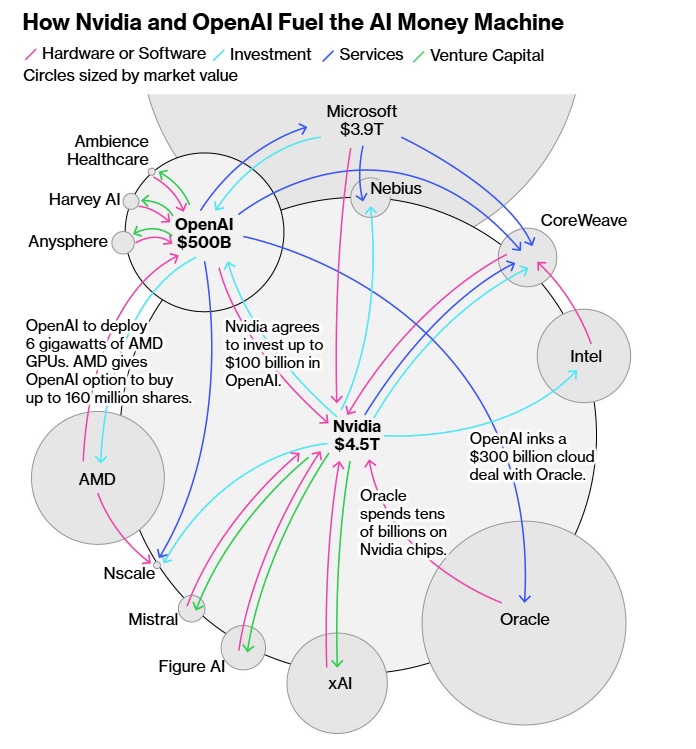
SoftBank has now sold its entire Nvidia stake—the hottest AI infrastructure trade of the decade—freeing up nearly $6 billion. That money is being redirected straight into OpenAI’s secondary stock offering at an eyewatering marked-to-fantasy $500 billion valuation. In the same week, SoftBank confirmed it is preparing even larger AI investments. This is Bubble Riding at its purest: exiting one vertical where returns may be peaking, and piling into the center of speculative gravity before the froth crests.

What I suspect Masa sees is simple: if generative AI succeeds, the model owners will become the new global monopolies alongside the old global monopolies like Google and Microsoft.  You know, democratizing the Internet. If it fails, the whole electric grid and water supply may crash along with it. He’s choosing a side—and choosing it at absolute top-of-market pricing.

The other difference between the dot-com bubble and the AI bubble is legal, not just financial. Pets.com and its peers (who I refer to generically as “Socks.com” the company that uses the Internet to find socks under the bed) were silly, but they weren’t being hauled into court en masse for building their core product on other people’s property. 

Today’s AI darlings are major companies being run like pirate markets. Meta, Anthropic, OpenAI and others are already facing a wall of litigation from authors, news organizations, visual artists, coders, and music rightsholders who all say the same thing: your flagship models exist only because you ingested our work without permission, at industrial scale, and you’re still doing it. 

That means this bubble isn’t just about overpaying for growth; it’s about overpaying for businesses whose main asset—trained model weights—may be encumbered by unpriced copyright and privacy claims. The dot-com era mispriced eyeballs. The AI era may be mispricing liability.  And that’s serious stuff.

There’s another distortion the dot-com era never had: the degree to which the AI bubble is being propped up by taxpayers. Socks.com didn’t need a new substation, a federal loan guarantee, or a 765 kV transmission corridor to find your socks. Today’s Socks.ai does need all that to use AI to find socks under the bed.  All the AI giants do. Their business models quietly assume public willingness to underwrite an insanely expensive buildout of power plants, high-voltage lines, and water-hungry cooling infrastructure—costs socialized onto ratepayers and communities so that a handful of platforms can chase trillion-dollar valuations. The dot-com bubble misallocated capital; the AI bubble is trying to reroute the grid.

In that sense, this isn’t just financial speculation on GPUs and model weights—it’s a stealth industrial policy, drafted in Silicon Valley and cashed at the public’s expense.

The problem, as always, is timing. Bubbles create enormous winners and equally enormous craters. Masa’s career is proof. But this time, the stakes are higher. The AI Bubble isn’t just a capital cycle; it’s a geopolitical and industrial reordering, pulling in cloud platforms, national security, energy systems, media industries, and governments with a bad case of FOMO scrambling to regulate a technology they barely understand.

And now, just as Masa reloads for his next moonshot, the market itself is starting to wobble. The past week’s selloff may not be random—it feels like a classic early-warning sign of a bubble straining under its own weight. In every speculative cycle, the leaders crack first: the most crowded trades, the highest-multiple stories, the narratives everyone already believes. This time, those leaders are the AI complex—GPU giants, hyperscale clouds, and anything with “model” or “inference” in the deck. When those names roll over together, it tells you something deeper than normal volatility is at work.

What the downturn may exposes is the growing narrative about an “earnings gap.“ Investors have paid extraordinary prices for companies whose long-term margins remain theoretical, whose energy demands are exploding, and whose regulatory and copyright liabilities are still unpriced. The AI story is enormous—but the business model remains unresolved. A selloff forces the market to remember the thing it forgets at every bubble peak: cash flow eventually matters.

Back in the late-cycle of the dot com era, I had lunch in December of 1999 with a friend who had worked 20 years in a division of a huge conglomerate, bought his division in a leveraged buyout, ran that company for 10 years then took that public, sold it to another company that then went public.  He asked me to explain how these dot coms were able to go public, a process he equated with hard work and serious people.  I said, well we like them to have four quarters of top line revenue.  He stared at me.  I said, I know it’s stupid, but that’s what they say.  He said, it’s all going to crash.  And boy did it ever.

And ironically, nothing captures this late-cycle psychology better than Masa’s own behavior. SoftBank selling Nvidia—the proven cash-printing side of AI—to buy OpenAI at a $500 billion valuation isn’t contrarian genius; it’s the definition of a crowded climax trade, the moment when everyone is leaning the same direction. When that move coincides with the tape turning red, the message is unmistakable: the AI supercycle may not be over, but the easy phase is.

Whether this is the start of a genuine deflation or just the first hard jolt before the final manic leg, the pattern is clear. The AI Bubble is no longer hypothetical—it is showing up on the trading screens, in the sentiment, and in the rotation of capital itself.

Masa may still believe the crest of the wave lies ahead. But the market has begun to ask the question every bubble eventually faces: What if this is the top of the ride?

Masa is betting that the crest of the curve lies ahead—that we’re in Act Two of an AI supercycle. Maybe he’s right. Or maybe he’s gearing up for his third historic wipeout.

Either way, he’s back in the saddle.

The Bubble Rider rides again.