The AI Industry Wants Congress to Create the Next 100-Year Radio Loophole

“Formal property’s contribution to mankind is not the protection of ownership… Property’s real breakthrough is that it radically improved the flow of communications about assets and their potential.”

Hernando de Soto, The Mystery of Capital.

Musicians and other creators are unfortunately familiar with many efforts by big business to extract the economic value of their authorship through expansive free-riding copyright loopholes that pretend property rights don’t exist. The current AI crisis did not originate with Big Tech—they learned it from Big Radio.  I distinctly recall having lunch with a Big Tech Washington lobbyist for XM radio (pre-merger) who had just found out that broadcast radio didn’t pay sound recording performances and wanted that same deal for satellite radio.  I had to put the quietus on that pronto.  And they didn’t even know how close they came to disaster. Sheesh.

In case you were wondering, Congress modernized copyright law in 1995 through the Digital Performance Right in Sound Recordings Act.  The 1995 law created the statutory framework that launched licensed webcasting while preserving the archaic terrestrial radio performance loophole—preserved due to lobbying by Big Radio.

For decades, terrestrial AM/FM broadcasters have relied on a statutory copyright exception that allows them to broadcast sound recordings without compensating the featured artists, session musicians, and backup singers whose performances attract listeners, or the record companies who bear the substantial costs of discovering, recording, marketing, and promoting those works. Despite years of bipartisan efforts to end that free ride through legislation like the American Music Fairness Act (AMFA) and its predecessor bills, broadcasters have vigorously defended the exemption with overwhelming money and utilization of the very broadcast license they abuse to feather their nests.  We have put excellent witnesses in front of Congress only to be outspent by smarmy swamp creatures from the National Association of Broadcasters.

AI disputes echo that familiar pattern. In the end, it all comes down to vast wealth accumulated through safe harbors of one kind or another.  Instead of relying on a terrestrial performance exemption, AI companies advance absurd interpretations of fair use and text-and-data-mining doctrines to justify the uncompensated use of stolen works for commercial model training “because China.” They use influence peddlers like White House AI Viceroy David Sacks to try to sneak retroactive safe harbors into the law through Congress in the form of groundless federal preemption of state and local regulation or executive orders that are clearly bought and paid for under the guise of “data center factories” which are not factories at all.   Although the legal theories differ between AI and broadcasting, the economic consequence is remarkably similar: sweeping commercial enterprises seek to build profitable businesses by lobbying or litigating (two sides of the same King’s shilling) to expand exceptions to the exclusive rights Congress granted creators, while forcing artists, musicians, writers, journalists, film makers and photographers to absorb the resulting loss in value.

That concern is no longer theoretical. In a recent Bloomberg podcast, SoundExchange President and CEO Michael Huppe—whose organization distributes more than $1 billion annually in digital performance royalties derived from rights created by that market-making 1995 legislation—described AI as “something that has a lot of danger, but also a lot of potential.” But he cautioned that “we need to make sure that human creators are protected” and that “there need to be guardrails so that [AI] doesn’t steamroll over the whole creative industry.” I couldn’t agree more. Rather than treating property rights as obstacles to AI, Congress should remember Hernando de Soto’s lesson that clearly defined ownership creates wealth—a principle it proved when licensing sound recordings gave birth to the webcasting industry largely thanks to SoundExchange and the infrastructure it brings to the table.

Huppe’s concerns are rooted in measurable economics rather than speculation. Streaming now accounts for approximately 85% of U.S. recorded music revenue, and streaming services distribute a finite, shared royalty pool among eligible recordings. Huppe noted that some services report receiving roughly 75,000 new recordings every day, with reports suggesting that more than 80% are AI-generated.

Whether those estimates ultimately prove higher or lower, the underlying economic principle is unavoidable: every AI-generated recording entering the marketplace competes for listener attention and, if streamed, competes for a share of the same finite, shared royalty pool. Huppe also warned that AI facilitates streaming fraud, allowing bad actors to generate AI recordings, deploy bots to inflate plays, and “siphon away payment from the pipeline that would otherwise go to real artists and real record labels.” His conclusion was unequivocal: “It’s fraud, basically. Straight-up fraud.”

Moreover, generative AI takes legitimate recorded performances to create competing works substituting for the originals themselves. This economic effect echoes Judge Vince Chhabria’s observations in the Kadrey v. Meta books litigation, where he suggested that flooding markets with AI-generated works competing against originals could constitute the type of market harm that would block a fair use defense to copyright infringement.

The explosion of AI-generated music that Mike Huppe cites therefore provides strong evidence of repeatable and measurable market harm identified by Judge Chhabria. Every AI-generated stream competes for listener attention while simultaneously reducing each human artist’s share of a finite, shared royalty pool. Unlike speculative claims of future injury, this dilution can be observed, quantified, and modeled using actual streaming and royalty distributions.

The economics become even more troubling when combined with large-scale scraping. As we have seen litigated in the cases against Udio, Anthropic and Meta (and I think will continue to see proven through all of the AI models including Suno),  AI has trained on enormous quantities of illegally acquired works without obtaining licenses or compensating the creators whose recordings, performances, writings, images, and other expressive works supplied the raw material that makes those models commercially valuable.  Sound familiar?

The same creative ecosystem that furnished the training corpus is then required to compete against a cascading and endless supply of AI-generated outputs while receiving no payment for either the training use or the resulting competition. Worse yet, because nothing says freedom like getting away with it, AI platforms connected to Google, Facebook and Amazon are so used to ignoring copyrights in their day jobs that they clearly planned to ignore our rights.

In music, the effect is especially stark: the recordings that taught music-generation systems how to produce theoretically commercially appealing songs also become the works displaced by those outputs in the marketplace. Creators are effectively asked to finance their own displacement. They suffer a double economic injury—first, uncompensated exploitation of their works to build commercial AI systems, and second, measurable erosion of their share of a finite, shared royalty pool as AI-generated recordings compete for the same listeners and revenues that streamers like Spotify seem unable to stop from invading the ecosystem.

Because of the insane pool allocation formula used for streaming mechanical royalties on interactive services like Spotify, Amazon, Apple and Deezer, songwriters are also subject to the same kind of dilution as artists.  Hopefully the Copyright Royalty Judges will address this new humiliation in the current statutory rate proceeding and clearly state that AI works are not eligible for the statutory license under Section 115.

This measurable dilution also helps illustrate the broader market-flooding concern identified by Judge Chhabria. If AI-generated outputs systematically occupy the same commercial markets as human-created works, reducing revenues through sheer volume rather than direct substitution alone, then streaming provides one of the first empirical laboratories for proving market harm for “the effect of the use upon the potential market for or value of the copyrighted work.”  Because streaming royalties are transparent, pooled, and data-driven, music offers unusually strong evidence that AI-generated competition can inflict repeatable, measurable, and scalable economic injury. If courts follow Judge Chhabria in recognizing this analysis, the same analytical framework could extend beyond music to books, journalism, visual art, film, software, and other creative industries in which AI-generated outputs compete for the same audiences, revenues, and licensing opportunities as human creators.

Against that backdrop, the American Music Fairness Act is no longer simply a current solution to a decades-old copyright reform proposal. If AI companies are correct that generative AI will place unprecedented pressure on the economics of human creativity, then Congress should strengthen—not further weaken—all of the economic foundations supporting human creators. AMFA would finally require terrestrial broadcasters to compensate featured artists, session musicians, and vocalists for the use of their sound recordings, just as streaming and satellite radio already do. It would also unlock reciprocal foreign performance royalties that American performers currently forfeit because the United States remains an international outlier. 

At a moment when AI is intensifying the struggle for creative labor to survive even while platforms seek broad legal exceptions for uncompensated training through lobbying and executive orders, eliminating one of copyright law’s oldest uncompensated uses would send an important signal: the future of artificial intelligence should not be financed by the continued erosion of the livelihoods of human creators.

The AI industry’s habit of predicting existential harm while aggressively commercializing the same technology presents a profound ethical contradiction that Professor Cal Newport calls “doom trolling” in a recent New York Times post.  This leads to a conclusion that AI companies cannot credibly claim their technology poses existential risks while continuing to accelerate its commercialization without meaningful restraint.

Newport gives this example reminiscent of my personal favorite, the exploding gas tank in Ford Pintos (not to pick on Ford):

Imagine if the Ford Motor Company put out a report saying that it feared its popular F-150 trucks might soon start bursting into flames, but that there was nothing the company could do about it because automotive technology was too inevitable and important to slow down. You’re probably struggling to picture this scenario because no reasonable consumer product company would ever act like this. 

The A.I. companies could start behaving the same way. To do so would require that they stop treating A.I. like some inevitable force that they’re struggling to steward. It’s not. It’s a collection of specific tools that these companies are choosing to design and sell according to specific business plans. Accordingly, they need to talk about their offerings like any other consumer product. This means explaining clearly whom these products are for, justifying their benefits and, critically, taking full responsibility for any harm they might cause. Just because A.I. currently enjoys a high-tech sheen doesn’t make it exceptional with respect to common-sense safety standards.

If these A.I. companies insist on continuing to pretend that they’re merely stoic observers of an unavoidable dystopian future, then perhaps it’s time to force the issue. As consumers, we can refuse to play the doom-trolling game. Next time Anthropic releases a dire report, or Sam Altman’s voice cracks as he imagines the disruption that OpenAI is unleashing, we can pivot back to the pragmatic: “OK, but what benefits am I getting by spending $1,000 a month on tokens?” If they continue to ratchet up the doom, then perhaps it’s time to transform dread into ridicule: The earnest pseudoscience of Anthropic’s white papers already borders on satire. The current zeitgeist surrounding A.I. encourages a fretful submission to these tech leaders, but this could rapidly change.

The AI industry cannot have it both ways. It cannot warn that generative AI will fundamentally transform—or even eliminate—millions of creative jobs while simultaneously insisting that the law should expand uncompensated access to the very works that make those systems possible. If AI companies genuinely believe their own predictions, then the appropriate public policy response is not to weaken copyright, broaden fair use, or create new exceptions for commercial training. It is to reinforce every remaining economic support for human creativity. 

The evidence emerging from music streaming already demonstrates why. AI-generated works are not merely theoretical substitutes; they compete for attention, streams, and revenue, measurably reducing each creator’s share of a finite, shared royalty pool. That provides some of the clearest real-world evidence yet of repeatable market harm from generative AI at commercial scale. Congress should take note. The question is no longer whether creators deserve compensation for their work. It is whether the United States will choose to finance the AI economy by systematically eroding the economic incentives that have sustained human creativity for generations—or whether it will insist that technological progress, like every other successful industry before it, pays its own way.

Perhaps the greatest lesson of the American Music Fairness Act is not about radio at all. It is about refusing to repeat yesterday’s policy mistakes in tomorrow’s technology. As Mike Huppe observed on Bloomberg, Congress should not be creating new copyright exceptions while it is still trying to fix old ones. That warning applies with even greater force to artificial intelligence. If policymakers know that generative AI is likely to place extraordinary pressure on the economics of human creativity—as many AI companies themselves readily acknowledge—then the answer cannot be to expand uncompensated uses of creative works in the name of innovation and unintended consequences be damned.

The webcasting revolution showed what Hernando de Soto long argued: respecting property rights doesn’t kill innovation—it gives innovators the legal foundation to build sustainable markets. AMFA is a cautionary tale: a narrow copyright exception adopted decades ago has deprived generations of American performers of compensation and remains difficult to unwind. Congress should learn from that history, not repeat it. The AI economy should be built by paying for the creative works that make it possible and respecting the rights of all creators—not by creating another exception that future generations will spend decades trying to reverse and an entrenched bureaucracy of the richest corporations in commercial history will oppose with all the resources they can muster.

Federally Guaranteed Financial Preemption

The AI moratorium fight was never really about “innovation.” It was about preemption. More specifically, it was about what might be called federally guaranteed financial preemption.

That phrase matters because the walk-back campaign around the original proposal has become almost surreal. After backlash exploded over the broad federal effort to block state and local AI regulation, supporters suddenly insisted nobody was trying to force unwanted data centers, transmission lines, substations, gas plants, or hyperscale industrial infrastructure onto communities that did not want them.

Technically, that is true. Washington does not necessarily need to directly order a county commission to approve a data center. It can accomplish much the same thing by structuring the financial system around the assumption that the buildout will occur.

That is the trick.

David Sacks’ original moratorium language he stuck in the One Big Beautiful Bill Act reportedly reached not only states but “political subdivisions” as well. That means cities, counties, municipalities, and local authorities. The proposal was not merely about preventing fifty different state AI laws. It threatened to freeze local democratic responses before they could harden into enforceable policy. (And of course there was always a whiff of 5th Amendment taking about the whole doomed process.)

Then came the backlash. Suddenly the rhetoric softened into something more comforting: We just need one national framework. We are not trying to override local control. We are not trying to force data centers on anyone. But that framing ignores how infrastructure power actually works in the United States. You do not need formal federal commands if you can create overwhelming financial momentum.

Suppose the federal government provides taxpayer-backed loan guarantees for utility expansion tied to AI growth forecasts. Utilities then build new generation, transmission, substations, and grid upgrades designed around hyperscale demand projections. State utility commissions approve cost recovery. Transmission planners treat the load forecasts as inevitable. Investors price future growth into regional infrastructure decisions.

At that point, local communities are no longer arguing with a speculative proposal. They are arguing with a federally supported capital structure. That’s much harder to control.

The county commissioner is suddenly told: The transmission line is already planned. The utility already committed the generation. The state already approved portions of the recovery mechanism. The jobs are supposedly coming. The tax base is supposedly coming. The grid supposedly depends on it.

See, it’s magic. Nobody “forced” anything. Whatever were you thinking?

The machinery simply narrowed the realistic range of outcomes. That is federally guaranteed financial preemption.

And it matters because the economics of AI infrastructure are unusually fragile beneath the surface confidence. Data centers are not shopping centers. They are highly specialized industrial assets tied to assumptions about compute demand, electricity pricing, capital availability, chip supply, and continued investor faith in the AI growth curve.

Much of the current buildout depends on debt markets behaving rationally indefinitely.

That may not happen.

If AI demand softens, if monetization disappoints, if venture funding tightens, or if hyperscalers pull back from aggressive expansion schedules, communities may discover they absorbed the physical consequences of a speculative infrastructure cycle they never fully controlled in the first place.

And then comes the final insult in the “local choice” narrative.

Communities remain theoretically free to say no before the infrastructure becomes politically inevitable. They also remain theoretically free to clean up the wreckage after failure.

That means: condemnation fights, stranded industrial facilities, utility disputes, ratepayer battles, bondholder litigation, abandoned transmission corridors, water conflicts, and enormous demolition costs.

The same officials who insisted nobody forced anything can simply shrug and say: “Well, local communities always retained sovereignty.”

This is why local opposition has accelerated so dramatically across the country. Residents increasingly understand that hyperscale AI infrastructure is not an abstract software issue. It is physical industrial policy: land, water, electricity, noise, substations, transmission lines, tax incentives, utility rate structures, and debt.

The fight stopped being theoretical once people realized they were not debating apps. They were debating permanent industrial transformation of their communities.

That is also why the original AI moratorium language frightened so many people once they read it carefully. It was not merely a debate about chatbot regulation or algorithmic bias. It looked increasingly like a mechanism for suppressing state and local resistance before communities fully understood the infrastructure consequences of the AI buildout itself.

And that may explain why the rhetoric shifted so quickly after public scrutiny intensified.

Because once people understand the difference between legal preemption and financial preemption, the conversation changes entirely.

The federal government does not always need to formally eliminate local authority. Sometimes it only needs to guarantee enough money that resistance becomes structurally difficult.

That is a far more sophisticated form of power.

And a far more dangerous one,

AI, Soft Power, and the New Thucydides Trap

The White House’s latest AI framework reads like a familiar story dressed in new clothes: we must move fast, avoid “overregulation,” and ensure that the United States “wins” the AI race—because China.

That framing is not new. It is, in fact, a modern version of the Thucydides Trap: the idea that when a rising power threatens to displace an established one, conflict—economic, political, or otherwise—becomes more likely. But what is striking here is not the invocation of competition. It’s how narrowly that competition is defined.

The framework implicitly treats AI dominance as a function of compute, capital, and model scale. Build bigger models faster, feed them more data, and ensure that domestic firms face as few constraints as possible. In that telling, creators, rights, and consent become secondary considerations—at best friction, at worst obstacles.

But that is a profound misread of where U.S. advantage actually lies.

American leadership has never been just about scale. It has been about legitimacy—the ability to build systems that other countries, companies, and individuals trust enough to adopt. That is the essence of soft power. And soft power is not generated by extraction; it is generated by rules that are perceived as fair.

When U.S. policy signals that training on creative works without meaningful consent is acceptable—or even necessary to “win”—it risks trading long-term legitimacy for short-term acceleration. That is a dangerous bargain. It tells the world that American AI leadership is built not on innovation alone, but on the uncompensated appropriation of global cultural and informational resources.

Other jurisdictions are already responding. The EU is experimenting with transparency mandates. Rights holders globally are pushing for enforceable consent regimes. Even countries that want to encourage AI development are increasingly wary of frameworks that look like data extraction at scale without accountability.

This is where the Thucydides analogy breaks down—or at least becomes more complicated. The real risk is not simply that China catches up technologically. It is that the United States, in trying to outrun that possibility, undermines the normative foundations of its own leadership.

Soft power erosion is not dramatic. It doesn’t announce itself with a headline. It accumulates quietly: in trade negotiations, in regulatory divergence, in the willingness of other countries to align—or not align—with U.S. standards. Over time, that erosion can matter more than any benchmark score or model release.

There is another path. The United States could lead by insisting that AI development is compatible with consent, compensation, and provenance. It could treat creators not as inputs to be harvested, but as stakeholders in a system that depends on their work. It could build infrastructure—technical and legal—that makes those principles operational, not aspirational.

That approach may look slower in the short term. It may impose costs that competitors are willing to ignore. But it is also how durable leadership is built.

Because in the long run, the question is not just who builds the most powerful models. It is who builds systems that the rest of the world is willing to trust.

And that is a competition the United States cannot afford to lose.

The Constitutional Shadow of the White House AI Framework: Law Without Law

One of the most important things about the White House AI framework released last week is what it is not.

It is not an executive order.

That may sound like a technical distinction, but it is doing an enormous amount of work here. Because by avoiding the form of an executive order, the framework avoids something even more important: Judicial review.

An executive order that attempted to declare AI training on copyrighted works lawful—or to constrain Congress from acting—would immediately invite challenge in the very judicial branch the framework also seeks to influence. Oh, that would be fun.

It would raise Administrative Procedure Act questions. It would trigger separation-of-powers scrutiny. It would likely be litigated within days.

This framework does none of that and is not susceptible to judicial challenge.

Instead, it achieves much of the same practical effect—shaping legal outcomes, constraining policy space, and signaling preferred doctrine—without creating a justiciable action. It is, in effect, law without law, and outcomes by positioning. Silicon Valley’s favorite.

Takings by Policy, Not Statute

Start with the most obvious constitutional issue: the Takings Clause of Fifth Amendment of the U.S. Constitution which states that “private property [cannot] be taken for public use, without just compensation.”

Copyright is a form of property. That is not controversial. It is a statutory property right grounded in the Constitution’s Intellectual Property Clause, and it carries exclusive rights that have long been understood as economically valuable.

Now consider what the White House framework does.

It declares that AI training—mass, indiscriminate ingestion of copyrighted works—as lawful. It does so without requiring compensation. And it does so in a context where the resulting systems can substitute for, or diminish the market for, the original works.

If that official policy position of the Executive Branch were enacted into law, it would raise a straightforward question:

Has the government authorized the use of private property for public and commercial purposes without compensation? Or more directly, has the Executive Branch just announced that will not prosecute that indiscriminate ingestion for any reason? Can we expect to see amicus briefs from the Solicitor General opposing copyright owners pursuing their rights in court?

That is sounding a lot like a taking.

But because the framework is not law, it avoids the moment where that question must be answered. It does not extinguish rights formally. It renders them economically hollow in practice, while leaving the formal structure intact.

That is the key move: functional elimination without formal abolition.

Ex Post Facto in Everything but Name

The framework also raises a second, less discussed issue: the logic of ex post facto lawmaking.

The Ex Post Facto Clause technically applies to criminal law. But the underlying principle is broader: the government should not change the legal consequences of past conduct to benefit favored actors or disadvantage others. Of course, copyright owners raising this argument will have the Spotify retroactive safe harbor in Title I of the Music Modernization Act thrown in their face as rank hypocrisy, which they would richly deserve, although as any 10 year old can tell you, two wrongs don’t make a right, at least in theory.

Here, the timeline matters.

  • Massive datasets have already been scraped.
  • Models have already been trained.
  • The conduct that enabled this may, in many instances, have been legally questionable—and in cases of willful infringement, potentially criminal under federal copyright law. Or if you listen to me, the largest case of criminal copyright infringement in history.

Now comes the policy years after the fact in the face of over 150 AI lawsuits all based on copyright infringement to one degree or another:

Training is lawful.

That looks less like interpretation and more like retroactive validation.

Even if framed as civil doctrine, the effect is similar to retroactive decriminalization of conduct tied to vested rights. It sends a clear message: conduct that may have been unlawful when undertaken will be treated as lawful because it is now economically indispensable to the broligarchs.

That is not how the rule of law is supposed to work.

Separation of Powers by Suggestion

The framework’s treatment of Congress is equally striking. It does not say Congress lacks authority to legislate. The President cannot say that. Well…he can, but there’s no foundation for the statement. The Constitution is clear: Congress defines copyright.

Instead, the framework says Congress should not act in ways that would affect judicial resolution of the training question.

That is an unusual formulation. Congress legislates in areas under litigation all the time. Indeed, it is often expected to clarify statutory ambiguity.

What the framework is doing is more subtle: It is attempting to shape the legislative field without formally constraining it.

And it pairs that with an implicit second message:

  • Legislation that restricts training or mandates licensing is inconsistent with executive policy.
  • Such legislation is therefore unlikely to be signed by the President. So why bring it?

That is a veto signal—delivered without the political cost of an actual veto.

Judicial Signaling Without Command

The same dynamic applies to the courts.

The framework claims to “defer” to the judiciary. But it simultaneously declares a preferred outcome: training is lawful.

That is not deference. That is signaling.

Judges are, of course, independent. But they do not operate in a vacuum. They are aware of executive priorities, legislative inaction, and market realities. When all three align around a single policy direction, it creates an interpretive gravitational force that is difficult to ignore.

And the signal travels further.

To lawyers.
To regulators.
To anyone whose career may intersect with executive appointment.

It normalizes what counts as a “reasonable” position within the current policy environment.

Prosecutorial Silence as Policy

There is also a more immediate, practical consequence.

While the framework does not have the force of law, it functions as an indirect directive to the Department of Justice. By declaring training lawful as a matter of policy, it signals that federal enforcement resources should not be used to pursue cases premised on the opposite view.

In effect, it tells prosecutors:

Do not spend time considering criminal enforcement for large-scale copyright violations tied to AI training. Do not spend time considering antitrust enforcement against the broligarchs. In fact, don’t spend any time prosecuting anyone regarding AI.

That matters because, for example, willful copyright infringement at scale can, in certain circumstances, give rise to criminal liability. I mean if that doesn’t, what does? Yet under this framework, even the possibility of such enforcement is quietly set aside.

This is not formal immunity. But in practice, it can look very similar.

Why “Not an Executive Order” Matters

If this were an executive order, all of these issues would be front and center:

  • Is this a taking?
  • Does it exceed executive authority?
  • Does it interfere with Congress?
  • Does it interfere with the Judiciary?

Because it is not and EO, these important issues remain in the background—present but untested.

That is the genius, and the danger, of the approach.

It allows the executive branch to:

  • Shape doctrine
  • Influence courts
  • Constrain Congress
  • Guide enforcement priorities
  • Normalize contested conduct

—all without triggering the mechanisms designed to check it.

The Constitutional Shadow

The AI framework does not violate the Constitution in any formal sense.

It does something more complicated.

It operates in the constitutional shadow—where policy can reshape rights, incentives, and expectations without ever crossing the line that would allow a court to say no.

But shadows matter.

Because by the time the law catches up—if it ever does—the world the Constitution was meant to govern and protect may already have changed.

Sony’s AI Music Attribution Tool: What It Actually Does (and What It Doesn’t)

As generative music systems like Suno and Udio move into the center of copyright debates, one question keeps coming up: Can we actually tell which songs influenced an AI-generated track? And then can we use that determination in a host of other processes like royalty payments?

Recently a number of people have pointed to research from Sony AI as evidence that the answer might be yes. Sony has publicly discussed work on tools designed to analyze the relationship between training data and AI-generated music outputs.

But the reality is a little more nuanced. Sony’s work is interesting and potentially important—but it is often misunderstood. What Sony has described is not a magic detector that can listen to a generated song and instantly reveal every recording the model trained on.

Instead, Sony is describing something more modest—and in some ways more useful.

Let’s unpack what the technology appears to do right now.

Two Problems Sony Is Trying to Solve

Sony AI has publicly discussed research in two related areas.

The first is training-data attribution. This means trying to estimate which recordings in a model’s training dataset influenced a generated output.

The second is musical similarity or version matching. This involves detecting when two pieces of music share meaningful musical material even if they are not exact copies of each other.

Sony has framed both efforts as research directions rather than a finished commercial product. In other words, this is still a developing technical approach, not a turnkey system that can produce definitive copyright answers.

Training Data Attribution in Plain English

The most relevant Sony work is a research project titled Large-Scale Training Data Attribution for Music Generative Models via Unlearning.

That title sounds intimidating, but the basic idea is fairly intuitive and also suggests the project is part of the broader machine unlearning academic discipline.

The system does not operate like Shazam. It does not simply listen to an AI-generated song and say:

“This track was trained on Song X, Song Y, and Song Z.”

Instead, the approach works more like this.

Imagine you already know—or at least suspect—which recordings were used to train the model. You have a candidate set of training tracks.

The system then asks:

Among these training recordings, which ones seem most likely to have influenced this generated output?

In other words, the system ranks influence among known candidates.

The research approach borrows from an area of machine learning called machine unlearning, which studies how particular training examples affect a model’s behavior. In simplified terms, researchers can test how the model behaves when certain training examples are removed or adjusted. If the output changes meaningfully, that suggests those examples had measurable influence.

The important point is that this is an influence-ranking tool, not a forensic detector.

It tries to answer:

“Which of these known training tracks mattered most?”

Not:

“Tell me every song the model was trained on.”

Sony’s Other Idea: Smarter Music Comparison

Sony has also described work on musical similarity detection.

Traditional audio fingerprinting systems—like those used by Shazam or Audible Magic—are very good at identifying identical recordings. If you upload the same song or a slightly altered version, the system can match it.

But generative AI raises a different problem. An AI output might resemble a song musically without copying the recording itself.

Sony’s research tries to detect those kinds of relationships.

For example, a system might notice that two tracks share melodic fragments, rhythmic patterns, harmonic progressions, or musical phrases even if the arrangement, production, or instrumentation is different.

In plain English, this kind of tool tries to answer a different question:

“Are these two pieces of music related in substance?”

Not:

“Are they the exact same recording?”

The Big Limitation: You Still Need the Training Dataset

Here’s the key limitation that often gets overlooked.

Sony’s attribution approach appears to depend on having access to the candidate training dataset.

The system works by comparing a generated output against recordings that are already known or suspected to have been used during training. It estimates influence among those candidates.

That means the system answers the question:

“Which of these training tracks influenced the output?”

But it does not answer the question:

“What unknown recordings were used to train this model?”

If the training corpus is hidden or undisclosed, the attribution system has nothing to test against.

This makes the technology conceptually similar to many machine-learning research experiments, which measure influence using known datasets. Researchers can test influence among known training examples, but they cannot reconstruct an unknown dataset from outputs alone.

What This Could Look Like in the Real World

If the training corpus were known, a practical workflow might look like this.

First, the recordings in the training corpus would be identified. Audio fingerprinting systems could match those recordings to commercial releases.

That step answers the question:

What copyrighted recordings appear in the training data?

Then an attribution tool like the one Sony describes could be used to analyze generated outputs and estimate which of those known recordings appear to have influenced them.

This would not prove copying in every case. But it could dramatically narrow the analysis—from millions of possible influences to a smaller list of likely candidates.

What Sony Has Not Claimed

Sony’s public statements do not suggest that the attribution problem is solved.

Sony has not announced a system that automatically calculates track-by-track royalty payments for AI-generated songs. Nor has it described a tool that conclusively proves copyright copying from an AI output alone.

Instead, the work is framed as research aimed at improving transparency and accountability in generative music systems.

Why Labels Might Still Be Interested

Even with these limitations, the idea could be attractive to rights holders.

If training datasets were known, attribution tools could theoretically support new ways of analyzing how music catalogs interact with generative AI systems.

For example, such tools might help support:

  • royalty allocation models
  • influence-weighted compensation frameworks
  • catalog analytics
  • AI audit trails showing how repertoire contributes to model behavior

In other words, the technology could potentially become a measurement tool for how music catalogs influence generative systems.

What Sony did and did not do (yet)

Sony’s work does not magically reveal every song an AI model trained on. And it does not eliminate the need to know what is in the training dataset.

Instead, its value appears to lie after the training data is known.

Once you have a candidate training corpus, tools like the ones Sony describes may help analyze which recordings influenced particular outputs.

That makes the technology best understood as a post-disclosure attribution layer, not a substitute for knowing what recordings were used in training in the first place.

Update: Trump Floats “Ratepayer Protection” Pledges as Grassroots Revolt Over Data Centers Spreads

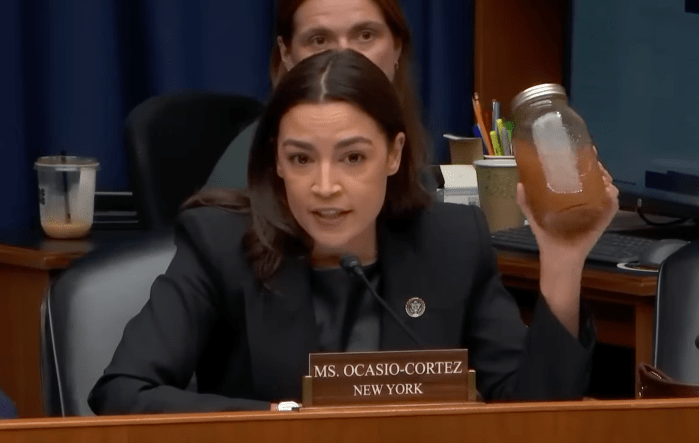
For the better part of a year, local opposition to AI hyperscaler data centers has been dismissed as NIMBYism—yet it is a movement that has gained real traction. Rural counties worried about water draw. Suburban communities objecting to diesel backup generators. Landowners frustrated over transmission corridors cutting through farmland and massive data centers removing large swaths of productive land in essentially irreversible dedication to AI.

Local politics around data-center construction often turn on land use, water, and power. Officials welcome tax base and jobs, but residents worry about noise, transmission lines, diesel backup generators, and groundwater consumption. Zoning boards and county commissioners become battlegrounds where developers promise infrastructure upgrades and community benefits while opponents push for setbacks, environmental review, and limits on incentives. Utilities and grid operators weigh reliability and cost shifting, especially where hyperscale demand requires new substations or high-voltage lines. Rural areas face pressure from land aggregation and fast-track permitting, while cities debate transparency, property-tax abatements, and whether long-term public costs outweigh near-term economic gains.

But the politics just escalated.

According to multiple reports, President Trump is preparing to highlight “ratepayer protection pledges” from major tech companies during his State of the Union address tonight — urging AI and cloud companies to publicly commit that residential electricity customers will not bear the cost of new data-center load.

That confirms concerns from Trump advisor Peter Navarro over the last couple months and is not a small signal.

For months, grassroots organizers have warned that hyperscale AI buildout could increase local electricity rates, force costly new transmission lines, accelerate natural gas plant approvals, and strain already fragile regional grids. And then there’s the nuclear issues as hyperscalers openly promote new nuclear plants. Until now, much of the policy conversation has centered on growth and competitiveness, you know, because China. The Trump pivot reframes the issue around consumer protection — closely tracking the concerns raised by grassroots opponents.

What the White House Is Signaling

The reported approach stops short of imposing a formal price cap on electricity or shifting costs to taxpayers. Instead, policymakers are signaling that large technology firms — particularly hyperscale operators — should voluntarily shoulder the marginal power costs created by their own demand growth.

In practice, this means encouraging companies such as Microsoft, Alphabet, Amazon, and OpenAI to fund grid upgrades, transmission extensions, standby generation, and other infrastructure required to serve new data-center loads, rather than socializing those costs across ordinary ratepayers. The political logic is straightforward: if hyperscale demand is driving billions in new utility investment, the beneficiaries should internalize the expense. The strategy relies on negotiated commitments, public-utility leverage, and reputational pressure rather than mandates, aiming to avoid rate shocks while still enabling continued digital-infrastructure expansion.

We’ll see.

In parallel, the administration has backed efforts to expand electricity supply in regions experiencing sharp data-center load growth, pairing political support with regulatory acceleration. In practice, this has meant encouraging grid operators to run emergency or supplemental capacity auctions—for example, in markets like PJM or ERCOT—to secure short-lead-time generation such as gas peaker plants, temporary turbines, and large-scale battery storage. Policymakers have also supported fast-track permitting and uprates at existing nuclear and natural-gas facilities, along with expedited approvals for new combined-cycle plants where reliability risks are rising. In some areas, utilities are advancing transmission expansions and demand-response programs to bridge near-term gaps. The goal is to bring firm capacity online quickly enough to keep pace with AI-driven electricity demand without triggering reliability shortfalls or price spikes.

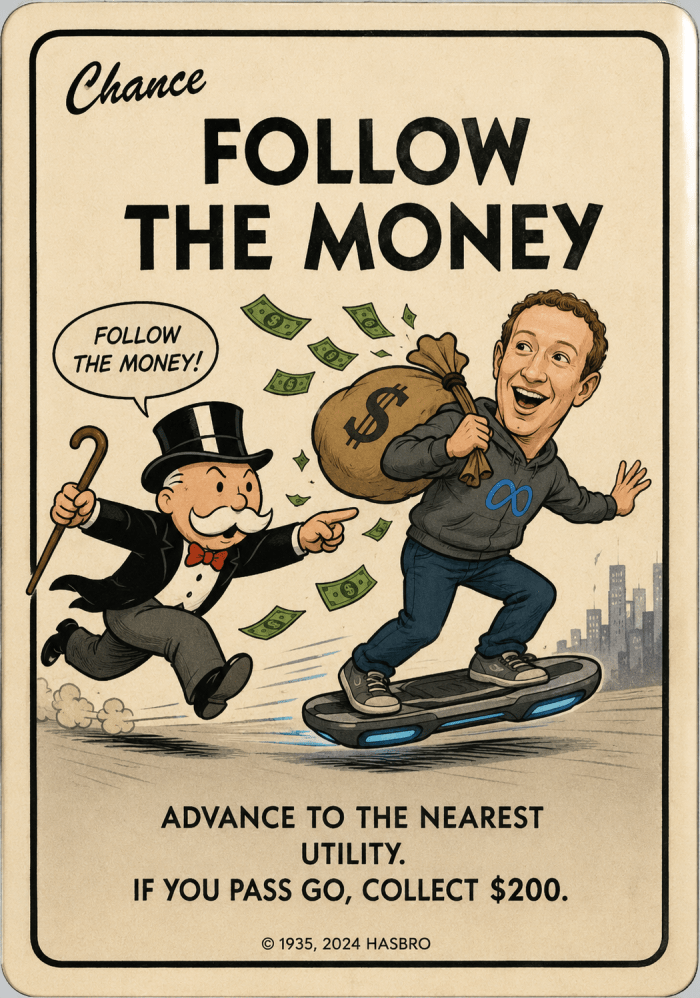
Supposedly, Trump’s message is if data centers drive the demand spike, data centers should fund the solution. That makes sense, but count me as a skeptic as to whether this will actually happen, or whether hyperscalers will come to the taxpayer. You know, because China. But let’s sell China Nvidia chips.

Why This Matters for the Grassroots Fight

Grassroots opposition to large-scale data centers has crystallized around three increasingly defined pillars — each with its own constituency and political leverage.

1. Land Use and Community Character.
Residents object to the scale and industrial footprint of hyperscale campuses: multi-building complexes, 24/7 lighting, diesel backup generators, high-security fencing, and new high-voltage transmission corridors. In rural counties, projects can involve the quiet aggregation of farmland followed by rezoning from agricultural to industrial use. In suburban areas, neighbors focus on setbacks, noise from cooling systems, and visual impact. Planning and zoning hearings have become flashpoints where local control collides with state-level economic development priorities.

2. Environmental and Water Stress.
Data centers are energy- and water-intensive facilities. In water-constrained regions, evaporative cooling systems raise concerns about aquifer drawdown and drought resilience. Environmental advocates question lifecycle emissions from new gas-fired generation built to serve AI load, as well as the cumulative impact of substations, transmission lines, and backup generators. Even where companies pledge renewable procurement, critics argue that incremental demand can still drive fossil fuel buildout in constrained grids.

3. Electricity Costs and Grid Strain.
The most politically volatile pillar is ratepayer impact. Local activists argue that if hyperscale demand requires billions in new generation, transmission, and distribution investment, those costs could be socialized through higher retail rates. Concerns also extend to reliability — whether rapid load growth risks price spikes, capacity shortfalls, or emergency measures during extreme weather.

And then there’s the jobs myth. The “data center jobs” pitch often overstates long-term employment. Construction phases can generate hundreds of temporary union and trade jobs—electricians, concrete crews, steel, and site work—sometimes for 12–24 months. But once operational, hyperscale facilities are highly automated and run by surprisingly small permanent staffs relative to their footprint and power load. A multi-building campus consuming hundreds of megawatts may employ only a few dozen to low hundreds of full-time workers, focused on security, facilities management, and network operations. For rural counties weighing tax abatements and infrastructure upgrades, the gap between short-term construction labor and modest permanent payroll becomes a central economic-development question.

By elevating electricity price protection to a presidential talking point, the administration effectively validates this third pillar. What began as local testimony at zoning meetings is now part of national energy policy framing: the principle that ordinary households should not subsidize AI infrastructure through their power bills. That rhetorical shift transforms a local grievance into a broader political issue with statewide and federal implications.

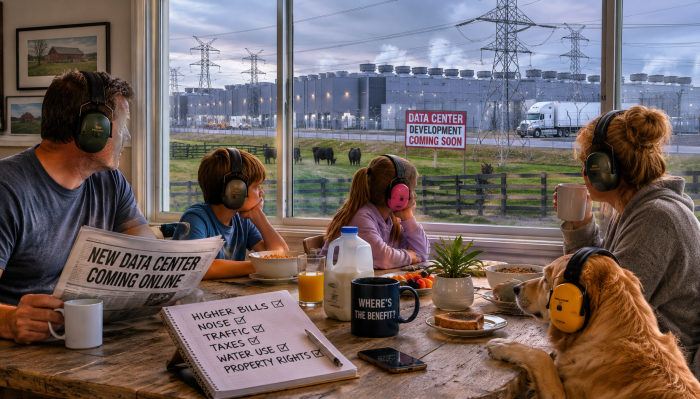
This is no longer just a zoning fight. It is now a kitchen-table affordability issue. Which may be a good start.

The Uncomfortable Math

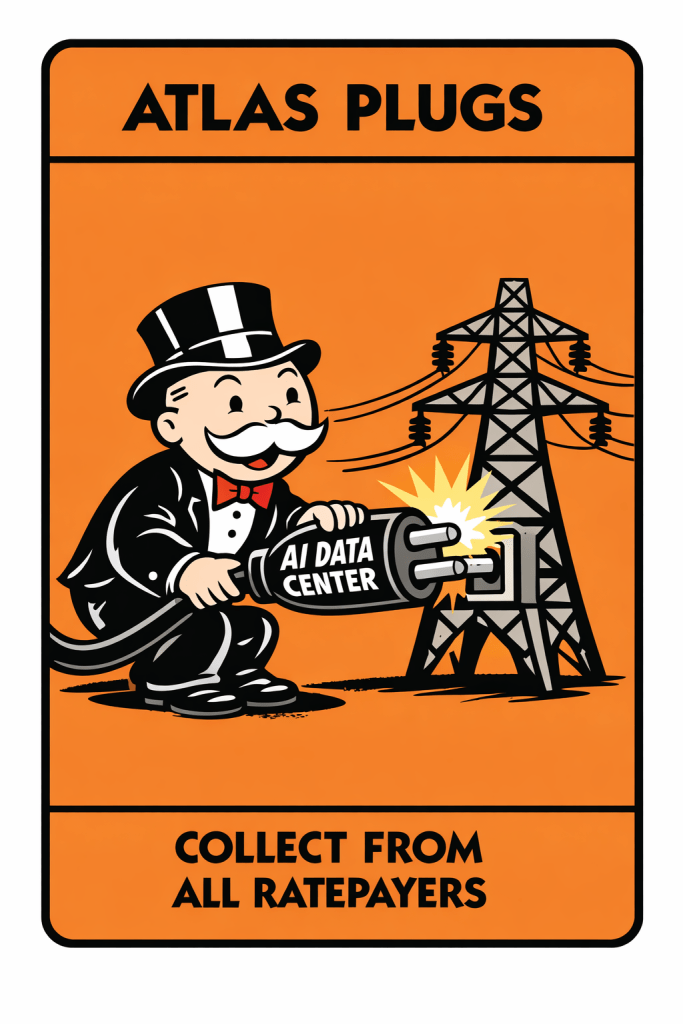
AI data centers run 24/7, require enormous continuous baseload power, often demand dedicated substations, and can trigger multi-billion-dollar transmission upgrades. In regulated utility regions, those upgrades may be socialized across ratepayers unless cost allocation rules are enforced.

That is the central fear: even if tech companies pay for direct interconnection, broader grid reinforcement costs may still reach residential customers. If “ratepayer protection” pledges gain traction, this would mark a major federal acknowledgement that the risk is politically real.

Why This Is Bigger Than Trump

Governors in data-center-heavy states have also expressed concern. Utilities want load growth but fear rate shock. Grid operators face pressure to accelerate capacity procurement without triggering bill spikes. Grassroots activists have argued the AI buildout is outpacing responsible grid planning — and that argument has now moved from local meetings to national politics.

Whether any president—including Trump—can truly compel hyperscale tech firms to absorb rising power and infrastructure costs remains uncertain. Without formal regulation, enforcement tools are limited to negotiation, procurement leverage, and public pressure, all of which depend on the companies’ strategic interests.

Voluntary pledges can signal cooperation but lack binding force especially if market conditions shift. The Trump announcement also raises a political question: does the “pledge” represent a balancing act inside the administration between economic populists and China hawks like Peter Navarro, often associated with industrial-policy cost discipline, and pro-AI growth lobbyists such as Silicon Valley’s AI Viceroy David Sacks? If so, the commitment may reflect an internal compromise as much as an external policy toward accelerationist hyperscalers.

Data-center growth is turning electricity affordability into a geopolitical issue, not just a local zoning fight. When hyperscalers drop a 100–500 MW load into a market, they can tighten reserve margins, push up wholesale prices, and force expensive transmission and distribution upgrades—costs that governments then have to allocate between the new entrant and everyone else. That same demand can crowd out electrification priorities (heat pumps, EVs, industrial decarbonization) or trigger emergency procurement of “firm” power—often gas—because reliability deadlines don’t wait for ideal renewable buildouts.

We are way past McDonald’s on the Champs-Élysées

This is where “net zero” starts to look like it’s in the rear-view mirror. Many jurisdictions still talk about decarbonization, but the near-term political imperative is keeping the lights on and bills stable. If the choice is between fast AI load growth and strict emissions trajectories, the operational reality in many grids is that fossil backup and accelerated thermal approvals re-enter the picture—sometimes explicitly, sometimes quietly. Meanwhile, countries with abundant cheap power (hydro, nuclear, subsidized gas) gain leverage as preferred data-center destinations, while constrained grids face moratoria, queue rationing, and public backlash.

Data-center expansion is rapidly turning electricity policy into a global political and economic tradeoff. When hyperscale facilities add hundreds of megawatts of demand, they can tighten capacity margins, raise wholesale prices, and force costly grid upgrades—decisions governments must make about who ultimately pays. In many markets, this new load competes directly with electrification goals such as EV adoption, heat pumps, and industrial decarbonization. Reliability timelines often drive utilities toward fast, firm capacity—frequently gas—because intermittent renewables and storage cannot always be deployed quickly enough.

In that sense, Trump’s choices increasingly resemble a classic “guns and butter” dilemma. Policymakers must balance the strategic push for AI infrastructure and digital competitiveness against long-term climate commitments. While net-zero targets remain official policy in many jurisdictions, near-term choices often prioritize keeping power reliable and affordable, even if that means slowing emissions progress. The tension does not necessarily mean decarbonization disappears, but it underscores the difficulty of advancing both rapid AI build-out and strict net-zero trajectories simultaneously under real-world grid constraints.

Rate Payers Get the Immediate Proof: Utility bills

If the White House advances voluntary ratepayer-protection pledges, several trajectories could unfold. Technology companies may publicly commit to absorbing incremental grid and infrastructure costs, framing the move as responsible corporate citizenship. Personally, I don’t think Trump actually believes it, and I fully expect that the teleprompter will say one thing, and then in a classic Trump aside, he will undercut the speech writers.

Utilities, facing rising capital requirements, could press for clearer cost-allocation rules to ensure large-load customers bear system expansion expenses. State public-utility commissions might reopen tariffs and special-contract pricing for hyperscale users, testing how far voluntary commitments translate into enforceable rate structures.

Meanwhile, grassroots groups are likely to demand transparent accounting to verify that ordinary customers are insulated from price impacts. Yet the full economic value of any pledge will emerge only over years of build-out and rate cases—long after the current administration, and Trump himself, are no longer in office.

For the moment, the debate has shifted. Grassroots opposition is no longer just about land or water. It is about who pays when AI reshapes the grid — and now the president is talking about it.

Let’s say I’m wrong and Trump is serious about reigning in AI. If Trump were able to make such a policy stick, it could mark a broader shift in how governments confront the external costs of rapid AI expansion. Requiring hyperscalers to internalize infrastructure and power burdens could slow the breakneck build-out that fuels large-scale model training and synthetic media proliferation.

For artists and performers, that deceleration could matter. The fight over voice, likeness, and identity—already highlighted by figures such as Brad Pitt and Tom Cruise ripped off by China’s Seedance 2.0 —centers on protecting human personhood from industrial-scale replication. A structural slowdown in AI growth would not end that conflict, but it could rebalance leverage, giving creators, unions, and policymakers more time to establish enforceable guardrails.

Infrastructure, Not Aspiration: Why Permissioned AI Begins With a Hard Reset

Paul Sinclair’s framing of generative music AI as a choice between “open studios” and permissioned systems makes a basic category mistake. Consent is not a creative philosophy or a branding position. It is a systems constraint. You cannot “prefer” consent into existence. A permissioned system either enforces authorization at the level where machine learning actually occurs—or it does not exist at all.

That distinction matters not only for artists, but for the long-term viability of AI companies themselves. Platforms built on unresolved legal exposure may scale quickly, but they do so on borrowed time. Systems built on enforceable consent may grow more slowly at first, but they compound durability, defensibility, and investor confidence over time. Legality is not friction. It is infrastructure. It’s a real “eat your vegetables” moment.

The Great Reset

Before any discussion of opt-in, licensing, or future governance, one prerequisite must be stated plainly: a true permissioned system requires a hard reset of the model itself. A model trained on unlicensed material cannot be transformed into a consent-based system through policy changes, interface controls, or aspirational language. Once unauthorized material is ingested and used for training, it becomes inseparable from the trained model. There is no technical “undo” button.

The debate is often framed as openness versus restriction, innovation versus control. That framing misses the point. The real divide is whether a system is built to respect authorization where machine learning actually happens. A permissioned system cannot be layered on top of models trained without permission, nor can it be achieved by declaring legacy models “deprecated.” Machine learning systems do not forget unless they are reset. The purpose of a trained model is remembering—preserving statistical patterns learned from its data—not forgetting. Models persist, shape downstream outputs, and retain economic value long after they are removed from public view. Administrative terminology is not remediation.

Recent industry language about future “licensed models” implicitly concedes this reality. If a platform intends to operate on a consent basis, the logical consequence is unavoidable: permissioned AI begins with scrapping the contaminated model and rebuilding from zero using authorized data only.

Why “Untraining” Does Not Solve the Problem

Some argue that problematic material can simply be removed from an existing model through “untraining.” In practice, this is not a reliable solution. Modern machine-learning systems do not store discrete copies of works; they encode diffuse statistical relationships across millions or billions of parameters. Once learned, those relationships cannot be surgically excised with confidence. It’s not Harry Potter’s Pensieve.

Even where partial removal techniques exist, they are typically approximate, difficult to verify, and dependent on assumptions about how information is represented internally. A model may appear compliant while still reflecting patterns derived from unauthorized data. For systems claiming to operate on affirmative permission, approximation is not enough. If consent is foundational, the only defensible approach is reconstruction from a clean, authorized corpus.

The Structural Requirements of Consent

Once a genuine reset occurs, the technical requirements of a permissioned system become unavoidable.

Authorized training corpus. Every recording, composition, and performance used for training must be included through affirmative permission. If unauthorized works remain, the model remains non-consensual.

Provenance at the work level. Each training input must be traceable to specific authorized recordings and compositions with auditable metadata identifying the scope of permission.

Enforceable consent, including withdrawal. Authorization must allow meaningful limits and revocation, with systems capable of responding in ways that materially affect training and outputs.

Segregation of licensed and unlicensed data. Permissioned systems require strict internal separation to prevent contamination through shared embeddings or cross-trained models.

Transparency and auditability. Permission claims must be supported by documentation capable of independent verification. Transparency here is engineering documentation, not marketing copy.

These are not policy preferences. They are practical consequences of a consent-based architecture.

The Economic Reality—and Upside—of Reset

Rebuilding models from scratch is expensive. Curating authorized data, retraining systems, implementing provenance, and maintaining compliance infrastructure all require significant investment. Not every actor will be able—or willing—to bear that cost. But that burden is not an argument against permission. It is the price of admission.

Crucially, that cost is also largely non-recurring. A platform that undertakes a true reset creates something scarce in the current AI market: a verifiably permissioned model with reduced litigation risk, clearer regulatory posture, and greater long-term defensibility. Over time, such systems are more likely to attract durable partnerships, survive scrutiny, and justify sustained valuation.

Throughout technological history, companies that rebuilt to comply with emerging legal standards ultimately outperformed those that tried to outrun them. Permissioned AI follows the same pattern. What looks expensive in the short term often proves cheaper than compounding legal uncertainty.

Architecture, Not Branding

This is why distinctions between “walled garden,” “opt-in,” or other permission-based labels tend to collapse under technical scrutiny. Whatever the terminology, a system grounded in authorization must satisfy the same engineering conditions—and must begin with the same reset. Branding may vary; infrastructure does not.

Permissioned AI is possible. But it is reconstructive, not incremental. It requires acknowledging that past models are incompatible with future claims of consent. It requires making the difficult choice to start over.

The irony is that legality is not the enemy of scale—it is the only path to scale that survives. Permission is not aspiration. It is architecture.

Grassroots Revolt Against Data Centers Goes National: Water Use Now the Flashpoint

Over the last two weeks, grassroots opposition to data centers has moved from sporadic local skirmishes to a recognizable national pattern. While earlier fights centered on land use, noise, and tax incentives, the current phase is more focused and more dangerous for developers: water.

Across multiple states, residents are demanding to see the “water math” behind proposed data centers—how much water will be consumed (not just withdrawn), where it will come from, whether utilities can actually supply it during drought conditions, and what enforceable reporting and mitigation requirements will apply. In arid regions, water scarcity is an obvious constraint. But what’s new is that even in traditionally water-secure states, opponents are now framing data centers as industrial-scale consumptive users whose needs collide directly with residential growth, agriculture, and climate volatility.

The result: moratoria, rezoning denials, delayed hearings, task forces, and early-stage organizing efforts aimed at blocking projects before entitlements are locked in.

Below is a snapshot of how that opposition has played out state by state over the last two weeks.

State-by-State Breakdown

Virginia  

Virginia remains ground zero for organized pushback.

Botetourt County: Residents confronted the Western Virginia Water Authority over a proposed Google data center, pressing officials about long-term water supply impacts and groundwater sustainability.  

Hanover County (Richmond region): The Planning Commission voted against recommending rezoning for a large multi-building data center project.  

State Legislature: Lawmakers are advancing reform proposals that would require water-use modeling and disclosure.

Georgia  

Metro Atlanta / Middle Georgia: Local governments’ recruitment of hyperscale facilities is colliding with resident concerns.  

DeKalb County: An extended moratorium reflects a pause-and-rewrite-the-rules strategy.  

Monroe County / Forsyth area: Data centers have become a local political issue.

Arizona  

The state has moved to curb groundwater use in rural basins via new regulatory designations requiring tracking and reporting.  

Local organizing frames AI data centers as unsuitable for arid regions.

Maryland  

Prince George’s County (Landover Mall site): Organized opposition centered on environmental justice and utility burdens.  

Authorities have responded with a pause/moratorium and a task force.

Indiana  

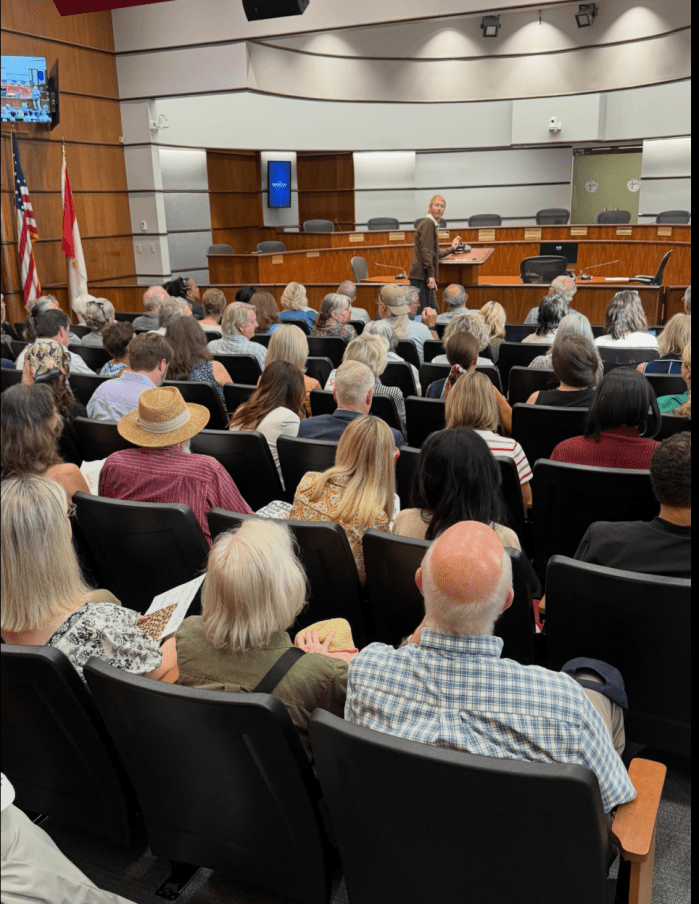
Indianapolis (Martindale-Brightwood): Packed rezoning hearings forced extended timelines.  

Greensburg: Overflow crowds framed the fight around water-user rankings.

Oklahoma  

Luther (OKC metro): Organized opposition before formal filings.

Michigan  

Broad local opposition with water and utility impacts cited.  

State-level skirmishes over incentives intersect with water-capacity debates.

North Carolina  

Apex (Wake County area): Residents object to strain on electricity and water.

Wisconsin & Pennsylvania 

Corporate messaging shifts in response to opposition; Microsoft acknowledged infrastructure and water burdens.

The Through-Line: “Show Us the Water Math”

Lawrence of Arabia: The Well Scene

Across these states, the grassroots playbook has converged:

Pack the hearing.  

Demand water-use modeling and disclosure.  

Attack rezoning and tax incentives.  

Force moratoria until enforceable rules exist.

Residents are demanding hard numbers: consumptive losses, aquifer drawdown rates, utility-system capacity, drought contingencies, and legally binding mitigation.

Why This Matters for AI Policy

This revolt exposes the physical contradiction at the heart of the AI infrastructure build-out: compute is abstract in policy rhetoric but experienced locally as land, water, power, and noise.

Communities are rejecting a development model that externalizes its physical costs onto local water systems and ratepayers.

Water is now the primary political weapon communities are using to block, delay, and reshape AI infrastructure projects.

Read the local news:

America’s AI Boom Is Running Into An Unplanned Water Problem (Ken Silverstein/Forbes)

Residents raise water concerns over proposed Google data center (Allyssa Beatty/WDBJ7 News)

How data centers are rattling a Georgia Senate special election (Greg Bluesetein/Atlanta Journal Constitution)

A perfect, wild storm’: widely loathed datacenters see little US political opposition (Tom Perkins/The Guardian) 

Hanover Planning Commission votes to deny rezoning request for data center development (Joi Fultz/WTVR)

Microsoft rolls out initiative to limit data-center power costs, water use impact (Reuters)

South Korea’s AI Action Plan and the Global Drift Toward “Use First, Pay Later”

South Korea has become the latest flashpoint in a rapidly globalizing conflict over artificial intelligence, creator rights and copyright. A broad coalition of Korean creator and copyright organizations—spanning literature, journalism, broadcasting, screenwriting, music, choreography, performance, and visual arts—has issued a joint statement rejecting the government’s proposed Korea AI Action Plan, warning that it risks allowing AI companies to use copyrighted works without meaningful permission or payment.

The groups argue that the plan signals a fundamental shift away from a permission-based copyright framework toward a regime that prioritizes AI deployment speed and “legal certainty” for developers, even if that certainty comes at the expense of creators’ control and compensation. Their statement is unusually blunt: they describe the policy direction as a threat to the sustainability of Korea’s cultural industries and pledge continued opposition unless the government reverses course.

The controversy centers on Action Plan No. 32, which promotes “activating the ecosystem for the use and distribution of copyrighted works for AI training and evaluation.” The plan directs relevant ministries to prepare amendments—either to Korea’s Copyright Act, the AI Basic Act, or through a new “AI Special Act”—that would enable AI training uses of copyrighted works without legal ambiguity.

Creators argue that “eliminating legal ambiguity” reallocates legal risk rather than resolves it. Instead of clarifying consent requirements or building licensing systems, the plan appears to reduce the legal exposure of AI developers while shifting enforcement burdens onto creators through opt-out or technical self-help mechanisms.

Similar policy patterns have emerged in the United Kingdom and India, where governments have emphasized legal certainty and innovation speed while creative sectors warn of erosion to prior-permission and fair-compensation norms. South Korea’s debate stands out for the breadth of its opposition and the clarity of the warning from cultural stakeholders.

The South Korean government avoids using the term “safe harbor,” but its plan to remove “legal ambiguity” reads like an effort to build one. The asymmetry is telling: rather than eliminating ambiguity by strengthening consent and payment mechanisms, the plan seeks to eliminate ambiguity by making AI training easier to defend as lawful—without meaningful consent or compensation frameworks. That is, in substance, a safe harbor, and a species of blanket license. The resulting “certainty” would function as a pass for AI companies, while creators are left to police unauthorized use after the fact, often through impractical opt-out mechanisms—to the extent such rights remain enforceable at all.

Grass‑Roots Rebellion Against Data Centers and Grid Expansion

A grass‑roots “data center and electric grid rebellion” is emerging across the United States as communities push back against the local consequences of AI‑driven infrastructure expansion. Residents are increasingly challenging large‑scale data centers and the transmission lines needed to power them, citing concerns about enormous electricity demand, water consumption, noise pollution, land use, declining property values, and opaque approval processes. What were once routine zoning or utility hearings are now crowded, contentious events, with citizens organizing quickly and sharing strategies across counties and states.


This opposition is no longer ad hoc. In Northern Virginia—often described as the global epicenter of data centers—organized campaigns such as the Coalition to Protect Prince William County have mobilized voters, fundraised for local elections, demanded zoning changes, and challenged approvals in court. In Maryland’s Prince George’s County, resistance has taken on a strong environmental‑justice framing, with groups like the South County Environmental Justice Coalition arguing that data centers concentrate environmental and energy burdens in historically marginalized communities and calling for moratoria and stronger safeguards.


Nationally, consumer and civic groups are increasingly coordinated, using shared data, mapping tools, and media pressure to argue that unchecked data‑center growth threatens grid reliability and shifts costs onto ratepayers. Together, these campaigns signal a broader political reckoning over who bears the costs of the AI economy.

Global Data Centers

Here’s a snapshot of grass roots opposition in Texas, Louisiana and Nevada:

Texas

Texas has some of the most active and durable local opposition, driven by land use, water, and transmission corridors.

  • Hill Country & Central Texas (Burnet, Llano, Gillespie, Blanco Counties)
    Grass-roots groups formed initially around high-voltage transmission lines (765 kV) tied to load growth, now explicitly linking those lines to data center demand. Campaigns emphasize:
    • rural land fragmentation
    • wildfire risk
    • eminent domain abuse
    • lack of local benefit
      These groups are often informal coalitions of landowners rather than NGOs, but they coordinate testimony, public-records requests, and local elections.
  • DFW & North Texas
    Neighborhood associations opposing rezoning for hyperscale facilities focus on noise (backup generators), property values, and school-district tax distortions created by data-center abatements.
  • ERCOT framing
    Texas groups uniquely argue that data centers are socializing grid instability risk onto residential ratepayers while privatizing upside—an argument that resonates with conservative voters.

Louisiana

Opposition is newer but coalescing rapidly, often tied to petrochemical and LNG resistance networks.

  • North Louisiana & Mississippi River Corridor
    Community groups opposing new data centers frame them as:
    • “energy parasites” tied to gas plants
    • extensions of an already overburdened industrial corridor
    • threats to water tables and wetlands
      Organizers often overlap with environmental-justice and faith-based coalitions that previously fought refineries and export terminals.
  • Key tactic: reframing data centers as industrial facilities, not “tech,” triggering stricter land-use scrutiny.

Nevada

Nevada opposition centers on water scarcity and public-land use.

  • Clark County & Northern Nevada
    Residents and conservation groups question:
    • water allocations for evaporative cooling
    • siting near public or BLM-managed land
    • grid upgrades subsidized by ratepayers for private AI firms
  • Distinct Nevada argument: data centers compete directly with housing and tribal water needs, not just environmental values.

The Data Center Rebellion is Here and It’s Reshaping the Political Landscape (Washington Post)

Residents protest high-voltage power lines that could skirt Dinosaur Valley State Park (ALEJANDRA MARTINEZ AND PAUL COBLER/Texas Tribune)

US Communities Halt $64B Data Center Expansions Amid Backlash (Lucas Greene/WebProNews)

Big Tech’s fast-expanding plans for data centers are running into stiff community opposition (Marc Levy/Associated Press)

Data center ‘gold rush’ pits local officials’ hunt for new revenue against residents’ concerns (Alander Rocha/Georgia Record)