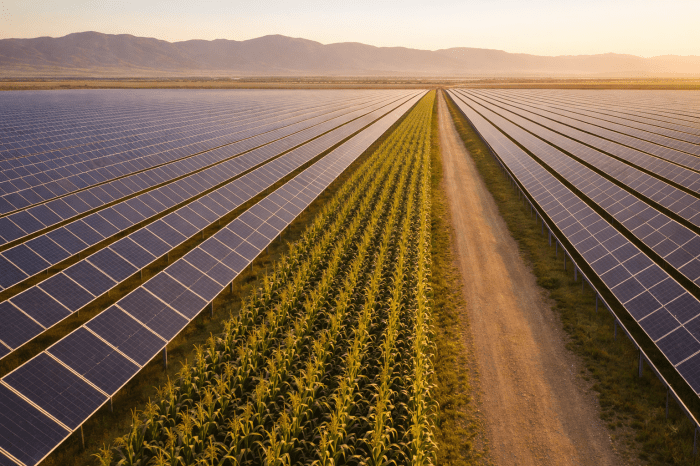
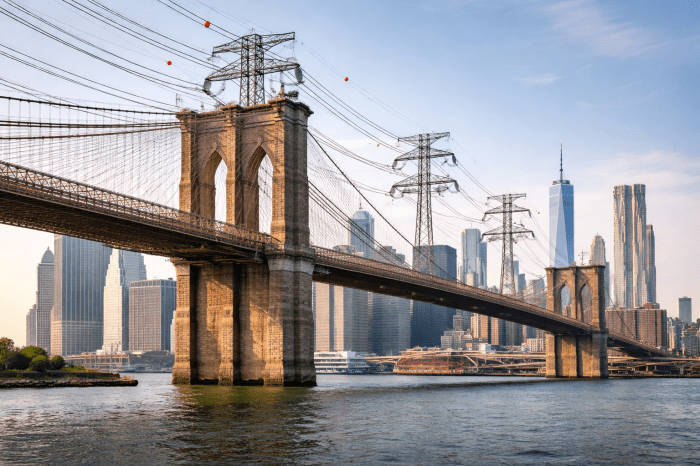
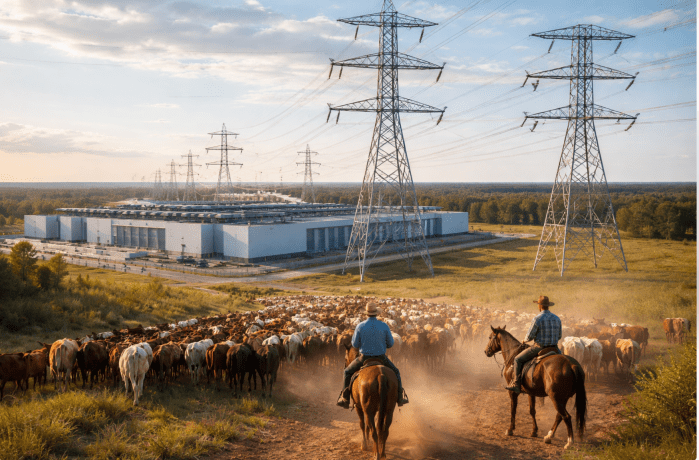
The Sync Apocalypse Case Against Suno

Democracy Made Them Do It

The new Poseidon Wave Media LLC lawsuit against Suno may become another important fair use case in generative AI music because it goes straight at the weak point Judge Vince Chhabria identified in Kadrey v. Meta regarding books: market substitution and market dilution under factor four that can trump the overused “transformative” analysis.


In Kadrey, Judge Chhabria ruled for Meta on fair use, but he did not give AI companies a clean bill of health. Quite the opposite. He suggested that generative AI training may often fail fair use where plaintiffs build a real record showing that the model floods or dilutes the market for the plaintiffs’ works. Like what is happening in real life with synthetic music, and in particular with synthetic music produced using Suno.

Aside from being suspicious of a grown man voluntarily calling himself “Mikey”, there’s a lot to work with in the public statements of Suno CEO Mikey Shulman. In a widely panned venture capital podcast, “Mikey” argued that traditional music creation is too difficult and time-consuming for most people, claiming that “the majority of people don’t enjoy the majority of the time they spend making music.” He framed AI music generation as a way to democratize creativity by removing the need for years of practice or technical skill.

Yes, that’s right. He’s doing it for, like, democracy, you see. Just like Daniel Ek (who is currently occupying himself after Spotify with another autonomous weapon that again violates international treaties).

Shulman also acknowledged that using copyrighted works in AI training is effectively industry standard, stating that “every AI company does” copyright infringement when building generative AI systems. His comments triggered backlash from musicians, composers and industry observers who viewed the statements as dismissive of artistic labor and revealing about AI companies’ attitudes toward copyright and human creativity. We’ll come back to this bit.

When Did Noah Build the Ark? Before the flood….

But the flooding of markets using Suno is what makes Poseidon different than other cases I’ve seen so far, kind of like the eggshell skull case lawyers study on the first day of Torts. One could argue that Poseidon’s lawsuit against Suno resembles the classic “eggshell skull” rule because AI companies may be liable for the full downstream harm caused by training on copyrighted works even if they claim they did not anticipate the scale of damage. If Suno’s infringement helped create systems that flood markets and substitute for human creators, defendants take the creative marketplace “as they find it.” You could also find it reasonably foreseeable that if one AI lab’s executives knew that “everyone was doing it” the flip side is that “everyone” can cause a good deal of market harm to everyone else.

Plaintiff Poseidon Wave Media, the entity behind the instrumental duo The American Dollar, alleges that Suno copied and ingested 236 recordings and compositions covered by 164 copyright registrations. More importantly, Poseidon alleges that its licensing revenue has fallen by nearly 80% since Suno launched.

That is not a vibes-based fair use objection. That is a market-harm theory with a ledger attached. The plaintiffs still have to prove their case, but it sounds like a pretty good starting place.

The complaint targets the precise market most vulnerable to AI substitution: sync and production music. Cinematic instrumental catalogs are valuable because they supply mood, pacing, emotional texture, and audiovisual utility. Music supervisors are concerned that fully synthetic music undermines the basic trust and clearance infrastructure on which film, television and advertising music depends. They are often pitched an apparent “artist” that turned out to be AI-generated, raising immediate clearance and provenance concerns for music supervisors, their clients and E&O insurance carriers. AI-generated tracks are fundamentally incompatible with the human authorship and rights verification required for professional sync licensing. So in addition to the human cost, there’s a broader aspect to destroying the human market—synthetic music could flood the marketplace with unverifiable works, creating legal uncertainty and making it harder for supervisors to assess ownership, permissions and creative authenticity.

Generative AI does not have to spit out an identical American Dollar track to destroy the market for American Dollar licenses. It only has to produce infinite near-substitutes at lower cost, faster speed, and no meaningful bargaining friction. That is market dilution.

That is factor four. And that is happening at a devastating rate in our business.

The Sync Apocalypse Extends the Kadrey Theory

This is also why Poseidon extends the Kadrey analysis beyond books. In the book cases, market harm may appear more abstract. In sync music, the substitution pathway is far cleaner. The buyer has a practical production need. The AI output can satisfy that need if the music supervisor looks the other way, at least for a while, particularly for commercials, “source” music, other background uses. The original license disappears. Mikey wants you to believe that’s a good thing, because democracy.

Poseidon’s allegation that licensing income collapsed after Suno launched is therefore not just damages evidence. It may be the whole fair use fight.

Suno will likely argue transformation: the model learns from recordings to generate new outputs. But Kadrey already shows why transformation is not enough if factor four turns decisively against the defendant and the plaintiff’s lawyers put on the right case. Judge Chhabria made it clear that this observation applied broadly to all fair use cases: “Generative AI has the potential to flood the market with endless amounts of images, songs, articles, books, and more.” Kadrey v. Meta Platforms, Inc., No. 23-cv-03417-VC, slip op. at 1–2 (N.D. Cal. June 25, 2025).

That makes Poseidon dangerous for Suno. The complaint does not need to prove that every Suno output is a counterfeit. It needs to show that Suno used copyrighted works to build a machine that competes directly in the licensing market with those works it ripped off.

That is the sync apocalypse theory:

First, copy the catalog.
Then, train the machine.
Then, flood the licensing market with synthetic substitutes.
Then, tell the original musicians there is no market harm because the outputs are not exact copies. Because democracy demands it.

Factor four was built for this problem, even without the democracy part. And Poseidon may be the case that forces courts to say so. And as far as the democracy part goes, I think Mikey may have taken the wrong turn on his way to Collectivism class. In our legal tradition, there’s another idea that has far greater purchase:

“The right of property… [is] that sole and despotic dominion which one man claims and exercises… in total exclusion of the right of any other individual in the universe.”
— Sir William Blackstone, Commentaries on the Laws of England, Book II, ch. 1. 

Could Suno’s Executives Be Added Personally?

One question hovering over the Poseidon complaint is whether Suno’s executives and investors could eventually be added as individual defendants. What did they know and when did they know it?

In copyright cases, corporate officers can face personal liability where they personally participated in the infringement, directed it, authorized it, or had the right and ability to supervise the infringing conduct while receiving a financial benefit from it as we saw in a couple leading cases “All persons and corporations who participate in, exercise control over or benefit from an infringement are jointly and severally liable as copyright infringers.” Gershwin Publ’g Corp. v. Columbia Artists Mgmt., Inc., 443 F.2d 1159, 1162 (2d Cir. 1971); “One who distributes a device with the object of promoting its use to infringe copyright… is liable for the resulting acts of infringement by third parties.” MGM Studios Inc. v. Grokster, Ltd., 545 U.S. 913, 936–37 (2005). See also Broad. Music, Inc. v. Hartmarx Corp., 1988 WL 128691, at *3 (N.D. Ill. Nov. 22, 1988) (“A corporate officer who directs, controls, ratifies, participates in, or is the moving force behind the infringing activity, is personally liable…”); Columbia Pictures Indus., Inc. v. Fung, 710 F.3d 1020 (9th Cir. 2013) (operator liability tied to inducement and encouragement of infringement); and then my personal favorite, Arista Records LLC v. Lime Group LLC, 784 F. Supp. 2d 398 (S.D.N.Y. 2011) (evidence of executive knowledge and encouragement relevant to secondary liability).

If Suno’s leadership approved the acquisition, copying, ingestion, or retention of copyrighted sound recordings for model training, plaintiffs may argue that the executives were not passive corporate managers. They were decision-makers in the alleged infringement pipeline.

If discovery shows that senior executives knew copyrighted commercial recordings were being copied, discussed licensing risk, chose not to license, or treated infringement exposure as a cost of doing business, the case could begin to look more like direct participation or inducement than ordinary corporate oversight. For example, Complete Music Update quotes Mikey as like “…admitting to using copyright protected music in his company’s AI training data, something that he describes as ‘stock standard’ practice that ‘every AI company does.’” He evidently said this as part of an interview he gave to leading venture capital industry podcast The Twenty Minute VC. Now I’m not saying that statement alone is enough to close a case, but it certainly is one of those whatchamacalits, an admission against interest.


Shulman’s statement is significant because it is not merely a generalized industry observation. It is an admission by a senior corporate officer that his company Suno used copyrighted works in AI training and that the practice was understood internally at Suno as normal operating procedure. In civil discovery, that seems more than enough to justify targeted subpoenas designed to identify the scope, intent and commercial exploitation of the alleged infringement. And who else participated in the policy implementation.

Courts permit broad discovery where a plaintiff can show a reasonable basis to believe relevant evidence exists. Here, the CEO publicly acknowledged both (1) use of copyrighted music in training data and (2) awareness that such conduct implicated copyright law. The statement therefore supports discovery into knowledge, willfulness, inducement and commercial benefit under cases like GroksterFung, and Lime Group.

The quote particularly supports subpoenas for:

  • Training datasets and provenance records identifying sound recordings, compositions, stems, embeddings, fingerprints, metadata or source libraries used in model training;
  • Internal communications discussing ingestion of copyrighted music, licensing avoidance, fair use strategy, risk assessments or litigation exposure, including with members of the Suno board of directors;
  • Board materials and investor presentations discussing training practices, copyright risk, or competitive advantages derived from unlicensed datasets;
  • Engineering documents concerning scraping pipelines, dataset assembly, deduplication, filtering and retention of copyrighted material;
  • Financial records showing revenues, subscriptions, enterprise deals or valuations tied to models trained on copyrighted works;
  • Communications with third-party dataset providers, cloud vendors or contractors involved in obtaining or processing music files;
  • Prompt/output testing records showing whether models could reproduce recognizable musical expression, styles, voices or commercially substitutive outputs;
  • Policies regarding removal requests, provenance tracking, watermarking or rights management; and
  • Executive communications, including those involving Shulman personally, concerning decisions to proceed despite known copyright objections.

The statement also strengthens arguments for discovery into willful infringement. Saying that infringement is “stock standard” and that “every AI company does” it can be framed not as innocence, but as evidence of conscious normalization of unlawful conduct. Plaintiffs could argue this reflects industry-wide deliberate disregard for licensing obligations rather than accidental or technically unavoidable copying.

Finally, the quote helps establish proportionality. Suno itself has publicly placed copyright infringement at the center of its business model and competitive narrative. Once the CEO publicly admits the conduct, defendants have a much harder time arguing that subpoenas directed at training records, executive knowledge or dataset provenance are speculative fishing expeditions.

Naming executives can sharpen the willfulness theory. It can support discovery into board materials, investor pitches, licensing discussions, data-acquisition plans, and internal risk assessments.

These claims also may open the door to the boardroom. If discovery shows that Suno’s training strategy, licensing posture, or infringement-risk tolerance was discussed at the board level, plaintiffs may seek board materials, investor communications, voting agreements, consent rights, and other governance documents. Yes, the entire odious apparatus.

That may be exceptionally relevant and productive especially if major investors had approval rights, information rights, veto rights, or board seats tied to key business decisions. In that scenario, the inquiry may not stop with management. It could reach the investors who helped authorize, finance, or control the strategy that made the alleged infringement commercially valuable.

Public reporting identifies Menlo, Lightspeed, Matrix, Founder Collective, Nat Friedman, Daniel Gross, NVentures/Nvidia, and Hallwood Media as Suno investors. I have not found a public source confirming which, if any, hold board seats or board-observer rights. Given the size and lead-investor status of Menlo and Lightspeed, board or observer rights would be plausible and even typical, but that should be confirmed through charter documents, investor rights agreements, board minutes, cap table materials, or other discovery.

Notably, many of these same issues are already surfacing in the book publisher plus Scott Turow litigation against Meta and Mark Zuckerberg, including the allegations raised in the Elsevier-related AI copyright cases and the broader author lawsuits against Meta.

Plaintiffs in those matters have increasingly focused not only on the existence of infringing training datasets, but on executive-level awareness, internal discussions concerning licensing risk, data acquisition strategy, and decisions to proceed despite known copyright concerns.

The same dynamics may emerge in the Suno litigation if discovery reveals board-level discussions, investor oversight, or strategic decisions concerning whether copyrighted music catalogs would be licensed, copied without permission, or treated as a litigation risk worth taking.

The Potential Shareholder Suit

Developing a detailed factual record against Mikey Shulman (or Mark Zuckerberg) could significantly increase the risk of a future shareholder derivative suit because it potentially transforms the case from “the company made aggressive legal bets” into “management knowingly exposed the company to massive liability while failing to fulfill fiduciary duties.”

A derivative case would likely center on fiduciary duty theories under Delaware law — particularly the duties of loyalty, oversight (Caremark), disclosure, and good faith.

The pathway looks something like this:

  1. Public admissions establish scienter groundwork

    Shulman’s statements that using copyrighted works was “stock standard” and that “every AI company does” infringement could be framed as evidence that senior management understood the conduct implicated copyright law from the outset. Plaintiffs in a derivative action would argue this was not inadvertent infringement or a technical edge case, but a conscious business strategy. Of course, it would also be interesting to see if we could find out exactly what made Mikey say such things? Any meetings he’d like to discuss? All like very democratic, I’m like so sure.
  2. Discovery in copyright litigation creates the evidentiary record

    The underlying copyright cases are what really matter. If discovery uncovers:
    • internal discussions acknowledging piracy risks,

    • deliberate avoidance of licensing,executive-level approval of infringing datasets,warnings from counsel or employees,or

    • efforts to conceal provenance,

    then plaintiffs’ firms would likely use that material to argue the board failed to exercise oversight or knowingly permitted unlawful conduct.
  3. Massive enterprise risk can trigger Caremark-style claims

    Delaware courts increasingly recognize that boards must monitor “mission critical” legal risks. For Suno, copyright compliance is not peripheral — it is existential. The entire company depends on ingesting copyrighted music. If plaintiffs could show there were inadequate controls over training data provenance, licensing, or infringement risk, they could argue the board ignored core compliance obligations.
  4. Investor disclosures become vulnerable

    Once litigation and discovery mature, shareholders may ask whether fundraising materials accurately described legal risks. If management portrayed datasets as compliant, transformative, or low-risk while internally acknowledging likely infringement, that creates exposure around disclosure duties and securities-related claims.
  5. Personal enrichment allegations amplify pressure

    Derivative plaintiffs often focus on:
    • executive compensation,liquidity events,fundraising rounds,valuation increases,and insider sales.
    The theory becomes: executives increased enterprise value through unlawful conduct while externalizing legal risk onto the corporation and shareholders.
  6. Insurance and indemnification issues emerge

    Findings of willful misconduct or bad faith can create disputes over D&O insurance coverage and indemnification rights. That dramatically increases settlement pressure and board conflict concerns.

The important strategic point is that copyright plaintiffs do not need to bring the derivative suit themselves. They only need to build the factual record. Once discovery produces emails, board materials, or executive communications suggesting knowing infringement or oversight failures, shareholder firms may step in independently.

That is why executive statements like, you know, matter so much. Public comments can later be connected to internal documents to argue that management knew exactly what it was doing, understood the legal exposure, and proceeded anyway because rapid AI scaling and market capture were prioritized over licensing compliance.

And who wants to bet that the board was leading the charge?

Federally Guaranteed Financial Preemption

The AI moratorium fight was never really about “innovation.” It was about preemption. More specifically, it was about what might be called federally guaranteed financial preemption.

That phrase matters because the walk-back campaign around the original proposal has become almost surreal. After backlash exploded over the broad federal effort to block state and local AI regulation, supporters suddenly insisted nobody was trying to force unwanted data centers, transmission lines, substations, gas plants, or hyperscale industrial infrastructure onto communities that did not want them.

Technically, that is true. Washington does not necessarily need to directly order a county commission to approve a data center. It can accomplish much the same thing by structuring the financial system around the assumption that the buildout will occur.

That is the trick.

David Sacks’ original moratorium language he stuck in the One Big Beautiful Bill Act reportedly reached not only states but “political subdivisions” as well. That means cities, counties, municipalities, and local authorities. The proposal was not merely about preventing fifty different state AI laws. It threatened to freeze local democratic responses before they could harden into enforceable policy. (And of course there was always a whiff of 5th Amendment taking about the whole doomed process.)

Then came the backlash. Suddenly the rhetoric softened into something more comforting: We just need one national framework. We are not trying to override local control. We are not trying to force data centers on anyone. But that framing ignores how infrastructure power actually works in the United States. You do not need formal federal commands if you can create overwhelming financial momentum.

Suppose the federal government provides taxpayer-backed loan guarantees for utility expansion tied to AI growth forecasts. Utilities then build new generation, transmission, substations, and grid upgrades designed around hyperscale demand projections. State utility commissions approve cost recovery. Transmission planners treat the load forecasts as inevitable. Investors price future growth into regional infrastructure decisions.

At that point, local communities are no longer arguing with a speculative proposal. They are arguing with a federally supported capital structure. That’s much harder to control.

The county commissioner is suddenly told: The transmission line is already planned. The utility already committed the generation. The state already approved portions of the recovery mechanism. The jobs are supposedly coming. The tax base is supposedly coming. The grid supposedly depends on it.

See, it’s magic. Nobody “forced” anything. Whatever were you thinking?

The machinery simply narrowed the realistic range of outcomes. That is federally guaranteed financial preemption.

And it matters because the economics of AI infrastructure are unusually fragile beneath the surface confidence. Data centers are not shopping centers. They are highly specialized industrial assets tied to assumptions about compute demand, electricity pricing, capital availability, chip supply, and continued investor faith in the AI growth curve.

Much of the current buildout depends on debt markets behaving rationally indefinitely.

That may not happen.

If AI demand softens, if monetization disappoints, if venture funding tightens, or if hyperscalers pull back from aggressive expansion schedules, communities may discover they absorbed the physical consequences of a speculative infrastructure cycle they never fully controlled in the first place.

And then comes the final insult in the “local choice” narrative.

Communities remain theoretically free to say no before the infrastructure becomes politically inevitable. They also remain theoretically free to clean up the wreckage after failure.

That means: condemnation fights, stranded industrial facilities, utility disputes, ratepayer battles, bondholder litigation, abandoned transmission corridors, water conflicts, and enormous demolition costs.

The same officials who insisted nobody forced anything can simply shrug and say: “Well, local communities always retained sovereignty.”

This is why local opposition has accelerated so dramatically across the country. Residents increasingly understand that hyperscale AI infrastructure is not an abstract software issue. It is physical industrial policy: land, water, electricity, noise, substations, transmission lines, tax incentives, utility rate structures, and debt.

The fight stopped being theoretical once people realized they were not debating apps. They were debating permanent industrial transformation of their communities.

That is also why the original AI moratorium language frightened so many people once they read it carefully. It was not merely a debate about chatbot regulation or algorithmic bias. It looked increasingly like a mechanism for suppressing state and local resistance before communities fully understood the infrastructure consequences of the AI buildout itself.

And that may explain why the rhetoric shifted so quickly after public scrutiny intensified.

Because once people understand the difference between legal preemption and financial preemption, the conversation changes entirely.

The federal government does not always need to formally eliminate local authority. Sometimes it only needs to guarantee enough money that resistance becomes structurally difficult.

That is a far more sophisticated form of power.

And a far more dangerous one,

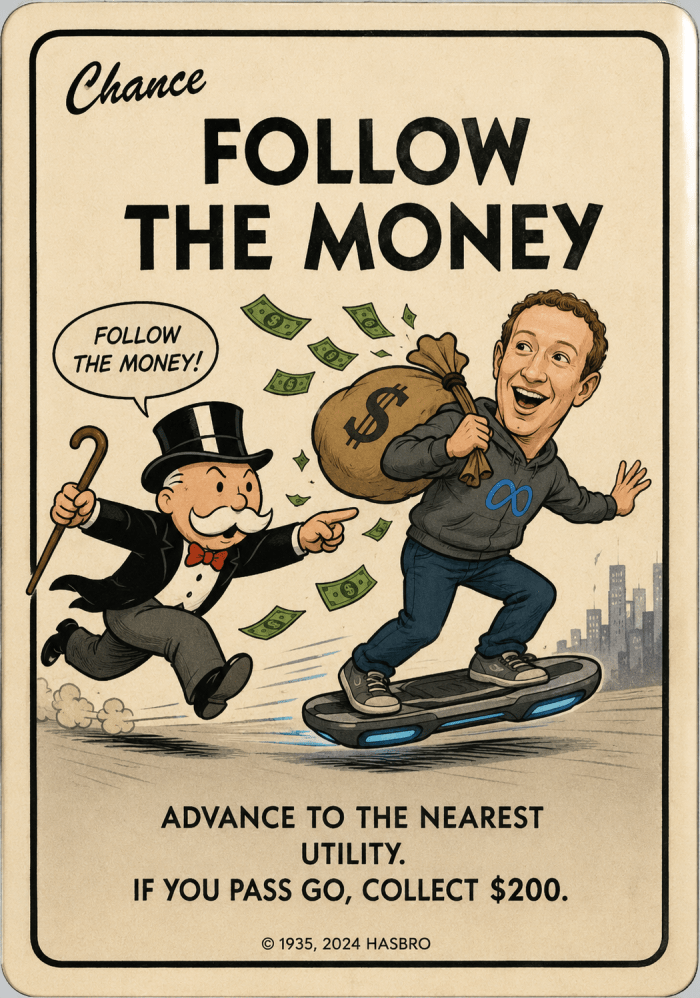
As AI Infringement Claims move to the C-Suite and Board Room, Plaintiffs should Follow the Money to Wire Fraud, Fiduciary Duty and RICO

AI training litigation is moving from copyright pleadings to governance pleadings. The next discovery fight should follow the money all the way to the C-suite and if necessary, to the board room.

The complaint in Elsevier Inc. v. Meta Platforms, Inc., No. 1:26-cv-03689 (S.D.N.Y. filed May 5, 2026) (the “Elsevier complaint”), alleges that Meta and Mark Zuckerberg personally illegally torrented millions of copyrighted books and journal articles from notorious pirate sites, copied those works repeatedly to train Llama, and did so with knowledge that the conduct violated copyright law. 

Alternatively, the shareholder derivative complaint in SEIU Pension Plan Master Trust v. Narayen, No. 3:26-cv-03521 (N.D. Cal. filed Apr. 24, 2026) (the “SEIU complaint”), shows the same issue also moving into the boardroom: it alleges that Adobe’s officers and directors adopted and implemented an unlawful AI business strategy by using copyrighted material to develop Adobe’s AI services, exposing Adobe to litigation, reputational harm, and corporate loss. 

Both cases suggest a practical discovery vector for plaintiffs in AI-training cases: if the defendant used Anna’s Archive, LibGen, Z-Library, Sci-Hub, Books3, RedPajama, SlimPajama, or any similar pirate-derived source, plaintiffs should investigate whether the defendant merely downloaded available files or also paid for bulk access, priority access, SFTP credentials, “membership” tiers, “donations,” vendor pass-through datasets, or intermediary transfers. 

The discovery question: was there a payment trail?

The current Elsevier complaint is framed principally as a copyright and DMCA case, not as a wire-fraud or shareholder derivative complaint. But its allegations make the payment question worth asking because it alleges that Meta downloaded Anna’s Archive, understood Anna’s Archive to be “essentially a bigger libgen” and “a pretty shady website,” acquired more than 81 terabytes of data through Anna’s Archive, and did not disable BitTorrent’s default distribution settings when torrenting from pirate sites. The complaint further alleges that Meta’s logs showed 134.6 TB downloaded and 40.42 TB uploaded through torrenting between April and July 2024.

It also alleges that Meta considered licensing literary works from major publishers in the training data market, discussed increasing its dataset licensing budget from $17 million to $200 million, then stopped licensing efforts after the license-versus-pirate question was escalated to Zuckerberg. Those allegations support discovery into whether Meta, its employees, contractors, affiliates, or data vendors ever communicated with, paid, negotiated with, or obtained credentials from Anna’s Archive or a similar bulk pirate-data provider. 

The public record concerning Anna’s Archive gives that discovery question additional force. As we covered before on MTP, Anna’s Archive reportedly charged tiered “membership” fees for faster download speeds, accepted cryptocurrency or gift cards, and offered AI companies “enterprise-level” high-speed SFTP transfers of a full 1.1-petabyte collection for a reported $200,000 in cryptocurrency. The complaint in Apress Media, LLC et al. v. Anna’s Archive et al., No. 1:26-cv-01850 (S.D.N.Y. filed Mar. 6, 2026) (the “Apress complaint”), similarly alleges that Anna’s Archive invited LLM developers to copy the entire collection for free or make a “donation” for faster download speeds. Publishers Weekly’s account of the Apress complaint states that Anna’s Archive publicly claimed to have provided high-speed access to its illegal collection to companies in China, Russia, and elsewhere, many of them LLMs, and that an email exchange quoted in the complaint offered premium access for $200,000 with payment suggested in cryptocurrency. It is important to note that as much as we may believe that these people are all scumbags, these allegations do not prove that any particular AI defendant paid Anna’s Archive, but they do make paid-access discovery reasonable where a defendant is already alleged to have used Anna’s Archive or comparable pirate repositories. As usual, facts matter.

Why payment alone is not wire fraud

The conditional nature of the theory also matters. Wire fraud is not “copyright infringement plus the internet,” and it is not “payment to a bad actor plus wires.” 18 U.S.C. § 1343 requires a scheme or artifice to defraud, or a scheme to obtain money or property by false or fraudulent pretenses, representations, or promises, plus interstate or foreign wire communications used for the purpose of executing that scheme.  DOJ’s formulation similarly requires voluntary and intentional participation in a scheme to defraud, intent to defraud, reasonably foreseeable use of interstate wire communications, and actual use of interstate wire communications.  DOJ also explains that the fraudulent aspect of a scheme to defraud is measured by nontechnical standards and generally involves wrongdoing in property rights by dishonest methods, trick, chicane, or overreaching. 

That is why a payment to a pirate site is not automatically wire fraud in a formal sense. A company may knowingly pay for unlawful access to copyrighted content, and that payment may be powerful evidence of willfulness, commercial purpose, knowledge, damages, or fiduciary misconduct. But if the buyer and seller both understand that the transaction is a purchase of illicit access and no materially false representation is used to obtain money, data, payment processing, procurement approval, compliance clearance, tax treatment, or concealment from a relevant victim or gatekeeper, the payment itself may not satisfy the fraud element. The discovery target should therefore likely be the deceptive aspect and proves up whether the payment was disguised as a “donation,” “membership,” “research access,” “preservation support,” “lawful dataset,” “vendor service,” “data license,” or other label that misrepresented the transaction’s purpose, legality, source, recipient, or quid pro quo.  And given who we’re dealing with, could even be designed to deceive internal accountants and co-signers depending on corporate check-writing policies.

Deceptive labeling can supply the fraud layer that ordinary infringement lacks. As we covered before on MTP, Anna’s Archive’s alleged “donation” model can be characterized as a commercial SFTP pipeline for stolen works, and the Apress complaint alleges that Anna’s Archive invited LLM developers to make a “donation” for faster download speeds. If discovery in a particular AI case shows that an AI developer, contractor, or data broker used wires, emails, SFTP credentials, cryptocurrency transactions, payment processors, invoices, procurement records, or vendor documentation to disguise a purchase of pirate training data as something lawful or altruistic, the facts may support a wire-fraud predicate theory. If discovery shows only an infringing download or torrent, the same evidence may still matter enormously to copyright liability, willfulness, damages, concealment, and fiduciary duty, but it should not be overstated as wire fraud without proof of deception and, of course, all the wire fraud elements. 

The Potential Civil RICO Angle

Civil RICO is a possible overlay, but not a shortcut and proving it up may be adjacent but separate to other claims. 18 U.S.C. § 1962(c) makes it unlawful for a person associated with an enterprise engaged in or affecting interstate commerce to conduct or participate in the conduct of the enterprise’s affairs through a pattern of racketeering activity (or collection of unlawful debt).  DOJ summarizes an 18 U.S.C. § 1962(c) violation as requiring conduct, of an enterprise, through a pattern, of racketeering activity. RICO’s definition of racketeering activity includes wire fraud under 18 U.S.C. § 1343 and criminal copyright infringement under 18 U.S.C. § 2319. Criminal copyright infringement requires a valid copyright, infringement, willfulness, and commercial advantage or private financial gain. 18 U.S.C. § 2319 provides felony penalties for certain offenses involving reproduction or distribution, including by electronic means, of at least ten copies or phonorecords of one or more copyrighted works with a total retail value of more than $2,500 during a 180-day period. Although criminal copyright infringement cases are not common, one has to ask if AI scraping of millions and millions of works is not criminal infringement, what is?

But RICO also requires relationship and continuity. A “pattern of racketeering activity” requires at least two predicate acts, but the Supreme Court has held that two predicates are not necessarily sufficient because a plaintiff or prosecutor must show that the predicates are related and amount to, or threaten, continued criminal activity. H.J. Inc. v. Northwestern Bell Telephone Co., 492 U.S. 229, 237–39 (1989). Relatedness can be shown where the acts share similar purposes, results, participants, victims, or methods of commission, or are otherwise interrelated and not isolated events.  Continuity can be closed-ended or open-ended, and the DOJ RICO guidance describes continuity as either a closed period of repeated conduct or past conduct that by its nature projects into the future with a threat of repetition.  A civil RICO plaintiff must also show injury to business or property by reason of a violation of 18 U.S.C. § 1962, and 18 U.S.C. § 1964(c) provides treble damages, costs, and attorney’s fees for such injury. 

Judge Mark C. Scarsi’s ruling in Perry v. Shein Distribution Corp. is useful because Judge Scarsi rejected the idea that large-scale copying must be treated as ordinary copyright infringement only. The court allowed independent designers’ civil RICO claims against the “fast fashion” Chinese retailer Shein to proceed, reportedly finding that the plaintiffs plausibly alleged a coordinated enterprise using copyright infringement and mail/wire fraud predicates as part of a broader scheme. The case later settled, so it is valuable as a pleading-stage roadmap.

The connection to Elsevier v. Meta is straightforward. Elsevier and other publishers allege that Meta copied millions of books and journal articles, used pirated libraries and web-scraped datasets, trained Llama on those works, and removed copyright-management information. If plaintiffs can show this was not ad hoc infringement but a coordinated corporate program approved at senior levels including Zuckerberg as they allege, using piracy, concealment, distribution, and monetization, the Shein ruling on RICO supports the argument that the conduct resembles an enterprise scheme rather than isolated copyright violations. The theory is when infringement is systematic, repeated, operationalized, concealed, and tied to enterprise monetization, RICO should not be dismissed merely because copyright is also involved in the defendant’s bad behavior.

Shareholder Derivative Action

A derivative claim does not need to prove that a payment to a pirate site was wire fraud; it can focus on whether fiduciaries knowingly caused or permitted the company to pursue AI profits through unlawful or legally reckless data acquisition. Delaware law does not charter lawbreakers because the DGCL authorizes Delaware corporations to pursue lawful business and lawful acts, 8 Del. C. §§ 101(b), 102(a)(3), and Delaware courts have stated that a fiduciary cannot be loyal to a Delaware corporation by knowingly causing it to seek profit by violating the law. In re Massey Energy Co. Derivative & Class Action Litigation, 2011 WL 2176479, at *20 (Del. Ch. May 31, 2011); see also Metro Communication Corp. BVI v. Advanced Mobilecomm Technologies Inc., 854 A.2d 121, 131, 163–64 (Del. Ch. 2004); Guttman v. Huang, 823 A.2d 492, 506 (Del. Ch. 2003).  

The same payment evidence may be even more immediately useful in shareholder derivative litigation. (Although the derivative theory is not a claim to be stapled onto a copyright-owner complaint. It is a separate governance claim for a different plaintiff and a different injury.). Under Delaware law, the board manages the corporation’s business and affairs, 8 Del. C. § 141(a), and a stockholder derivative action seeks to assert a corporate claim when demand is excused or wrongfully refused. See United Food & Commercial Workers Union & Participating Food Industry Employers Tri-State Pension Fund v. Zuckerberg, 262 A.3d 1034, 1047, 1059 (Del. 2021).

Delaware courts have also explained that directors must make a good-faith effort to implement and monitor systems that keep the board informed about legal-compliance risks, and that personal liability may follow when fiduciaries act in bad faith by utterly failing to implement such systems or consciously failing to monitor them. Stone v. Ritter, 911 A.2d 362, 370 (Del. 2006); Marchand v. Barnhill, 212 A.3d 805, 820–21 (Del. 2019). Delaware officers also owe context-specific oversight duties within their corporate remit. In re McDonald’s Corp. Stockholder Derivative Litigation, 289 A.3d 343, 359–61, 369–70 (Del. Ch. 2023). In that framework, a payment trail to a pirate repository may support allegations of knowing illegality, bad faith, internal-control failure, waste, disclosure failure, or conscious disregard of red flags. 

The SEIU complaint illustrates how quickly AI copyright allegations can become governance allegations. It alleges that Adobe is a Delaware corporation and that the defendants owed Adobe fiduciary duties of care, loyalty, good faith, diligence, fair dealing, and supervision.  The complaint alleges that Adobe used the SlimPajama dataset, which was derived from RedPajama, and that the dataset contained copyrighted works not authorized or approved by authors and copyright holders. It alleges that Adobe told the market that Firefly was commercially safe, trained on licensed content, trained on data Adobe had rights to use, and designed to respect creator rights and avoid infringing third-party intellectual property. It then alleges that those statements were false or misleading because Adobe’s AI products allegedly depended on SlimLM datasets that included pirated materials. 

The SEIU complaint also pleads the red-flag story in governance terms. It alleges that Adobe’s officers were personally involved in Adobe’s AI strategy and dataset choices, that multiple AI copyright lawsuits against competitors put all defendants on notice, and that Adobe was using datasets associated with Books3, RedPajama, the Pile, and SlimPajama. It alleges that copyright holders filed two class actions against Adobe, that Adobe’s stock dropped by more than 25% after those filings, and that Adobe faces litigation costs, potential liability, reputational harm, lost customers, and other corporate injuries. It also alleges that Adobe wasted corporate assets by paying compensation and bonuses, repurchasing shares at allegedly inflated prices, and incurring legal liability and costs associated with the copyright class actions. 

That is exactly why payment discovery matters to derivative plaintiffs. If corporate funds, procurement systems, crypto wallets, reimbursement requests, vendor invoices, or contractor payments were used to purchase pirate datasets, then the derivative theory becomes less abstract. The evidence would speak not only to whether copyrighted works were used, but to who approved the acquisition, how it was booked, what compliance review occurred, what the board or audit committee was told, whether the source was concealed, and whether public statements about “licensed,” “commercially safe,” or “rights-cleared” AI products were misleading.  If a payment was mislabeled as a donation, membership, research support, vendor service, or lawful data license, that same fact could support both a fraud-oriented discovery path and a fiduciary-duty theory focused on bad faith, oversight failure, disclosure controls, and corporate waste. 

What plaintiffs could ask for

Plaintiffs should ask for all communications with Anna’s Archive, LibGen, Z-Library, Sci-Hub, Books3 distributors, shadow-library mirrors, dataset curators, data brokers, contractors, and AI-training data vendors.  They should ask for payment records, cryptocurrency wallet addresses, exchange records, gift-card purchases, reimbursement requests, procurement records, vendor invoices, purchase orders, data-source approvals, security reviews, legal-risk memoranda, audit-committee materials, board presentations, and employee messages about “donations,” “memberships,” “enterprise access,” “SFTP,” “fast downloads,” “bulk transfer,” “shadow libraries,” “pirate datasets,” or “rights-cleared” alternatives. They should also ask for logs showing whether data was received by torrent, direct download, SFTP, cloud transfer, physical drive shipment, contractor delivery, or a repackaged dataset from an intermediary. 

In a copyright case, those materials may bear on copying, distribution, willfulness, CMI removal, concealment, damages, and market substitution. In a wire-fraud/RICO overlay, those materials may bear on whether any payment was part of a deceptive scheme executed through wires, whether the alleged predicates are related and continuous, and whether the plaintiff can show injury to business or property by reason of a RICO violation.  In a derivative suit, those materials may bear on whether officers or directors knowingly caused the company to violate law, ignored red flags, failed to maintain adequate reporting and compliance systems, approved misleading disclosures, or wasted corporate assets. See 8 Del. C. §§ 141(a), 102(b)(7); Stone v. Ritter, 911 A.2d 362, 370 (Del. 2006); Marchand v. Barnhill, 212 A.3d 805, 820–21 (Del. 2019); In re Massey Energy Co. Derivative & Class Action Litigation, 2011 WL 2176479, at *20–22 (Del. Ch. May 31, 2011); In re McDonald’s Corp. Stockholder Derivative Litigation, 289 A.3d 343, 359–61, 369–70 (Del. Ch. 2023). 

The boardroom point

AI malfeasance claims are no longer confined to the question whether a model copied books, music, code, images, or articles. The Elsevier complaint alleges a top-down AI-training strategy in which Zuckerberg, as founder, chairman, CEO, and controlling shareholder, had ultimate control over Llama development and allegedly authorized, directed, and participated in torrenting pirate collections after employees raised legal and ethical concerns. The SEIU complaint alleges that directors and officers allowed an unlawful AI business strategy, made or approved statements about commercially safe AI, ignored red flags from other AI copyright litigation, and exposed Adobe to litigation costs, stock-price decline, reputational harm, and corporate waste. Together, those pleadings suggest that plaintiffs should treat pirate-data acquisition as both an infringement issue and a governance issue. And both state and federal prosecutors should treat it as a potential RICO issue. 

The practical takeaway is simple: follow the data, but also follow the money. If a defendant merely downloaded pirate data, the case may remain principally a copyright, DMCA, and fiduciary-duty case. If discovery shows that the defendant or its agents paid for bulk pirate access, the evidence may sharpen willfulness, commercial-purpose, damages, knowledge, and governance theories. 

If discovery further shows that the payment was deceptively labeled or concealed through wires, invoices, cryptocurrency, credentials, procurement records, or vendor channels, plaintiffs may have reason to evaluate wire fraud as a potential RICO predicate, subject to all the other statutory requirements.

And even where wire fraud cannot be pleaded, the same payment trail may still be highly relevant to a shareholder derivative theory that corporate fiduciaries knowingly used corporate machinery to build AI products through unlawful data acquisition while representing to investors and customers that those AI products were trained lawfully, safely, and with licensed or rights-cleared data. 

Following the money achieves different ends to different plaintiffs. Copyright plaintiffs should use that trail to prove copying, distribution, willfulness, CMI removal, concealment, damages, and, where the evidence supports deception, continuity, enterprise participation, causation, and injury, potential wire-fraud and RICO theories. Stockholders should use the same trail differently: not to staple a derivative count onto a copyright-owner complaint, but to bring a separate governance action if the facts show that corporate fiduciaries used corporate machinery to acquire unlawful training data, ignored red flags, concealed or mislabeled the payments, or represented to investors and customers that AI products were trained lawfully, safely, and with licensed or rights-cleared data.

The point is not to turn every AI-training case into RICO or every copyright case into a derivative suit. The point is that pirate-data acquisition is no longer just a back-end engineering fact; when the data was bought, disguised, approved, ignored, or monetized at scale, it becomes a roadmap to intent, control, concealment, enterprise conduct, and boardroom accountability.

To paraphrase Deep Throat, forget the myths the media has created about Silicon Valley. The truth is these are not very bright guys and things got out of hand. Follow the money.
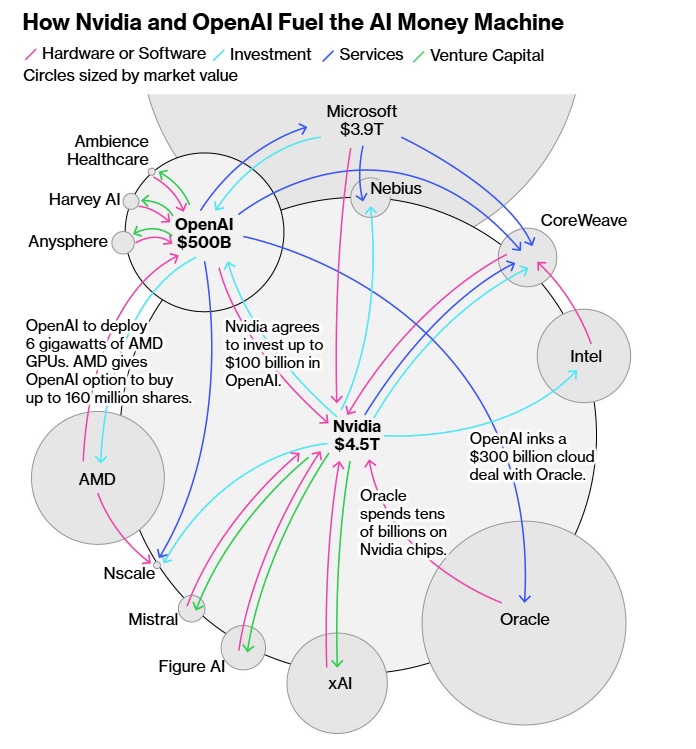
The AI Subsidy Is Over. Or Maybe It’s Just Beginning.


The current narrative says the “AI subsidy era” is ending. Prices are rising. Rate limits are tightening. Ads are creeping in. Enterprise tiers are replacing all-you-can-eat plans. In short: users will finally start paying what AI actually costs.

Haydon Field writing in The Verge tells us:

Earlier this month, millions of OpenClaw users woke up to a sweeping mandate: The viral AI agent tool, which this year took the worldwide tech industry by storm, had been severely restricted by Anthropic.

Anthropic, like other leading AI labs, was under immense pressure to lessen the strain on its systems and start turning a profit. So if the users wanted its Claude AI to power their popular agents, they’d have to start paying handsomely for the privilege.

“Our subscriptions weren’t built for the usage patterns of these third-party tools,” wrote Boris Cherny, head of Claude Code, on X. “We want to be intentional in managing our growth to continue to serve our customers sustainably long-term. This change is a step toward that.”

The announcement was a sign of the times. Investors have poured hundreds of billions of dollars into companies like OpenAI and Anthropic to help them scale and build out their compute. Now, they’re expecting returns. After years of offering cheap or totally free access to advanced AI systems, the bill is starting to come due — and downstream, users are beginning to feel the pinch.

That’s true but it’s leaving out a lot.

Yes, the consumer subsidy—venture-backed underpricing of inference—may be winding down. But the broader subsidy system that made AI possible isn’t going away. It’s expanding. Just ask President Trump.

To understand why, you have to go back to the last great digital disruption.

From P2P to Streaming to AI

Start with Napster.

P2P didn’t just enable infringement. It rewired expectations. It taught users that all music should be available, instantly, for free. Why? Because there was gold in them long tails. Forget about supply and demand, we had infinite supply so demand would take care of itself.

It’s for sale

Every artist, songwriter, label and publisher in the history of recorded music were not compensated for this shift. They were its involuntary financiers. Their catalogs created the demand, the network effects, and the user adoption that built the early internet music economy.

Streaming—think Spotify—didn’t reverse that logic. It formalized it. (Remember, streaming saved us from piracy and we should all be so grateful.) It actually transferred that involuntary financing from the p2p balance sheet to Spotify’s, and took it public.


Streaming platforms accepted a new baseline: the entire world’s repertoire must be available at all times, regardless of demand. That is a costly and structurally inefficient mandate, but it became the price of competing in a market shaped by P2P expectations. Licensing systems like the Mechanical Licensing Collective (MLC) were built to support that scale, but the underlying premise remained: total availability first, compensation second.

AI changes the game again.

AI Doesn’t Just Distribute Works. It Consumes Them.

P2P distributed music. Streaming licensed it. AI models ingest it.

That’s the critical difference.

Generative AI systems are trained on massive corpora that include copyrighted works, performances, and what we might call personhood signals—voice, style, tone, phrasing, and creative identity. These inputs are not just indexed or streamed. They are transmogrified (see what I did there) into model weights that can generate new outputs that compete with, mimic, or substitute for the originals.

So the role of the artist evolves:
    •    In P2P: unpaid distributor subsidy
    •    In streaming: underpaid inventory supplier
    •    In AI: uncompensated production input
That is not a marginal shift. It is a structural one.

The Real Subsidy Stack

When people say the “AI subsidy era is over,” they are usually talking about one thing: cheap access to compute.
But AI has always depended on a multi-layered subsidy stack:

    Creators – supply training data, cultural value, and identity signals without compensation or consent
    Users – supply prompts, feedback, and behavioral data that improve the models
    Communities – absorb land use, water consumption, and environmental costs
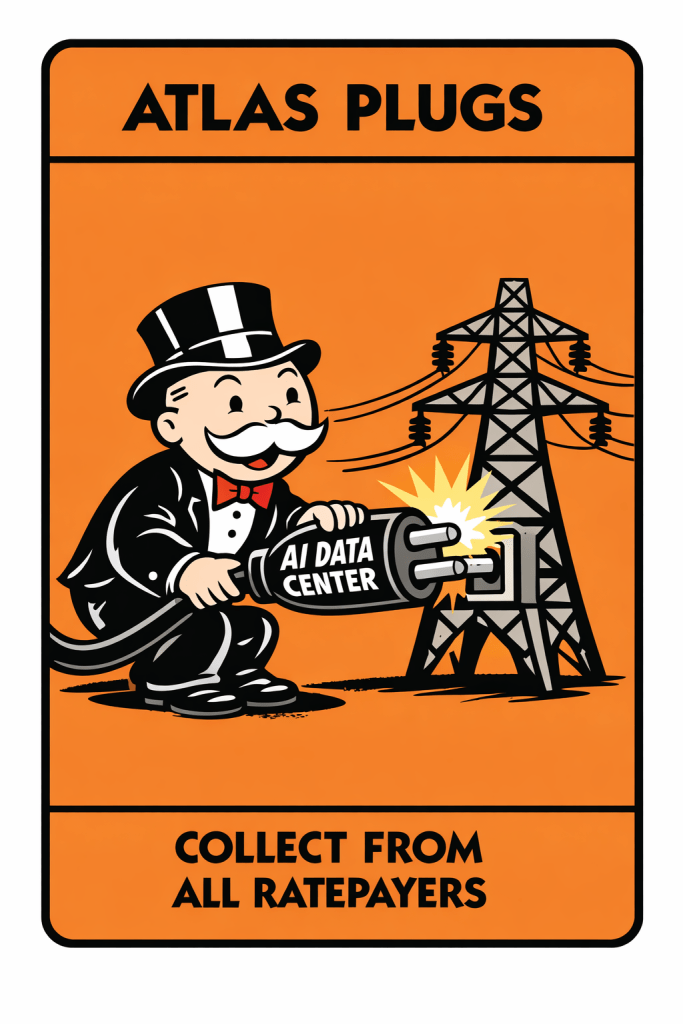
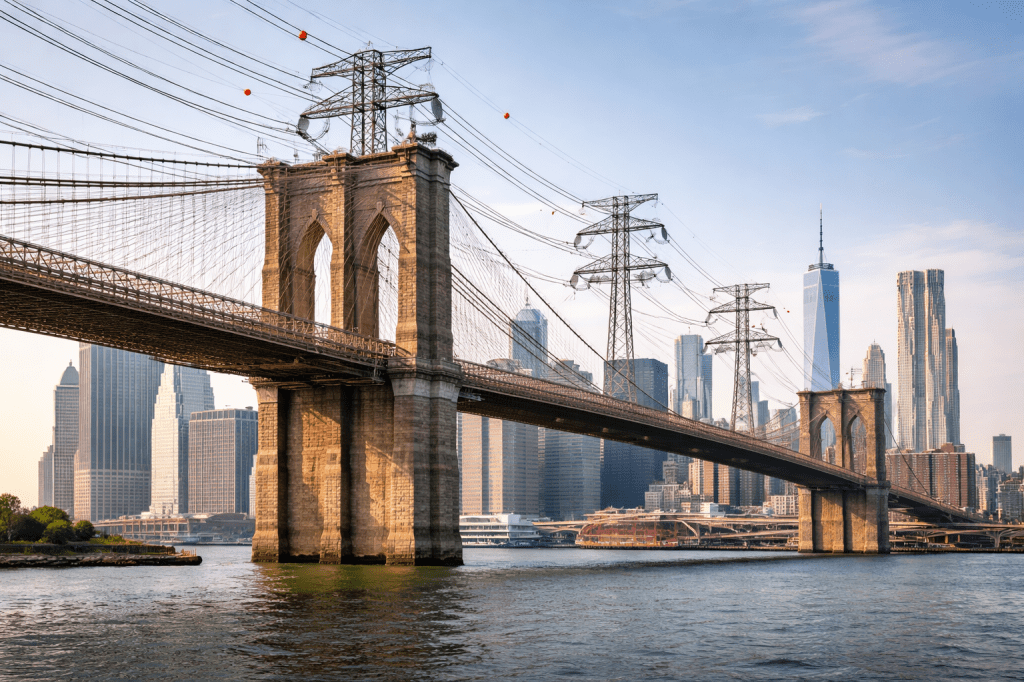
    Ratepayers – fund grid upgrades, transmission, and reliability for data center demand
    Venture capital – underwrites early losses to drive adoption and scale

The shift we are seeing now is not the end of subsidies. It’s a reallocation. Or as a cynic might say, it’s rearranging the deck chairs to hide the lifeboats.

Users may start paying more. But creators still aren’t being paid for training. Communities are still being asked to host infrastructure. And the physical footprint of AI is accelerating. Just ask President Trump.

The World Turned Upside Down

What makes this moment different is the scale of the buildout.
We are not just talking about apps anymore. We are talking about an industrial transformation:
    •    New data centers the size of small cities
    •    High-voltage transmission lines
    •    Water-intensive cooling systems
    •    Semiconductor supply chains
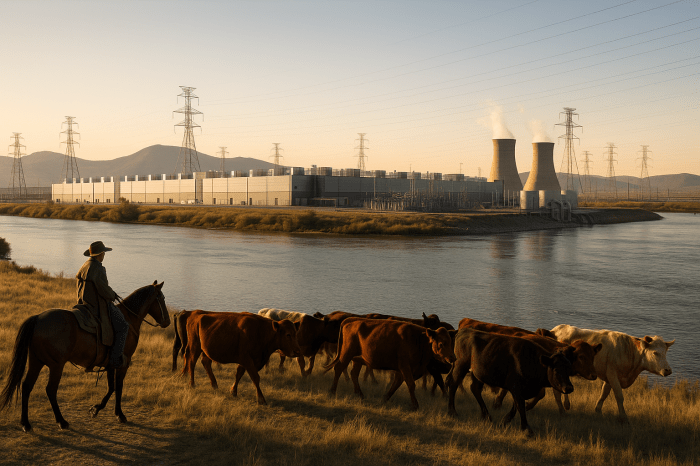
    •    And even discussions of new nuclear capacity to support compute demand

This is infrastructure on the scale of a national project, or more like national mobilization. But it is being built on top of a premise that has not been resolved: the uncompensated use of human creative work as training input.

That is the inversion: We are building power plants for systems that depend on not paying the people whose work makes those systems possible.

A Better Frame

The cleanest way to understand this is as a continuum:

P2P turned infringement into consumer expectation.
Streaming turned that expectation into platform infrastructure.
AI turns uncompensated authorship into industrial feedstock.

Or more bluntly:
The AI free ride is not ending. It is being re-invoiced. Users may now see higher prices. But the deeper subsidies—creative, environmental, and civic—remain off the books.

What Comes Next

If the industry is serious about “pricing AI correctly,” it cannot stop at compute.

It has to address:
    •    Compensation frameworks for training data
    •    Attribution and provenance standards
    •    Licensing models for style and voice
    •    Infrastructure cost allocation (who pays for the grid?)
    •    Governance of large-scale compute deployment

Otherwise, we are not exiting the subsidy era. We are doing what Big Tech lives for.

We are scaling it.

And this time, instead of a few server racks in a dorm room, we are building an global energy system around it.

AI, Soft Power, and the New Thucydides Trap

The White House’s latest AI framework reads like a familiar story dressed in new clothes: we must move fast, avoid “overregulation,” and ensure that the United States “wins” the AI race—because China.

That framing is not new. It is, in fact, a modern version of the Thucydides Trap: the idea that when a rising power threatens to displace an established one, conflict—economic, political, or otherwise—becomes more likely. But what is striking here is not the invocation of competition. It’s how narrowly that competition is defined.

The framework implicitly treats AI dominance as a function of compute, capital, and model scale. Build bigger models faster, feed them more data, and ensure that domestic firms face as few constraints as possible. In that telling, creators, rights, and consent become secondary considerations—at best friction, at worst obstacles.

But that is a profound misread of where U.S. advantage actually lies.

American leadership has never been just about scale. It has been about legitimacy—the ability to build systems that other countries, companies, and individuals trust enough to adopt. That is the essence of soft power. And soft power is not generated by extraction; it is generated by rules that are perceived as fair.

When U.S. policy signals that training on creative works without meaningful consent is acceptable—or even necessary to “win”—it risks trading long-term legitimacy for short-term acceleration. That is a dangerous bargain. It tells the world that American AI leadership is built not on innovation alone, but on the uncompensated appropriation of global cultural and informational resources.

Other jurisdictions are already responding. The EU is experimenting with transparency mandates. Rights holders globally are pushing for enforceable consent regimes. Even countries that want to encourage AI development are increasingly wary of frameworks that look like data extraction at scale without accountability.

This is where the Thucydides analogy breaks down—or at least becomes more complicated. The real risk is not simply that China catches up technologically. It is that the United States, in trying to outrun that possibility, undermines the normative foundations of its own leadership.

Soft power erosion is not dramatic. It doesn’t announce itself with a headline. It accumulates quietly: in trade negotiations, in regulatory divergence, in the willingness of other countries to align—or not align—with U.S. standards. Over time, that erosion can matter more than any benchmark score or model release.

There is another path. The United States could lead by insisting that AI development is compatible with consent, compensation, and provenance. It could treat creators not as inputs to be harvested, but as stakeholders in a system that depends on their work. It could build infrastructure—technical and legal—that makes those principles operational, not aspirational.

That approach may look slower in the short term. It may impose costs that competitors are willing to ignore. But it is also how durable leadership is built.

Because in the long run, the question is not just who builds the most powerful models. It is who builds systems that the rest of the world is willing to trust.

And that is a competition the United States cannot afford to lose.

Since it’s 1999, What MGM v. Grokster Teaches Us About Perplexity’s Bizarre Infringement Defense

Nate Garhart writing in Reuters analyzes Perplexity AI’s novel—some might say bizarre—legal defense in copyright suits filed by the New York Times and the Chicago Tribune in December 2025.   Rather than relying primarily on fair use, the typical defense in AI infringement cases, Perplexity instead argues it lacked “volitional conduct” sufficient for direct copyright infringement, contending that it did not “make” the infringing copies in a legally relevant sense. The defense in Perplexity’s motion to dismiss draws on the Second Circuit’s 2008 Cartoon Network v. CSC Holdings decision, where a DVR service was not held directly liable because the user, not the service, initiated the recording of each specific work.  Sound familiar?  That’s one straight outta 1999.  You know, the technology made me do it.

Why Generative AI Is Not a Passive Conduit

Mr. Garhart makes clear that Perplexity’s attempt to cast itself as a mere automated tool triggered by user prompts is fundamentally at odds with how generative AI systems actually work. There are several reasons why the “passive conduit” framing fails.

Deliberate System Architecture Embodies Volition

The Grokster Inducement Framework Reinforces This Analysis

The Court identified three particularly notable features of intent evidence:

  1. Failure to implement filtering or safeguards: Neither defendant developed tools to diminish infringing activity, which—while not independently sufficient—was probative of intent alongside other evidence. 

Moreover, at each stage of Perplexity’s training pipeline, human decision-making is deeply embedded: engineers and researchers decide what content to tokenize, how to structure training data, and which model behaviors to reinforce or suppress through “reinforcement learning from human feedback” (RLHF) and other fine-tuning methods. The resulting system is curated by humans at multiple points in the typical workflow from dataset selection and preprocessing, to model alignment and quality control, meaning the outputs are not the product of a purely autonomous process but rather of layered, intentional design choices made by people, or more precisely, by Perplexity.

Tokenization itself is a telling example of design choice: by selecting a tokenization scheme and deciding which corpora to process (and spend scarce compute resources on), the system’s developers are making both editorial and commercial judgments about what material the model will learn from and be capable of reproducing. These upstream human choices further undercut the notion that the system is a passive conduit simply responding to downstream user prompts.

Importantly, these tokenization decisions are not made in a vacuum or for altruistic reasons—they are driven by the commercial imperative of delivering a product sufficiently useful that consumers will pay Perplexity for it, rather than paying the New York Times or other original publishers for their journalism. The economic logic is plain: the more effectively the system can ingest and repackage high-quality copyrighted content, the more valuable the product becomes to subscribers, and the more extracted revenue flows to Perplexity instead of to the creators whose work fuels the system. These upstream human choices further undercut the notion that the system is a passive conduit simply responding to user prompts.  Sound familiar?

Applying Grokster‘s Logic to Generative AI

Several design features of a generative AI answer engine map onto the Grokster framework, even without identical facts:

The Causal Chain Is Not Broken by a User Prompt

I think Mr. Garhart’s most compelling point is that a user’s query is not the kind of discrete, volitional act that broke the causal chain in Cartoon Network.  A user who types “What does the New York Times say about X?” is asking a question—not selecting a specific copyrighted work and pressing “copy” as with a DVR. The Perplexity system then selects, processes, and generates expressive content drawn from copyrighted sources because that’s how it was trained.   The Grokster Court rejected the notion that intermediaries like Perplexity could hide behind user-initiated actions when those intermediaries had built systems designed to facilitate infringement and had taken affirmative steps to encourage it. 

Critically, the generative AI system’s response to a prompt is shaped by decisions made long before the user ever typed a query. Humans selected the training corpora, decided how text would be tokenized and encoded, fine-tuned the model’s outputs through iterative RLHF and other quality-control processes, and designed the retrieval and generation architecture. Each of these steps reflects purposeful human conduct—not the behavior of a neutral pipe. A system in which humans curate the inputs, architect the processing, and refine the outputs at multiple stages is, by any reasonable measure, an active participant in producing the allegedly infringing content.

In sum, generative AI systems are not passive conduits. They are purpose-built products whose design choices—what to crawl, what to tokenize, how to store it, when to reproduce it, and how to monetize it—reflect exactly the kind of upstream volition and deliberate architecture that both the Cartoon Network volitional conduct doctrine and the Grokster inducement framework are designed to capture. The fact that a user prompt triggers the final output does not absolve a company that engineered every step in the chain leading to that output.

Why did Perplexity scrape leading newspapers for content to feed their AI?  Because it was high value, well written, well editing writing and it was valuable to them.  In short, they did it for the money.

They robbed the authors for the same famous reason Willie Sutton robbed the banks.  Because that’s where the money is.

And going back to 1999 won’t save them.

Update: Trump Floats “Ratepayer Protection” Pledges as Grassroots Revolt Over Data Centers Spreads

For the better part of a year, local opposition to AI hyperscaler data centers has been dismissed as NIMBYism—yet it is a movement that has gained real traction. Rural counties worried about water draw. Suburban communities objecting to diesel backup generators. Landowners frustrated over transmission corridors cutting through farmland and massive data centers removing large swaths of productive land in essentially irreversible dedication to AI.

Local politics around data-center construction often turn on land use, water, and power. Officials welcome tax base and jobs, but residents worry about noise, transmission lines, diesel backup generators, and groundwater consumption. Zoning boards and county commissioners become battlegrounds where developers promise infrastructure upgrades and community benefits while opponents push for setbacks, environmental review, and limits on incentives. Utilities and grid operators weigh reliability and cost shifting, especially where hyperscale demand requires new substations or high-voltage lines. Rural areas face pressure from land aggregation and fast-track permitting, while cities debate transparency, property-tax abatements, and whether long-term public costs outweigh near-term economic gains.

But the politics just escalated.

According to multiple reports, President Trump is preparing to highlight “ratepayer protection pledges” from major tech companies during his State of the Union address tonight — urging AI and cloud companies to publicly commit that residential electricity customers will not bear the cost of new data-center load.

That confirms concerns from Trump advisor Peter Navarro over the last couple months and is not a small signal.

For months, grassroots organizers have warned that hyperscale AI buildout could increase local electricity rates, force costly new transmission lines, accelerate natural gas plant approvals, and strain already fragile regional grids. And then there’s the nuclear issues as hyperscalers openly promote new nuclear plants. Until now, much of the policy conversation has centered on growth and competitiveness, you know, because China. The Trump pivot reframes the issue around consumer protection — closely tracking the concerns raised by grassroots opponents.

What the White House Is Signaling

The reported approach stops short of imposing a formal price cap on electricity or shifting costs to taxpayers. Instead, policymakers are signaling that large technology firms — particularly hyperscale operators — should voluntarily shoulder the marginal power costs created by their own demand growth.

In practice, this means encouraging companies such as Microsoft, Alphabet, Amazon, and OpenAI to fund grid upgrades, transmission extensions, standby generation, and other infrastructure required to serve new data-center loads, rather than socializing those costs across ordinary ratepayers. The political logic is straightforward: if hyperscale demand is driving billions in new utility investment, the beneficiaries should internalize the expense. The strategy relies on negotiated commitments, public-utility leverage, and reputational pressure rather than mandates, aiming to avoid rate shocks while still enabling continued digital-infrastructure expansion.

We’ll see.

In parallel, the administration has backed efforts to expand electricity supply in regions experiencing sharp data-center load growth, pairing political support with regulatory acceleration. In practice, this has meant encouraging grid operators to run emergency or supplemental capacity auctions—for example, in markets like PJM or ERCOT—to secure short-lead-time generation such as gas peaker plants, temporary turbines, and large-scale battery storage. Policymakers have also supported fast-track permitting and uprates at existing nuclear and natural-gas facilities, along with expedited approvals for new combined-cycle plants where reliability risks are rising. In some areas, utilities are advancing transmission expansions and demand-response programs to bridge near-term gaps. The goal is to bring firm capacity online quickly enough to keep pace with AI-driven electricity demand without triggering reliability shortfalls or price spikes.

Supposedly, Trump’s message is if data centers drive the demand spike, data centers should fund the solution. That makes sense, but count me as a skeptic as to whether this will actually happen, or whether hyperscalers will come to the taxpayer. You know, because China. But let’s sell China Nvidia chips.

Why This Matters for the Grassroots Fight

Grassroots opposition to large-scale data centers has crystallized around three increasingly defined pillars — each with its own constituency and political leverage.

1. Land Use and Community Character.
Residents object to the scale and industrial footprint of hyperscale campuses: multi-building complexes, 24/7 lighting, diesel backup generators, high-security fencing, and new high-voltage transmission corridors. In rural counties, projects can involve the quiet aggregation of farmland followed by rezoning from agricultural to industrial use. In suburban areas, neighbors focus on setbacks, noise from cooling systems, and visual impact. Planning and zoning hearings have become flashpoints where local control collides with state-level economic development priorities.

2. Environmental and Water Stress.
Data centers are energy- and water-intensive facilities. In water-constrained regions, evaporative cooling systems raise concerns about aquifer drawdown and drought resilience. Environmental advocates question lifecycle emissions from new gas-fired generation built to serve AI load, as well as the cumulative impact of substations, transmission lines, and backup generators. Even where companies pledge renewable procurement, critics argue that incremental demand can still drive fossil fuel buildout in constrained grids.

3. Electricity Costs and Grid Strain.
The most politically volatile pillar is ratepayer impact. Local activists argue that if hyperscale demand requires billions in new generation, transmission, and distribution investment, those costs could be socialized through higher retail rates. Concerns also extend to reliability — whether rapid load growth risks price spikes, capacity shortfalls, or emergency measures during extreme weather.

And then there’s the jobs myth. The “data center jobs” pitch often overstates long-term employment. Construction phases can generate hundreds of temporary union and trade jobs—electricians, concrete crews, steel, and site work—sometimes for 12–24 months. But once operational, hyperscale facilities are highly automated and run by surprisingly small permanent staffs relative to their footprint and power load. A multi-building campus consuming hundreds of megawatts may employ only a few dozen to low hundreds of full-time workers, focused on security, facilities management, and network operations. For rural counties weighing tax abatements and infrastructure upgrades, the gap between short-term construction labor and modest permanent payroll becomes a central economic-development question.

By elevating electricity price protection to a presidential talking point, the administration effectively validates this third pillar. What began as local testimony at zoning meetings is now part of national energy policy framing: the principle that ordinary households should not subsidize AI infrastructure through their power bills. That rhetorical shift transforms a local grievance into a broader political issue with statewide and federal implications.

This is no longer just a zoning fight. It is now a kitchen-table affordability issue. Which may be a good start.

The Uncomfortable Math

AI data centers run 24/7, require enormous continuous baseload power, often demand dedicated substations, and can trigger multi-billion-dollar transmission upgrades. In regulated utility regions, those upgrades may be socialized across ratepayers unless cost allocation rules are enforced.

That is the central fear: even if tech companies pay for direct interconnection, broader grid reinforcement costs may still reach residential customers. If “ratepayer protection” pledges gain traction, this would mark a major federal acknowledgement that the risk is politically real.

Why This Is Bigger Than Trump

Governors in data-center-heavy states have also expressed concern. Utilities want load growth but fear rate shock. Grid operators face pressure to accelerate capacity procurement without triggering bill spikes. Grassroots activists have argued the AI buildout is outpacing responsible grid planning — and that argument has now moved from local meetings to national politics.

Whether any president—including Trump—can truly compel hyperscale tech firms to absorb rising power and infrastructure costs remains uncertain. Without formal regulation, enforcement tools are limited to negotiation, procurement leverage, and public pressure, all of which depend on the companies’ strategic interests.

Voluntary pledges can signal cooperation but lack binding force especially if market conditions shift. The Trump announcement also raises a political question: does the “pledge” represent a balancing act inside the administration between economic populists and China hawks like Peter Navarro, often associated with industrial-policy cost discipline, and pro-AI growth lobbyists such as Silicon Valley’s AI Viceroy David Sacks? If so, the commitment may reflect an internal compromise as much as an external policy toward accelerationist hyperscalers.

Data-center growth is turning electricity affordability into a geopolitical issue, not just a local zoning fight. When hyperscalers drop a 100–500 MW load into a market, they can tighten reserve margins, push up wholesale prices, and force expensive transmission and distribution upgrades—costs that governments then have to allocate between the new entrant and everyone else. That same demand can crowd out electrification priorities (heat pumps, EVs, industrial decarbonization) or trigger emergency procurement of “firm” power—often gas—because reliability deadlines don’t wait for ideal renewable buildouts.

We are way past McDonald’s on the Champs-Élysées

This is where “net zero” starts to look like it’s in the rear-view mirror. Many jurisdictions still talk about decarbonization, but the near-term political imperative is keeping the lights on and bills stable. If the choice is between fast AI load growth and strict emissions trajectories, the operational reality in many grids is that fossil backup and accelerated thermal approvals re-enter the picture—sometimes explicitly, sometimes quietly. Meanwhile, countries with abundant cheap power (hydro, nuclear, subsidized gas) gain leverage as preferred data-center destinations, while constrained grids face moratoria, queue rationing, and public backlash.

Data-center expansion is rapidly turning electricity policy into a global political and economic tradeoff. When hyperscale facilities add hundreds of megawatts of demand, they can tighten capacity margins, raise wholesale prices, and force costly grid upgrades—decisions governments must make about who ultimately pays. In many markets, this new load competes directly with electrification goals such as EV adoption, heat pumps, and industrial decarbonization. Reliability timelines often drive utilities toward fast, firm capacity—frequently gas—because intermittent renewables and storage cannot always be deployed quickly enough.

In that sense, Trump’s choices increasingly resemble a classic “guns and butter” dilemma. Policymakers must balance the strategic push for AI infrastructure and digital competitiveness against long-term climate commitments. While net-zero targets remain official policy in many jurisdictions, near-term choices often prioritize keeping power reliable and affordable, even if that means slowing emissions progress. The tension does not necessarily mean decarbonization disappears, but it underscores the difficulty of advancing both rapid AI build-out and strict net-zero trajectories simultaneously under real-world grid constraints.

Rate Payers Get the Immediate Proof: Utility bills

If the White House advances voluntary ratepayer-protection pledges, several trajectories could unfold. Technology companies may publicly commit to absorbing incremental grid and infrastructure costs, framing the move as responsible corporate citizenship. Personally, I don’t think Trump actually believes it, and I fully expect that the teleprompter will say one thing, and then in a classic Trump aside, he will undercut the speech writers.

Utilities, facing rising capital requirements, could press for clearer cost-allocation rules to ensure large-load customers bear system expansion expenses. State public-utility commissions might reopen tariffs and special-contract pricing for hyperscale users, testing how far voluntary commitments translate into enforceable rate structures.

Meanwhile, grassroots groups are likely to demand transparent accounting to verify that ordinary customers are insulated from price impacts. Yet the full economic value of any pledge will emerge only over years of build-out and rate cases—long after the current administration, and Trump himself, are no longer in office.

For the moment, the debate has shifted. Grassroots opposition is no longer just about land or water. It is about who pays when AI reshapes the grid — and now the president is talking about it.

Let’s say I’m wrong and Trump is serious about reigning in AI. If Trump were able to make such a policy stick, it could mark a broader shift in how governments confront the external costs of rapid AI expansion. Requiring hyperscalers to internalize infrastructure and power burdens could slow the breakneck build-out that fuels large-scale model training and synthetic media proliferation.

For artists and performers, that deceleration could matter. The fight over voice, likeness, and identity—already highlighted by figures such as Brad Pitt and Tom Cruise ripped off by China’s Seedance 2.0 —centers on protecting human personhood from industrial-scale replication. A structural slowdown in AI growth would not end that conflict, but it could rebalance leverage, giving creators, unions, and policymakers more time to establish enforceable guardrails.

Infrastructure, Not Aspiration: Why Permissioned AI Begins With a Hard Reset

Paul Sinclair’s framing of generative music AI as a choice between “open studios” and permissioned systems makes a basic category mistake. Consent is not a creative philosophy or a branding position. It is a systems constraint. You cannot “prefer” consent into existence. A permissioned system either enforces authorization at the level where machine learning actually occurs—or it does not exist at all.

That distinction matters not only for artists, but for the long-term viability of AI companies themselves. Platforms built on unresolved legal exposure may scale quickly, but they do so on borrowed time. Systems built on enforceable consent may grow more slowly at first, but they compound durability, defensibility, and investor confidence over time. Legality is not friction. It is infrastructure. It’s a real “eat your vegetables” moment.

The Great Reset

Before any discussion of opt-in, licensing, or future governance, one prerequisite must be stated plainly: a true permissioned system requires a hard reset of the model itself. A model trained on unlicensed material cannot be transformed into a consent-based system through policy changes, interface controls, or aspirational language. Once unauthorized material is ingested and used for training, it becomes inseparable from the trained model. There is no technical “undo” button.

The debate is often framed as openness versus restriction, innovation versus control. That framing misses the point. The real divide is whether a system is built to respect authorization where machine learning actually happens. A permissioned system cannot be layered on top of models trained without permission, nor can it be achieved by declaring legacy models “deprecated.” Machine learning systems do not forget unless they are reset. The purpose of a trained model is remembering—preserving statistical patterns learned from its data—not forgetting. Models persist, shape downstream outputs, and retain economic value long after they are removed from public view. Administrative terminology is not remediation.

Recent industry language about future “licensed models” implicitly concedes this reality. If a platform intends to operate on a consent basis, the logical consequence is unavoidable: permissioned AI begins with scrapping the contaminated model and rebuilding from zero using authorized data only.

Why “Untraining” Does Not Solve the Problem

Some argue that problematic material can simply be removed from an existing model through “untraining.” In practice, this is not a reliable solution. Modern machine-learning systems do not store discrete copies of works; they encode diffuse statistical relationships across millions or billions of parameters. Once learned, those relationships cannot be surgically excised with confidence. It’s not Harry Potter’s Pensieve.

Even where partial removal techniques exist, they are typically approximate, difficult to verify, and dependent on assumptions about how information is represented internally. A model may appear compliant while still reflecting patterns derived from unauthorized data. For systems claiming to operate on affirmative permission, approximation is not enough. If consent is foundational, the only defensible approach is reconstruction from a clean, authorized corpus.

The Structural Requirements of Consent

Once a genuine reset occurs, the technical requirements of a permissioned system become unavoidable.

Authorized training corpus. Every recording, composition, and performance used for training must be included through affirmative permission. If unauthorized works remain, the model remains non-consensual.

Provenance at the work level. Each training input must be traceable to specific authorized recordings and compositions with auditable metadata identifying the scope of permission.

Enforceable consent, including withdrawal. Authorization must allow meaningful limits and revocation, with systems capable of responding in ways that materially affect training and outputs.

Segregation of licensed and unlicensed data. Permissioned systems require strict internal separation to prevent contamination through shared embeddings or cross-trained models.

Transparency and auditability. Permission claims must be supported by documentation capable of independent verification. Transparency here is engineering documentation, not marketing copy.

These are not policy preferences. They are practical consequences of a consent-based architecture.

The Economic Reality—and Upside—of Reset

Rebuilding models from scratch is expensive. Curating authorized data, retraining systems, implementing provenance, and maintaining compliance infrastructure all require significant investment. Not every actor will be able—or willing—to bear that cost. But that burden is not an argument against permission. It is the price of admission.

Crucially, that cost is also largely non-recurring. A platform that undertakes a true reset creates something scarce in the current AI market: a verifiably permissioned model with reduced litigation risk, clearer regulatory posture, and greater long-term defensibility. Over time, such systems are more likely to attract durable partnerships, survive scrutiny, and justify sustained valuation.

Throughout technological history, companies that rebuilt to comply with emerging legal standards ultimately outperformed those that tried to outrun them. Permissioned AI follows the same pattern. What looks expensive in the short term often proves cheaper than compounding legal uncertainty.

Architecture, Not Branding

This is why distinctions between “walled garden,” “opt-in,” or other permission-based labels tend to collapse under technical scrutiny. Whatever the terminology, a system grounded in authorization must satisfy the same engineering conditions—and must begin with the same reset. Branding may vary; infrastructure does not.

Permissioned AI is possible. But it is reconstructive, not incremental. It requires acknowledging that past models are incompatible with future claims of consent. It requires making the difficult choice to start over.

The irony is that legality is not the enemy of scale—it is the only path to scale that survives. Permission is not aspiration. It is architecture.

Grass‑Roots Rebellion Against Data Centers and Grid Expansion

A grass‑roots “data center and electric grid rebellion” is emerging across the United States as communities push back against the local consequences of AI‑driven infrastructure expansion. Residents are increasingly challenging large‑scale data centers and the transmission lines needed to power them, citing concerns about enormous electricity demand, water consumption, noise pollution, land use, declining property values, and opaque approval processes. What were once routine zoning or utility hearings are now crowded, contentious events, with citizens organizing quickly and sharing strategies across counties and states.


This opposition is no longer ad hoc. In Northern Virginia—often described as the global epicenter of data centers—organized campaigns such as the Coalition to Protect Prince William County have mobilized voters, fundraised for local elections, demanded zoning changes, and challenged approvals in court. In Maryland’s Prince George’s County, resistance has taken on a strong environmental‑justice framing, with groups like the South County Environmental Justice Coalition arguing that data centers concentrate environmental and energy burdens in historically marginalized communities and calling for moratoria and stronger safeguards.


Nationally, consumer and civic groups are increasingly coordinated, using shared data, mapping tools, and media pressure to argue that unchecked data‑center growth threatens grid reliability and shifts costs onto ratepayers. Together, these campaigns signal a broader political reckoning over who bears the costs of the AI economy.

Global Data Centers

Here’s a snapshot of grass roots opposition in Texas, Louisiana and Nevada:

Texas

Texas has some of the most active and durable local opposition, driven by land use, water, and transmission corridors.

  • Hill Country & Central Texas (Burnet, Llano, Gillespie, Blanco Counties)
    Grass-roots groups formed initially around high-voltage transmission lines (765 kV) tied to load growth, now explicitly linking those lines to data center demand. Campaigns emphasize:
    • rural land fragmentation
    • wildfire risk
    • eminent domain abuse
    • lack of local benefit
      These groups are often informal coalitions of landowners rather than NGOs, but they coordinate testimony, public-records requests, and local elections.
  • DFW & North Texas
    Neighborhood associations opposing rezoning for hyperscale facilities focus on noise (backup generators), property values, and school-district tax distortions created by data-center abatements.
  • ERCOT framing
    Texas groups uniquely argue that data centers are socializing grid instability risk onto residential ratepayers while privatizing upside—an argument that resonates with conservative voters.

Louisiana

Opposition is newer but coalescing rapidly, often tied to petrochemical and LNG resistance networks.

  • North Louisiana & Mississippi River Corridor
    Community groups opposing new data centers frame them as:
    • “energy parasites” tied to gas plants
    • extensions of an already overburdened industrial corridor
    • threats to water tables and wetlands
      Organizers often overlap with environmental-justice and faith-based coalitions that previously fought refineries and export terminals.
  • Key tactic: reframing data centers as industrial facilities, not “tech,” triggering stricter land-use scrutiny.

Nevada

Nevada opposition centers on water scarcity and public-land use.

  • Clark County & Northern Nevada
    Residents and conservation groups question:
    • water allocations for evaporative cooling
    • siting near public or BLM-managed land
    • grid upgrades subsidized by ratepayers for private AI firms
  • Distinct Nevada argument: data centers compete directly with housing and tribal water needs, not just environmental values.

The Data Center Rebellion is Here and It’s Reshaping the Political Landscape (Washington Post)

Residents protest high-voltage power lines that could skirt Dinosaur Valley State Park (ALEJANDRA MARTINEZ AND PAUL COBLER/Texas Tribune)

US Communities Halt $64B Data Center Expansions Amid Backlash (Lucas Greene/WebProNews)

Big Tech’s fast-expanding plans for data centers are running into stiff community opposition (Marc Levy/Associated Press)

Data center ‘gold rush’ pits local officials’ hunt for new revenue against residents’ concerns (Alander Rocha/Georgia Record)

The Paradox of Huang’s Rope

If the tech industry has a signature fallacy for the 2020s aside from David Sacks, it belongs to Jensen Huang. The CEO of Nvidia has perfected a circular, self-consuming logic so brazen that it deserves a name: The Paradox of Huang’s Rope. It is the argument that China is too dangerous an AI adversary for the United States to regulate artificial intelligence at home or control export of his Nvidia chips abroad—while insisting in the very next breath that the U.S. must allow him to keep selling China the advanced Nvidia chips that make China’s advanced AI capabilities possible. The justification destroys its own premise, like handing an adversary the rope to hang you and then pointing to the length of that rope as evidence that you must keep selling more, perhaps to ensure a more “humane” hanging. I didn’t think it was possible to beat “sharing is caring” for utter fallacious bollocks.

The Paradox of Huang’s Rope works like this: First, hype China as an existential AI competitor. Second, declare that any regulatory guardrails—whether they concern training data, safety, export controls, or energy consumption—will cause America to “fall behind.” Third, invoke national security to insist that the U.S. government must not interfere with the breakneck deployment of AI systems across the economy. And finally, quietly lobby for carveouts that allow Nvidia to continue selling ever more powerful chips to the same Chinese entities supposedly creating the danger that justifies deregulation.

It is a master class in circularity: “China is dangerous because of AI → therefore we can’t regulate AI → therefore we must sell China more AI chips → therefore China is even more dangerous → therefore we must regulate even less and export even more to China.” At no point does the loop allow for the possibility that reducing the United States’ role as China’s primary AI hardware supplier might actually reduce the underlying threat. Instead, the logic insists that the only unacceptable risk is the prospect of Nvidia making slightly less money.

This is not hypothetical. While Washington debates export controls, Huang has publicly argued that restrictions on chip sales to China could “damage American technology leadership”—a claim that conflates Nvidia’s quarterly earnings with the national interest. Meanwhile, U.S. intelligence assessments warn that China is building fully autonomous weapons systems, and European analysts caution that Western-supplied chips are appearing in PLA research laboratories. Yet the policy prescription from Nvidia’s corner remains the same: no constraints on the technology, no accountability for the supply chain, and no acknowledgment that the market incentives involved have nothing to do with keeping Americans safe. And anyone who criticizes the authoritarian state run by the Chinese Communist Party is a “China Hawk” which Huang says is a “badge of shame” and “unpatriotic” because protecting America from China by cutting off chip exports “destroys the American Dream.” Say what?

The Paradox of Huang’s Rope mirrors other Cold War–style fallacies, in which companies invoke a foreign threat to justify deregulation while quietly accelerating that threat through their own commercial activity. But in the AI context, the stakes are higher. AI is not just another consumer technology; its deployment shapes military posture, labor markets, information ecosystems, and national infrastructure. A strategic environment in which U.S. corporations both enable and monetize an adversary’s technological capabilities is one that demands more regulation, not less.

Naming the fallacy matters because it exposes the intellectual sleight of hand. Once the circularity is visible, the argument collapses. The United States does not strengthen its position by feeding the very capabilities it claims to fear. And it certainly does not safeguard national security by allowing one company’s commercial ambitions to dictate the boundaries of public policy. The Paradox of Huang’s Rope should not guide American AI strategy. It should serve as a warning of how quickly national priorities can be twisted into a justification for private profit.