Once again we’ve started a new session of Congress with really old news–the National Association of Broadcasters is yet again circulating the reactionary Local Radio Freedom Act (or the grammatically challenged “LRFA”) that’s been warmed over and served up again from the last Congress.
LRFA’s purpose is twofold. Get unsuspecting Members to support a policy to deny recording artists their fair share for the performance of their recordings on terrestrial radio. How? By aligning America with the practice of Iran and North Korea that is out of step with the business of every other major world economy. And because America denies the world’s recording artists the same treatment that American artists would enjoy overseas, America’s trading partners justifiably refuse Americans reciprocal treatment in foreign countries. Which is more embarrassing?
It’s not that American artists don’t earn the foreign performance royalties–it’s that the royalties earned overseas by hardworking Americans are denied to them because Congress is misled by the NAB into thinking that fair compensation is somehow bad policy and the US denies equal treatment to foreign artists. Why should those countries–who actually care about their creative class–grant reciprocal treatment to Americans?
It goes like this: When you hear Aretha Franklin sing “R-E-S-P-E-C-T” written by Otis Redding on the radio in your car, that economic transaction results in Otis Redding (the songwriter) getting paid as a songwriter under the government’s 75 year consent decrees (another sad story). Aretha Franklin, however, gets ZERO.
When that same recording is played in the UK, Otis Redding still gets paid as the songwriter, but the artist does, too. Except that because Aretha is an American, her money is never paid to her.
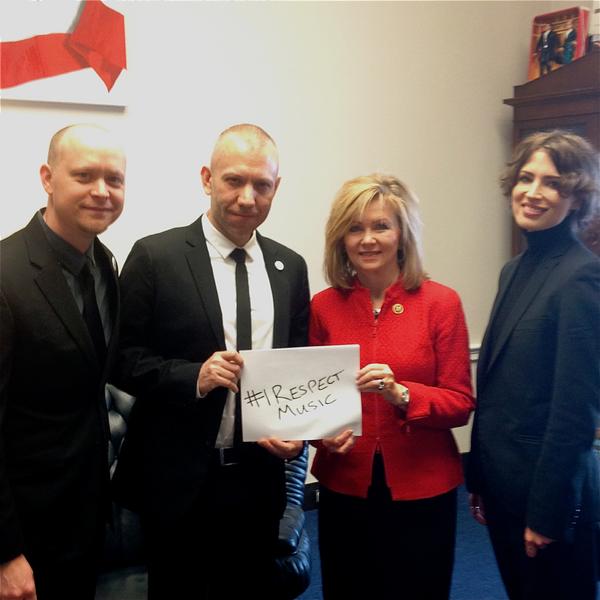
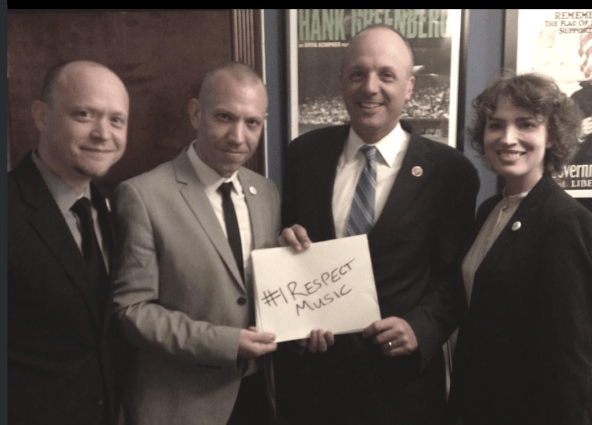
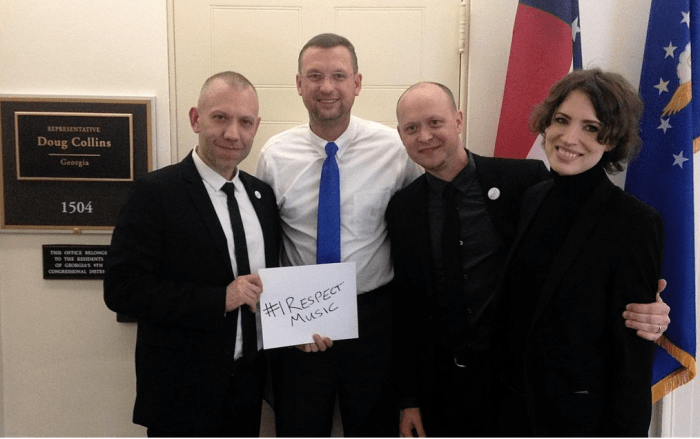
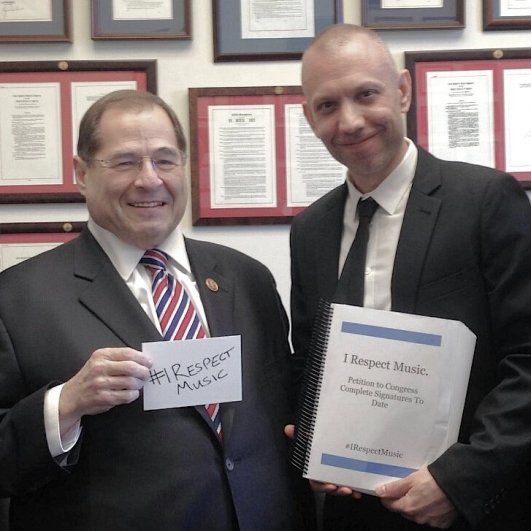
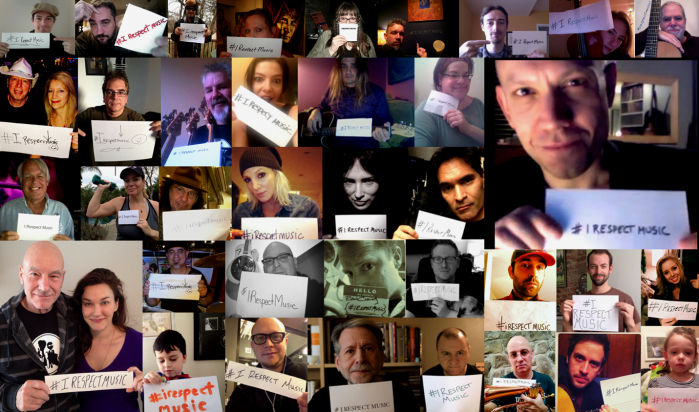
This obvious inequity is what motivated over 14,000 musicians and music fans to sign the I Respect Music petition in the last Congress and created the largest grass roots movement in the history of the music business with a positive message. Because friends don’t let friends get LRFA’d.
It’s one of the few issues left that is truly bipartisan.
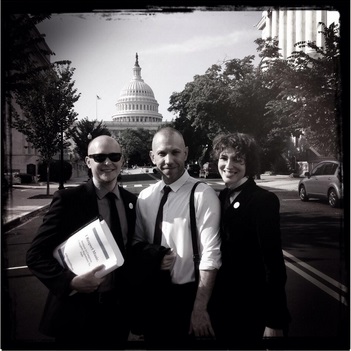
When Blake Morgan and the IRM team took the 14,000 signatures on the IRM petition to Congress, they had to carry two huge books of signatures. And yet, we once again are presented with getting LRFA’d.
LRFA is the Alinsky-style straw man–demonize your opponent as something you want people to believe your opponent to be (a “tax” for example), then perpetuate that mischaracterization no matter what. (In the current parlance, something pretty close to gaslighting fake news.)
This LRFA legacy “nonbinding resolution” has become an evergreen in the arsenal of the NAB’s gaslighting efforts to perpetuate exploitation of recording artists for one reason and one reason only–because they can. The NAB gets a bunch of Members to sign up, don’t tell them the truth about what they signed, and hope that nobody tells them otherwise until it’s too late. But when Blake teaches the I Respect Music story on college campuses across America, it requires little explanation.
What the NAB’s vast army of lobbyists will do with the LRFA after they largely dupe Members into signing on to it (and dupe Members staffs into allowing their bosses to sign on without doing the real staff work to know how they are being duped) is to perpetuate the greatest inequity in the Copyright Act by convincing members that any performance right legislation is doomed to fail so why support it?
How do we know this? Because the NAB did the same thing in the last session. When artists met with Members in their offices to discuss what happened, it turned out that many Members had no idea what the real story was behind LRFA.
It’s important that your Member of Congress understand what the NAB is up to with this gaslighting campaign. The truth behind this great inequity needs to be told along with the hard economic facts–because of faux legislation like LRFA, America is leaving hundreds of millions in real revenue from foreign countries that could easily be repatriated by American artists.
Not to mention supporting future American artists.
We cannot let another session of Congress pass by without fixing this great inequity. Don’t let your Member of Congress be fooled again–because friends don’t let friends get LRFA’d.
Call your representatives and sign the I Respect Music petition by clicking here.
Jacqueline C. Charlesworth has joined Covington’s Intellectual Property Rights and Media and Communications practices in the New York office. She most recently served as General Counsel and Associate Register of Copyrights of the U.S. Copyright Office.
While at the Copyright Office, Ms. Charlesworth had primary responsibility for interpretation of the U.S. Copyright Act. As General Counsel she oversaw a wide range of litigation, legislative, regulatory, and policy matters, including the Office’s participation in cases before the U.S. Supreme Court, rulemaking proceedings under the Digital Millennium Copyright Act and other provisions, legal review of Copyright Royalty Board decisions, administration of statutory cable, satellite, and music licenses, and copyright registration and termination issues. She also advised Congress on copyright-related legislation and policy concerns.
Prior to joining the Copyright Office, Ms. Charlesworth was in private practice, in litigation and transactional matters. She also previously served as General Counsel of the National Music Publishers’ Association and as General Counsel of The Harry Fox Agency, a music licensing organization.
“Jacqueline’s experience includes a rare combination of litigation, transactional and policy work in both public service and private practice,” said Simon J. Frankel, co-chair of the firm’s Intellectual Property Rights Practice Group. “At a time of significant technological developments and potential revisions to the Copyright Act, we believe Jacqueline’s deep expertise will enhance our ability to serve a wide range of clients dealing with copyright and related intellectual property issues.”
“I am excited to resume my private practice and was particularly drawn to Covington because of its outstanding legal talent and highly collaborative culture,” said Ms. Charlesworth. “I look forward to drawing on my government and private sector experience to assist a diversity of clients with their copyright needs.”
Ms. Charlesworth received a B.A. from Brown University and a J.D. from Yale Law School. She clerked for Judge Betty Fletcher of the U.S. Court of Appeals for the Ninth Circuit and Judge Miriam Goldman Cedarbaum of the U.S. District Court for the Southern District of New York.
“[P]rivate equity funds affiliated with Blackstone” yesterday announced the purchase of SESAC from another private equity group, Rizvi Traverse Management.
We hold our breath to see what the monopolists in the MIC Coalition will do about the sale. In light of the new administration, it will be an interesting test of both to see if the monopolists in the MIC Coalition run to the nanny state again to try to stop the sale on some grotesquely hypocritical antitrust theory and equally interesting to see if the new administration entertains that idea. It is almost a certainty that there will be a new head of the antitrust division of the Justice Department, so we’ll see.
But assuming that the sale goes through, it’s worth noting the story that Blackstone is telling in its press release. We probably think of SESAC as being all about songwriters and publishers. Songwriters did not get mentioned until the last couple sentences of the third paragraph of Blackstone’s press release.
It seems pretty clear from the press release that what Blackstone is valuing is the licensing infrastructure and data in SESAC followed closely by SESAC’s ability to do one-stop shopping on music licenses after its acquisition of HFA. (The MIC Coalition has already complained to the DOJ about that.) Remember–one-stop shopping was one of the improvements in the job killing ASCAP and BMI consent decrees that songwriters were interested in seeing implemented to empower ASCAP and BMI.
It is also worth noting that part of this value is that SESAC is not under the job-crushing regulations from the Department of Justice that have set wage and price controls on songwriters for 75 years. That means that SESAC can actually engage in free market negotiations–real ones, not the ASCAP and BMI rate court version where judges in a faraway Eastern city pretend to set free market rates in a performance rights market that has effectively never been entirely free. No wonder MIC Coalition likes other people’s consent decrees.
So while we know that it’s really all about the songwriters and relationships, investors seem at least as interested if not more interested in organizations that can offer licenses that contribute to solutions for the complexities of music licensing–preferably outside of the government mandated compulsory or near compulsory legacy licensing structure that seems to lumber on.
This is good news both for SESAC and for its competitors, and in the end we hope it’s also good for songwriters, too. DOJ please take note.
As you may have read, the newly appointed Librarian of Congress terminated the head of the U.S. Copyright Office (called the “Register of Copyrights”) through a process that I believe would be considered what’s called “retaliatory constructive termination”. This is when an employer doesn’t actually fire an employee–usually a senior employee or whistleblower–but puts them in what is effectively a demoted position to make them miserable enough to quit and then announces that the person quit.
No one should have been surprised when Pallante quit.
While several in the anti-copyright crowed crowed about Pallante’s demotion being business as usual because Pallante wanted greater independence for the Copyright Office, the justification that they gave was that the Librarian has the power to appoint the Register, so she also has the power to constructively terminate a Register that someone else appointed. I guess they didn’t realize that they were actually strengthening Pallante’s constructive termination case if anybody cared to listen.
So it looks like somebody did care to listen–in the form of the House and Senate Judiciary Committees. This is, after all, the Library of Congress after all. If anybody forgot who they worked for, it now looks like that person was the Librarian, Dr. Carla Hayden.
The House Judiciary Committee has just issued a carefully worded policy paper regarding the appointment of the next Register–notwithstanding the rather mean spirited “and your little dog, too” justifications given by some in the anti-copyright crowd who are promoting the Library’s recent deal with the Berkman Center’s Digital Public Library of America to turn a digitized Library of Congress into a kind of feeder to Kickass Torrents with sovereign immunity. (You won’t be surprised to learn that DPLA is overseen by at least one director formerly of the Google Books project.)
Here’s the money line from the House Memo:
Currently, the Register is not subject to the same nomination and consent process as other senior government officials. To ensure that the American people have an opportunity to provide input into the selection of future Registers of Copyright through their elected officials, the next Register and all that follow should be subject to a nomination and consent process with a 10-year term limit, subject to potential re-nomination.
Let it not be lost on anyone that Congress is about to adjourn for the year and will return in January with a new Congress in a new session. This memo served as a warning to the Librarian that Dr. Hayden should not get any further delusions of grandeur that manifested in appointing a new Register during the recess. Not only should she not be thinking about a recess appointment, but she just lost the unilateral right to appoint the Register forever.
The Committee should be commended for coming up with a real solution to put a stop to what was a shabby little story of inside Washington back stabbing that was widely condemned by fair minded people everywhere and exposed the anti-copyright crowd for what they really are.
Aside from the terrible legal optics–the appeal is not unlike a prosecutor losing a capital murder case and then appealing–there is an overtly political aspect to the timing of the appeal as David Lowery has pointed out on The Trichordist. Filed on a Friday in the “news dump” time slot immediately following a U.S. Presidential election, the filing was likely to be lost in the news hole.
Why appeal Judge Stanton? First, there is the spite factor. Given that the head of the Antitrust Division is Renata B. Hesse, a former outside lawyer for Google, it should not be a surprise to learn that division head was the driving force behind the 100% licensing position at the DOJ. Given also that Judge Stanton, who has been interpreting the BMI consent decree for many, many years, was so decisive in ruling against the DOJ, that message should have been what every songwriter already knows. The U.S. government’s position was Kafka-esque insanity that has been called out by everyone in the music business as well as Texas Governor Greg Abbott who called on Attorney General Lynch to abandon the DOJ’s position.
Whatever the back story, there is a simple solution to this problem–the incoming administration can simply dismiss the appeal.
How Did This Happen?
Internally at the Antitrust Division, it’s entirely likely that the decision to appeal this ruling was approved by Ms. Hesse. Ms. Hesse was promoted to acting associate attorney general, the DOJ’s third-highest ranking official–but will leave office without a confirmation hearing due in part to the timing of her appointment. A prominent lawyer in the Big Tech legal community, Ms. Hesse is also well-known as someone who nearly exclusively represented Google during a revolving door hiatus in private practice where she protected the interests of the multinational media corporation.
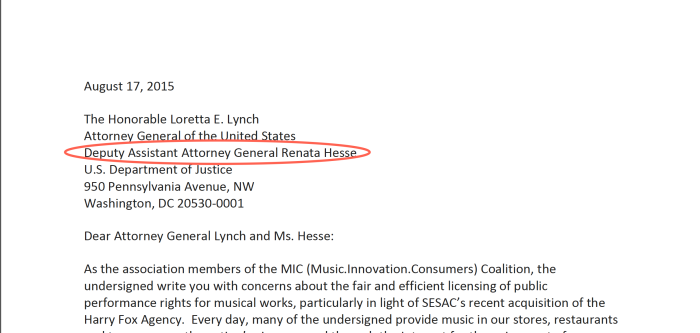
Given her loyalties, it was natural for the Google-backed MIC Coalition to turn to Ms. Hesse when it wanted the government to attack SESAC, one of two U.S. based PROs not currently under consent decree. (Read their letter here.)
It is hard to believe that the DOJ’s decision to appeal the 100% licensing case was taken without Ms. Hesse’s chop given the commitment of the people’s money involved in a lengthy appeal. It is equally hard to believe that Ms. Hesse’s former client had no influence on her decision to grind the songwriters just a little while longer to make her point.
Whatever the motive behind the appeal, it must be said that the BMI ruling also undercuts another event near and dear to Google–the termination of Register of Copyrights Maria Pallante by recent Obama appointee Carla Hayden, the new Librarian of Congress.
There is some circumstantial evidence that Google’s lobbying influence was brought to bear in removing Ms. Pallante, though both Google and Ms. Pallante declined to talk to us. Google’s business model is essentially making money off other people’s content, and the company’s strategy has been to infringe on copyrighted material like books and fight it out later in court. The copyright office administers laws that protect owners.
For example, Ms. Pallante’s office opposed a Justice Department interpretation of licensing that would have undercut collaborations. As it happens, that change was reportedly pushed by a former outside counsel for Google who had moved over to Justice. Ms. Pallante’s view won in court.
Given the campaign to discredit Register Pallante, the Googlers now left in the bunker simply could not allow that home run by Register Pallante to stay on the scoreboard without going into extra innings with an appeal.
It should also not be forgotten that Songwriters of North America sued the DOJ over this very 100% licensing ruling, a case that is largely concerning the DOJ’s mishandling–which inevitably will mean Ms. Hesse’s mishandling–of the 100% licensing position and its refusal to provide written versions of the DOJ’s planned statement for public comment. If the case survives summary judgement, the discovery could include the filing of this appeal as an extension of the mishandling of the process.
Finally, you have to wonder why the Obama Justice Department is trying to back their successors into a corner with this odd appeal so close in time to when the new President will take over.
But therein lies a simple solution to the entire caustic episode, however. In a few weeks, the Department of Justice will have a new boss. President Trump and his new Attorney General could easily decide to stand by the analysis of the subject matter expert–the BMI Rate Court Judge–and simply dismiss the case to end the madness.
I’m looking forward to participating on a great panel on fixing our future in the music business, moderated by the brilliant Dr. Gigi Johnson, founder and executive director of the UCLA Center for Music Innovation.
Music 2020: Recreating Music’s Future will be a lunch time panel held on October 13 in Los Angeles under the auspices of the Association of Independent Music Publishers an important voice for independent publishers in our policy efforts. I’m part of an august group: Sam Kling,SVP Creative Operations, SESAC & AIMP Board Member and Vickie Nauman,Founder & Owner, CrossBorderWorks, both of whom I know to be deep thinkers on problem solving in our business.
The event is to be held at Lawry’s, 100 North La Cienega Blvd. (near Wilshire) in Beverly Hills from 11:30 am to 1:45 pm on October 13. Reservations are required and lunch is served. Tickets are $44 for AIMP members and $57 for non-members.
As we saw in parts 1 and 2 of this post, New Boss companies like Google are playing on a loophole in the Copyright Act’s compulsory license for songs to shirk responsibility for song licensing from the songwriters or other copyright owners, get out of paying royalties and stop songwriters from auditing.
Not only have Google targeted long tail titles, but also new releases and songs by ex-US songwriters who are protected by international treaties. This is exactly the kind of rent seeking behavior by crony capitalists that gives Big Tech a bad name in the music community.
Google are doing this on a grand scale and at great expense, reportedly using “millions” of “address unknown” NOI filings with the Copyright Office that are supposed to be reserved for bona fide situations where the copyright owner cannot be found after a reasonably diligent search. Amazon is doing the same.
Through a quirk in the law (which needs to be fixed pronto) Google and Amazon are paying astonishing sums in filing fees to send the “address unknown” NOIs to the Copyright Office for songs that have not been registered for U.S. copyright or otherwise recorded with the Copyright Office. “Address unknown” NOIs are intended to be used when you really can’t find the address of the copyright owner after a diligent search of relevant records, although the Copyright Act limits the search to the public records of the Copyright Office. That limitation on records to be searched is a legacy echo from the 1909 revision of the Copyright Act which required registration and renewal for copyright to attach in the U.S.
So far, the overwhelming majority of “address unknown” NOIs are filed by Google. Spot checking the Amazon filings shows that Amazon filed a handful of titles.
Google apparently accomplishes this by manipulating a data dump from the Library of Congress that was never designed for filing mass NOIs and comparing the metadata in the data dump song title to their own list of sound recording titles that they want to exploit on their services.
Moral Hazard Revisited, DMCA Style
If you have a recording you want to use, you need to clear the song. You take that song title from the recording and look it up in the Library of Congress data dump. If it’s not there, you file the “address unknown” NOI. Wash, rinse, repeat 1,000,000 times or more. See how that works?
As if by magic, you don’t have to pay mechanical royalties until the songwriter figures out what you have done by checking the NOI submissions page at the Copyright Office (assuming anyone knows it’s there or knows their song might be listed) and then…does what?
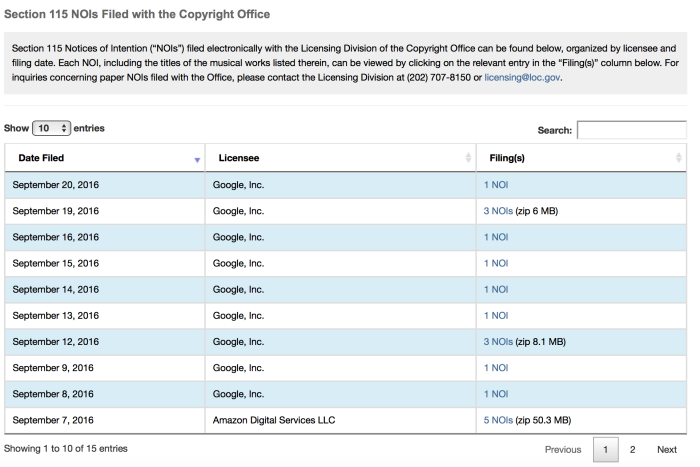
Note that “1 NOI” means “1 NOI with tens of thousands of songs attached in an Excel file”
This approach is fraught with moral hazard for largely the same reasons that plague the DMCA safe harbor–the party who benefits from avoiding both royalties and copyright infringement liability by sending the “address unknown” NOI is also the party who decides whether they qualify for the “address unknown” NOI. The Copyright Office clearly lacks the resources to cross check. Sounds kind of like DMCA notices, right?
The excuse the services give for this approach is that they can’t find the copyright owner for “long tail” and new releases.
The long tail part you can understand, but of course you have to ask yourself if a title is so obscure that you can’t find the song copyright owner, then why use it at all? Holding a track off of a service is far more likely to get the songwriter to come forward than sneaking around through the back door.
The New Release Scam Illustrated
It’s with new releases that Google runs the true arbitrage play. This is the part that makes no sense, particularly for songs written or owned by people with whom Google does repeat business. By relying on the “address unknown” NOI filings for new releases, even for songs that may be subject to a direct license, Google is using a loophole to appropriate value to themselves that should rightly go to the songwriters.
Let’s take another Sting example.
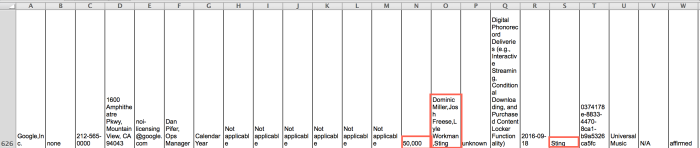
Sting released the song “50,000”, apparently as a single from his new 57th & 9th LP. “50,000” is an introspective Sting-style tribute to David Bowie and Prince. The album release date was September 23, 2016 and the single debuted around September 17. Google must have gotten the track around the same time as it is listed in Google’s September 16, 2016 mass NOI filing on line 626.
“50,000” is a particularly good example of how bogus Google’s approach is to “address unknown” NOIs. Google’s basis for filing the NOI on “50,000” apparently is that “50,000” is not included in either a copyright registration or other recording in the public records of the Copyright Office at the moment that Google looked for it. What this evidently means is that “50,000” wasn’t in the Library of Congress data dump sometime prior to September 16 when Google filed its mass NOI.
It is important to remember that there is no requirement for anyone to register their works or otherwise record their works in order to enjoy the rights of a copyright owner–such as mechanical royalties. This is true under international copyright law, not just in the U.S., so this quirk in U.S. copyright law is probably illegal and possibly unenforceable (which is why the “address unknown” NOI filing needs to be amended or eliminated–more about that below).
So simply put–how can you take away rights from a copyright owner based on a registration requirement that the copyright owner is not required to comply with because it is a formality that is actually prohibited by law? Sound Kafka-esque to you? It does to me.
In Sting’s case, Google knows who Sting is. They have other songs by Sting for which they probably sent an NOI. They may even have a direct license with Sting’s publisher that may actually supersede or be in lieu of a statutory license. In other words–they very well may have actual knowledge of Sting’s publisher. Wouldn’t that be a good place to start?
Yet because a new release has not yet shown up in the Copyright Office records, Google sends an NOI and will not be required to pay royalties until–if ever–the song is included in the Library of Congress data dump. Even though Sting is not required to register the song, Sting’s publisher may decide to register the copyright in order to take advantage of statutory damages and attorneys fees for infringement actions.
Getting a conformed copy of a copyright registration can take months–so for a single or an album, any mechanical royalties from Google under a statutory license during the new release window will never be paid. And if any direct license does not expressly prohibit including titles in mass NOIs, there’s a good chance no new release will get mechanical royalties from Google.
What Is To Be Done?
So now we know what the problem is, how to stop it? Not so easy to do.
1. Anticompetitive: It should not be lost on anyone that the government has created an opportunity for companies with market power to use their leverage to the disadvantage of their competitors as well as songwriters. It takes considerable capital to pay the filing fees to the Copyright Office and purchase data from the Library of Congress in order to arbitrage this loophole.
2. Take Down the Recordings: There are any one of a number of ways that the terms of a typical interactive music service license can be interpreted to allow the sound recording owner to pull recordings by at least current roster artists, especially new releases written by artist/songwriters (including co-writes) who complain to their labels.
3. Take Down the Songs: Direct licenses from music publishers presumably have some clause that will allow the publishers to stop mass NOI filings for their catalog, particularly of the type that creates a nonexistent distinction between versions of a song that have been retititled–not by the songwriter or publisher but by the artist or record company because the versions of the recording are different even though the song remains the same.
4. Counterfeits or Bootlegs (including stream rips): Statutory licenses are only available for sound recordings distributed under the authority of the copyright owner. There are a number of NOIs that look suspiciously like bootlegs or counterfeits, some of which may have been stream ripped. As Google is presumably sending NOIs for YouTube Red or other on-demand service.
5. Congressional Investigation to Stop the Library of Congress Selling Data for NOIs: The LOC has no business selling what is obviously incomplete data or misleading data to a user who so obviously is using it for a harmful purpose. The LOC could stop that immediately if they were so instructed by the Congress, and in any event the Congress should investigate.
6. Use Webform to Update or File Your Address Including Excel File Link: The Copyright Office has a webform for email contact by the public available here. You can use this to file your address and link to your catalog in an Excel file (hosted on your website or blog). Such correspondence is likely subject to FOIA (and therefore part of the public records of the Copyright Office), but you can also state in your webform that you are submitting the information with the intention that it become public and demand that your information be provided to anyone submitting a mass NOI as part of the LOC data dump.
The point that seems to have escaped Google and Amazon is that this loophole will surely be stopped, but what won’t be stopped is the complete lack of moral compass that would drive megacorporations to run roughshod over songwriters that they so aptly demonstrate.
“1 NOI” Means “1 Excel file for the NOIs Filed That Day, each Excel file contains tens of thousands of songs
As noted in Part 1 of this post, Google, Amazon and others are filing what are reportedly “millions” of “address unknown” NOIs with the U.S. Copyright Office. I fully expect that Pandora will eventually do the same for its on-demand service and Spotify is likely to do the same. Note–this type of carpet bombing of NOIs would not have helped Spotify in the David Lowery litigation because David Lowery registered his copyrights that are the subject of that litigation.
If you click here, you will find the most recent iteration of these massive NOIs, which apparently are being posted on a regular basis. The screenshot above is the first page of these filings on the Copyright Office site, most of which came this month (September 2016).
Each Excel file can be downloaded–a word of warning, even the zipped files are large and may take a while to open on an average home computer.
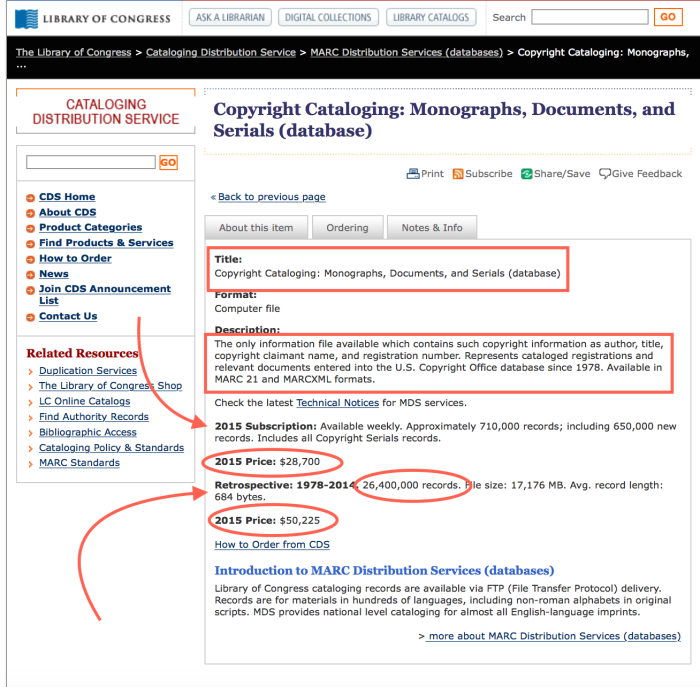
Remember what you are looking at in these files–this is the list that results from comparing the list of sound recordings that the services are using to the data dump that the service purchases from the Library of Congress. Take a tip–you’ll never find the page on the LOC website unless you know where to look, which is right here.
Willful Blindness on Song Titles
This is an overwhelming amount of data, so in order to have any idea what is really going on, spot checking will be required. And since it’s Google, you know there’s a scam afoot, your challenge is just to figure out which scam it is this time. (Of course the entire exercise is a scam, but leave that to one side for now.)
Scam # 1 appears to be treating any song title that has any text in it other than the actual song title as a song for which the owner cannot be identified. Here’s two examples from Sting in the Google 9/16/16 NOI file:
Of course, the song “Fragile” is registered, but Google’s filing claims that there is a different song “Fragile (Live)” that is not registered by that title. Google has, no doubt, sent another NOI for the song “Fragile” (or has a direct license) and if so has actual knowledge of the song copyright owner.
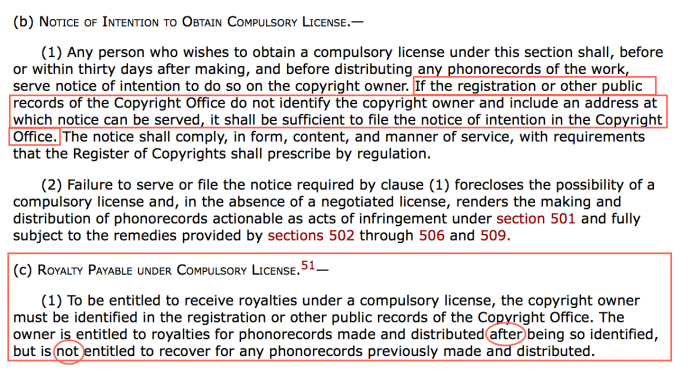
And here’s the loophole–by claiming that “Fragile (Live)” is an “unknown” song, Google can try to get out of paying for the live version. (Because how would you know that “Fragile” performed by Sting for which you know the copyright owner is the same as “Fragile (Live)” performed by Sting for which you now claim to be shocked that is the same song–unless, oh, maybe if you listened to the two?) The government’s compulsory license says this:
If you search for live recordings in Google’s NOI filings, you will find many, many live recordings by artists such as Bob Dylan, Heart, Quincy Jones, Lynyrd Skynyrd and Chicago. And then there’s the medleys like “Hotel California Dreaming” which lists the Eagles writers with John and Michelle Phillips of the Mamas and the Papas.
Not to mention a ton of foreign songwriters who are under no obligation to register their songs with the U.S. Copyright Office.
Let’s also set aside for the moment whether the recordings that Google has listed on their certified filing are all lawfully distributed–some certainly look like bootlegs to me. Of course “bootlegs” these days have to include illegal live recordings posted on YouTube and then stream ripped into mp3 files to be distributed through Tunecore, CD Baby or someone else who doesn’t pay much attention to where the recordings come from and then subsequently distributed through Google–who invented the game.
So what appears to be happening is that Google and Amazon (which has hired MRI, I believe) are playing the willful blindness game. What can be done about it?
If the music-tech industry has one major failing from which all of their messaging and legal problems flow, it is their fascination with loopholes that predictably harm creators. Whether it’s YouTube’s nefarious reliance on a tortured interpretation of the DMCA safe harbors that bears no relation to the law, Pandora and SiriusXM’s bone headed refusal to pay statutory royalties on pre-72 sound recordings (not to mention Pandora’s purchase of a radio station in a failed attempt to pay songwriters lower royalties), Spotify’s absurdly unnecessary collision with Taylor Swift over windowing, the MIC Coalition’s ridiculous manipulation of the Department of Justice on 100% licensing, or Amazon’s bizarre fascination with compulsory licenses for which songwriters have no audit right, these companies rival each other in the undignified pursuit of loopholes.
And in particular, loopholes that hurt songwriters who can’t afford the litigation and lobbying machine that is always the not-so-veiled threat brought by all these companies. The latest debacle is no different–mass filings of NOIs to avoid paying mechanical royalties because of a loophole that is detritus left over from the 1909 Copyright Act that is being manipulated to benefit the rich Silicon Valley companies at the expense of songwriters.
Yes, that’s right. They’d rather pay enormous sums in filing fees that vastly exceed any royalties payable just to get out of paying royalties at all. You have a better chance of recovering an old utility deposit from a state unclaimed property office than you have of getting mechanicals once you fall victim to this latest move.
I have been reliably informed that Google, Amazon and Music Reports among others are filing “millions” of “address unknown” NOIs with the Copyright Office based on a database that these companies are purchasing for tens of thousands of dollars from the Library of Congress (remember that the Copyright Office is under the jurisdiction of the Library of Congress). And by the way–once they file this NOI, they don’t pay royalties until the copyright owner can be identified in the records of the Copyright Office. Regardless of how easily the copyright owner could be found in other readily accessible databases.
Mystified? I will explain. Rest assured, you’re not the only one who is surprised. And remember that bit about the utility deposit, we’ll come back to that one.
As you read this post, remember one thing–it didn’t have to be this way. This is all happening for the same reason. Google, Amazon, Spotify, and likely soon Pandora (for its yet-to-be-launched on demand service) are all far more likely to take the legalistic and aggressive route rather than reach out to the songwriting community to work cooperatively to find a solution.
One music tech executive told me, we decide what’s fair and then we jam it down your throat.
That doesn’t work.
Mechanical Licensing and the Compulsory License
For one reason or another, the U.S. Government has a tradition of being very interested in regulating songwriters. The Copyright Act of 1909 established the baseline rules that compel songwriters to license their songs and sets the terms on which those songs are licensed including the royalty rate.
Even if you are not troubled by this degree of attention that is probably the original wage and price control, it would be nice if the USG is going to pay enough attention to songwriters that they set the price at which they can license their work, that the same USG not forget to raise that rate for 60-odd years.
That’s right–the government set the mechanical rate in 1909 at 2 cents and refused to raise it until 1978 (as part of the 1976 Copyright Act revision). Adjusted for inflation, that 2 cent rate would now be about 80 cents. Instead, it’s been 9.1 cents for the last 10 years.
The current compulsory license law was crafted in 1909 and slightly amended in 1976, and amended again a couple times to include the concept of “digital phonorecord deliveries” which essentially makes that compulsory applicable to streaming.
The 1976 Act also got rid of the copyright registrations that formed the basis of copyright under the 1909 Act with the exception of requiring a registration to sue for statutory damages and attorneys fees in a copyright infringement lawsuit. (Not quite that straight a line, but that’s where we ended up.)
But here’s the twist–the compulsory license rules are a notice based system. A music user who intends to use a song that is subject to the compulsory license must send a notice to the copyright owner. These notices are called a “notice of intention” or “NOI”. If you’re going to require an NOI, then how do you deal with copyright owners who cannot be found?
There was an easy answer to this that derives from the registration requirements–look them up in the Copyright Office. If the copyright owner can’t be identified in the records of the Copyright Office, then the music user can send a notice to the Copyright Office which the Copyright Office then publishes. Just like when your state publishes a list of unclaimed utility deposits, closed bank account balances, etc.
Now we all know that nobody uses the records of the Copyright Office to find a copyright owner, or if they use those records they don’t use them exclusively. Most people will look first at the PRO databases, cue sheets, publisher websites, other materials like that. When all else fails, then they look at the Copyright Office. This is partly due to the lag time between filing a copyright registration and receiving a conformed copy of that registration (which is when it is “official”).
There is also another public record maintained by the Copyright Office called the “recordation section”. This is where people file documents relating to works of copyright, such as a notice of assignment or a mortgage of copyright (which is kind of like a UCC-1 financing statement). The recordation section requires paper filings and typically only ingests a handful of titles from a large acquisition. That results in a filing of “‘Yesterday’ and 10,000 other songs” or something along those lines.
In other words, the recordation section is not all that reliable either–and neither is dispositive because there hasn’t been a registration requirement for decades. Is it a good practice to register? Yes. Is it required to have valid copyright? No.
And it’s particularly not required for non-US songwriters. In fact, there’s a good argument that a registration requirement in order to enjoy your rights (such as the statutory mechanical royalty, however poorly handled by the government) is actually barred by the Berne Convention’s prohibition on formalities.
Yet, the U.S. Copyright Act allows a valid compulsory license to issue for a copyright owner who may be listed in the PRO databases, may be a foreign copyright owner, or be under license (even direct license) for other songs with the same music user–if that copyright owner of a particular song cannot be identified from the public records of the Copyright Office–as determined by the music user.
Now why is this a moral hazard that should not be resolved by the music user?
Because the Copyright Act also provides that the music user filing that “address unknown” NOI is not required to pay royalties until that copyright owner is identifiable in the public records of the Copyright Office.
And who decides if the NOI is properly filed for the right song title? That’s right–the music user. Who is incented to play games with the song metadata? That’s right–the music user.
So what comes next should be of no surprise given the bad advice that these giant companies receive about their artist and writer relations.
Original sin–In Christian theology, the condition of sin that marks all humans as a result of Adam’s first act of disobedience to God.
It’s kind of an Old Testament thing. The ASCAP and BMI consent decrees punish songwriters for a kind of original sin that most of them don’t know about and that happened some time before 1941–before most of them were born. And yet all of them are held guilty in advance.
Sound familiar?
The Obama Justice Department just had a spectacular loss on its misguided and probably unconstitutional 100% licensing position in front of Judge Louis Stanton, the BMI rate court judge who has primary responsibility for interpreting the BMI consent decrees. BMI asked for declaratory relief from Judge Stanton which was granted in a decisive opinion rejecting the government’s position. So now what?
Not only did the Obama Justice Department go down the wrong rabbit hole with the consent decrees, they also managed to get themselves sued–by songwriters. How in the world could that have happened? Not just one, but two separate and distinct lawsuits.
The songwriters lawsuit is against the Justice Department, the Attorney General of the United States and the head of the Antitrust Division, Principal Deputy Assistant Attorney General Renata B. Hesse. (It appears that Principal Deputy Assistant Attorney General Hesse is the prime mover in pushing the DOJ’s position on 100% licensing through the Justice Department, although it is hard to imagine that the Attorney General did not personally approve the position given the magnitude of the change in position.)
The songwriters’ lawsuit is not brought under the consent decrees. The complaint alleges that the DOJ attorneys, starting with Principal Deputy Assistant Attorney General Hesse, engaged in unconstitutional behavior by denying songwriters their due process rights as well as taking the economic value of private property without compensation (see Professor Richard Epstein).
The lawsuit also alleges that the process that Principal Deputy Assistant Attorney General Hesse engaged in–secret phone calls, no public comment on proposed amendments to the consent decree, deceptive practices designed to encourage songwriters to leave their PROs–violated laws governing the behavior of federal administrative agencies. The implication is that the DOJ intentionally engaged in deceptive practices lead by Hesse but also the recently departed Litigation III Section Chief David C. Kully. (Mr. Kully was probably “just following orders”, but we all know where that can lead.)
What are the possible steps forward from here?
No Change for Music Users
Some of the less knowledgeable reporting on fractional licensing suggests that somehow music users are burdened by the decision. Not true–most music users already have licenses from ASCAP, BMI, SESAC and increasingly from Global Music Rights. SESAC and GMR are not subject to consent decrees because more PROs means more competition which means good things happen, right? That was, after all, reason for the consent decrees in the first place–to encourage more competition, not less, in the public interest.
The choices afforded songwriters among competing licensing associations are no more burdensome for music users than having to deal with any other vendors in their business. On the contrary, if the Justice Department had been successful in their stated goals of encouraging songwriters to leave ASCAP and BMI, the Justice Department would have mandated mind numbing complexity in the market place.
The Missed Opportunity
The real policy failure is that the Department of Justice failed to adopt any of the hundreds of policy proposals made by the public to amend the consent decrees–the longest running consent decrees in the history of the United States–after years of review, negotiation and discussion.
Not one.
Instead, the DOJ fixed on 100% licensing, which is something that nobody had asked for publicly as the Copyright Office noted (at p. 2, text accompanying note 8):
Despite the wide-ranging nature of the study and invitation to raise additional issues, none of the participants identified fractional licensing of musical works by the PROs as a practice that needed to be changed.
The Justice Department missed an historic opportunity to do something good for everyone.
This is tragic.
Possible Futures
DOJ Changes Position on 100% Licensing
The easiest thing would be for Principal Deputy Assistant Attorney General Hesse to issue a statement acknowledging she got it wrong on 100% licensing and that the DOJ is abandoning the position. I doubt this will happen.
DOJ Appeals Judge Stanton’s Ruling
Given the general bull-headedness that produced the flawed 100% licensing statement in the first place, I think it is more likely than not that the DOJ appeals Judge Stanton’s ruling. If you were able to suspend reality to the point that you would come up with the idea in the first place, then you are probably possessed of the kind of denial that would make you believe you will prevail on appeal.
As Judge Stanton is a U.S. District Judge sitting in the Southern District of New York, the appeal in this case would go to the Second Circuit Court of Appeals. It seems unlikely that the Second Circuit is going to rule against the subject matter expertise of the BMI Rate Court judge–expertise is the point of having rate court judges in the first place. This is particularly true in a case requiring an interpretation of the consent decree.
Nevertheless, I will not be surprised to see an appeal, particularly one filed before the ASCAP rate court judge (Judge Cote) follows Judge Stanton’s which is likely. An appeal of the BMI case would allow the DOJ to drag out the uncertainty which seems to be the plan for reasons no one outside the Justice Department can understand.
ASCAP Asks for Declaratory Relief
Given the many rulings against songwriters handed down by Judge Cote, caution may be the watchword for any request for declaratory relief by ASCAP. However much I appreciate Judge Stanton’s ruling, it must be said that the conclusion is rather obvious. Even so, I thought that the ASCAP members’ partial withdrawal from collective licensing of the bundle of rights was so obviously the law that it was axiomatic, and Judge Cote ruled against that rather obvious policy.
It may be better for ASCAP to simply wait it out until the issue arises before Judge Cote in a future proceeding. Since the MIC Coalition seems to have its hand in the Justice Department’s positioning anyway, it would not surprise if the MIC Coalition went to Judge Cote for their own declaratory relief.
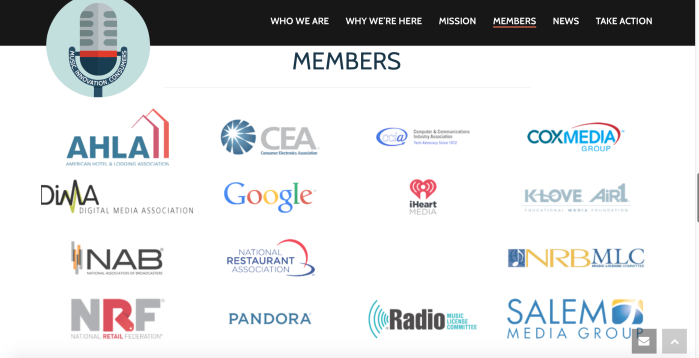
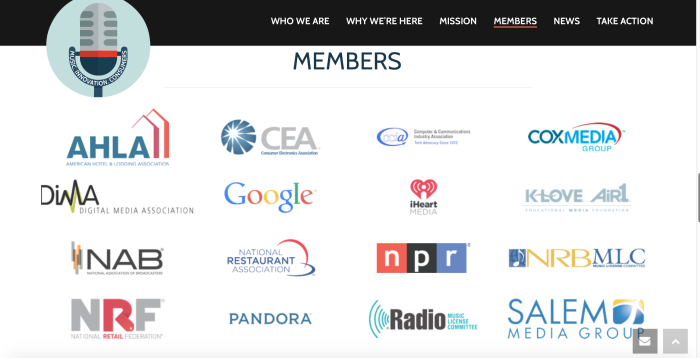
MIC Coalition Members
SONA Pursues Its Lawsuit
The most interesting part of the puzzle is the lawsuit brought by Songwriters of North America, Michelle Lewis, Thomas Kelly and Pamela Sheyne. As a threshold matter, it reinforces the idea that ASCAP and BMI are comprised of songwriters bargaining collectively. While it may be convenient for the broadcasters, Google and their MIC Coalition to heap condemnation on the PROs, when doing so they are actually shaming the individual songwriters who are members of ASCAP and BMI. Those songwriters don’t feel they’ve done anything wrong.
The SONA lawsuit confirms this for all to see. While it takes considerable courage to sue a defendant who comes with badges and guns and prints money to pay their legal bills, the DOJ is now faced with a process that reeks to high heaven, looks at least potentially fraught with corruption and which SONA will now put under a microscope–if they survive summary judgement.
Of course, it should not be lost on anyone that the DOJ’s position will be some version of “We lost, so no harm, no foul” as absurd as that may seem. I’m not sure that “just kidding” is a good look for them.
Until the ASCAP judge rules on the issue and follows Judge Stanton’s reasoning and the DOJ agrees not to file an appeal, there’s no reason for SONA to change course. If SONA survives summary judgement on one or both of its claims, then things may get interesting.
Governors Take Action
Texas Governor Greg Abbott was the first state governor to call on the Attorney General to back off of the 100% licensing rule, acting in defense of Texas songwriters. It would not be surprising to see other governors write their own letters to the AG, particularly now that Judge Stanton has ruled.
Terminating the Consent Decrees
What this episode should teach everyone is that the consent decrees have run their course. They are now being manipulated by crony capitalists for private commercial advantage. Hesse’s connections to Google and the MIC Coalition are well known and only further undermine the public’s trust in government’s ability to operate fairly.
Abandoning the consent decrees does not mean that songwriters would get a free pass on antitrust prosecution, it just means that the true free market would operate outside of a little intellectual elite in a far away Eastern city that thinks it can plan the lives of songwriters better than songwriters can themselves. Music users and the government would still be free to bring antitrust actions if the facts warranted it as has already happened to SESAC (which is not subject to a consent decree).
So for the moment, songwriters are in a holding pattern but with the wind at their backs.
I’m still looking forward to an explanation of why Google, Pandora, Clear Channel and a host of other giant multinational corporations with hundreds if not thousands of lobbyists need the awesome power of the U.S. Government to protect them from…songwriters.
Getting closure on this regrettable episode will be better for songwriters and for music users. It’s hard enough without the Nanny State intervening. Collective licensing is one of the few areas of the business that is working pretty well in the digital age.
Songwriters deserve the chance to live their commercial lives without paying for long-forgotten sins committed before most of them were born.

 Music Tech Solutions