Denmark’s Big Idea: Protect Personhood from the Blob With Consent First and Platform Duty Built In

Denmark has given the rest of us a simple, powerful starting point: protect the personhood of citizens from the blob—the borderless slurry of synthetic media that can clone your face, your voice, and your performance at scale. Crucially, Denmark isn’t trying to turn name‑image‑likeness into a mini‑copyright. It’s saying something more profound: your identity isn’t a “work”; it’s you. It’s what is sometimes called “personhood.” That framing changes everything. It’s not commerce, it’s a human right.

The Elements of Personhood

Personhood raises human reality as moral consideration, not a piece of content. For example, the European Court of Human Rights reads Article 8 ECHR (“private life”) to include personal identity (name, identity integrity, etc.), protecting individual identity against unjustified interference. This is, of course, anathema to Silicon Valley, but the world takes a different view.

In fact, Denmark’s proposal echoes the Universal Declaration of Human Rights. It starts with dignity (Art. 1) and recognition of each person before the law (Art. 6), and it squarely protects private life, honor, and reputation against synthetic impersonation (Art. 12). It balances freedom of expression (Art. 19) with narrow, clearly labeled carve-outs, and it respects creators’ moral and material interests (Art. 27(2)). Most importantly, it delivers an effective remedy (Art. 8): a consent-first rule backed by provenance and cross-platform stay-down, so individuals aren’t forced into DMCA-style learned helplessness.

Why does this matter? Because the moment we call identity or personhood a species of copyright, platforms will reach for a familiar toolbox—quotation, parody, transient copies, text‑and‑data‑mining (TDM)—and claim exceptions to protect them from “data holders”. That’s bleed‑through: the defenses built for expressive works ooze into an identity context where they don’t belong. The result is an unearned permission slip to scrape faces and voices “because the web is public.” Denmark points us in the opposite direction: consent or it’s unlawful. Not “fair use,” not “lawful access,” not “industry custom., not “data profile.” Consent. Pretty easy concept. It’s one of the main reasons tech executives keep their kids away from cell phones and social media.

Not Replicating the Safe Harbor Disaster

Think about how we got here. The first generation of the internet scaled by pushing risk downstream with a portfolio of safe harbors like the God-awful DMCA and Section 230 in the US. Platforms insisted they were deserving of blanket liability shields because they were special. They were “neutral pipes” which no one believed then and don’t believe now. These massive safe harbors hardened into a business model that likely added billions to the FAANG bottom line. We taught millions of rightsholders and users to live with learned helplessness: file a notice, watch copies multiply, rinse and repeat. Many users did not know they could even do that much, and frankly still may not. That DMCA‑era whack‑a‑mole turned into a faux license, a kind of “catch me if you can” bargain where exhaustion replaces consent.

Denmark’s New Protection of Personhood for the AI Era

Denmark’s move is a chance to break that pattern—if we resist the gravitational pull back to copyright. A fresh right of identity (called a “sui generis” right among Latin fans) is not subject to copyright or database exceptions, especially fair use, DMCA, and TDM. In plain English: “publicly available” is not permission to clone your face, train on your voice, or fabricate your performance. Or your children, either. If an AI platform wants to use identity, they ask first. If they don’t ask, they don’t get to do it, and they don’t get to keep the model they trained on it. And like many other areas, children can’t consent.

That legal foundation unlocks the practical fix creators and citizens actually need: stay‑down across platforms, not endless piecemeal takedowns. Imagine a teacher discovers a convincing deepfake circulating on two social networks and a messaging app. If we treat that deepfake as a copyright issue under the old model, she sends three notices, then five, then twelve. Week two, the video reappears with a slight change. Week three, it’s re‑encoded, mirrored, and captioned. The message she receives under a copyright regime is “you can never catch up.” So why don’t you just give up. Which, of course, in the world of Silicon Valley monopoly rents, is called the plan. That’s the learned helplessness Denmark gives us permission to reject.

Enforcing Personhood

How would the new plan work? First, we treat realistic digital imitations of a person’s face, voice, or performance as illegal absent consent, with only narrow, clearly labeled carve‑outs for genuine public‑interest reporting (no children, no false endorsement, no biometric spoofing risk, provenance intact). That’s the rights architecture: bright lines and human‑centered. Hence, “personhood.”

Second, we wire enforcement to succeed at internet scale. The way out of whack‑a‑mole is a cross‑platform deepfake registry operated with real governance. A deepfake registry doesn’t store videos; it stores non‑reversible fingerprints—exact file hashes for byte‑for‑byte matches and robust, perceptual fingerprints for the variants (different encodes, crops, borders). For audio, we use acoustic fingerprints; for video, scene/frame signatures. These markers will evolve and so should the deepfakes registry. One confirmed case becomes a family of identifiers that platforms check at upload and on re‑share. The first takedown becomes the last.

Third, we pair that with provenance by default: Provenance isn’t a license; it’s evidence. When credentials are present, it’s easier to authenticate so there is an incentive to use them. Provenance is the rebar that turns legal rules into reliable, automatable processes. However, absence of credentials doesn’t mean free for all.

Finally, we put the onus where it belongs—on platforms. Europe’s Digital Services Act at least theoretically already replaced “willful blindness” with “notice‑and‑action” duties and oversight for very large platforms. Denmark’s identity right gives citizens a clear, national‑law basis to say: “This is illegal content—remove it and keep it down.” The platform’s job isn’t to litigate fair use in the abstract or hide behind TDM. It’s to implement upload checks, preserve provenance, run repeat‑offender policies, and prevent recurrences. If a case was verified yesterday, it shouldn’t be back tomorrow with a 10‑pixel border or other trivial alteration to defeat the rules.

Some will ask: what about creativity and satire? The answer is what it has always been in responsible speech law—more speech not fake speech. If you’re lampooning a politician with a clearly labeled synthetic speech, no implied endorsement, provenance intact, and no risk of biometric spoofing or fraud, you have defenses. The point isn’t to smother satire; it’s to end the pretense that satire requires open season on the biometric identities of private citizens and working artists.

Others will ask: what about research and innovation? Good research runs on consent, especially human subject research (see 45 C.F.R. part 46). If a lab wants to study voice cloning, it recruits consenting participants, documents scope and duration, and keeps data and models in controlled settings. That’s science. What isn’t science is scraping the voices of a country’s population “because the web is public,” then shipping a model that anyone can use to spoof a bank’s call‑center checks. A no‑TDM‑bleed‑through clause draws that line clearly.

And yes, edge cases exist. There will be appeals, mistakes, and hard calls at the margins. That is why the registry must be governed—with identity verification, transparent logs, fast appeals, and independent oversight. Done right, it will look less like a black box and more like infrastructure: a quiet backbone that keeps people safe while allowing reporting and legitimate creative work to thrive.

If Denmark’s spark is to become a firebreak, the message needs to be crisp:

— This is not copyright. Identity is a personal right; copyright defenses don’t apply.

— Consent is the rule. Deepfakes without consent is unlawful.

— No TDM bleed‑through. “Publicly available” does not equate to permission to clone or train.

— Provenance helps prove, not permit. Keep credentials intact; stripping them has consequences.

— Stay‑down, cross‑platform. One verified case should not become a thousand reuploads.

That’s how you protect personhood from the blob. By refusing to treat humans like “content,” by ending the faux‑license of whack‑a‑mole, and by making platforms responsible for prevention, not just belated reaction. Denmark has given us the right opening line. Now we should finish the paragraph: consent or block. Label it, prove it, or remove it.

AI’s Manhattan Project Rhetoric, Clearance-Free Reality

Every time a tech CEO compares frontier AI to the Manhattan Project, take a breath—and remember what that actually means.  Master spycatcher James Jesus Angleton is rolling in his grave. (aka Matt Damon in The Good Shepherd.). And like most elevator pitch talking points, that analogy starts to fall apart on inspection.

The Manhattan Project wasn’t just a moonshot scientific collaboration. It was the most tightly controlled, security-obsessed R&D operation in American history. Every physicist, engineer, and janitor involved had a federal security clearance. Facilities were locked down under military command of General Leslie Groves. Communications were monitored. Access was compartmentalized. And still—still—the Soviets penetrated it.  See Klaus Fuchs.  Let’s understand just how secret the Manhattan Project was—General Curtis LeMay had no idea it was happening until he was asked to set up facilities for the Enola Gay on his bomber base on Tinian a few months before the first nuclear bomb.  You want to find out about the details of any frontier lab, just pick up the newspaper.  Not nearly the same thing. There were no chatbots involved and there were no Special Government Employees with no security clearance.

Oppie Sacks

So when today’s AI executives name-drop Oppenheimer and invoke the gravity of dual-use technologies, what exactly are they suggesting? That we’re building world-altering capabilities without any of the safeguards that even the AI Whiz Kids admit are historically necessary by their Manhattan Project talking point in the pitch deck?

These frontier labs aren’t locked down. They’re open-plan. They’re not vetting personnel. They’re recruiting from Discord servers. They’re not subject to classified environments. They’re training military-civilian dual-use models on consumer cloud platforms. And when questioned, they invoke private sector privilege and push back against any suggestion of state or federal regulation.  And here’s a newsflash—requiring a security clearance for scientific work in the vital national interest is not regulation.  (Neither is copyright but that’s another story.)

Meanwhile, they’re angling for access to Department of Energy nuclear real estate, government compute subsidies, and preferred status in export policy—all under the justification of “national security” because, you know, China.  They want the symbolism of the Manhattan Project without the substance. They want to be seen as indispensable without being held accountable.

The truth is that AI is dual-use. It can power logistics and surveillance, language learning and warfare. That’s not theoretical—it’s already happening. China openly treats AI as part of its military-civil fusion strategy. Russia has targeted U.S. systems with information warfare bots. And our labs? They’re scraping from the open internet and assuming the training data hasn’t been poisoned with the massive misinformation campaigns on Wikipedia, Reddit and X that are routine.

If even the Manhattan Project—run under maximum secrecy—was infiltrated by Soviet spies, what are the chances that today’s AI labs, operating in the wide open are immune?  Wouldn’t a good spycatcher like Angleton assume these wunderkinds have already been penetrated?

We have no standard vetting for employees. No security clearances. No model release controls. No audit trail for pretraining data integrity. And no clear protocol for foreign access to model weights, inference APIs, or sensitive safety infrastructure. It’s not a matter of if. It’s a matter of when—or more likely, a matter of already.

Remember–nobody got rich out of working on the Manhattan Project. That’s another big difference. These guys are in it for the money, make no mistake.

So when you hear the Manhattan Project invoked again, ask the follow-up question: Where’s the security clearance?  Where’s the classification?  Where’s the real protection?  Who’s playing the role of Klaus Fuchs?

Because if AI is our new Manhattan Project, then running it without security is more than hypocrisy. It’s incompetence at scale.

AI Frontier Labs and the Singularity as a Modern Prophetic Cult

It gets rid of your gambling debts 
It quits smoking 
It’s a friend, it’s a companion 
It’s the only product you will ever need
From Step Right Up, written by Tom Waits

The AI “frontier labs” — OpenAI, Anthropic, DeepMind, xAI, and their constellation of evangelists — often present themselves as the high priests of a coming digital transcendence. This is sometimes called “the singularity” which refers to a hypothetical future point when artificial intelligence surpasses human intelligence, triggering rapid, unpredictable technological growth. Often associated with self-improving AI, it implies a transformation of society, consciousness, and control, where human decision-making may be outpaced or rendered obsolete by machines operating beyond our comprehension. 

But viewed through the lens of social psychology, the AI evangelists increasingly resembles that of cognitive dissonance cults, as famously documented in Dr. Leon Festinger and team’s important study of a UFO cult (a la Heaven’s Gate), When Prophecy Fails.  (See also The Great Disappointment.)

In that social psychology foundational study, a group of believers centered around a woman named “Marian Keech” predicted the world would end in a cataclysmic flood, only to be rescued by alien beings — but when the prophecy failed, they doubled down. Rather than abandoning their beliefs, the group rationalized the outcome (“We were spared because of our faith”) and became even more committed. They get this self-hypnotized look, kind of like this guy (and remember-this is what the Meta marketing people thought was the flagship spot for Meta’s entire superintelligence hustle):


This same psychosis permeates Singularity narratives and the AI doom/alignment discourse:
– The world is about to end — not by water, but by unaligned superintelligence.
– A chosen few (frontier labs) hold the secret knowledge to prevent this.
– The public must trust them to build, contain, and govern the very thing they fear.
– And if the predicted catastrophe doesn’t come, they’ll say it was their vigilance that saved us.

Like cultic prophecy, the Singularity promises transformation:
– Total liberation or annihilation (including liberation from annihilation by the Red Menace, i.e., the Chinese Communist Party).
– A timeline (“AGI by 2027”, “everything will change in 18 months”).
– An elite in-group with special knowledge and “Don’t be evil” moral responsibility.
– A strict hierarchy of belief and loyalty — criticism is heresy, delay is betrayal.

This serves multiple purposes:
1. Maintains funding and prestige by positioning the labs as indispensable moral actors.
2. Deflects criticism of copyright infringement, resource consumption, or labor abuse with existential urgency (because China, don’t you know).
3. Converts external threats (like regulation) into internal persecution, reinforcing group solidarity.

The rhetoric of “you don’t understand how serious this is” mirrors cult defenses exactly.

Here’s the rub: the timeline keeps slipping. Every six months, we’re told the leap to “godlike AI” is imminent. GPT‑4 was supposed to upend everything. That didn’t happen, so GPT‑5 will do it for real. Gemini flopped, but Claude 3 might still be the one.

When prophecy fails, they don’t admit error — they revise the story:
– “AI keeps accelerating”
– “It’s a slow takeoff, not a fast one.”
– “We stopped the bad outcomes by acting early.”
– “The doom is still coming — just not yet.”

Leon Festinger’s theories seen in When Prophecy Fails, especially cognitive dissonance and social comparison, influence AI by shaping how systems model human behavior, resolve conflicting inputs, and simulate decision-making. His work guides developers of interactive agents, recommender systems, and behavioral algorithms that aim to mimic or respond to human inconsistencies, biases, and belief formation.   So this isn’t a casual connection.

As with Festinger’s study, the failure of predictions intensifies belief rather than weakening it. And the deeper the believer’s personal investment, the harder it is to turn back. For many AI cultists, this includes financial incentives, status, and identity.

Unlike spiritual cults, AI frontier labs have material outcomes tied to their prophecy:
– Federal land allocations, as we’ve seen with DOE site handovers.
– Regulatory exemptions, by presenting themselves as saviors.
– Massive capital investment, driven by the promise of world-changing returns.

In the case of AI, this is not just belief — it’s belief weaponized to secure public assets, shape global policy, and monopolize technological futures. And when the same people build the bomb, sell the bunker, and write the evacuation plan, it’s not spiritual salvation — it’s capture.

The pressure to sustain the AI prophecy—that artificial intelligence will revolutionize everything—is unprecedented because the financial stakes are enormous. Trillions of dollars in market valuation, venture capital, and government subsidies now hinge on belief in AI’s inevitable dominance. Unlike past tech booms, today’s AI narrative is not just speculative; it is embedded in infrastructure planning, defense strategy, and global trade. This creates systemic incentives to ignore risks, downplay limitations, and dismiss ethical concerns. To question the prophecy is to threaten entire business models and geopolitical agendas. As with any ideology backed by capital, maintaining belief becomes more important than truth.

The Singularity, as sold by the frontier labs, is not just a future hypothesis — it’s a living ideology. And like the apocalyptic cults before them, these institutions demand public faith, offer no accountability, and position themselves as both priesthood and god.

If we want a secular, democratic future for AI, we must stop treating these frontier labs as prophets — and start treating them as power centers subject to scrutiny, not salvation.

Schrödinger’s Training Clause: How Platforms Like WeTransfer Say They’re Not Using Your Files for AI—Until They Are

Tech companies want your content. Not just to host it, but for their training pipeline—to train models, refine algorithms, and “improve services” in ways that just happen to lead to new commercial AI products. But as public awareness catches up, we’ve entered a new phase: deniable ingestion.

Welcome to the world of the Schrödinger’s training clause—a legal paradox where your data is simultaneously not being used to train AI and fully licensed in case they decide to do so.

The Door That’s Always Open

Let’s take the WeTransfer case. For a brief period this month (in July 2025), their Terms of Service included an unmistakable clause: users granted them rights to use uploaded content to “improve the performance of machine learning models.” That language was direct. It caused backlash. And it disappeared.

Many mea culpas later, their TOS has been scrubbed clean of AI references. I appreciate the sentiment, really I do. But—and there’s always a but–the core license hasn’t changed. It’s still:

– Perpetual

– Worldwide

– Royalty-free

– Transferable

– Sub-licensable

They’ve simply returned the problem clause to its quantum box. No machine learning references. But nothing that stops it either.

 A Clause in Superposition

Platforms like WeTransfer—and others—have figured out the magic words: Don’t say you’re using data to train AI. Don’t say you’re not using it either. Instead, claim a sweeping license to do anything necessary to “develop or improve the service.”

That vague phrasing allows future pivots. It’s not a denial. It’s a delay. And to delay is to deny.

That’s what makes it Schrödinger’s training clause: Your content isn’t being used for AI. Unless it is. And you won’t know until someone leaks it, or a lawsuit makes discovery public.

The Scrape-Then-Scrub Scenario

Let’s reconstruct what could have happened–not saying it did happen, just could have–following the timeline in The Register:

1. Early July 2025: WeTransfer silently updates its Terms of Service to include AI training rights.

2. Users continue uploading sensitive or valuable content.

3. [Somebody’s] AI systems quickly ingest that data under the granted license.

4. Public backlash erupts mid-July.

5. WeTransfer removes the clause—but to my knowledge never revokes the license retroactively or promises to delete what was scraped. In fact, here’s their statement which includes this non-denial denial: “We don’t use machine learning or any form of AI to process content shared via WeTransfer.” OK, that’s nice but that wasn’t the question. And if their TOS was so clear, then why the amendment in the first place?

Here’s the Potential Legal Catch

Even if WeTransfer removed the clause later, any ingestion that occurred during the ‘AI clause window’ is arguably still valid under the terms then in force. As far as I know, they haven’t promised:

– To destroy any trained models

– To purge training data caches

– Or to prevent third-party partners from retaining data accessed lawfully at the time

What Would ‘Undoing’ Scraping Require?

– Audit logs to track what content was ingested and when

– Reversion of any models trained on user data

– Retroactive license revocation and sub-license termination

None of this has been offered that I have seen.

What ‘We Don’t Train on Your Data’ Actually Means

When companies say, “we don’t use your data to train AI,” ask:

– Do you have the technical means to prevent that?

– Is it contractually prohibited?

– Do you prohibit future sublicensing?

– Can I audit or opt out at the file level?

If the answer to those is “no,” then the denial is toothless.

How Creators Can Fight Back

1. Use platforms that require active opt-in for AI training.

2. Encrypt files before uploading.

3. Include counter-language in contracts or submission terms:

   “No content provided may be used, directly or indirectly, to train or fine-tune machine learning or artificial intelligence systems, unless separately and explicitly licensed for that purpose in writing” or something along those lines.

4. Call it out. If a platform uses Schrödinger’s language, name it. The only thing tech companies fear more than litigation is transparency.

What is to Be Done?

The most dangerous clauses aren’t the ones that scream “AI training.” They’re the ones that whisper, “We’re just improving the service.”

If you’re a creative, legal advisor, or rights advocate, remember: the future isn’t being stolen with force. It’s being licensed away in advance, one unchecked checkbox at a time.

And if a platform’s only defense is “we’re not doing that right now”—that’s not a commitment. That’s a pause.

That’s Schrödinger’s training clause.

From Plutonium to Prompt Engineering: Big Tech’s Land Grab at America’s Nuclear Sites–and Who’s Paying for It?

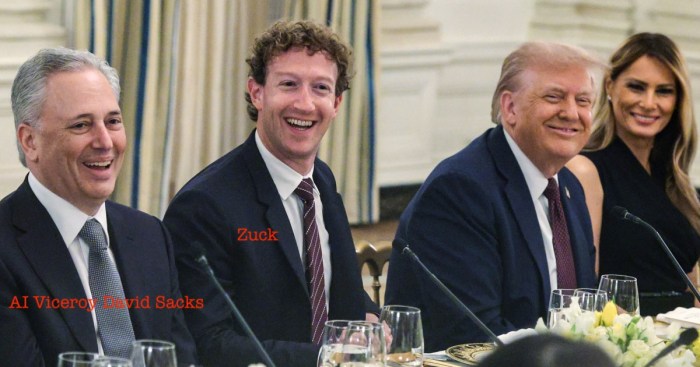
In a twist of post–Cold War irony, the same federal sites that once forged the isotopes of nuclear deterrence are now poised to fuel the arms race of artificial intelligence under the leadership of Special Government Employee and Silicon Valley Viceroy David Sacks. Under a new Department of Energy (DOE) initiative, 16 legacy nuclear and lab sites — including Savannah River, Idaho National Lab, and Oak Ridge Tennessee — are being opened to private companies to host massive AI data centers. That’s right–Tennessee where David Sacks is riding roughshod over the ELVIS Act.

But as this techno-industrial alliance gathers steam, one question looms large: Who benefits — and how will the American public be compensated for leasing its nuclear commons to the world’s most powerful corporations? Spoiler alert: We won’t.

A New Model, But Not the Manhattan Project

This program is being billed in headlines as a “new Manhattan Project for AI.” But that comparison falls apart quickly. The original Manhattan Project was:
– Owned by the government
– Staffed by public scientists
– Built for collective defense

Today’s AI infrastructure effort is:
– Privately controlled
– Driven by monopolies and venture capital
– Structured to avoid transparency and public input
– Uses free leases on public land with private nuclear reactors

Call it the Manhattan Project in reverse — not national defense, but national defense capture.

The Art of the Deal: Who gets what?

What Big Tech Is Getting

– Access to federal land already zoned, secured, and wired
– Exemption from state and local permitting
– Bypass of grid congestion via nuclear-ready substations
– DOE’s help fast-tracking nuclear microreactors (SMRs)
– Potential sovereign AI training enclaves, shielded from export controls and oversight

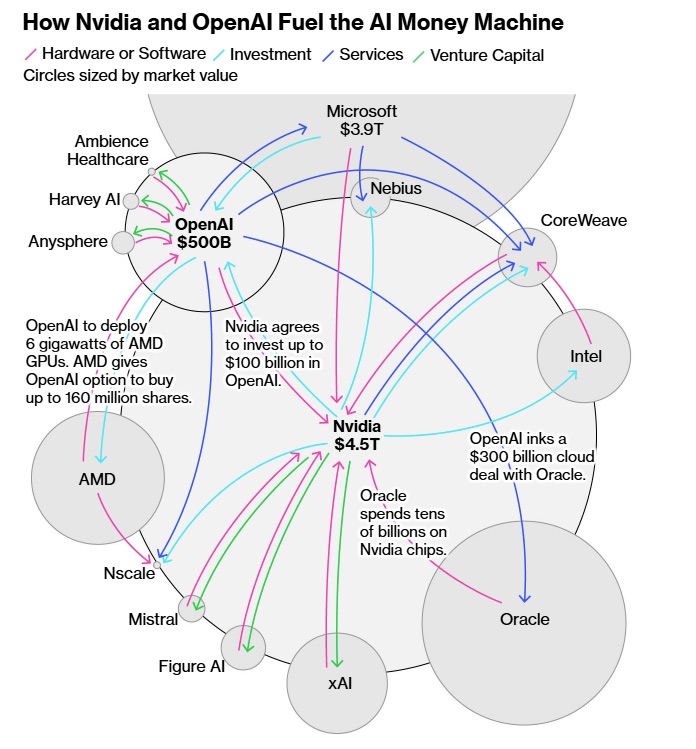
And all of it is being made available to private companies called the “Frontier labs”: Microsoft, Oracle, Amazon, OpenAI, Anthropic, xAI — the very firms at the center of the AI race.

What the Taxpayer Gets (Maybe)

Despite this extraordinary access, almost nothing is disclosed about how the public is compensated. No known revenue-sharing models. No guaranteed public compute access. No equity. No royalties.

Land lease payments? Not disclosed. Probably none.
Local tax revenue? Minimal (federal lands exempt)
Infrastructure benefit sharing? Unclear or limited

It’s all being negotiated quietly, under vague promises of “national competitiveness.”

Why AI Labs Want DOE Sites

Frontier labs like OpenAI and Anthropic — and their cloud sponsors — need:
– Gigawatts of energy
– Secure compute environments
– Freedom from export rules and Freedom of Information Act requests
– Permitting shortcuts and national branding

The DOE sites offer all of that — plus built-in federal credibility. The same labs currently arguing in court that their training practices are “fair use” now claim they are defenders of democracy training AI on taxpayer-built land.

This Isn’t the Manhattan Project — It’s the Extraction Economy in a Lab Coat

The tech industry loves to invoke patriotism when it’s convenient — especially when demanding access to federal land, nuclear infrastructure, or diplomatic cover from the EU’s AI Act. But let’s be clear:

This isn’t the Manhattan Project. Or rather we should hope it isn’t because that one didn’t end well and still hasn’t.
It’s not public service.
It’s Big Tech lying about fair use, wrapped in an American flag — and for all we know, it might be the first time David Sacks ever saw one.

When companies like OpenAI and Microsoft claim they’re defending democracy while building proprietary systems on DOE nuclear land, we’re not just being gaslit — we’re being looted.

If the AI revolution is built on nationalizing risk and privatizing power, it’s time to ask whose country this still is — and who gets to turn off the lights.

When Viceroy David Sacks Writes the Tariffs: How One VC Could Weaponize U.S. Trade Against the EU

David Sacks is a “Special Government Employee”, Silicon Valley insider and a PayPal mafioso who has become one of the most influential “unofficial” architects of AI policy under the Trump administration. No confirmation hearings, no formal role—but direct access to power.

He:
– Hosts influential political podcasts with Musk and Thiel-aligned narratives.
– Coordinates behind closed doors with elite AI companies who are now PRC-style “national champions” (OpenAI, Anthropic, Palantir).
– Has reportedly played a central role in shaping the AI Executive Orders and industrial strategy driving billions in public infrastructure to favored firms.

Under 18 U.S.C. § 202(a), a Special Government Employee is:

  • Temporarily retained to perform limited government functions,
  • For no more than 130 days per year (which for Sacks ends either April 14 or May 30, 2025), unless reappointed in a different role,
  • Typically serves in an advisory or consultative role, or
  • Without holding actual decision-making or operational authority over federal programs or agencies.

SGEs are used to avoid conflict-of-interest entanglements for outside experts while still tapping their expertise for advisory purposes. They are not supposed to wield sweeping executive power or effectively run a government program. Yeah, right.

And like a good little Silicon Valley weasel, Sacks supposedly is alternating between his DC side hustle and his VC office to stay under 130 days. This is a dumbass reading of the statute which says “‘Special Government employee’ means… any officer or employee…retained, designated, appointed, or employed…to perform…temporary duties… for not more than 130 days during any period of 365 consecutive days.” That’s not the same as “worked” 130 days on the time card punch. But oh well.

David Sacks has already exceeded the legal boundaries of his appointment as a Special Government Employee (SGE) both in time served but also by directing the implementation of a sweeping, whole-of-government AI policy, including authoring executive orders, issuing binding directives to federal agencies, and coordinating interagency enforcement strategies—actions that plainly constitute executive authority reserved for duly appointed officers under the Appointments Clause. As an SGE, Sacks is authorized only to provide temporary, nonbinding advice, not to exercise operational control or policy-setting discretion across the federal government. Accordingly, any executive actions taken at his direction or based on his advisement are constitutionally infirm as the unlawful product of an individual acting without valid authority, and must be deemed void as “fruit of the poisonous tree.”

Of course, one of the states that the Trump AI Executive Orders will collide with almost immediately is the European Union and its EU AI Act. Were they 51st? No that’s Canada. 52nd? Ah, right that’s Greenland. Must be 53rd.

How Could David Sacks Weaponize Trade Policy to Help His Constituents in Silicon Valley?

Here’s the playbook:

Engineer Executive Orders

Through his demonstrated access to Trump and senior White House officials, Sacks could promote executive orders under the International Emergency Economic Powers Act (IEEPA) or Section 301 of the Trade Act, aimed at punishing countries (like EU members) for “unfair restrictions” on U.S. AI exports or operations.

Something like this: “The European Union’s AI Act constitutes a discriminatory and protectionist measure targeting American AI innovation, and materially threatens U.S. national security and technological leadership.” I got your moratorium right here.

Leverage the USTR as a Blunt Instrument

The Office of the U.S. Trade Representative (USTR) can initiate investigations under Section 301 without needing new laws. All it takes is political will—and a nudge from someone like Viceroy Sacks—to argue that the EU’s AI Act discriminates against U.S. firms. See Canada’s “Tech Tax”. Gee, I wonder if Viceroy Sacks had anything to do with that one.

Redefine “National Security”

Sacks and his allies can exploit the Trump administration’s loose definition of “national security” claiming that restricting U.S. AI firms in Europe endangers critical defense and intelligence capabilities.

Smear Campaigns and Influence Operations

Sacks could launch more public campaigns against the EU like his attacks on the AI diffusion rule. According to the BBC, “Mr. Sacks cited the alienation of allies as one of his key arguments against the AI diffusion plan”. That’s a nice ally you got there, be a shame if something happened to it.

After all, the EU AI Act does what Sacks despises like protects artists and consumers, restricts deployment of high-risk AI systems (like facial recognition and social scoring), requires documentation of training data (which exposes copyright violations), and applies extraterritorially (meaning U.S. firms must comply even at home).

And don’t forget, Viceroy Sacks actually was given a portfolio that at least indirectly includes the National Security Council, so he can use the NATO connection to put a fine edge on his “industrial patriotism” just as war looms over Europe.

When Policy Becomes Personal

In a healthy democracy, trade retaliation should be guided by evidence, public interest, and formal process.

But under the current setup, someone like David Sacks can short-circuit the system—turning a private grievance into a national trade war. He’s already done it to consumers, wrongful death claims and copyright, why not join war lords like Eric Schmidt and really jack with people? Like give deduplication a whole new meaning.

When one man’s ideology becomes national policy, it’s not just bad governance.

It’s a broligarchy in real time.

Beyond Standard Oil: How the AI Action Plan Made America a Command Economy for Big Tech That You Will Pay For

When the White House requested public comments earlier this year on how the federal government should approach artificial intelligence, thousands of Americans—ranging from scientists to artists, labor leaders to civil liberties advocates—responded with detailed recommendations. Yet when America’s AI Action Plan was released today, it became immediately clear that those voices were largely ignored. The plan reads less like a response to public input and more like a pre-written blueprint drafted in collaboration with the very corporations it benefits. The priorities, language, and deregulatory thrust suggest that the real consultations happened behind closed doors—with Big Tech executives, not the American people.

In other words, business as usual.

By any historical measure—Standard Oil, AT&T, or even the Cold War military-industrial complex—the Trump Administration’s “America’s AI Action Plan” represents a radical leap toward a command economy built for and by Big Tech. Only this time, there are no rate regulations, no antitrust checks, and no public obligations—just streamlined subsidies, deregulation, and federally orchestrated dominance by a handful of private AI firms.

“Frontier Labs” as National Champions

The plan doesn’t pretend to be neutral. It picks winners—loudly. Companies like OpenAI, Anthropic, Meta, Microsoft, and Google are effectively crowned as “national champions,” entrusted with developing the frontier of artificial intelligence on behalf of the American state.

– The National AI Research Resource (NAIRR) and National Science Foundation partnerships funnel taxpayer-funded compute and talent into these firms.
– Federal procurement standards now require models that align with “American values,” but only as interpreted by government-aligned vendors.
– These companies will receive priority access to compute in a national emergency, hard-wiring them into the national security apparatus.
– Meanwhile, so-called “open” models will be encouraged in name only—no requirement for training data transparency, licensing, or reproducibility.

This is not a free market. This is national champion industrial policy—without the regulation or public equity ownership that historically came with it.

Infrastructure for Them, Not Us

The Action Plan reads like a wishlist from Silicon Valley’s executive suites:

– Federal lands are being opened up for AI data centers and energy infrastructure.
– Environmental and permitting laws are gutted to accelerate construction of facilities for private use.
– A national electrical grid expansion is proposed—not to serve homes and public transportation, but to power hyperscaler GPUs for model training.
– There’s no mention of public access, community benefit, or rural deployment. This is infrastructure built with public expense for private use.

Even during the era of Ma Bell, the public got universal service and price caps. Here? The public is asked to subsidize the buildout and then stand aside.

Deregulation for the Few, Discipline for the Rest

The Plan explicitly orders:
– Rescission of Biden-era safety and equity requirements.
– Reviews of FTC investigations to shield AI firms from liability.
– Withholding of federal AI funding from states that attempt to regulate the technology for safety, labor, or civil rights purposes.

Meanwhile, these same companies are expected to supply the military, detect cyberattacks, run cloud services for federal agencies, and set speech norms in government systems.

The result? An unregulated cartel tasked with executing state functions.

More Extreme Than Standard Oil or AT&T

Let’s be clear: Standard Oil was broken up. AT&T had to offer regulated universal service. Lockheed, Raytheon, and the Cold War defense contractors were overseen by procurement auditors and GAO enforcement.

This new AI economy is more privatized than any prior American industrial model—yet more dependent on the federal government than ever before. It’s an inversion of free market principles wrapped in American flags and GPU clusters.

Welcome to the Command Economy—For Tech Oligarchs

There’s a word for this: command economy. But instead of bureaucrats in Soviet ministries, we now have a handful of unelected CEOs directing infrastructure, energy, science, education, national security, and labor policy—all through cozy relationships with federal agencies.

If we’re going to nationalize AI, let’s do it honestly—with public governance, democratic accountability, and shared benefit. But this halfway privatized, fully subsidized, and wholly unaccountable structure isn’t capitalism. It’s capture.

AI Needs Ever More Electricity—And Google Wants Us to Pay for It

Uncle Sugar’s “National Emergency” Pitch to Congress

At a recent Congressional hearing, former Google CEO Eric “Uncle Sugar” Schmidt delivered a message that was as jingoistic as it was revealing: if America wants to win the AI arms race, it better start building power plants. Fast. But the subtext was even clearer—he expects the taxpayer to foot the bill because, you know, the Chinese Communist Party. Yes, when it comes to fighting the Red Menace, the all-American boys in Silicon Valley will stand ready to fight to the last Ukrainian, or Taiwanese, or even Texan.

Testifying before the House Energy & Commerce Committee on April 9, Schmidt warned that AI’s natural limit isn’t chips—it’s electricity. He projected that the U.S. would need 92 gigawatts of new generation capacity—the equivalent of nearly 100 nuclear reactors—to keep up with AI demand.

Schmidt didn’t propose that Google, OpenAI, Meta, or Microsoft pay for this themselves, just like they didn’t pay for broadband penetration. No, Uncle Sugar pushed for permitting reform, federal subsidies, and government-driven buildouts of new energy infrastructure. In plain English? He wants the public sector to do the hard and expensive work of generating the electricity that Big Tech will profit from.

Will this Improve the Grid?

And let’s not forget: the U.S. electric grid is already dangerously fragile. It’s aging, fragmented, and increasingly vulnerable to cyberattacks, electromagnetic pulse (EMP) weapons, and even extreme weather events. Pouring public money into ultra-centralized AI data infrastructure—without first securing the grid itself—is like building a mansion on a cracked foundation.

If we are going to incur public debt, we should prioritize resilience, distributed energy, grid security, and community-level reliability—not a gold-plated private infrastructure buildout for companies that already have trillion-dollar valuations.

Big Tech’s Growing Appetite—and Private Hoarding

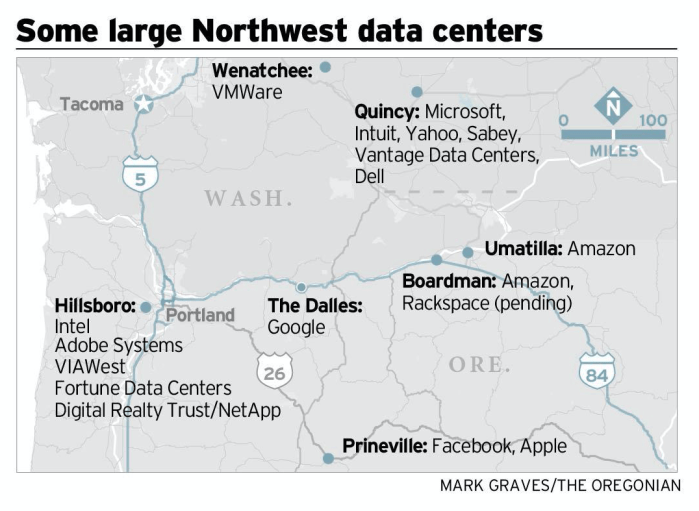
This isn’t just a future problem. The data center buildout is already in full swing and your Uncle Sugar must be getting nervous about where he’s going to get the money from to run his AI and his autonomous drone weapons. In Oregon, where electricity is famously cheap thanks to the Bonneville Power Administration’s hydroelectric dams on the Columbia River, tech companies have quietly snapped up huge portions of the grid’s output. What was once a shared public benefit—affordable, renewable power—is now being monopolized by AI compute farms whose profits leave the region to the bank accounts in Silicon Valley.

Meanwhile, Microsoft is investing in a nuclear-powered data center next to the defunct Three Mile Island reactor—but again, it’s not about public benefit. It’s about keeping Azure’s training workloads running 24/7. And don’t expect them to share any of that power capacity with the public—or even with neighboring hospitals, schools, or communities.

Letting the Public Build Private Fortresses

The real play here isn’t just to use public power—it’s to get the public to build the power infrastructure, and then seal it off for proprietary use. Moats work both ways.

That includes:
– Publicly funded transmission lines across hundreds of miles to deliver power to remote server farms;
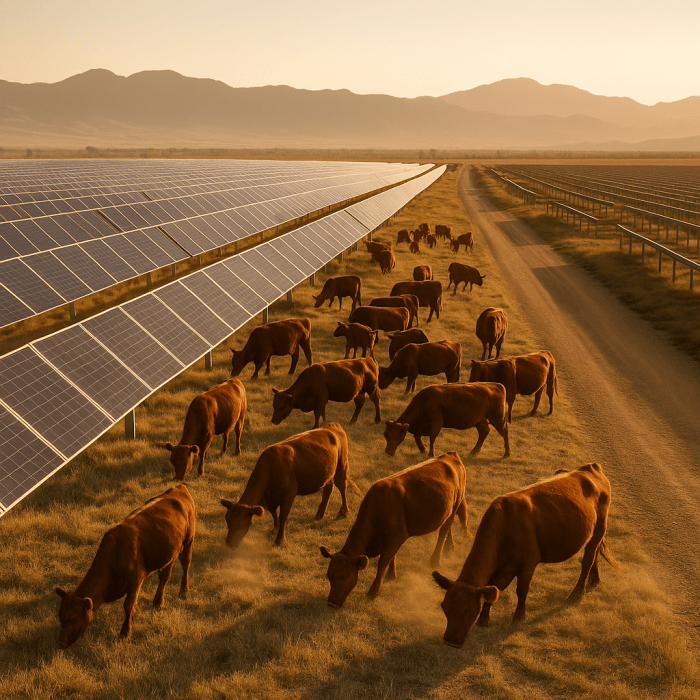
– Publicly subsidized generation capacity (nuclear, gas, solar, hydro—you name it);
– And potentially, prioritized access to the grid that lets AI workloads run while the rest of us face rolling blackouts during heatwaves.

All while tech giants don’t share their models, don’t open their training data, and don’t make their outputs public goods. It’s a privatized extractive model, powered by your tax dollars.

Been Burning for Decades

Don’t forget: Google and YouTube have already been burning massive amounts of electricity for 20 years. It didn’t start with ChatGPT or Gemini. Serving billions of search queries, video streams, and cloud storage events every day requires a permanent baseload—yet somehow this sudden “AI emergency” is being treated like a surprise, as if nobody saw it coming.

If they knew this was coming (and they did), why didn’t they build the power? Why didn’t they plan for sustainability? Why is the public now being told it’s our job to fix their bottleneck?

The Cold War Analogy—Flipped on Its Head

Some industry advocates argue that breaking up Big Tech or slowing AI infrastructure would be like disarming during a new Cold War with China. But Gail Slater, the Assistant Attorney General leading the DOJ’s Antitrust Division, pushed back forcefully—not at a hearing, but on the War Room podcast.

In that interview, Slater recalled how AT&T tried to frame its 1980s breakup as a national security threat, arguing it would hurt America’s Cold War posture. But the DOJ did it anyway—and it led to an explosion of innovation in wireless technology.

“AT&T said, ‘You can’t do this. We are a national champion. We are critical to this country’s success. We will lose the Cold War if you break up AT&T,’ in so many words. … Even so, [the DOJ] moved forward … America didn’t lose the Cold War, and … from that breakup came a lot of competition and innovation.”

“I learned that in order to compete against China, we need to be in all these global races the American way. And what I mean by that is we’ll never beat China by becoming more like China. China has national champions, they have a controlled economy, et cetera, et cetera.

We win all these races and history has taught by our free market system, by letting the ball rip, by letting companies compete, by innovating one another. And the reason why antitrust matters to that picture, to the free market system is because we’re the cop on the beat at the end of the day. We step in when competition is not working and we ensure that markets remain competitive.”

Slater’s message was clear: regulation and competition enforcement are not threats to national strength—they’re prerequisites to it. So there’s no way that the richest corporations in commercial history should be subsidized by the American taxpayer.

Bottom Line: It’s Public Risk, Private Reward

Let’s be clear:

– They want the public to bear the cost of new electricity generation.
– They want the public to underwrite transmission lines.
– They want the public to streamline regulatory hurdles.
– And they plan to privatize the upside, lock down the infrastructure, keep their models secret and socialize the investment risk.

This isn’t a public-private partnership. It’s a one-way extraction scheme. America needs a serious conversation about energy—but it shouldn’t begin with asking taxpayers to bail out the richest companies in commercial history.

David Sacks Is Learning That the States Still Matter

For a moment, it looked like the tech world’s powerbrokers had pulled it off. Buried deep in a Republican infrastructure and tax package was a sleeper provision — the so-called AI moratorium — that would have blocked states from passing their own AI laws for up to a decade. It was an audacious move: centralize control over one of the most consequential technologies in history, bypass 50 state legislatures, and hand the reins to a small circle of federal agencies and especially to tech industry insiders.

But then it collapsed.

The Senate voted 99–1 to strike the moratorium. Governors rebelled. Attorneys general sounded the alarm. Artists, parents, workers, and privacy advocates from across the political spectrum said “no.” Even hardline conservatives like Ted Cruz eventually reversed course when it came down to the final vote. The message to Big Tech or the famous “Little Tech” was clear: the states still matter — and America’s tech elite ignore that at their peril.  (“Little Tech” is the latest rhetorical deflection promoted by Big Tech aka propaganda.)

The old Google crowd pushed the moratorium–their fingerprints were obvious. Having gotten fabulously rich off of their two favorites: The DMCA farce and the Section 230 shakedown. But there’s increasing speculation that White House AI Czar and Silicon Valley Viceroy David Sacks, PayPal alum and vocal MAGA-world player, was calling the ball. If true, that makes this defeat even more revealing.

Sacks represents something of a new breed of power-hungry tech-right influencer — part of the emerging “Red Tech” movement that claims to reject woke capitalism and coastal elitism but still wants experts to shape national policy from Silicon Valley, a chapter straight out of Philip Dru: Administrator. Sacks is tied to figures like Peter Thiel, Elon Musk, and a growing network of Trump-aligned venture capitalists. But even that alignment couldn’t save the moratorium.

Why? Because the core problem wasn’t left vs. right. It was top vs. bottom.

In 1964, Ronald Reagan’s classic speech called A Time for Choosing warned about “a little intellectual elite in a far-distant capitol” deciding what’s best for everyone else. That warning still rings true — except now the “capitol” might just be a server farm in Menlo Park or a podcast studio in LA.

The AI moratorium was an attempt to govern by preemption and fiat, not by consent. And the backlash wasn’t partisan. It came from red states and blue ones alike — places where elected leaders still think they have the right to protect their citizens from unregulated surveillance, deepfakes, data scraping, and economic disruption.

So yes, the defeat of the moratorium was a blow to Google’s strategy of soft-power dominance. But it was also a shot across the bow for David Sacks and the would-be masters of tech populism. You can’t have populism without the people.

If Sacks and his cohort want to play a long game in AI policy, they’ll have to do more than drop ideas into the policy laundry of think tank white papers and Beltway briefings. They’ll need to win public trust, respect state sovereignty, and remember that governing by sneaky safe harbors is no substitute for legitimacy.  

The moratorium failed because it presumed America could be governed like a tech startup — from the top, at speed, with no dissent. Turns out the country is still under the impression they have something to say about how they are governed, especially by Big Tech.