Taxpayer-Backed AI? The Triple Subsidy No One Voted For

OpenAI’s CFO recently suggested that Uncle Sam should backstop AI chip financing—essentially asking taxpayers to guarantee the riskiest capital costs for “frontier labs.” As The Information reported, the idea drew immediate pushback from tech peers who questioned why a company preparing for a $500 billion valuation—and possibly a trillion-dollar IPO—can’t raise its own money. Why should the public underwrite a firm whose private investors are already minting generational wealth?
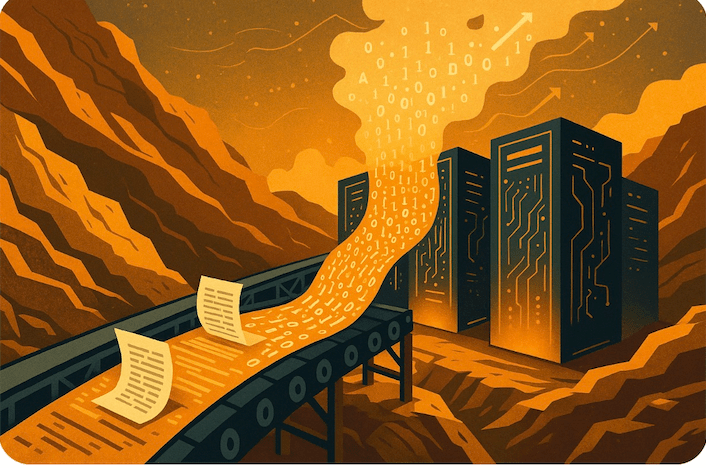

Meanwhile, the Department of Energy is opening federal nuclear and laboratory sites—from Idaho National Lab to Oak Ridge and Savannah River—for private AI data centers, complete with fast-track siting, dedicated transmission lines, and priority megawatts. DOE’s expanded Title XVII loan-guarantee authority sweetens the deal, offering government-backed credit and low borrowing costs. It’s a breathtaking case of public risk for private expansion, at a time when ordinary ratepayers are staring down record-high energy bills.

And the ambition goes further. Some of these companies now plan to site small modular nuclear reactors to provide dedicated power for AI data centers. That means the next generation of nuclear power—built with public financing and risk—could end up serving private compute clusters, not the public grid. In a country already facing desertification, water scarcity, and extreme heat, it is staggering to watch policymakers indulge proposals that will burn enormous volumes of water to cool servers, while residents across the Southwest are asked to ration and conserve. I theoretically don’t have a problem with private power grids, but I don’t believe they’ll be private and I do believe that in both the short run and the long run these “national champions” will drive electricity prices through the stratosphere—which would be OK, too, if the AI labs paid off the bonds that built our utilities. All the bonds.

At the same time, Washington still refuses to enforce copyright law, allowing these same firms to ingest millions of creative works into their models without consent, compensation, or disclosure—just as it did under DMCA §512 and Title I of the MMA, both of which legalized “ingest first, reconcile later.” That’s a copyright subsidy by omission, one that transfers cultural value from working artists into the balance sheets of companies whose business model depends on denial.


And the timing? Unbelievable. These AI subsidies were being discussed in the same week SNAP benefits are running out and the Treasury is struggling to refinance federal debt. We are cutting grocery assistance to families while extending loan guarantees and land access to trillion-dollar corporations.
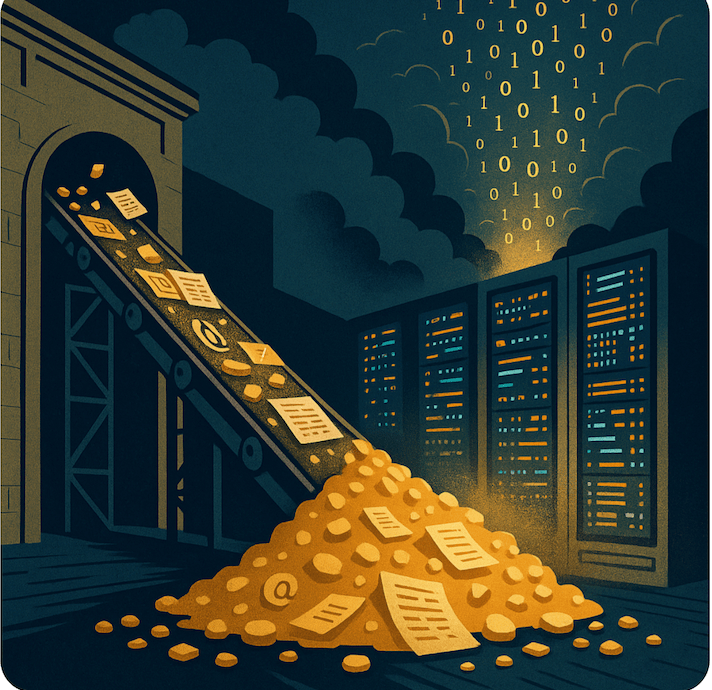

If DOE and DOD insist on framing this as “AI industrial policy,” then condition every dollar on verifiable rights-clean training data, environmental transparency, and water accountability. Demand audits, clawbacks, and public-benefit commitments before the first reactor breaks ground.

Until then, this is not innovation—it’s industrialized arbitrage: public debt, public land, and public water underwriting the private expropriation of America’s creative and natural resources.
Too Dynamic to Question, Too Dangerous to Ignore

When Ed Newton-Rex left Stability AI, he didn’t just make a career move — he issued a warning. His message was simple: we’ve built an industry that moves too fast to be honest.

AI’s defenders insist that regulation can’t keep up, that oversight will “stifle innovation.” But that speed isn’t a by-product; it’s the business model. The system is engineered for planned obsolescence of accountability — every time the public begins to understand one layer of technology, another version ships, invalidating the debate. The goal isn’t progress; it’s perpetual synthetic novelty, where nothing stays still long enough to be measured or governed, and “nothing says freedom like getting away with it.”

We’ve seen this play before. Car makers built expensive sensors we don’t want that fail on schedule; software platforms built policies that expire the moment they bite. In both cases, complexity became a shield and a racket — “too dynamic to question.” And yet, like those unasked-for, but paid for, features in the cars we don’t want, AI’s design choices are too dangerous to ignore. (Like what if your brakes really are going out, not just the sensor is malfunctioning.)

Ed Newton-Rex’s point — echoed in his tweets and testimony — is that the industry has mistaken velocity for virtue. He’s right. The danger is not that these systems evolve too quickly to regulate; it’s that they’re designed that way designed to fail just like that brake sensor. And until lawmakers recognize that speed itself is a form of governance, we’ll keep mistaking momentum for inevitability.

Schrödinger’s Training Clause: How Platforms Like WeTransfer Say They’re Not Using Your Files for AI—Until They Are

Tech companies want your content. Not just to host it, but for their training pipeline—to train models, refine algorithms, and “improve services” in ways that just happen to lead to new commercial AI products. But as public awareness catches up, we’ve entered a new phase: deniable ingestion.

Welcome to the world of the Schrödinger’s training clause—a legal paradox where your data is simultaneously not being used to train AI and fully licensed in case they decide to do so.

The Door That’s Always Open

Let’s take the WeTransfer case. For a brief period this month (in July 2025), their Terms of Service included an unmistakable clause: users granted them rights to use uploaded content to “improve the performance of machine learning models.” That language was direct. It caused backlash. And it disappeared.

Many mea culpas later, their TOS has been scrubbed clean of AI references. I appreciate the sentiment, really I do. But—and there’s always a but–the core license hasn’t changed. It’s still:

– Perpetual

– Worldwide

– Royalty-free

– Transferable

– Sub-licensable

They’ve simply returned the problem clause to its quantum box. No machine learning references. But nothing that stops it either.

 A Clause in Superposition

Platforms like WeTransfer—and others—have figured out the magic words: Don’t say you’re using data to train AI. Don’t say you’re not using it either. Instead, claim a sweeping license to do anything necessary to “develop or improve the service.”

That vague phrasing allows future pivots. It’s not a denial. It’s a delay. And to delay is to deny.

That’s what makes it Schrödinger’s training clause: Your content isn’t being used for AI. Unless it is. And you won’t know until someone leaks it, or a lawsuit makes discovery public.

The Scrape-Then-Scrub Scenario

Let’s reconstruct what could have happened–not saying it did happen, just could have–following the timeline in The Register:

1. Early July 2025: WeTransfer silently updates its Terms of Service to include AI training rights.

2. Users continue uploading sensitive or valuable content.

3. [Somebody’s] AI systems quickly ingest that data under the granted license.

4. Public backlash erupts mid-July.

5. WeTransfer removes the clause—but to my knowledge never revokes the license retroactively or promises to delete what was scraped. In fact, here’s their statement which includes this non-denial denial: “We don’t use machine learning or any form of AI to process content shared via WeTransfer.” OK, that’s nice but that wasn’t the question. And if their TOS was so clear, then why the amendment in the first place?

Here’s the Potential Legal Catch

Even if WeTransfer removed the clause later, any ingestion that occurred during the ‘AI clause window’ is arguably still valid under the terms then in force. As far as I know, they haven’t promised:

– To destroy any trained models

– To purge training data caches

– Or to prevent third-party partners from retaining data accessed lawfully at the time

What Would ‘Undoing’ Scraping Require?

– Audit logs to track what content was ingested and when

– Reversion of any models trained on user data

– Retroactive license revocation and sub-license termination

None of this has been offered that I have seen.

What ‘We Don’t Train on Your Data’ Actually Means

When companies say, “we don’t use your data to train AI,” ask:

– Do you have the technical means to prevent that?

– Is it contractually prohibited?

– Do you prohibit future sublicensing?

– Can I audit or opt out at the file level?

If the answer to those is “no,” then the denial is toothless.

How Creators Can Fight Back

1. Use platforms that require active opt-in for AI training.

2. Encrypt files before uploading.

3. Include counter-language in contracts or submission terms:

   “No content provided may be used, directly or indirectly, to train or fine-tune machine learning or artificial intelligence systems, unless separately and explicitly licensed for that purpose in writing” or something along those lines.

4. Call it out. If a platform uses Schrödinger’s language, name it. The only thing tech companies fear more than litigation is transparency.

What is to Be Done?

The most dangerous clauses aren’t the ones that scream “AI training.” They’re the ones that whisper, “We’re just improving the service.”

If you’re a creative, legal advisor, or rights advocate, remember: the future isn’t being stolen with force. It’s being licensed away in advance, one unchecked checkbox at a time.

And if a platform’s only defense is “we’re not doing that right now”—that’s not a commitment. That’s a pause.

That’s Schrödinger’s training clause.

The Duty Comes From the Data: Rethinking Platform Liability in the Age of Algorithmic Harm

For too long, dominant tech platforms have hidden behind Section 230 of the Communications Decency Act, claiming immunity for any harm caused by third-party content they host or promote. But as platforms like TikTok, YouTube, and Google have long ago moved beyond passive hosting into highly personalized, behavior-shaping recommendation systems, the legal landscape is shifting in the personal injury context. A new theory of liability is emerging—one grounded not in speech, but in conduct. And it begins with a simple premise: the duty comes from the data.

Surveillance-Based Personalization Creates Foreseeable Risk

Modern platforms know more about their users than most doctors, priests, or therapists. Through relentless behavioral surveillance, they collect real-time information about users’ moods, vulnerabilities, preferences, financial stress, and even mental health crises. This data is not inert or passive. It is used to drive engagement by pushing users toward content that exploits or heightens their current state.

If the user is a minor, a person in distress, or someone financially or emotionally unstable, the risk of harm is not abstract. It is foreseeable. When a platform knowingly recommends payday loan ads to someone drowning in debt, promotes eating disorder content to a teenager, or pushes a dangerous viral “challenge” to a 10-year-old child, it becomes an actor, not a conduit. It enters the “range of apprehension,” to borrow from Judge Cardozo’s reasoning in Palsgraf v. Long Island Railroad (one of my favorite law school cases). In tort law, foreseeability or knowledge creates duty. And here, the knowledge is detailed, intimate, and monetized. In fact it is so detailed we had to coin a new name for it: Surveillance capitalism.

Algorithmic Recommendations as Calls to Action

Defenders of platforms often argue that recommendations are just ranked lists—neutral suggestions, not expressive or actionable speech. But I think in the context of harm accruing to users for whatever reason, speech misses the mark. The speech argument collapses when the recommendation is designed to prompt behavior. Let’s be clear, advertisers don’t come to Google because speech, they come to Google because Google can deliver an audience. As Mr. Wanamaker said, “Half the money I spend on advertising is wasted; the trouble is I don’t know which half.” If he’d had Google, none of his money would have been wasted–that’s why Google is a trillion dollar market cap company.

When TikTok serves the same deadly challenge over and over to a child, or Google delivers a “pharmacy” ad to someone seeking pain relief that turns out to be a fentanyl-laced fake pill, the recommendation becomes a call to action. That transforms the platform’s role from curator to instigator. Arguably, that’s why Google paid a $500,000,000 fine and entered a non prosecution agreement to keep their executives out of jail. Again, nothing to do with speech.

Calls to action have long been treated differently in tort and First Amendment law. Calls to action aren’t passive; they are performative and directive. Especially when based on intimate surveillance data, these prompts and nudges are no longer mere expressions—they are behavioral engineering. When they cause harm, they should be judged accordingly. And to paraphrase the gambling bromide, the get paid their money and they takes their chances.

Eggshell Skull Meets Platform Targeting

In tort law, the eggshell skull rule (Smith v. Leech Brain & Co. Ltd. my second favorite law school tort case) holds that a defendant must take their victim as they find them. If a seemingly small nudge causes outsized harm because the victim is unusually vulnerable, the defendant is still liable. Platforms today know exactly who is vulnerable—because they built the profile. There’s nothing random about it. They can’t claim surprise when their behavioral nudges hit someone harder than expected.

When a child dies from a challenge they were algorithmically fed, or a financially desperate person is drawn into predatory lending through targeted promotion, or a mentally fragile person is pushed toward self-harm content, the platform can’t pretend it’s just a pipeline. It is a participant in the causal chain. And under the eggshell skull doctrine, it owns the consequences.

Beyond 230: Duty, Not Censorship

This theory of liability does not require rewriting Section 230 or reclassifying platforms as publishers although I’m not opposed to that review. It’s a legal construct that may have been relevant in 1996 but is no longer fit for purpose. Duty as data bypasses the speech debate entirely. What it says is simple: once you use personal data to push a behavioral outcome, you have a duty to consider the harm that may result and the law will hold you accountable for your action. That duty flows from knowledge, very precise knowledge that is acquired with great effort and cost for a singular purpose–to get rich. The platform designed the targeting, delivered the prompt, and did so based on a data profile it built and exploited. It has left the realm of neutral hosting and entered the realm of actionable conduct.

Courts are beginning to catch up. The Third Circuit’s 2024 decision in Anderson v. TikTok reversed the district court and refused to grant 230 immunity where the platform’s recommendation engine was seen as its own speech. But I think the tort logic may be even more powerful than a 230 analysis based on speech: where platforms collect and act on intimate user data to influence behavior, they incur a duty of care. And when that duty is breached, they should be held liable.

The duty comes from the data. And in a world where your data is their new oil, that duty is long overdue.

Steve’s Not Here–Why AI Platforms Are Still Acting Like Pirate Bay

In 2006, I wrote “Why Not Sell MP3s?” — a simple question pointing to an industry in denial. The dominant listening format was the MP3 file, yet labels were still trying to sell CDs or hide digital files behind brittle DRM. It seems kind of incredible in retrospect, but believe me it happened. Many cycles were burned on that conversation. Fans had moved on. The business hadn’t.

Then came Steve Jobs.

At the launch of the iTunes Store — and I say this as someone who sat in the third row — Jobs gave one of the most brilliant product presentations I’ve ever seen. He didn’t bulldoze the industry. He waited for permission, but only after crafting an offer so compelling it was as if the labels should be paying him to get in. He brought artists on board first. He made it cool, tactile, intuitive. He made it inevitable.

That’s not what’s happening in AI.

Incantor: DRM for the Input Layer

Incantor is trying to be the clean-data solution for AI — a system that wraps content in enforceable rights metadata, licenses its use for training and inference, and tracks compliance. It’s DRM, yes — but applied to training inputs instead of music downloads.

It may be imperfect, but at least it acknowledges that rights exist.

What’s more troubling is the contrast between Incantor’s attempt to create structure and the behavior of the major AI platforms, which have taken a very different route.

AI Platforms = Pirate Bay in a Suit

Today’s generative AI platforms — the big ones — aren’t behaving like Apple. They’re behaving like The Pirate Bay with a pitch deck.

– They ingest anything they can crawl.
– They claim “public availability” as a legal shield.
– They ignore licensing unless forced by litigation or regulation.
– They posture as infrastructure, while vacuuming up the cultural labor of others.

These aren’t scrappy hackers. They’re trillion-dollar companies acting like scraping is a birthright. Where Jobs sat down with artists and made the economics work, the platforms today are doing everything they can to avoid having that conversation.

This isn’t just indifference — it’s design. The entire business model depends on skipping the licensing step and then retrofitting legal justifications later. They’re not building an ecosystem. They’re strip-mining someone else’s.

What Incantor Is — and Isn’t

Incantor isn’t Steve Jobs. It doesn’t control the hardware, the model, the platform, or the user experience. It can’t walk into the room and command the majors to listen with elegance. But what it is trying to do is reintroduce some form of accountability — to build a path for data that isn’t scraped, stolen, or in legal limbo.

That’s not an iTunes power move. It’s a cleanup job. And it won’t work unless the AI companies stop pretending they’re search engines and start acting like publishers, licensees, and creative partners.

What the MP3 Era Actually Taught Us

The MP3 era didn’t end because DRM won. It ended because someone found a way to make the business model and the user experience better — not just legal, but elegant. Jobs didn’t force the industry to change. He gave them a deal they couldn’t refuse.

Today, there’s no Steve Jobs. No artists on stage at AI conferences. No tactile beauty. Just cold infrastructure, vague promises, and a scramble to monetize other people’s work before the lawsuits catch up. Let’s face it–when it comes to Elon, Sam, or Zuck, would you buy a used Mac from that man?

If artists and AI platforms were in one of those old “I’m a Mac / I’m a PC” commercials, you wouldn’t need to be told which is which. One side is creative, curious, collaborative. The other is corporate, defensive, and vaguely annoyed that you even asked the question.

Until that changes, platforms like Incantor will struggle to matter — and the AI industry will continue to look less like iTunes, and more like Pirate Bay with an enterprise sales team.

Does the Metaverse Have Rights? Permissionless Innovation Bias and Artificial Intelligence

As Susan Crawford told us in 2010:

I was brought up and trained in the Internet Age by people who really believed that nation states were on the verge of crumbling…and we could geek around it.  We could avoid it.  These people [and their nation states] were irrelevant.

Ms. Crawford had a key tech role in the Obama Administration and is now a law professor. She crystalized the wistful disappointment of technocrats when the Internet is confronted with generational expectations of non-technocrats (i.e., you and me). The disappointment that ownership means something, privacy means something and that permission defines a self-identity boundary that is not something to “geek around” in a quest for “permissionless innovation.”

Seeking permission recognizes humanity. Failing to do so takes these rights away from the humans and gives them to the people who own the machines–at least until the arrival of general artificial intelligence which may find us working for the machines.

These core concepts of civil society are not “irrelevant”. They define humanity. What assurance do we have that empowered AI machines won’t capture these rights?

All these concepts are at issue in the “metaverse” plan announced by Mark Zuckerberg, who has a supermajority of Facebook voting shares and has decided to devote an initial investment of $10 billion (that we know of) to expanding the metaverse. Given the addictive properties of social media and the scoring potential of social credit it is increasingly important that we acknowledge that the AI behind the metaverse (and soon almost everything else) is itself a hyper efficient implementation of the biases of those who program that AI.

AI bias and the ethics of AI are all the rage. Harvard Business Review tells us that “AI can help identify and reduce the impact of human biases, but it can also make the problem worse by baking in and deploying biases at scale in sensitive application areas.” Cathy O’Neill’s 2016 book Weapons of Math Destruction is a deep dive into how databases discriminate and exhibit the biases of those who create them.

We can all agree that insurance redlining, gender stereotyping and comparable social biases need to be dealt with. But concerns about bias don’t end there. An even deeper dive needs to be done into the more abstract biases required to geek around the nation state and fundamental human rights corrupted by the “permissionless innovation” bias that is built into major platforms like Facebook and from which its employees and kingpin enjoy unparalleled riches.

That bias will be incorporated into the Zuckerberg version of the metaverse and the AI that will power it.

Here’s an example. We know that Facebook’s architecture never contemplated a music or movie licensing process. Zuckerberg built it that way on purpose–the architecture reflected his bias against respecting copyright, user data and really any private property rights not his own. Not only does Zuckerberg take copyright and data for his own purposes, he has convinced billions of people to create free content for him and then to pay him to advertise that content to Facebook users and elsewhere. He takes great care to be sure that there is extraordinarily complex programming to maximize his profit from selling other people’s property, but he refuses to do the same when it comes to paying the people who create the content, and by extension the data he then repackages and sells.

He does this for a reason–he was allowed to get away with it. The music and movie industries failed to stop him and let him get away with it year after year until he finally agreed to make a token payment to a handful of large companies. That cash arrives with no really accurate reporting because reporting would require reversing the bias against licensing and reporting that was built into the Facebook systems to begin with.

A bias that is almost certainly going to be extended into the Facebook metaverse.

The metaverse is likely going to be a place where everything is for sale and product placements abound. The level of data collection on individuals will likely increase exponentially. Consider this Techcrunch description of “Project Cambria” the Metaverse replacement for the standard VR headset:

Cambria will include capabilities that currently aren’t possible on other VR headsets. New sensors in the device will allow your virtual avatar to maintain eye contact and reflect your facial expressions. The company says that’s something that will allow people you’re interacting with virtually to get a better sense of how you’re feeling. Another focus of the headset will be mixed-reality experiences. With the help of new sensors and reconstruction algorithms, Facebook claims Cambria will have the capability to represent objects in the physical world with a sense of depth and perspective.

If past is prologue, the Metaverse will exhibit an even greater disregard for human rights and the laws that protect us than Facebook. That anti-human bias will be baked into the architecture and the AI that supports it. The machines don’t look kindly on those pesky humans and all their petty little rights that stand in the way of the AI getting what it wants.

If you don’t think that’s true, try reading the terms of service for these platforms. Or considering why the technocrats are so interested in safe harbors where their machines can run free of liability for collateral damage. The terms of service should make clear that AI has greater rights than you. We are way beyond pronouns now.

If the only concern of AI ethics is protection against stereotypes or insurance redlining (a version of the social credit score), we will be missing huge fundamental parts of the bias problem. Should we be content if AI is allowing its owner (for so long as it has an owner) to otherwise rob you blind by taking your property or selling your data while using the right pronoun as it geeks around the nation state?