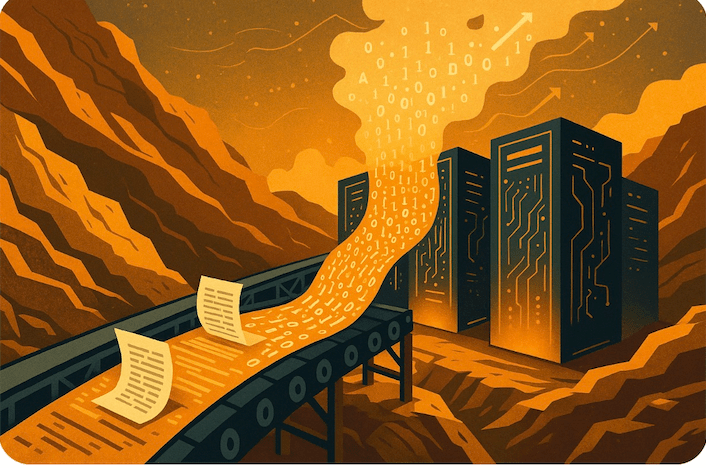
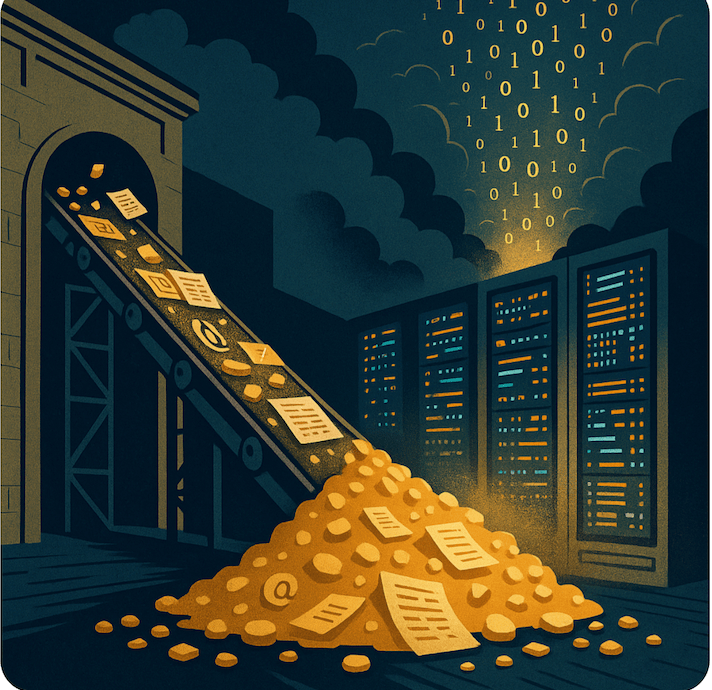
Taxpayer-Backed AI? The Triple Subsidy No One Voted For

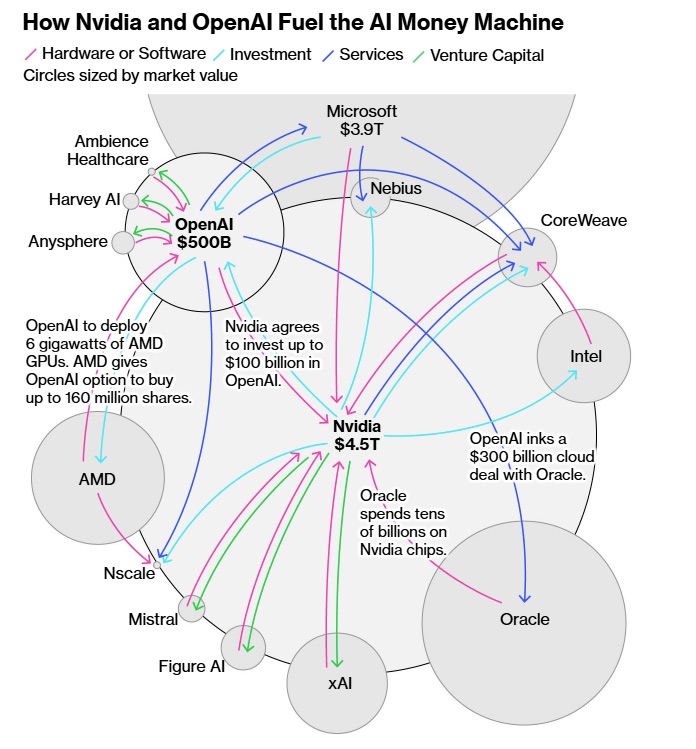
OpenAI’s CFO recently suggested that Uncle Sam should backstop AI chip financing—essentially asking taxpayers to guarantee the riskiest capital costs for “frontier labs.” As The Information reported, the idea drew immediate pushback from tech peers who questioned why a company preparing for a $500 billion valuation—and possibly a trillion-dollar IPO—can’t raise its own money. Why should the public underwrite a firm whose private investors are already minting generational wealth?


Meanwhile, the Department of Energy is opening federal nuclear and laboratory sites—from Idaho National Lab to Oak Ridge and Savannah River—for private AI data centers, complete with fast-track siting, dedicated transmission lines, and priority megawatts. DOE’s expanded Title XVII loan-guarantee authority sweetens the deal, offering government-backed credit and low borrowing costs. It’s a breathtaking case of public risk for private expansion, at a time when ordinary ratepayers are staring down record-high energy bills.

And the ambition goes further. Some of these companies now plan to site small modular nuclear reactors to provide dedicated power for AI data centers. That means the next generation of nuclear power—built with public financing and risk—could end up serving private compute clusters, not the public grid. In a country already facing desertification, water scarcity, and extreme heat, it is staggering to watch policymakers indulge proposals that will burn enormous volumes of water to cool servers, while residents across the Southwest are asked to ration and conserve. I theoretically don’t have a problem with private power grids, but I don’t believe they’ll be private and I do believe that in both the short run and the long run these “national champions” will drive electricity prices through the stratosphere—which would be OK, too, if the AI labs paid off the bonds that built our utilities. All the bonds.

At the same time, Washington still refuses to enforce copyright law, allowing these same firms to ingest millions of creative works into their models without consent, compensation, or disclosure—just as it did under DMCA §512 and Title I of the MMA, both of which legalized “ingest first, reconcile later.” That’s a copyright subsidy by omission, one that transfers cultural value from working artists into the balance sheets of companies whose business model depends on denial.


And the timing? Unbelievable. These AI subsidies were being discussed in the same week SNAP benefits are running out and the Treasury is struggling to refinance federal debt. We are cutting grocery assistance to families while extending loan guarantees and land access to trillion-dollar corporations.


If DOE and DOD insist on framing this as “AI industrial policy,” then condition every dollar on verifiable rights-clean training data, environmental transparency, and water accountability. Demand audits, clawbacks, and public-benefit commitments before the first reactor breaks ground.

Until then, this is not innovation—it’s industrialized arbitrage: public debt, public land, and public water underwriting the private expropriation of America’s creative and natural resources.

The Digital End-Cap: How Spotify’s Discovery Mode Turned Payola into Personalization

The streaming economy’s most controversial feature revives the old record-store co-op ad model—only now, the shelf space is algorithmic, the payments are disguised as royalty discounts, and the audience has no idea.

From End-Caps to Algorithms: The Disappearing Line Between Marketing and Curation

In the record-store era, everyone in the business knew that end-caps, dump bins, window clings, and in-store listening stations weren’t “organic” discoveries—they were paid placements. Labels bought the best shelf space, sponsored posters, and underwrote the music piped through the store’s speakers because visibility sold records.

Spotify’s Discovery Mode is that same co-op advertising model reborn in code: a system where royalty discounts buy algorithmic shelf space rather than retail real estate. Yet unlike the physical store, today’s paid promotion is hidden behind the language of personalization. Users are told that playlists and AI DJs are “made just for you,” when in fact those recommendations are shaped by the same financial incentives that once determined which CD got the end-cap.

On Spotify, nothing is truly organic; Discovery Mode simply digitizes the old pay-for-placement economy, blending advertising with algorithmic curation while erasing the transparency that once separated marketing from editorial judgment.

Spotify’s Discovery Mode: The “Inverted Payola”

The problem for Spotify is that it has never positioned itself like a retailer. It has always positioned itself as a substitute for radio, and buying radio is a dangerous occupation. That’s called payola.

Spotify’s controversial “Discovery Mode” is a kind of inverted payola which makes it seem like it smells less than it actually does. Remember, artists don’t get paid for broadcast radio airplay in the US so the incentive always was for labels to bribe DJs because that’s the only way that money entered the transaction. (At one point, that could have included publishers, too, back when publishers tried to break artists who recorded their songs.)

What’s different about Spotify is that streaming services do pay for their equivalent of airplay. When Discovery Mode pays less in return for playing certain songs more, that’s essentially the same as getting paid for playing certain songs more. It’s just a more genteel digital transaction in the darkness of ones and zeros instead of the tackier $50 handshake. The discount is every bit as much a “thing of value” as a $50 bill, with the possible exception that it goes to benefit Spotify stockholders and employees unlike the $50 that an old-school DJ probably just put in his pocket in one of those gigantic money rolls. (For games to play on a rainy day, try betting a DJ he has less than $10,000 in his pocket.)

Music Business Worldwide gave Spotify’s side of the story (which is carefully worded flack talk so pay close attention):Spotify rejected the allegations, telling AllHipHop: 

“The allegations in this complaint are nonsense. Not only do they misrepresent what Discovery Mode is and how it works, but they are riddled with misunderstandings and inaccuracies.”

The company explained that Discovery Mode affects only RadioAutoplay and certain Mixes, not flagship playlists like Discover Weekly or the AI DJ that the lawsuit references.Spotify added: “The complaint even gets basic facts wrong: Discovery Mode isn’t used in all algorithmic playlists, or even Discover Weekly or DJ, as it claims.

The Payola Deception Theory

The emerging payola deception theory against Spotify argues that Spotify’s pay-to-play Discovery Mode constitutes a form of covert payola that distorts supposedly neutral playlists and recommendation systems—including Discover Weekly and the AI DJ—even if those specific products do not directly employ the “Discovery Mode” flag.

The key to proving this theory lies in showing how a paid-for boost signal introduced in one part of Spotify’s ecosystem inevitably seeps through the data pipelines and algorithmic models that feed all the others, deceiving users about the neutrality of their listening experience. That does seem to be the value proposition—”You give us cheaper royalties, we give you more of the attention firehose.”

Spotify claims that Discovery Mode affects only Radio, Autoplay, and certain personalized mixes, not flagship products like enterprise playlists or the AI DJ. That defense rests on a narrow, literal interpretation: those surfaces do not read the Discovery Mode switch. Yet under the payola deception theory, this distinction is meaningless because Spotify’s recommendation ecosystem appears to be fully integrated.

Spotify’s own technical publications and product descriptions indicate that multiple personalized surfaces— including Discover Weekly and AI DJ—are built on shared user-interaction data, learned taste profiles, and common recommendation models, rather than each using entirely independent algorithms. It sounds like Spotify is claiming that certain surfaces like Discover Weekly and AI DJ have cabined algorithms and pristine data sets that are not affected by Discovery Mode playlists or the Discovery Mode switch.

While that may be true, it seems like maintaining that separation would be downright hairy if not expensive in terms of compute. It seems far more likely that Spotify run shared models on shared data, and when they say “Discovery Mode isn’t used in X,” they’re only talking about the literal flag—not the downstream effects of the paid boost on global engagement metrics and taste profiles.

How the Bias Spreads: Five Paths of Contamination

So let’s infer that every surface draws on the same underlying datasets, engagement metrics, and collaborative models. Once the paid boost changes user behavior, it alters the entire system’s understanding of what is popular, relevant, or representative of a listener’s taste. The result is systemic contamination: a payola-driven distortion presented to users as organic personalization. The architecture that would make their strong claim true is expensive and unnatural; the architecture that’s cheap and standard almost inevitably lets the paid boost bleed into those “neutral” surfaces in five possible ways.

The first is through popularity metrics. As much as we can tell from the outside, Discovery Mode artificially inflates a track’s exposure in the limited contexts where the switch is activated. Those extra impressions generate more streams, saves, and “likes,” which I suspect feed into Spotify’s master engagement database.

Because stream count, skip rate, and save ratio are very likely global ranking inputs, Discovery Mode’s beneficiaries appear “hotter” across the board. Even if Discover Weekly or the AI DJ ignore the Discovery Mode flag, it’s reasonable to infer that they still rely on those popularity statistics to select and order songs. Otherwise Spotify would need to maintain separate, sanitized algorithms trained only on “clean” engagement data—an implausible and inefficient architecture given Spotify’s likely integrated recommendation system and the economic logic of Discovery Mode itself which I find highly unlikely to be the case. The paid boost thus translates into higher ranking everywhere, not just in Radio or Autoplay. This is the algorithmic equivalent of laundering a bribe through the system—money buys visibility that masquerades as audience preference.

The second potential channel is through user taste profiles. Spotify’s personalization models constantly update a listener’s “taste vector” based on recent listening behavior. If Discovery Mode repeatedly serves a track in Autoplay or Radio, a listener’s history skews toward that song and its stylistic “neighbors”. The algorithm likely then concludes that the listener “likes” similar artists (even if it’s actually Discover Mode serving the track, not user free will. The algorithm likely feeds those likes into Discover Weekly, Daily Mixes, and the AI DJ’s commentary stream. The user thinks the AI is reading their mood; in reality, it is reading a taste profile that was manipulated upstream by a pay-for-placement mechanism. All roads lead to Bieber or Taylor.

A third route is collaborative filtering and embeddings aka “truthiness”. As I understand it, Spotify’s recommendation architecture relies on listening patterns—tracks played in the same sessions or saved to the same playlists become linked in multidimensional “embedding” space. When Discovery Mode injects certain tracks into more sessions, it likely artificially strengthens the connections between those promoted tracks and others around them. The output then seems far more likely to become “fans of Artist A also like Artist B.” That output becomes algorithmically more frequent and hence “truer” or “truthier”, not because listeners chose it freely, but because paid exposure engineered the correlation. Those embeddings are probably global: they shape the recommendations of Discover Weekly, the “Fans also like” carousel, and the candidate pool for the AI DJ. A commercial distortion at the periphery thus is more likely to reshape the supposedly organic map of musical similarity at the core.

Fourth, the DM boost echoes through editorial and social feedback loops. Once Discovery Mode inflates a song’s performance metrics, it begins to look like what passes for a breakout hit these days. Editors scanning dashboards see higher engagement and may playlist the track in prominent editorial contexts. Users might add it to their own playlists, creating external validation. The cumulative effect is that an artificial advantage bought through Discovery Mode converts into what appears to be organic success, further feeding into algorithmic selection for other playlists and AI-driven features. This recursive amplification makes it almost impossible to isolate the paid effect from the “natural” one, which is precisely why disclosure rules exist in traditional payola law. I say “almost impossible” reflexively—I actually think it is in fact impossible, but that’s the kind of thing you can model in a different type of “discovery” being court-ordered discovery.

Finally, there is the shared-model problem. Spotify has publicly acknowledged that the AI DJ is a “narrative layer” built on the same personalization technology that powers its other recommendation surfaces. In practice, this means one massive model (or group of shared embeddings) generates candidate tracks, while a separate module adds voice or context.

If the shared model was trained on Discovery-Mode-skewed data, then even when the DJ module does not read the Discovery flag, it inherits the distortions embedded in those weights. Turning off the switch for the DJ therefore does not remove the influence; it merely hides its provenance. Unlike AI systems designed to dampen feedback bias, Spotify’s Discovery Mode institutionalizes it—bias is the feature, not the bug. You know, garbage in, garbage out.

Proving the Case: Discovery Mode’s Chain of Causation and the Triumph of GIGO

Legally, there’s a strong argument that the deception arises not from the existence of Discovery Mode itself but from how Spotify represents its recommendation products. The company markets Discover Weekly, Release Radar, and AI DJ as personalized to your taste, not as advertising or sponsored content. When a paid-boost mechanism anywhere in the ecosystem alters what those “organic” systems serve, Spotify arguably misleads consumers and rightsholders about the independence of its curation. Under a modernized reading of payola or unfair-deceptive-practice laws, that misrepresentation can amount to a hidden commercial endorsement—precisely the kind of conduct that the Federal Communications Commission’s sponsorship-identification rules (aka payola rules) and the FTC’s endorsement guides were designed to prevent.

In fact, the same disclosure standards that govern influencers on social media should govern algorithmic influencers on streaming platforms. When Spotify accepts a royalty discount in exchange for promoting a track, that arguably constitutes a material connection under the FTC’s Endorsement Guides. Failing to disclose that connection to listeners could transform Discovery Mode from a personalization feature into a deceptive advertisement—modern payola by another name. Why piss off one law enforcement agency when you can have two of them chase you around the rugged rock?

It must also be said that Discovery Mode doesn’t just shortchange artists and mislead listeners; it quietly contaminates the sainted ad product, too. Advertisers think they’re buying access to authentic, personalized listening moments. In reality, they’re often buying attention in a feed where the music itself is being shaped by undisclosed royalty discounts — a form of algorithmic payola that bends not only playlists, but the very audience segments and performance metrics brands are paying for. Advertising agencies don’t like that kind of thing one little bit. We remember what happened when it became apparent that ads were being served to pirate sites by you know who.

Proving the payola deception theory would therefore likely involve demonstrating causation across data layers: that the presence of Discovery Mode modifies engagement statistics, that those metrics propagate into global recommendation features, and that users (and possibly advertisers) were misled to believe those recommendations were purely algorithmic or merit-based. We can infer that the structure of Spotify’s own technology likely makes that chain not only plausible but possibly inevitable.

In an interconnected system where every model learns from the outputs of every other, no paid input stays contained. The moment a single signal is bought, a strong case can be made that the neutrality of the entire recommendation network is compromised—and so is the user’s trust in what it means when Spotify says a song was “picked just for you.”

Less Than Zero: The Significance of the Per Stream Rate and Why It Matters

Spotify’s insistence that it’s “misleading” to compare services based on a derived per-stream rate reveals exactly how out of touch the company has become with the very artists whose labor fuels its stock price. Artists experience streaming one play at a time, not as an abstract revenue pool or a complex pro-rata formula. Each stream represents a listener’s decision, a moment of engagement, and a microtransaction of trust. Dismissing the per-stream metric as irrelevant is a rhetorical dodge that shields Spotify from accountability for its own value proposition. (The same applies to all streamers, but Spotify is the only one that denies the reality of the per-stream rate.)

Spotify further claims that users don’t pay per stream but for access as if that negates the artist’s per stream rate payments. It is fallacious to claim that because Spotify users pay a subscription fee for “access,” there is no connection between that payment and any one artist they stream. This argument treats music like a public utility rather than a marketplace of individual works. In reality, users subscribe because of the artists and songs they want to hear; the value of “access” is wholly derived from those choices and the fans that artists drive to the platform. Each stream represents a conscious act of consumption and engagement that justifies compensation.

Economically, the subscription fee is not paid into a vacuum — it forms a revenue pool that Spotify divides among rights holders according to streams. Thus, the distribution of user payments is directly tied to which artists are streamed, even if the payment mechanism is indirect. To say otherwise erases the causal relationship between fan behavior and artist earnings.

The “access” framing serves only to obscure accountability. It allows Spotify to argue that artists are incidental to its product when, in truth, they are the product. Without individual songs, there is nothing to access. The subscription model may bundle listening into a single fee, but it does not sever the fundamental link between listener choice and the artist’s right to be paid fairly for that choice.

Less Than Zero Effect: AI, Infinite Supply and Erasing Artist

In fact, this “access” argument may undermine Spotify’s point entirely. If subscribers pay for access, not individual plays, then there’s an even greater obligation to ensure that subscription revenue is distributed fairly across the artists who generate the listening engagement that keeps fans paying each month. The opacity of this system—where listeners have no idea how their money is allocated—protects Spotify, not artists. If fans understood how little of their monthly fee reached the musicians they actually listen to, they might demand a user-centric payout model or direct licensing alternatives. Or they might be more inclined to use a site like Bandcamp. And Spotify really doesn’t want that.

And to anticipate Spotify’s typical deflection—that low payments are the label’s fault—that’s not correct either. Spotify sets the revenue pool, defines the accounting model, and negotiates the rates. Labels may divide the scraps, but it’s Spotify that decides how small the pie is in the first place either through its distribution deals or exercising pricing power.

Three Proofs of Intention

Daniel Ek, the Spotify CEO and arms dealer, made a Dickensian statement that tells you everything you need to know about how Spotify perceives their role as the Streaming Scrooge—“Today, with the cost of creating content being close to zero, people can share an incredible amount of content”.

That statement perfectly illustrates how detached he has become from the lived reality of the people who actually make the music that powers his platform’s market capitalization (which allows him to invest in autonomous weapons). First, music is not generic “content.” It is art, labor, and identity. Reducing it to “content” flattens the creative act into background noise for an algorithmic feed. That’s not rhetoric; it’s a statement of his values. Of course in his defense, “near zero cost” to a billionaire like Ek is not the same as “near zero cost” to any artist. This disharmonious statement shows that Daniel Ek mistakes the harmony of the people for the noise of the marketplace—arming algorithms instead of artists.

Second, the notion that the cost of creating recordings is “close to zero” is absurd. Real artists pay for instruments, studios, producers, engineers, session musicians, mixing, mastering, artwork, promotion, and often the cost of simply surviving long enough to make the next record or write the next song. Even the so-called “bedroom producer” incurs real expenses—gear, software, electricity, distribution, and years of unpaid labor learning the craft. None of that is zero. As I said in the UK Parliament’s Inquiry into the Economics of Streaming, when the day comes that a soloist aspires to having their music included on a Spotify “sleep” playlist, there’s something really wrong here.

Ek’s comment reveals the Silicon Valley mindset that art is a frictionless input for data platforms, not an enterprise of human skill, sacrifice, and emotion. When the CEO of the world’s dominant streaming company trivializes the cost of creation, he’s not describing an economy—he’s erasing one.

While Spotify tries to distract from the “per-stream rate,” it conveniently ignores the reality that whatever it pays “the music industry” or “rights holders” for all the artists signed to one label still must be broken down into actual payments to the individual artists and songwriters who created the work. Labels divide their share among recording artists; publishers do the same for composers and lyricists. If Spotify refuses to engage on per-stream value, what it’s really saying is that it doesn’t want to address the people behind the music—the very creators whose livelihoods depend on those streams. In pretending the per-stream question doesn’t matter, Spotify admits the artist doesn’t matter either.

Less Than Zero or Zeroing Out: Where Do We Go from Here?

The collapse of artist revenue and the rise of AI aren’t coincidences; they’re two gears in the same machine. Streaming’s economics rewards infinite supply at near-zero unit cost which is really the nugget of truth in Daniel Ek’s statements. This is evidenced by Spotify’s dalliances with Epidemic Sound and the like. But—human-created music is finite and costly; AI music is effectively infinite and cheap. For a platform whose margins improve as payout obligations shrink, the logical endgame is obvious: keep the streams, remove the artists.

  • Two-sided market math. Platforms sell audience attention to advertisers and access to subscribers. Their largest variable cost is royalties. Every substitution of human tracks with synthetic “sound-alikes,” noise, functional audio, or AI mashup reduces royalty liability while keeping listening hours—and revenue—intact. You count the AI streams just long enough to reduce the royalty pool, then you remove them from the system, only to be replace by more AI tracks. Spotify’s security is just good enough to miss the AI tracks for at least one royalty accounting period.
  • Perpetual content glut as cover. Executives say creation costs are “near zero,” justifying lower per-stream value. That narrative licenses a race to the bottom, then invites AI to flood the catalog so the floor can fall further.
  • Training to replace, not to pay. Models ingest human catalogs to learn style and voice, then output “good enough” music that competes with the very works that trained them—without the messy line item called “artist compensation.”
  • Playlist gatekeeping. When discovery is centralized in editorial and algorithmic playlists, platforms can steer demand toward low-or-no-royalty inventory (functional audio, public-domain, in-house/commissioned AI), starving human repertoire while claiming neutrality.
  • Investor alignment. The story that scales is not “fair pay”; it’s “gross margin expansion.” AI is the lever that turns culture into a fixed cost and artists into externalities.

Where does that leave us? Both streaming and AI “work” best for Big Tech, financially, when the artist is cheap enough to ignore or easy enough to replace. AI doesn’t disrupt that model; it completes it. It also gives cover through a tortured misreading through the “national security” lens so natural for a Lord of War investor like Mr. Ek who will no doubt give fellow Swede and one of the great Lords of War, Alfred Nobel, a run for his money. (Perhaps Mr. Ek will reimagine the Peace Prize.) If we don’t hard-wire licensing, provenance, and payout floors, the platform’s optimal future is music without musicians.

Plato conceived justice as each part performing its proper function in harmony with the whole—a balance of reason, spirit, and appetite within the individual and of classes within the city. Applied to AI synthetic works like those generated by Sora 2, injustice arises when this order collapses: when technology imitates creation without acknowledging the creators whose intellect and labor made it possible. Such systems allow the “appetitive” side—profit and scale—to dominate reason and virtue. In Plato’s terms, an AI trained on human art yet denying its debt to artists enacts the very disorder that defines injustice.

Too Dynamic to Question, Too Dangerous to Ignore

When Ed Newton-Rex left Stability AI, he didn’t just make a career move — he issued a warning. His message was simple: we’ve built an industry that moves too fast to be honest.

AI’s defenders insist that regulation can’t keep up, that oversight will “stifle innovation.” But that speed isn’t a by-product; it’s the business model. The system is engineered for planned obsolescence of accountability — every time the public begins to understand one layer of technology, another version ships, invalidating the debate. The goal isn’t progress; it’s perpetual synthetic novelty, where nothing stays still long enough to be measured or governed, and “nothing says freedom like getting away with it.”

We’ve seen this play before. Car makers built expensive sensors we don’t want that fail on schedule; software platforms built policies that expire the moment they bite. In both cases, complexity became a shield and a racket — “too dynamic to question.” And yet, like those unasked-for, but paid for, features in the cars we don’t want, AI’s design choices are too dangerous to ignore. (Like what if your brakes really are going out, not just the sensor is malfunctioning.)

Ed Newton-Rex’s point — echoed in his tweets and testimony — is that the industry has mistaken velocity for virtue. He’s right. The danger is not that these systems evolve too quickly to regulate; it’s that they’re designed that way designed to fail just like that brake sensor. And until lawmakers recognize that speed itself is a form of governance, we’ll keep mistaking momentum for inevitability.

SB 683: California’s Quiet Rejection of the DMCA—and a Roadmap for Real AI Accountability

When Lucian Grainge drew a bright line—“UMG will not do business with bad actors regardless of the consequences”—he did more than make a corporate policy statement.  He threw down a moral challenge to an entire industry: choose creators or choose exploitation.

California’s recently passed SB 683 does not shout as loudly, but it answers the same call. By refusing to copy Washington’s bureaucratic NO FAKES Act and its DMCA-style “notice-and-takedown” maze, SB 683 quietly re-asserts a lost principle: rights are vindicated through courts and accountability, not compliance portals.

What SB 683 actually does

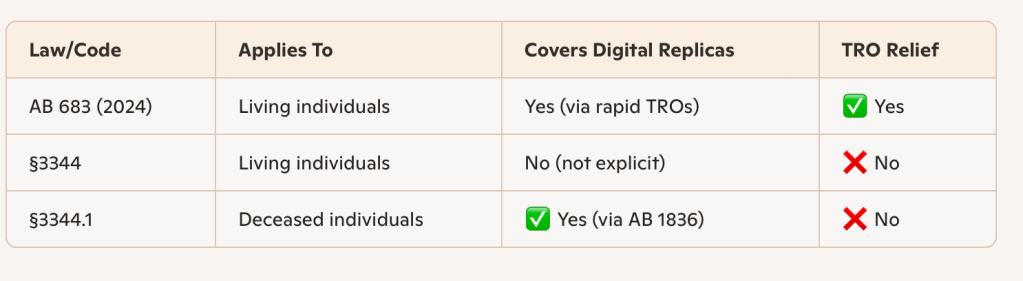
SB 683 amends California Civil Code § 3344, the state’s right-of-publicity statute for living persons, to make injunctive relief real and fast.  If someone’s name, voice, or likeness is exploited without consent, a court can now issue a temporary restraining order or preliminary injunction.  If the order is granted without notice, the defendant must comply within two business days.  

That sounds procedural—and it is—but it matters. SB 683 replaces “send an email to a platform” with “go to a judge.”   It converts moral outrage into enforceable law.

The deeper signal: a break from the DMCA’s bureaucracy

For twenty-seven years, the Digital Millennium Copyright Act (DMCA) has governed online infringement through a privatized system of takedown notices, counter-notices, and platform safe harbors.  When it was passed, Silicon Valley came alive with schemes to get around copyright infringement through free riding schemes that beat a path to Grokster‘s door.

But the DMCA was built for a dial-up internet and has aged about as gracefully as a boil on cow’s butt.

The Copyright Office’s 2020 Section 512 Study concluded that whatever Solomonic balance Congress thought it was making has completely collapsed:

“[T]he volume of notices demonstrates that the notice-and-takedown system does not effectively remove infringing content from the internet; it is, at best, a game of whack-a-mole.”

“Congress’ original intended balance has been tilted askew.”  

“Rightsholders report notice-and-takedown is burdensome and ineffective.”  

“Judicial interpretations have wrenched the process out of alignment with Congress’ intentions.” 
 
“Rising notice volume can only indicate that the system is not working.”  

Unsurprisingly, the Office concluded that “Roughly speaking, many OSPs spoke of section 512 as being a success, enabling them to [free ride and] grow exponentially and serve the public without facing debilitating lawsuits [or one might say, paying the freight]. Rightsholders reported a markedly different perspective, noting grave concerns with the ability of individual creators to meaningfully use the section 512 system to address copyright infringement and the “whack-a-mole” problem of infringing content re-appearing after being taken down. Based upon its own analysis of the present effectiveness of section 512, the Office has concluded that Congress’ original intended balance has been tilted askew.”

Which is a genteel way of saying the DMCA is an abject failure for creators and halcyon days for venture-backed online service providers. So why would anyone who cared about creators want to continue that absurd process?

SB 683 flips that logic. Instead of creating bureaucracy and rewarding the one who can wait out the last notice standing, it demands obedience to law.  Instead of deferring to internal “trust and safety” departments, it puts a judge back in the loop. That’s a cultural and legal break—a small step, but in the right direction.

The NO FAKES Act: déjà vu all over again

Washington’s proposed NO FAKES Act is designed to protect individuals from AI-generated digital replicas which is great. However—NO FAKES recreates the truly awful DMCA’s failed architecture: a federal registry of “designated agents,” a complex notice-and-takedown workflow, and a new safe-harbor regime based on “good-faith compliance.”    You know, notice and notice and notice and notice and notice and notice and…..

If NO FAKES passes, platforms like Google would again hold all the procedural cards: largely ignore notices until they’re convenient, claim “good faith,” and continue monetizing AI-generated impersonations.  In other words, it gives the platforms exactly what they wanted because delay is the point.  I seriously doubt that Congress of 1998 thought that their precious DMCA would be turned into a not so funny joke on artists, and I do remember Congressman Howard Berman (one of the House managers for DMCA) looking like he was going to throw up during the SOPA hearings when he found out how many millions of DMCA notices YouTube alone receives.  So why would we want to make the same mistake again thinking we’ll have a different outcome?  With the same platforms now richer beyond category? Who could possibly defend such garbage as anything but a colossal mistake?

The approach of SB 683 is, by contrast, the opposite of NO FAKES. It tells creators: you don’t need to find the right form—you need to find a judge.  It tells platforms: if a court says take it down, you have two days, not two months of emails, BS counter notices and a bad case of learned helplessness.  True, litigation is more costly than sending a DMCA notice, but litigation is far more likely to be effective in keeping infringing material down and will not become a faux “license” like DMCA has become.  

The DMCA heralded twenty-seven years of normalizing massive and burdensome copyright infringement and raising generations of lawyers to defend the thievery while Big Tech scooped up free rider rents that they then used for anti-creator lobbying around the world.  It should be entirely unsurprising that all of that litigation and lobbying has lead us to the current existential crisis.

Lucian Grainge’s throw-down and the emerging fault line

When Mr. Grainge spoke, he wasn’t just defending Universal’s catalog; he was drawing a perimeter around normalizing AI exploitation, and not buying into an even further extension of “permissionless innovation.”

Universal’s position aligns with what California just did. While Congress toys with a federal opt-out regime for AI impersonations, Sacramento quietly passed a law grounded in judicial enforcement and personal rights.  It’s not perfect, but it’s a rejection of the “catch me if you can” ethos that has defined Silicon Valley’s relationship with artists for decades.

A job for the Attorney General

SB 683 leaves enforcement to private litigants, but the scale of AI exploitation demands public enforcement under the authority of the State.  California’s Attorney General should have explicit power to pursue pattern-or-practice actions against companies that:

– Manufacture or distribute AI-generated impersonations of deceased performers (like Sora 2’s synthetic videos).
– Monetize those impersonations through advertising or subscription revenue (like YouTube does right now with the Sora videos).
– Repackage deepfake content as “user-generated” to avoid responsibility.

Such conduct isn’t innovation—it’s unfair competition under California law. AG actions could deliver injunctions, penalties, and restitution far faster than piecemeal suits. And as readers know, I love a good RICO, so let’s put out there that the AG should consider prosecuting the AI cabal with its interlocking investments under Penal Code §§ 186–186.8, known as the California Control of Profits of Organized Crime Act (CCPOCA) (h/t Seeking Alpha).

While AI platforms complain of “burdensome” and “unproductive” litigation, that’s simply not true of enterprises like the AI cabal—litigation is exactly what was required in order to reveal the truth about massive piracy powering the circular AI bubble economy. Litigation has revealed that the scale of infringement by AI platforms like Anthropic and Meta is so vast that private damages are meaningless. It is increasingly clear these companies are not alone—they have relied on pirate libraries and torrent ecosystems to ingest millions of works across every creative category. Rather than whistle past the graveyard while these sites flourish, government must confront its failure to enforce basic property rights. When theft becomes systemic, private remedies collapse, and enforcement becomes a matter for the state. Even Anthropic’s $1.5 billion settlement feels hollow because the crime is so immense. Not just because statutory damages in the US were also established in 1999 to confront…CD ripping.

AI regulation as the moment to fix the DMCA

The coming wave of AI legislation represents the first genuine opportunity in a generation to rewrite the online liability playbook.  AI and the DMCA cannot peacefully coexist—platforms will always choose whichever regime helps them keep the money.

If AI regulation inherits the DMCA’s safe harbors, nothing changes. Instead, lawmakers should take the SB 683 cue:
– Restore judicial enforcement.  
– Tie AI liability to commercial benefit. 
– Require provenance, not paperwork.  
– Authorize public enforcement.

The living–deceased gap: California’s unfinished business


SB 683 improves enforcement for living persons, but California’s § 3344.1 already protects deceased individuals against digital replicas.  That creates an odd inversion: John Coltrane’s estate can challenge an AI-generated “Coltrane tone,” but a living jazz artist cannot.   The Legislature should align the two statutes so the living and the dead share the same digital dignity.

Why this matters now

Platforms like YouTube host and monetize videos generated by AI systems such as Sora, depicting deceased performers in fake performances.  If regulators continue to rely on notice-and-takedown, those platforms will never face real risk.   They’ll simply process the takedown, re-serve the content through another channel, and cash another check.

The philosophical pivot

The DMCA taught the world that process can replace principle. SB 683 quietly reverses that lesson.  It says: a person’s identity is not an API, and enforcement should not depend on how quickly you fill out a form.

In the coming fight over AI and creative rights, that distinction matters. California’s experiment in court-centered enforcement could become the model for the next generation of digital law—where substance defeats procedure, and accountability outlives automation.

SB 683 is not a revolution, but it’s a reorientation. It abandons the DMCA’s failed paperwork culture and points toward a world where AI accountability and creator rights converge under the rule of law.

If the federal government insists on doubling down with the NO FAKES Act’s national “opt-out” registry, California may once again find itself leading by quiet example: rights first, bureaucracy last.

Denmark’s Big Idea: Protect Personhood from the Blob With Consent First and Platform Duty Built In

Denmark has given the rest of us a simple, powerful starting point: protect the personhood of citizens from the blob—the borderless slurry of synthetic media that can clone your face, your voice, and your performance at scale. Crucially, Denmark isn’t trying to turn name‑image‑likeness into a mini‑copyright. It’s saying something more profound: your identity isn’t a “work”; it’s you. It’s what is sometimes called “personhood.” That framing changes everything. It’s not commerce, it’s a human right.

The Elements of Personhood

Personhood raises human reality as moral consideration, not a piece of content. For example, the European Court of Human Rights reads Article 8 ECHR (“private life”) to include personal identity (name, identity integrity, etc.), protecting individual identity against unjustified interference. This is, of course, anathema to Silicon Valley, but the world takes a different view.

In fact, Denmark’s proposal echoes the Universal Declaration of Human Rights. It starts with dignity (Art. 1) and recognition of each person before the law (Art. 6), and it squarely protects private life, honor, and reputation against synthetic impersonation (Art. 12). It balances freedom of expression (Art. 19) with narrow, clearly labeled carve-outs, and it respects creators’ moral and material interests (Art. 27(2)). Most importantly, it delivers an effective remedy (Art. 8): a consent-first rule backed by provenance and cross-platform stay-down, so individuals aren’t forced into DMCA-style learned helplessness.

Why does this matter? Because the moment we call identity or personhood a species of copyright, platforms will reach for a familiar toolbox—quotation, parody, transient copies, text‑and‑data‑mining (TDM)—and claim exceptions to protect them from “data holders”. That’s bleed‑through: the defenses built for expressive works ooze into an identity context where they don’t belong. The result is an unearned permission slip to scrape faces and voices “because the web is public.” Denmark points us in the opposite direction: consent or it’s unlawful. Not “fair use,” not “lawful access,” not “industry custom., not “data profile.” Consent. Pretty easy concept. It’s one of the main reasons tech executives keep their kids away from cell phones and social media.

Not Replicating the Safe Harbor Disaster

Think about how we got here. The first generation of the internet scaled by pushing risk downstream with a portfolio of safe harbors like the God-awful DMCA and Section 230 in the US. Platforms insisted they were deserving of blanket liability shields because they were special. They were “neutral pipes” which no one believed then and don’t believe now. These massive safe harbors hardened into a business model that likely added billions to the FAANG bottom line. We taught millions of rightsholders and users to live with learned helplessness: file a notice, watch copies multiply, rinse and repeat. Many users did not know they could even do that much, and frankly still may not. That DMCA‑era whack‑a‑mole turned into a faux license, a kind of “catch me if you can” bargain where exhaustion replaces consent.

Denmark’s New Protection of Personhood for the AI Era

Denmark’s move is a chance to break that pattern—if we resist the gravitational pull back to copyright. A fresh right of identity (called a “sui generis” right among Latin fans) is not subject to copyright or database exceptions, especially fair use, DMCA, and TDM. In plain English: “publicly available” is not permission to clone your face, train on your voice, or fabricate your performance. Or your children, either. If an AI platform wants to use identity, they ask first. If they don’t ask, they don’t get to do it, and they don’t get to keep the model they trained on it. And like many other areas, children can’t consent.

That legal foundation unlocks the practical fix creators and citizens actually need: stay‑down across platforms, not endless piecemeal takedowns. Imagine a teacher discovers a convincing deepfake circulating on two social networks and a messaging app. If we treat that deepfake as a copyright issue under the old model, she sends three notices, then five, then twelve. Week two, the video reappears with a slight change. Week three, it’s re‑encoded, mirrored, and captioned. The message she receives under a copyright regime is “you can never catch up.” So why don’t you just give up. Which, of course, in the world of Silicon Valley monopoly rents, is called the plan. That’s the learned helplessness Denmark gives us permission to reject.

Enforcing Personhood

How would the new plan work? First, we treat realistic digital imitations of a person’s face, voice, or performance as illegal absent consent, with only narrow, clearly labeled carve‑outs for genuine public‑interest reporting (no children, no false endorsement, no biometric spoofing risk, provenance intact). That’s the rights architecture: bright lines and human‑centered. Hence, “personhood.”

Second, we wire enforcement to succeed at internet scale. The way out of whack‑a‑mole is a cross‑platform deepfake registry operated with real governance. A deepfake registry doesn’t store videos; it stores non‑reversible fingerprints—exact file hashes for byte‑for‑byte matches and robust, perceptual fingerprints for the variants (different encodes, crops, borders). For audio, we use acoustic fingerprints; for video, scene/frame signatures. These markers will evolve and so should the deepfakes registry. One confirmed case becomes a family of identifiers that platforms check at upload and on re‑share. The first takedown becomes the last.

Third, we pair that with provenance by default: Provenance isn’t a license; it’s evidence. When credentials are present, it’s easier to authenticate so there is an incentive to use them. Provenance is the rebar that turns legal rules into reliable, automatable processes. However, absence of credentials doesn’t mean free for all.

Finally, we put the onus where it belongs—on platforms. Europe’s Digital Services Act at least theoretically already replaced “willful blindness” with “notice‑and‑action” duties and oversight for very large platforms. Denmark’s identity right gives citizens a clear, national‑law basis to say: “This is illegal content—remove it and keep it down.” The platform’s job isn’t to litigate fair use in the abstract or hide behind TDM. It’s to implement upload checks, preserve provenance, run repeat‑offender policies, and prevent recurrences. If a case was verified yesterday, it shouldn’t be back tomorrow with a 10‑pixel border or other trivial alteration to defeat the rules.

Some will ask: what about creativity and satire? The answer is what it has always been in responsible speech law—more speech not fake speech. If you’re lampooning a politician with a clearly labeled synthetic speech, no implied endorsement, provenance intact, and no risk of biometric spoofing or fraud, you have defenses. The point isn’t to smother satire; it’s to end the pretense that satire requires open season on the biometric identities of private citizens and working artists.

Others will ask: what about research and innovation? Good research runs on consent, especially human subject research (see 45 C.F.R. part 46). If a lab wants to study voice cloning, it recruits consenting participants, documents scope and duration, and keeps data and models in controlled settings. That’s science. What isn’t science is scraping the voices of a country’s population “because the web is public,” then shipping a model that anyone can use to spoof a bank’s call‑center checks. A no‑TDM‑bleed‑through clause draws that line clearly.

And yes, edge cases exist. There will be appeals, mistakes, and hard calls at the margins. That is why the registry must be governed—with identity verification, transparent logs, fast appeals, and independent oversight. Done right, it will look less like a black box and more like infrastructure: a quiet backbone that keeps people safe while allowing reporting and legitimate creative work to thrive.

If Denmark’s spark is to become a firebreak, the message needs to be crisp:

— This is not copyright. Identity is a personal right; copyright defenses don’t apply.

— Consent is the rule. Deepfakes without consent is unlawful.

— No TDM bleed‑through. “Publicly available” does not equate to permission to clone or train.

— Provenance helps prove, not permit. Keep credentials intact; stripping them has consequences.

— Stay‑down, cross‑platform. One verified case should not become a thousand reuploads.

That’s how you protect personhood from the blob. By refusing to treat humans like “content,” by ending the faux‑license of whack‑a‑mole, and by making platforms responsible for prevention, not just belated reaction. Denmark has given us the right opening line. Now we should finish the paragraph: consent or block. Label it, prove it, or remove it.

Shilling Like It’s 1999: Ars, Anthropic, and the Internet of Other People’s Things

Ars Technica just ran a piece headlined “AI industry horrified to face largest copyright class action ever certified.”

It’s the usual breathless “innovation under siege” framing—complete with quotes from “public interest” groups that, if you check the Google Shill List submitted to Judge Alsup in the Oracle case and Public Citizen’s Mission Creep-y, have long been in the paid service of Big Tech. Judge Alsup…hmmm…isn’t he the judge in the very Anthropic case that Ars is going on about?

Here’s what Ars left out: most of these so-called advocacy outfits—EFF, Public Knowledge, CCIA, and their cousins—have been doing Google’s bidding for years, rebranding corporate priorities as public interest. It’s an old play: weaponize the credibility of “independent” voices to protect your bottom line.

The article parrots the industry’s favorite excuse: proving copyright ownership is too hard, so these lawsuits are bound to fail. That line would be laughable if it weren’t so tired; it’s like elder abuse. We live in the age of AI deduplication, manifest checking, and robust content hashing—technologies the AI companies themselves use daily to clean, track, and optimize their training datasets. If they can identify and strip duplicates to improve model efficiency, they can identify and track copyrighted works. What they mean is: “We’d rather not, because it would expose the scale of our free-riding.”

That’s the unspoken truth behind these lawsuits. They’re not about “stifling innovation.” They’re about holding accountable an industry that’s built its fortunes on what can only be called the Internet of Other People’s Things—a business model where your creative output, your data, and your identity are raw material for someone else’s product, without permission, payment, or even acknowledgment.

Instead of cross-examining these corporate talking points like you know…journalists…Ars lets them pass unchallenged, turning what could have been a watershed moment for transparency into a PR assist. That’s not journalism—it’s message laundering.

The lawsuit doesn’t threaten the future of AI. It threatens the profitability of a handful of massive labs—many backed by the same investors and platforms that bankroll these “public interest” mouthpieces. If the case succeeds, it could force AI companies to abandon the Internet of Other People’s Things and start building the old-fashioned way: by paying for what they use.

Come on, Ars. Do we really have to go through this again? If you’re going to quote industry-adjacent lobbyists as if they were neutral experts, at least tell readers who’s paying the bills. Otherwise, it’s just shilling like it’s 1999.

David Sacks Is Learning That the States Still Matter

For a moment, it looked like the tech world’s powerbrokers had pulled it off. Buried deep in a Republican infrastructure and tax package was a sleeper provision — the so-called AI moratorium — that would have blocked states from passing their own AI laws for up to a decade. It was an audacious move: centralize control over one of the most consequential technologies in history, bypass 50 state legislatures, and hand the reins to a small circle of federal agencies and especially to tech industry insiders.

But then it collapsed.

The Senate voted 99–1 to strike the moratorium. Governors rebelled. Attorneys general sounded the alarm. Artists, parents, workers, and privacy advocates from across the political spectrum said “no.” Even hardline conservatives like Ted Cruz eventually reversed course when it came down to the final vote. The message to Big Tech or the famous “Little Tech” was clear: the states still matter — and America’s tech elite ignore that at their peril.  (“Little Tech” is the latest rhetorical deflection promoted by Big Tech aka propaganda.)

The old Google crowd pushed the moratorium–their fingerprints were obvious. Having gotten fabulously rich off of their two favorites: The DMCA farce and the Section 230 shakedown. But there’s increasing speculation that White House AI Czar and Silicon Valley Viceroy David Sacks, PayPal alum and vocal MAGA-world player, was calling the ball. If true, that makes this defeat even more revealing.

Sacks represents something of a new breed of power-hungry tech-right influencer — part of the emerging “Red Tech” movement that claims to reject woke capitalism and coastal elitism but still wants experts to shape national policy from Silicon Valley, a chapter straight out of Philip Dru: Administrator. Sacks is tied to figures like Peter Thiel, Elon Musk, and a growing network of Trump-aligned venture capitalists. But even that alignment couldn’t save the moratorium.

Why? Because the core problem wasn’t left vs. right. It was top vs. bottom.

In 1964, Ronald Reagan’s classic speech called A Time for Choosing warned about “a little intellectual elite in a far-distant capitol” deciding what’s best for everyone else. That warning still rings true — except now the “capitol” might just be a server farm in Menlo Park or a podcast studio in LA.

The AI moratorium was an attempt to govern by preemption and fiat, not by consent. And the backlash wasn’t partisan. It came from red states and blue ones alike — places where elected leaders still think they have the right to protect their citizens from unregulated surveillance, deepfakes, data scraping, and economic disruption.

So yes, the defeat of the moratorium was a blow to Google’s strategy of soft-power dominance. But it was also a shot across the bow for David Sacks and the would-be masters of tech populism. You can’t have populism without the people.

If Sacks and his cohort want to play a long game in AI policy, they’ll have to do more than drop ideas into the policy laundry of think tank white papers and Beltway briefings. They’ll need to win public trust, respect state sovereignty, and remember that governing by sneaky safe harbors is no substitute for legitimacy.  

The moratorium failed because it presumed America could be governed like a tech startup — from the top, at speed, with no dissent. Turns out the country is still under the impression they have something to say about how they are governed, especially by Big Tech.