On Wednesday, January 28, 2026, the U.S. Senate Commerce Committee’s Subcommittee on Consumer Protection, Technology, and Data Privacy will convene a hearing titled “Examining the Impact of Ticket Sales Practices and Bot Resales on Concert Fans.” At the center of the witness list is Kid Rock who bridges fan frustration, executive action, and emerging legislative priorities.
From the Oval Office to the Senate Hearing Room
The dysfunction in the U.S. ticketing market has rarely been stated more plainly than in the Oval Office on March 31, 2025, when President Trump signed an Executive Order targeting scalping and speculative ticket abuse. Standing alongside him, Kid Rock articulated what millions of fans and artists already felt: “I think this is a great first step…. I would love down the road if there’d be legislation that we could actually put a cap on the resale of tickets.”
President Trump captured the broken social contract in stark terms: “I see the artists… they go out with a $100 ticket, and it sells for $2,000 the following night.” His emphasis was not merely about price, but about the erosion of the artist-fan bond: “Bob is more interested in the fans and the people that are having to pay crazy prices.”
That moment matters now because it set a policy through-line: unchecked resale markets and bot-driven harvesting have turned access to live events into a rigged system. The Senate hearing is where that narrative meets legislative scrutiny.
A Broader Landscape: States Taking Ticketing Reform into Their Own Hands
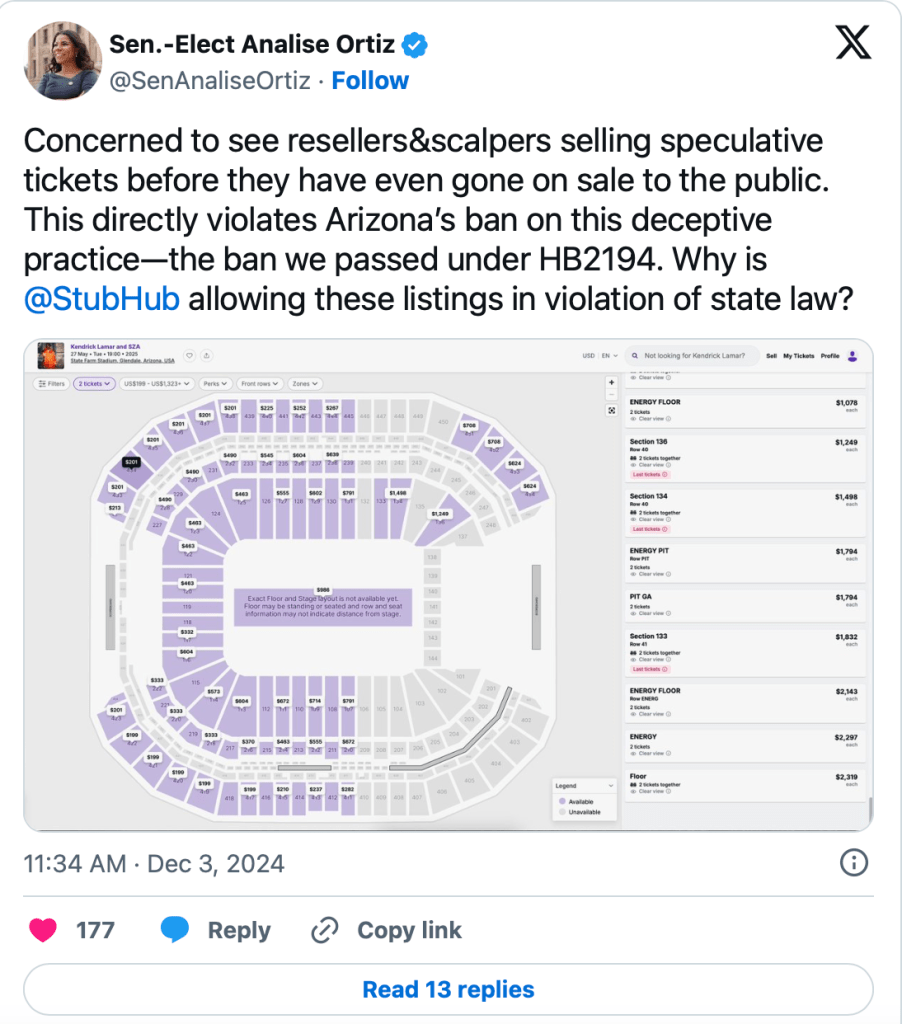
While Congress now faces the issue nationally, state lawmakers haven’t waited. A growing number of states have responded to speculative ticketing and resale abuses with enforceable reforms.
Most recently, the California legislature took up AB 1349, which goes further than many prior state laws by empowering local authorities with enforceable tools to govern resale practices, ticket transparency, and anti-scalping enforcement at the local level. The bill reflects the emerging view that ticketing dysfunction is not just a pricing problem—it’s a governance gap that undermines the free market, local cultural economies and consumer trust. (California AB 1349 and the Case for Enforceable Local Ticketing Reform.)
These state experiments matter because they show how legislative remedies—if properly structured—can move beyond symbolic rhetoric to real market impact by regulating resellers like StubHub. They also heighten the stakes for federal action: if states can innovate meaningful protections, why shouldn’t the national marketplace?
The Witnesses and What They Represent
Kid Rock’s testimony brings the artist-fan perspective directly into the policy forum—where ticketing has often been treated as a narrow consumer pricing issue, rather than a systemic failure of market design.
The hearing also includes testimony from policy analysts and independent venue advocates. These voices underscore two critical points:
- All-in pricing alone isn’t sufficient if speculative trading, bots, and opaque distribution channels continue to dominate.
- Smaller venues and promoters lack the leverage and infrastructure to safeguard fair access, meaning reform must account for market structure, not just disclosure.
Together, the witnesses frame the issue as one not only about price, but about who gets to participate in culture on fair terms.
A Moment of Reckoning for Ticketing Policy
This hearing isn’t just another Congressional event—it’s the logical next step in a policy arc that runs from state legislatures, to executive recognition, to national scrutiny. The message is the system as it exists today privileges speculation over connection, and intermediaries over communities.
Whether the Senate responds with binding reforms or more symbolic gestures will determine whether this hearing marks a genuine inflection point but President Trump has made his policy clear and Kid Rock can tell you all about it.

 Music Tech Solutions