AI is Using Forks and Knives to Eat Your Bacon…and then there’s the political clout

The Internet is an extraordinary electricity hog. You know this intuitively even if you’ve never studied the question of just how big a hog it really is. AI has already taken that electricity use to exponentially extraordinary new levels. These hogs will ultimately consume the farm if that herd is not thinned out.

This is nothing new. Consider YouTube. First of all, YouTube has long been the second largest search engine in the world. So there’s that. Reportedly, YouTube’s aggregate audience watches over 1 billion viewing hours per day.

To put that in context, the electricity burned by YouTubers works out to approximately 600 terawatt-hours (TWh) per year. (A terawatt hour (TWh) is a unit of energy that represents the amount of work done by one terawatt of power in one hour. The prefix ‘tera’ signifies 10^12. Therefore, one terawatt equals one trillion (1,000,000,000,000 or 10^12) watts.)

600 TWh is roughly 2.5% of global electricity use, exceeds the combined consumption of all data centers and data transmission networks worldwide, and “could power an American household for about 2 billion years. Or all 127 million U.S. households for about 8 years.”

And that’s just YouTube.

AI’s electricity consumption is a growing concern. Data centers worldwide, which store the information required for online interactions, account for about 1 to 1.5 percent of global electricity useThe AI boom could potentially increase this figure significantly.

A study by Alex de Vries, a data scientist at the central bank of the Netherlands, estimates that by 2027, NVIDIA could be shipping 1.5 million AI server units per yearThese servers, running at full capacity, would consume at least 85.4 terawatt-hours (TWh) of electricity annuallyThis consumption is more than what many countries use in a year.

AI’s energy footprint does not end with training–after training comes users or the “inference” phase. When an AI is put to work generating data based on prompts in the inference phase, it also uses a significant amount of computing power and thus electricityFor example, generative AI like ChatGPT could cost 564 megawatt-hours (MWh) of electricity a day to run.

According to de Vries, “In 2021, Google’s total electricity consumption was 18.3 TWh, with AI accounting for 10%–15% of this total. The worst-case scenario suggests Google’s AI alone could consume as much electricity as a country such as Ireland (29.3 TWh per year), which is a significant increase compared to its historical AI-related energy consumption.” Remember, that’s just Google.

And then there’s bitcoin mining. Bitcoin mining involves computers across the globe racing to complete a computation that creates a 64-digit hexadecimal number, or hash, for each Bitcoin transaction. This hash goes into a public ledger so anyone can confirm that the transaction for that particular bitcoin happened. The computer that solves the computation first gets a reward of 6.2 bitcoins.

Bitcoin mining consumes a significant amount of electricity. In May 2023, Bitcoin mining was estimated to consume around 95.58 terawatt-hours of electricity. It reached its highest annual electricity consumption in 2022, peaking at 204.5 terawatt-hours, surpassing the power consumption of Finland.

By some estimates, a single Bitcoin transaction can spend up to 1,200 kWh of energy, which is equivalent to almost 100,000 VISA transactions. Another estimate is that Bitcoin uses more than 7 times as much electricity as all of Google’s global operations.

Back to AI, remember that Big Tech requires big data centers. According to Bloomberg, AI is currently–no pun intended–currently using so much electrical power that coal plants that utilities planned to shut down for climate sustainability are either staying online or being brought back online if they had been shut down. For example, Virginia has been suffering from this surge in usage:

In a 30-square-mile patch of northern Virginia that’s been dubbed “data center alley,” the boom in artificial intelligence is turbocharging electricity use. Struggling to keep up, the power company that serves the area temporarily paused new data center connections at one point in 2022. Virginia’s environmental regulators considered a plan to allow data centers to run diesel generators during power shortages, but backed off after it drew strong community opposition.
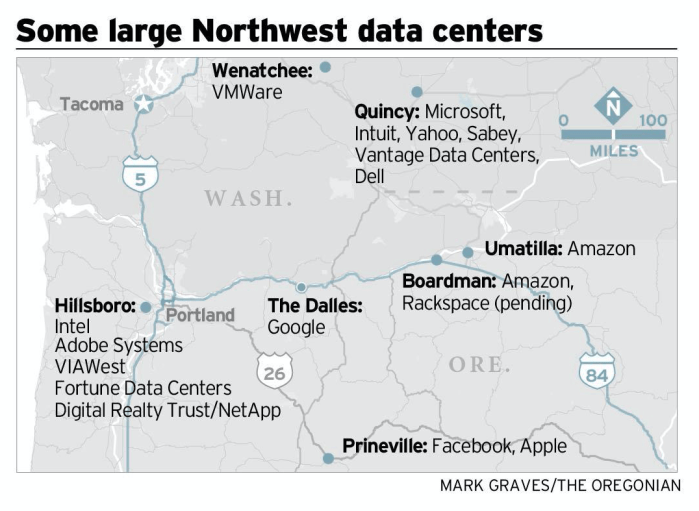
It’s also important to realize that building data centers in states that are far flung from the Silicon Valley heartland also increases Big Tech’s political clout. This explains why Oregon Senator Ron Wyden is the confederate of the worst of Big Tech’s excesses like child exploitation and of course, copyright. Copyright never had a worse enemy, all because of the huge presence in Oregon of Big Tech’s data centers–not their headquarters or anything obvious.
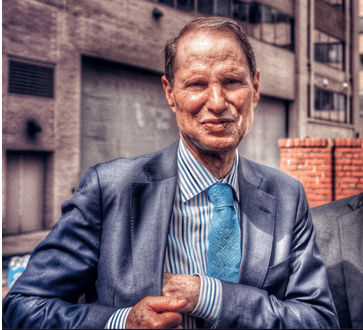
Wyden with his hand in his own pocket.

A terawatt here and a terawatt there and pretty soon you’re talking about a lot of electricity. So if you’re interested in climate change, there’s a lot of material here to work with. Maybe we do this before we slaughter the cattle, just sayin’.
Serving Fans in Self Preservation Moves: A TikTok case study

Fans don’t expect you to give up your right to choose your channels or to survive. If you are in a situation where the platform like TikTok overplays their hand and is so unreasonable that you have to walk away, it’s not your fault. It’s your right. But it is undoubtedly inconvenient for fans when platforms are impossible to deal with and their use of the music they love to create UGC is disrupted due to business.

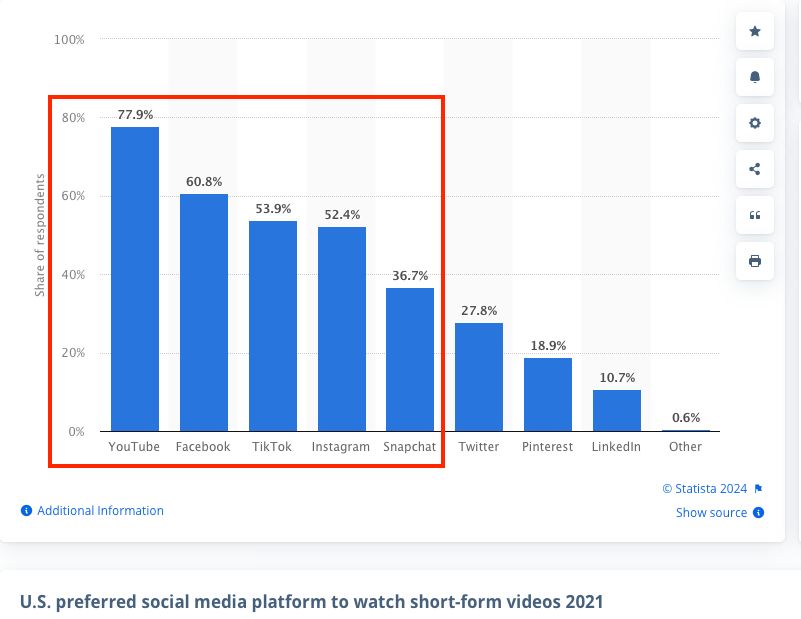
But although TikTok is undoubtedly a big platform, it’s not the only game in town and there are other platforms that are licensed among TikTok’s competitors, particularly YouTube, Facebook, Instagram, and Snapchat.

Of course, YouTube started the trend of putting up messages for fans saying “You can’t get what you want because of these enemies of humanity who refuse to recognize our Big Tech Godhead” or something like that. These messages use the terminating licensor’s branding. I have never understood why the public messaging when tracks are taken down for whatever reason is not a material deal point in any license.

These automatic messages are programmed by the terminated service alone. The copy in the message is written by the service alone. There is never input from and certainly no approval of the terminating licensor. 

I find this unusual. For example, these licenses frequently have negotiated rules about mutual approval of press releases, credit, use of brands, display of copyright notices and other public speech. These are widely accepted and largely standard provisions. So if there are rules about some public speech, surely it’s a short step to also include in those rules any automated messages that convey information to the public about the licensor’s exercise of their rights either during or after the term. That licensor approval, especially mutual approval with the licensee, seems quite reasonable particularly if that messaging includes a reference to the licensor or its branding.

It’s entirely justified for license negotiators to require a meeting of the minds about post termination messaging to our fans and their customers when tracks stop becoming available. (We may have driven fans/customers to the platform in the first place for uncompensated customer acquisition cost, but that’s another discussion.)

Points to Consider

Part of that messaging to fans could be suggesting that since that track is no longer available on TikTok (or whoever), go to a platform where it is available on licensed platforms. This is just good consumer information rather than creating the confusing implication that it’s not available on TikTok so it’s not available anywhere.

Then the question is how to convey that information on alternate legal sites in a way that doesn’t become an unreasonable expectation of the terminated service and also doesn’t favor someone else. It seems like one easy way to do this would be to create a page of licensed platforms that excludes the terminated platform and put that link in the “track unavailable” message. An example is the “Why Music Matters” site, but obviously excluding the terminated site as to the catalog concerned.

This will require having control over that message and the right to force a correction if the platform fails to comply.

It may not be that simple for fans to move videos from one platform to another with the music intact, but that should be considered.

Fans don’t expect artists or songwriters to take a rube deal just to keep making tracks available on a platform that doesn’t respect them. But both the platform and the copyright owner should want to make it easy on fans rather than confusing consumers with a self-serving message.

If you want to explain why a track is no longer available, explain it. Don’t make it more confusing.

Chronology: The Week in Review: TikTok has a Napster Problem; @Helienne on Spotify’s new free goods; @MarshaBlackburn’s tour de force

When Universal withdrew from TikTok, the social media company was suddenly thrown back to its pirate-site roots, at least for the Universal catalog of all sound recordings and many, many songs. The eponymous TikTok is now on the clock to take down or mute Universal’s entire catalog. So tick tock baby.

Universal head Lucian Grainge made the case for the company’s approach to terminating its TikTok license because his negotiators were unable to reach a meeting of the minds with the other side. Pretty simple, really. This is not a big deal, it happens every day. Because in a free market capitalist system, “fair” is where we end up. Which means you have to end up somewhere, including nowhere.

Lucian made that case in an open letter to artists and songwriters as a community. There are some great nuggets in that letter, but I like this section to explain the casus belli:

The terms of our relationship with TikTok are set by contract, which expires January 31, 2024. In our contract renewal discussions, we have been pressing them on three critical issues—appropriate compensation for our artists and songwriters, protecting human artists from the harmful effects of AI, and online safety for TikTok’s users.

We have been working to address these and related issues with our other platform partners.  For example, our Artist-Centric initiative is designed to update streaming’s remuneration model and better reward artists for the value they deliver to platforms.  In the months since its inception, we’re proud that this initiative has been received so positively and taken up by a range of partners, including the largest music platform in the world.  We’ve also moved aggressively to embrace the promise of AI while fighting to ensure artists’ rights and interests are protected now and far into the future.  In addition, we’ve engaged a number of our platform partners to try to drive positive change for their users and by extension, our artists, by addressing online safety issues, and we are recognized as the industry leader in focusing on music’s broader impact on health and wellness.

With respect to the issue of artist and songwriter compensation, TikTok proposed paying our artists and songwriters at a rate that is a fraction of the rate that similarly situated major social platforms pay.  Today, as an indication of how little TikTok compensates artists and songwriters, despite its massive and growing user base, rapidly rising advertising revenue and increasing reliance on music-based content, TikTok accounts for only about 1% of our total revenue.

Let’s not forget that TikTok does not have some statutory or other legal or theoretical right to use Universal’s recordings or songs.  Their rights come from one place–their contract with Universal. No Universal contract, no Universal content. (Sorry copyright infringer apologists in the professoriate.).

Contracts have a duration, and when contracts end you negotiate an extension. If you can’t get an extension or a new agreement, remember the clock is ticking and time is running out–fair is where we end up, so one place to end up is nowhere. Stuff happens. Contracts frequently address what happens when the contract is over and the relationship must be unwound, sometimes called post-termination conditions which are just as much of a promise as anything else in the contract even if the duration (or the “term”) of the agreement is over.

The answer to what happened with Universal is simple: TikTok couldn’t close. Mr. TikTok may be a lot of things, but he’s no Blake.

Now that TikTok allowed their Universal deal to spin out of control, the termination clause(s) of their agreement no doubt become effective. If I had to guess, I would guess that TikTok must immediately stop any new uses of Universal content. Then it would not surprise me if TikTok has about 30 days to take it all down so they are on the clock…so to speak. I would also guess (or hope) that Universal has some post term conditions that will protect them from having to take TikTok’s rube deal on DMCA takedowns. The difference between a post term DMCA take down and a bald take down with no pre-existing contract should be that TikTok has a unilateral obligation to police their network for at least a period of time after termination. Failing to do so could leave them open to breach of contract for failing to satisfy post-termination conditions. Or something like that.

Let’s not forget that TikTok started out as a pirate social media site that got retroactive and prospective licenses in settlement of potential copyright infringement lawsuits. If licenses terminate, TikTok is essentially in the same position as it was before the license–at least as to the content that is covered by the terminating license. 

But of course TikTok won’t be in exactly the same position as the status quo ante, because the company is dependent on passing itself off as this inevitable legitimate company, i.e., a licensed platform. That was not the case when TikTok began licensing to avoid mammoth copyright infringement lawsuits. And therein lies the rub. 

TikTok may have a Napster problem. Once you let unlicensed material into a platform, it’s deuced hard to get it out, even if you have license. And as Judge Patel said in granting an injunction against Napster, “I’m sure that anyone as clever as the people who wrote the software in the case are clever enough, as there are plenty or those minds in Silicon Valley to do it, [to] come up with a program that will help to identify infringing items as well.”  

Thank God for the smart people.

So what happens now? Looking to recent history, Spotify was in a similar pre-IPO position when David Lowery and Melissa Ferrick sued the company for massive use of unlicensed songs. This led Spotify to go to Congress to rewrite the copyright laws in order to stop future litigation (called the “Music Modernization Act” with its probably unconstitutional retroactive reach back safe harbor). They were able to do that because of compliant lobbyists and the hunger among the elites for cash money from a Spotify IPO (or more precisely DPO). Plus Congress got to hang out with famous people and generally felt good about it because dissenting views were strangely absent in the mainstream media.

What do you think will happen if TikTok also goes to Congress to change the law to protect their cash cow and undermine artists and songwriters like Spotify did? They may send lobbyists to Capitol Hill with some walking around money, but if you haven’t picked up on it yet, at least half of the Congress despises TikTok. How does TikTok thread that needle?

TikTok’s response reads like it was written by the editorial staff at the People’s Daily:

“It is sad and disappointing that Universal Music Group has put their own greed above the interests of their artists and songwriters.

Despite Universal’s false narrative and rhetoric, the fact is they have chosen to walk away from the powerful support of a platform with well over a billion users that serves as a free promotional and discovery vehicle for their talent.

TikTok has been able to reach ‘artist-first’ agreements with every other label and publisher. Clearly, Universal’s self-serving actions are not in the best interests of artists, songwriters and fans.”

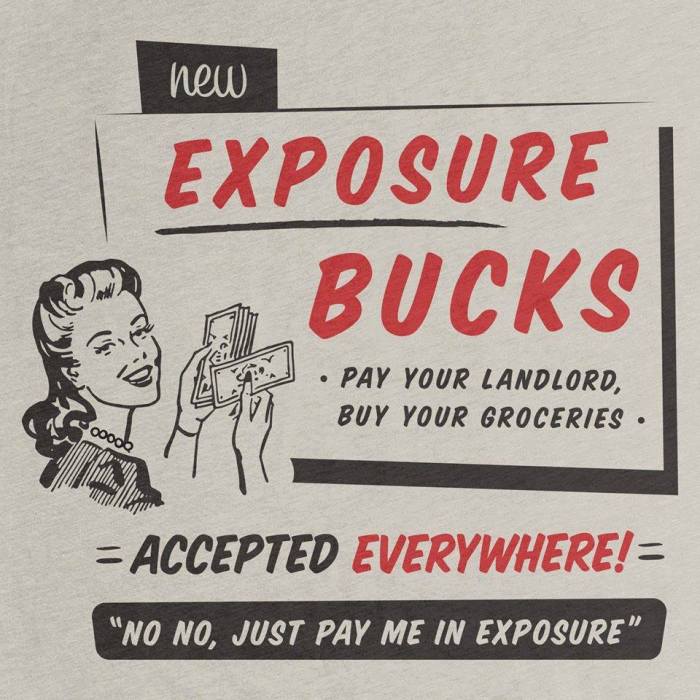
Note to Mr. TikTok and his PR bagmen, that “exposure” angle is not a winner. Not to mention that artists drive their fans to TikTok in huge numbers which is the real “free” promotion as in “uncompensated”. Also, newsflash, there is no free lunch so don’t embarrass yourself by starting the old “free promotion” okie doke. Mr. Tok needs to go home, think about his priorities and try again.

Also, don’t forget that TikTok has to do “blind check” licenses because it lacks the functionality to track and pay royalties, even the broken market centric royalty deal. Blind check licenses are the rough equivalent of an agreement not to sue TikTok rather than an industry standard royalty deal. Over time, it’s likely that the amount of the blind check must increase to compensate for the blindness.

The Universal episode is revealing, however. If TikTok thought they were going to get away with jamming artists because “exposure”, they need to go home and reconsider their life. The situation is completely out of control for one reason–TikTok underestimated Universal’s resolve. And they broke one of the cardinal rules of Business Affairs.

Never let it get to the point that you can’t just write a check.

@helienne’s Panel with Streamers and Label reps about artist centric, streaming fraud and Spotify’s new free goods

I interview Helienne Lindvall about a panel she was on in Europe with reps from Spotify, Deezer and WMG about artist centric implementation, streaming fraud and the new free goods, aka, Track Monetization Eligibility. 

How do you say “Bless your heart” in Mandarin?

If you didn’t watch the Big Tech hearing at the U.S. Senate, you should at least watch Senator Marsha Blackburn’s grilling of Mr. TikTok. Must-see TV.

@CrispinHunt on the TikTok showdown