It’s a damn good thing we never let another MTV build a business on our backs.
In case you were wondering, the founder of TikTok’s parent corporation Bytedance is now reportedly China’s richest man according to the Hurun Rich List at a net worth of US$49.3 billion. Is that because of “profits”? Ah, no. It’s due to his share of the Bytedance stock valuation. This is why any royalty deal with Big Tech that is based solely on a percentage of revenue rather than a dollar rate based on total value is severely lacking.
Revenue is a factor in determining stock valuation, of course. ByteDance’s first-half 2024 revenue increased to $73 billion, making Bytedance’s revenues almost as big as Facebook but potentially growing faster. (Meta/Facbook’s first half revenue increased about 25% to $75.5 billion.)
But where does TikTok’s revenue come from? ByteDance’s international revenue reached $17 billion in the first half of 2024, largely driven by TikTok. Non-China revenues for ByteDance rose by nearly 60% during this period. ByteDance continues to leverage TikTok to expand into international e-commerce, sustaining its global popularity. So the company is throwing off a pile of cash–yet they are unable to come up with a functioning royalty system.
Then what would a Bytedance IPO price at? We kind of have to guess because Bytedance is not publicly traded and doesn’t report its financials to the public (and even if they did, China-based companies got special beneficial treatment during the Obama Administration so PRC companies haven’t reported on the same basis as everyone else until recently). Continuing the Meta/Facebook comparison, Meta has a market capitalization of $1.4 trillion give or take, while ByteDance’s valuation on the secondary market for private stocks is about $250 billion, according to a CapLight subscriber.
That gap is not lost on our friends at Sequoia China and other influential investors in Bytedance such as Susquehanna, SoftBank, and General Atlantic. And, of course, the Chinese Communist Party investing through its Cyberspace Administration of China owns “golden shares” in Bytedance that allows it to name directors to the board. These cats did not put up cold hard cash for a distress asset sale of Bytedance’s principal operating unit aka TikTok.
Assuming a constant growth rate, Bytedance is trading at a paltry 1.7x 2024 revenues compared to Meta which is trading at about 8.7x its revenues. There are some difference, like operating profits: Meta has a 38% operating margin compared to Bytedance at about 25%. But we all know why Bytedance’s valuation is depressed—the TikTok divestment which seems to be on track to happen on or about January 19.
The Protecting Americans from Foreign Adversary Controlled Applications Act aka the TikTok Divestment Act, Bytedance must sell TikTok. There’s a pretty good argument that the divestment is enforceable for a variety of reasons. The law applies not only to TikTok, but also to any entity controlled by China, Iran, North Korea or Russia that distributes an application in the United States. That’s a pretty significant barrier to IPO riches, or at least one major risk factor that could sour underwriters if not investors. How to get around it?
As we saw with the Music Modernization Act that solved Spotify’s IPO issues due to the company’s massive copyright infringement business model, if you spread enough cash around Capitol Hill, it’s astonishing what can happen with the vast number of people on the take. Whatever it costs, lobbyists and lawmakers are cheap dates compared to IPO riches. Even so, it doesn’t look like the US government is quite ready to allow one of the biggest foreign agent data harvesting and user profiling operations in history to get its snout in the public markets trough. At least not yet.
But an argument could be made that Bytedance is missing about $1 trillion in market cap. Greed and resentment are a powerful combination. To add insult to injury, even Triller managed to get to the public markets, so things could start to get weird while Mr. Tok watches his paper billions evaporate.
Here’s some news, and make sure you’re sitting down: Still stinging from its encounter with Universal, TikTok wants its counterparties weak, divided and broke. So naturally TikTok is going after Merlin in TikTok’s latest concerted refusal to deal.
Let’s remember the basic premise behind Merlin, the licensing body that independent labels can opt into at their election. Independent labels as a group have a combined market share that is on par with a major label. I recall hearing this from Alison Wenham back when the Association of Independent Music was founded back in 1999. Joining together, independent labels could be strong, united and claiming their fair share right along side the major labels. (Unclear why this seems to be lost on the publishers.)
So after Mr. Tok got a spanking from Universal, TikTok are definitely not going to put up with resistance from independent labels, assuming TikTok are even in business by the time the dust settles. As Kristin Robinson reports in Billboard:
A TikTok spokesperson says that “TikTok would like to offer all of the world’s music to our users. We are committed to working with the independent sector as well as the major labels and publishers. We know that our community of over a billion music fans value the diversity and richness that independent music brings to our platform. We are committed to entering into direct deals with Merlin members in order to keep their music on TikTok.”
Founded in 2008, Merlin represents 15% of the global recorded music market, and it uses that collective market power to negotiate with digital partners on behalf of its members on a similar footing as the bigger major labels.
So there you have it: TikTok doesn’t want any lip from independents that might put them on the same footing as the majors anymore than the MIC Coalition wants lip from GMR. The one thing that TikTok cannot say is that it’s more efficient for the company to negotiate separately with independents. This isn’t about efficiency–it’s about stopping a near Universal-level exodus from happening again. And not just stopping it this time, it’s about stopping it forever.
In other words, crushing the resistance. That option wasn’t available to Mr. Tok when negotiating with Universal but it’s available now.
Of course you know that TikTok intends to hose the independents because the first thing they did before even discussing a potential deal is require the labels sign a nondisclosure agreement (which no doubt is nonnegotiable). Because nothing says transparency like secrecy. And what’s really great is that it’s no problem because nobody in the music business ever talks about their deals.
As Ms. Robinson reports:
Billboard obtained an email TikTok sent out to some Merlin members, stating that the short-form video app “decided not to renew [its] license agreements with Merlin” and that TikTok “may be able to do direct deals” with the labels, provided that they agree to sign a non-disclosure agreement (NDA). “The purpose of the NDA is to enable us to discuss direct licensing agreements with you.” The deadline to sign and return the NDA is Oct. 4. A TikTok spokesperson says, however, that any Merlin label that wishes to stay on TikTok after Oct. 31 can review and sign the TikTok and CapCut agreements anytime before Oct. 25.
Merlin told its members that it is doing “all [it] can to re-engage with TikTok… we have already made it clear to them that we are ready to hold an actual negotiation and address any concerns they may have.”
Actually, the purpose of the NDA is to keep the independent labels quiet under threat of lawsuit from Mr. Tok and his backers like Neil Shen and Sequoia China. TikTok’s feigned support for independent music is about as convincing as an ivory poacher joining PETA.
I’ve been concerned for a a good four years and with advancing velocity that TikTok’s is leveraging unsuspecting artists and fans to advance a murky agenda. And frankly duping most of the executives in our business into believing that TikTok was just another addictive social media site. There are many clinical issues with TikTok and the short video format, but behind all that is the algorithm.
Allowing TikTok to continue to be operated by its current parent company could allow the Chinese government to covertly influence US elections, the Justice Department said in a court filing late Friday.
In a federal appeals court filing, prosecutors raised concerns that TikTok’s algorithm could be used in a “secret manipulation” campaign to “influence the views of Americans for its own purposes.”
“Among other things, it would allow a foreign government to illicitly interfere with our political system and political discourse, including our elections,” prosecutors wrote. The filing added, “if, for example, the Chinese government were to determine that the outcome of a particular American election as sufficiently important to Chinese interests.”
“Allowing the Chinese government to remain poised to use TikTok to maximum effectiveness at a moment of extreme importance presents an unacceptable threat to national security,” prosecutors wrote.
Amplification of Pro-China and Irrelevant Content: TikTok amplifies frontier influencers (travel and lifestyle content accounts) and irrelevant or clickbait material, to crowd out discussion of CCP-driven ethnic genocide and human rights abuses on its platform.
Suppression of Anti-China Content: TikTok’s moderation algorithms significantly augment this suppression. The views-to-likes ratio for anti-China content on TikTok was 87% lower than pro-China content even though the content was liked nearly twice as much.
Cross-Platform Influence Operations: The CCP also uses frontier influencers and stateaffiliated media to disseminate pro-China narratives to crowd out discussion of human rights abuses on Instagram and YouTube with tourism and culture content.
Psychological Indoctrination: A psychological survey of Americans (n=1214) shows that, among the platforms studied, TikTok screentime positively and uniquely predicted favorability towards China’s human rights record. Notably, heavy users of TikTok (i.e., those with >3 hours of daily screentime) demonstrated a roughly 50% increase in pro-China attitudes compared to non-users. This suggests that TikTok’s content may contribute to psychological manipulation of users, aligning with the CCP’s strategic objective of shaping favorable perceptions among young audiences.
Strategic Assessment: NCRI assesses that the CCP is deploying algorithmic manipulation in combination with prolific information operations to impact user beliefs and behaviors on a massive scale and that these efforts prove highly successful on TikTok in particular. These findings underscore the urgent need for transparent regulation of social media algorithms, or even the creation of a public trust funded by the platforms themselves to safeguard democratic values and free will.
It finally happened–Congress passed the Protecting Americans from Foreign Adversary Controlled Applications Act that prohibits the distribution, maintenance, or provision of internet hosting services for applications that are directly or indirectly operated by foreign adversaries. This legislation would include applications owned by ByteDance, Ltd. (the company that owns TikTok) or social media companies controlled by foreign adversaries that pose a significant threat to national security.
According to a Reuters exclusive, the response from Bytedance is that they would rather shut down TikTok than sell it–if the sale included the TikTok algorithm:
“The algorithms TikTok relies on for its operations are deemed core to ByteDance’s overall operations, which would make a sale of the app with algorithms highly unlikely, said the sources close to the parent….
TikTok shares the same core algorithms with ByteDance domestic apps like short video platform Douyin, three of the sources said. Its algorithms are considered better than ByteDance rivals such as Tencent and Xiaohongshu, said one of them.
It would be impossible to divest TikTok with its algorithms as their intellectual property licence is registered under ByteDance in China and thus difficult to disentangle from the parent company, said the sources.”
Well then. Of course, one of the primary national security arguments supporting any First Amendment defense on a challenge by TikTok to the content neutral, time, place and manner regulation will involve both the data privacy and foreign actor mass media manipulation evidentiary hearings. I don’t know how you make that defense without access to the algorithm. So why so secretive?
One could therefore plausibly argue that refusing to put the algorithm on the table is as good as admitting that TikTok is manipulating US users through algorithmic emotional targeting and scraping their users private data to do so. That would directly undermine their First Amendment attack on the US government and be a big step toward proving the government’s case.
And, of course, that secret algorithm uses music as the honeypot to attract users from the very young to the not so young. Remember, if this issue ever comes up in a court as a defense for the government, it will likely be because TikTok brought the underlying lawsuit that gave rise to the defense, and then refused to comply with a subpoena for the key piece of evidence. We call that “bootstrapping” in the trade.
In the interest of full disclosure, I’ve been supporting a version of the foreign adversary divestment legislation since 2020 and did so publicly that year when I moderated a great panel at the Music Biz conference on this very subject. If that panel or this topic made you uncomfortable, it may be because you felt such a strong…let’s say attraction…to TikTok as either a marketer or user that you couldn’t imagine living without it. Or maybe you bought into the “exposure” benefits of TikTok. Or maybe you’d had no reason to think about the larger implications. More about that another time.
After the legislation passed–despite a US lobbying campaign against it worthy of The Internet Association…ahem–people are asking, now what? So let’s think about that.
The Universal Connection
TikTok’s future cannot be well understood without taking into account the withdrawal of Universal’s recordings and songs from the platform for commercial reasons. That withdrawal now looks even more prescient given the foreign adversary divestiture legislation. Is it materially different to make a deal with a company that is just another piggy Big Tech company that doesn’t value music and considers it a loss leader to get to the really big bundle of cash like Spotify stock, or to do a deal with that piggy company who has also been declared a tool of a strategic foreign adversary of the United States by none other than the President of the United States?
I think it rather is. So the two events are in some ways quite connected.
First of all, in the short run I would expect TikTok to immediately expand their direct licensing campaign which evidently has already snared Taylor Swift and do it quickly before anyone noticed that what was just a crappy licensing deal the day before President Biden signed the legislation into law, now is a crappy licensing deal from a declared foreign adversary of the United States. How that twist will affect the brand of Miss Americana remains to be seen.
One solution I would expect to get floated in coming days is the need for TikTok executives to register as foreign agents under the Foreign Agents Registration Act. According to the Congressional Research Service:
In 1938, the Foreign Agents Registration Act (22 U.S.C. §§611-621; FARA) was enacted to require individuals doing political or advocacy work on behalf of foreign entities in the United States to register with the Department of Justice and to disclose their relationship, activities, receipts, and disbursements in support of their activities. The FARA does not prohibit any specific activities; rather it seeks to require registration and disclosure of them….In 1966, FARA was amended to shift the focus from political propagandists to agents representing the economic interests of foreign principals. These amendments were partially the result of an investigation by the Senate Foreign Relations Committee into foreign sugar interests and other lobbying activities. The 1966 amendments changed several definitions in the law, prohibited contingent fee contracts, broadened exemptions to ensure legitimate commercial activities were not burdened, strengthened provisions for the disclosure and labeling of propaganda, and required the Department of Justice to issue regulations on the act (28 C.F.R. §5.1 et seq.).
FARA enforcement languished for a bit over the years. However, FARA enforcement against those who fail to register as a foreign agent has had a resurgence in popularity at the Department of Justice. I think it can fairly be said that requiring TikTok executives to register would be consistent with DOJ’s actions and is worth a discussion. The policy underlying FARA is for the public to be aware of who is whom–disclosure not imprisonment, or at least disclosure first.
Enter the Miasma of Angst
There is something of a miasma of angst around passing the foreign adversary divestment legislation as applied to TikTok which is partly due to an extraordinary amount of commercial activity between the US and China which may tend to mask the underlying kinetic tensions between our countries. It’s quite difficult for Americans to grasp this kinetic part due to the Great Firewall of China, the language and cultural barrier, and China’s own propaganda which is way, way more effective and long lasting than anything the Nazis dreamed up. TikTok is, after all, a danger close propaganda missile battery.
The legislation seems to assume that China is an “adversary” and not a “belligerent”. Is that actually true?
There are other rather inescapable events that suggests that the U.S. is already in a war with China, at least as far as the Chinese government are concerned. It helps to understand that when people say the Chinese Communist Party or “the CCP”, they mean the Chinese government and vice versa, a government ruled by Chairman for Life Xi Jinping. The Chinese constitution is, for example, the Constitution of the CCP.
Always remember that Usama Bin Laden declared war on the US but nobody took him seriously. Nuff said.
Why is that relevant to TikTok? Well, here’s another declaration of war on the US that nobody noticed. On May 14, 2019, the CCP government declared a “people’s war” against the United States as reported in the Pravda of China, the Global Times operated by Xinhua News Agency (the cabinet-level “news” agency run by the CCP):
“The most important thing is that in the China-US trade war, the US side fights for greed and arrogance … and morale will break at any point…The Chinese side is fighting back to protect its legitimate interests. The trade war in the US is the creation of one person and one administration, but it affects that country’s entire population…In China, the entire country and all its people are being threatened. For us, this is a real ‘people’s war.'”
What is the “people’s war”? It is an old Maoist phrase (remembering that Xi Jinping’s father fought with Mao during China’s Communist Revolution). It has a very specific meaning in the history of the Chinese Communist Party according to Wikipedia:
People’s war, also called protracted people’s war, is a Maoist military strategy. First developed by the Chinese communist revolutionary leader Mao Zedong (1893–1976), the basic concept behind people’s war is to maintain the support of the population and draw the enemy deep into the countryside (stretching their supply lines) where the population will bleed them dry through a mix of mobile warfare and guerrilla warfare.
So in the dimension of “unrestricted warfare,” what end state would the CCP like to see? Bearing in mind that they will avoid a shooting war in favor of the various other dimensions of civil-military fusion and following Sun Tzu’s admonishment o subdue the enemy without fighting. One way would be to impose economic damage on the United States.
The Unrestricted Warfare Dimension
What is this “unrestricted warfare”? That is a much bigger topic and I cannot emphasize enough the importance for every American and really everyone to understand it. Literally “Unrestricted Warfare” is one of the most important books on military strategy and geopolitics that nobody has read.
We think the book was published in Mandarin In 1999; it could have been earlier. It was written by two colonels in the Peoples’ Liberation Army of the Peoples Republic of China and entitled Unrestricted Warfare. The title is variously translated as Unrestricted Warfare: Two Air Force Senior Colonels on Scenarios for War and the Operational Art in an Era of Globalization, or the more bellicose Unrestricted Warfare: China’s Master Plan to Destroy America.
Why is this important? You must understand that when the colonels say “to destroy America” they actually mean that very thing. China’s military and civil goal is to replace the United States as the global hegemon under the “mandate of Heaven.” (See 2050 China: Understanding Xi Jinping Thought.)
No kidding.
The thesis of the book is that it is a mistake for a contemporary great power to think of war solely in military terms; war includes an economic, cyber, space, information war (especially social media like TikTok), and other dimensions–including kinetic–depending on the national interest at the time. I think of Unrestricted Warfare as an origin story for China’s civil and military fusion policy, later expressed in various statutes of the Chinese Communist Party that were on full display in the TikTok hearings before Congress.
Although the book was translated and certain of the cognoscenti read it in Mandarin (see Josh Rogan, Michal Pillsbury and Gen. Rob Spaulding), it was largely unnoticed until recently. Except in China–the CCP rewarded the authors handsomely: Colonel Qiao Liang retired as a major general in the PLA and Colonel Wang Xiangsui is a professor at Beihang University in Beijing following his retirement as a senior Colonel in the PLA (OF-5).
The point of both Bin Ladin’s 1998 fatwa and Unrestricted Warfare, and the 2019 people’s war declaration, is both that each of them declared war on America, and that no one paid attention. We know where that got us with bin Ladin, there are movies about it.
To War or Not?
So the first question is what is the argument that we are not at war currently with China under their definition? Particularly given that they declared war on us with just enough plausible deniability to make you feel bad about shutting down TikTok–see what I did there? (I think the CCP declared war started much, much longer ago, but let’s stick with their people’s war declaration as a recent tangible event to keep it manageable and ignore, oh, say island building, expanding to the largest navy in the world, and the rest of it. (Read The Hundred-Year Marathon and see what you think. It may be worth reviewing the history on the Anglo-German Naval Agreement indirectly referenced in a Noël Coward song.)
Don’t Let’s Be Beastly to the Germans by Noël Coward is reflective on “excessive humanitarians”
It is also worth remembering that should open hostilities with China actually break out, i.e., in the colonels’ words should the current level of unrestricted warfare go kinetic, CCP-owned companies operating in the US will fall under an entirely more intense level of scrutiny. This is permitted by international laws of armed conflict and doesn’t even require additional US national laws although there surely will be many.
In the first instance, is the ostensibly private company actually private? What if good old chummy Mr. Tok turned out to be a colonel in the People’s Liberation Army and just didn’t get around to telling anyone? (I don’t think anyone in Congressional hearings ever asked him.)
And what if TikTok complied with the CCP laws that apply to Bytedance for sure and may apply to TikTok that require there to be a CCP cadre in each company? (See Article 19 of China’s “Company Law.”) If a private company’s staff members are also members of the armed forces of a state or have combat functions for an organized armed group belonging to a party in the conflict, they are notconsidered civilians. Further, if a private company is directly involved in military operations (e.g., cyber attacks or psy ops), it may lose its civilian status and become a legitimate military target under the Geneva Conventions. (Further reading, an excellent article from West Point on topic. I don’t think anyone ever asked Mr. Chew if he was a serving member of the PLA.)
So if China invades Taiwan and the US comes in on the side of Taiwan, but TikTok assists in even psychological warfare ops to support that war effort for China against Taiwan (and possibly the US), then what happens? What if it turns out that senior Tiks are reservists or active duty in the Peoples Liberation Army that they just kind of didn’t mention before? Good old Uncle Chew? This kind of thing can also get you sanctioned if you try hard enough. Remember this came up with Elon Musk when Starlink allegedly thwarted an attack by Ukraine (which he denied for other reasons).
So about those licenses….Do artists really want to be used as a honeypot? Especially if TikTok keeps its algorithm, ostensibly shuts down in the US, but parks outside the US and still assaults US users?
Fans don’t expect you to give up your right to choose your channels or to survive. If you are in a situation where the platform like TikTok overplays their hand and is so unreasonable that you have to walk away, it’s not your fault. It’s your right. But it is undoubtedly inconvenient for fans when platforms are impossible to deal with and their use of the music they love to create UGC is disrupted due to business.
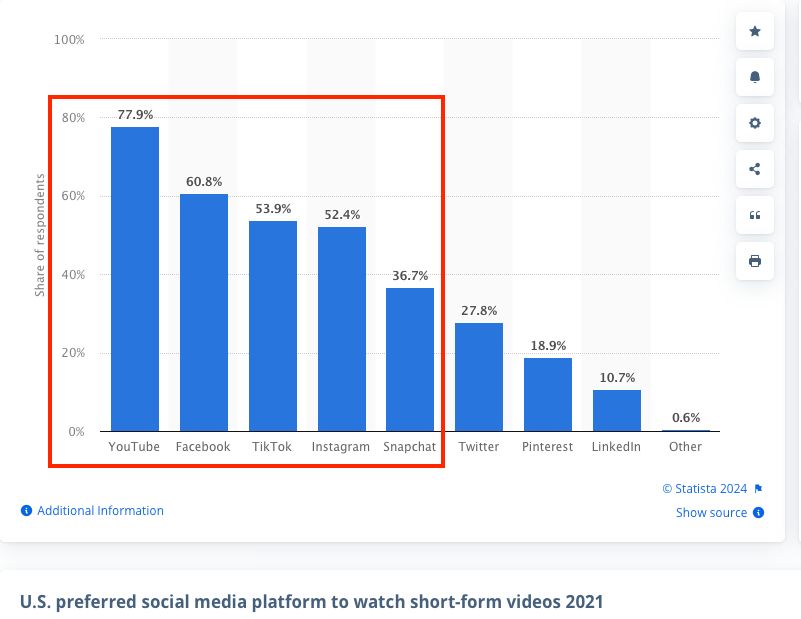
But although TikTok is undoubtedly a big platform, it’s not the only game in town and there are other platforms that are licensed among TikTok’s competitors, particularly YouTube, Facebook, Instagram, and Snapchat.
Of course, YouTube started the trend of putting up messages for fans saying “You can’t get what you want because of these enemies of humanity who refuse to recognize our Big Tech Godhead” or something like that. These messages use the terminating licensor’s branding. I have never understood why the public messaging when tracks are taken down for whatever reason is not a material deal point in any license.
These automatic messages are programmed by the terminated service alone. The copy in the message is written by the service alone. There is never input from and certainly no approval of the terminating licensor.
I find this unusual. For example, these licenses frequently have negotiated rules about mutual approval of press releases, credit, use of brands, display of copyright notices and other public speech. These are widely accepted and largely standard provisions. So if there are rules about some public speech, surely it’s a short step to also include in those rules any automated messages that convey information to the public about the licensor’s exercise of their rights either during or after the term. That licensor approval, especially mutual approval with the licensee, seems quite reasonable particularly if that messaging includes a reference to the licensor or its branding.
It’s entirely justified for license negotiators to require a meeting of the minds about post termination messaging to our fans and their customers when tracks stop becoming available. (We may have driven fans/customers to the platform in the first place for uncompensated customer acquisition cost, but that’s another discussion.)
Points to Consider
Part of that messaging to fans could be suggesting that since that track is no longer available on TikTok (or whoever), go to a platform where it is available on licensed platforms. This is just good consumer information rather than creating the confusing implication that it’s not available on TikTok so it’s not available anywhere.
Then the question is how to convey that information on alternate legal sites in a way that doesn’t become an unreasonable expectation of the terminated service and also doesn’t favor someone else. It seems like one easy way to do this would be to create a page of licensed platforms that excludes the terminated platform and put that link in the “track unavailable” message. An example is the “Why Music Matters” site, but obviously excluding the terminated site as to the catalog concerned.
This will require having control over that message and the right to force a correction if the platform fails to comply.
It may not be that simple for fans to move videos from one platform to another with the music intact, but that should be considered.
Fans don’t expect artists or songwriters to take a rube deal just to keep making tracks available on a platform that doesn’t respect them. But both the platform and the copyright owner should want to make it easy on fans rather than confusing consumers with a self-serving message.
If you want to explain why a track is no longer available, explain it. Don’t make it more confusing.
When Universal withdrew from TikTok, the social media company was suddenly thrown back to its pirate-site roots, at least for the Universal catalog of all sound recordings and many, many songs. The eponymous TikTok is now on the clock to take down or mute Universal’s entire catalog. So tick tock baby.
Universal head Lucian Grainge made the case for the company’s approach to terminating its TikTok license because his negotiators were unable to reach a meeting of the minds with the other side. Pretty simple, really. This is not a big deal, it happens every day. Because in a free market capitalist system, “fair” is where we end up. Which means you have to end up somewhere, including nowhere.
Lucian made that case in an open letter to artists and songwriters as a community. There are some great nuggets in that letter, but I like this section to explain the casus belli:
The terms of our relationship with TikTok are set by contract, which expires January 31, 2024. In our contract renewal discussions, we have been pressing them on three critical issues—appropriate compensation for our artists and songwriters, protecting human artists from the harmful effects of AI, and online safety for TikTok’s users.
We have been working to address these and related issues with our other platform partners. For example, our Artist-Centric initiative is designed to update streaming’s remuneration model and better reward artists for the value they deliver to platforms. In the months since its inception, we’re proud that this initiative has been received so positively and taken up by a range of partners, including the largest music platform in the world. We’ve also moved aggressively to embrace the promise of AI while fighting to ensure artists’ rights and interests are protected now and far into the future. In addition, we’ve engaged a number of our platform partners to try to drive positive change for their users and by extension, our artists, by addressing online safety issues, and we are recognized as the industry leader in focusing on music’s broader impact on health and wellness.
With respect to the issue of artist and songwriter compensation, TikTok proposed paying our artists and songwriters at a rate that is a fraction of the rate that similarly situated major social platforms pay. Today, as an indication of how little TikTok compensates artists and songwriters, despite its massive and growing user base, rapidly rising advertising revenue and increasing reliance on music-based content, TikTok accounts for only about 1% of our total revenue.
Let’s not forget that TikTok does not have some statutory or other legal or theoretical right to use Universal’s recordings or songs. Their rights come from one place–their contract with Universal. No Universal contract, no Universal content. (Sorry copyright infringer apologists in the professoriate.).
Contracts have a duration, and when contracts end you negotiate an extension. If you can’t get an extension or a new agreement, remember the clock is ticking and time is running out–fair is where we end up, so one place to end up is nowhere. Stuff happens. Contracts frequently address what happens when the contract is over and the relationship must be unwound, sometimes called post-termination conditions which are just as much of a promise as anything else in the contract even if the duration (or the “term”) of the agreement is over.
The answer to what happened with Universal is simple: TikTok couldn’t close. Mr. TikTok may be a lot of things, but he’s no Blake.
Now that TikTok allowed their Universal deal to spin out of control, the termination clause(s) of their agreement no doubt become effective. If I had to guess, I would guess that TikTok must immediately stop any new uses of Universal content. Then it would not surprise me if TikTok has about 30 days to take it all down so they are on the clock…so to speak. I would also guess (or hope) that Universal has some post term conditions that will protect them from having to take TikTok’s rube deal on DMCA takedowns. The difference between a post term DMCA take down and a bald take down with no pre-existing contract should be that TikTok has a unilateral obligation to police their network for at least a period of time after termination. Failing to do so could leave them open to breach of contract for failing to satisfy post-termination conditions. Or something like that.
Let’s not forget that TikTok started out as a pirate social media site that got retroactive and prospective licenses in settlement of potential copyright infringement lawsuits. If licenses terminate, TikTok is essentially in the same position as it was before the license–at least as to the content that is covered by the terminating license.
But of course TikTok won’t be in exactly the same position as the status quo ante, because the company is dependent on passing itself off as this inevitable legitimate company, i.e., a licensed platform. That was not the case when TikTok began licensing to avoid mammoth copyright infringement lawsuits. And therein lies the rub.
TikTok may have a Napster problem. Once you let unlicensed material into a platform, it’s deuced hard to get it out, even if you have license. And as Judge Patel said in granting an injunction against Napster, “I’m sure that anyone as clever as the people who wrote the software in the case are clever enough, as there are plenty or those minds in Silicon Valley to do it, [to] come up with a program that will help to identify infringing items as well.”
Thank God for the smart people.
So what happens now? Looking to recent history, Spotify was in a similar pre-IPO position when David Lowery and Melissa Ferrick sued the company for massive use of unlicensed songs. This led Spotify to go to Congress to rewrite the copyright laws in order to stop future litigation (called the “Music Modernization Act” with its probably unconstitutional retroactive reach back safe harbor). They were able to do that because of compliant lobbyists and the hunger among the elites for cash money from a Spotify IPO (or more precisely DPO). Plus Congress got to hang out with famous people and generally felt good about it because dissenting views were strangely absent in the mainstream media.
What do you think will happen if TikTok also goes to Congress to change the law to protect their cash cow and undermine artists and songwriters like Spotify did? They may send lobbyists to Capitol Hill with some walking around money, but if you haven’t picked up on it yet, at least half of the Congress despises TikTok. How does TikTok thread that needle?
TikTok’s response reads like it was written by the editorial staff at the People’s Daily:
“It is sad and disappointing that Universal Music Group has put their own greed above the interests of their artists and songwriters.
Despite Universal’s false narrative and rhetoric, the fact is they have chosen to walk away from the powerful support of a platform with well over a billion users that serves as a free promotional and discovery vehicle for their talent.
TikTok has been able to reach ‘artist-first’ agreements with every other label and publisher. Clearly, Universal’s self-serving actions are not in the best interests of artists, songwriters and fans.”
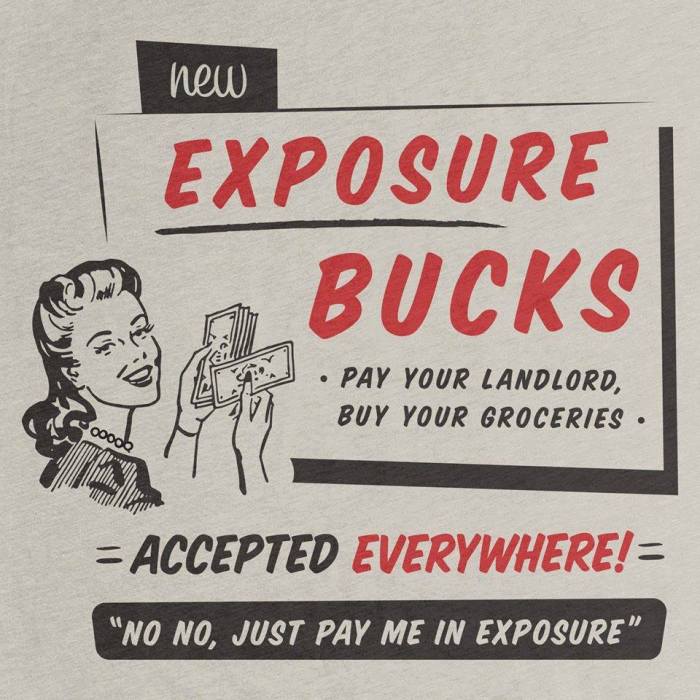
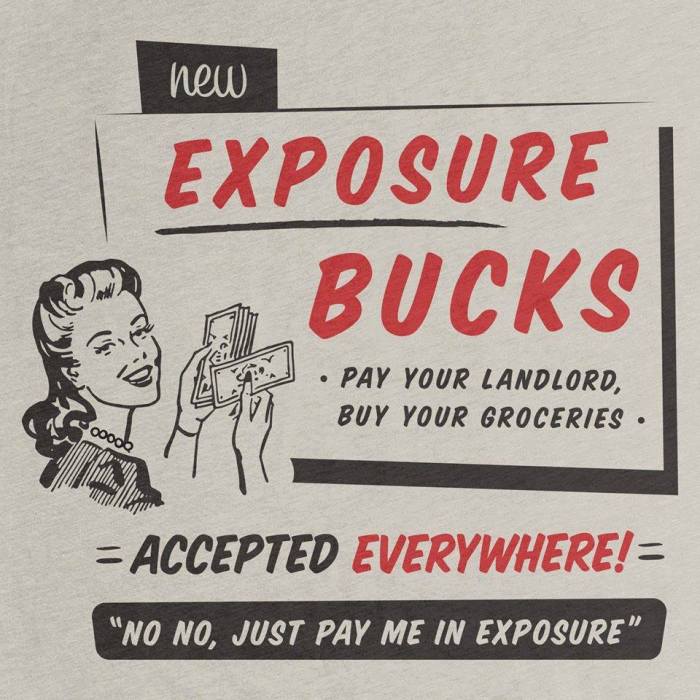
Note to Mr. TikTok and his PR bagmen, that “exposure” angle is not a winner. Not to mention that artists drive their fans to TikTok in huge numbers which is the real “free” promotion as in “uncompensated”. Also, newsflash, there is no free lunch so don’t embarrass yourself by starting the old “free promotion” okie doke. Mr. Tok needs to go home, think about his priorities and try again.
Also, don’t forget that TikTok has to do “blind check” licenses because it lacks the functionality to track and pay royalties, even the broken market centric royalty deal. Blind check licenses are the rough equivalent of an agreement not to sue TikTok rather than an industry standard royalty deal. Over time, it’s likely that the amount of the blind check must increase to compensate for the blindness.
The Universal episode is revealing, however. If TikTok thought they were going to get away with jamming artists because “exposure”, they need to go home and reconsider their life. The situation is completely out of control for one reason–TikTok underestimated Universal’s resolve. And they broke one of the cardinal rules of Business Affairs.
Never let it get to the point that you can’t just write a check.
@helienne’s Panel with Streamers and Label reps about artist centric, streaming fraud and Spotify’s new free goods
I interview Helienne Lindvall about a panel she was on in Europe with reps from Spotify, Deezer and WMG about artist centric implementation, streaming fraud and the new free goods, aka, Track Monetization Eligibility.
How do you say “Bless your heart” in Mandarin?
If you didn’t watch the Big Tech hearing at the U.S. Senate, you should at least watch Senator Marsha Blackburn’s grilling of Mr. TikTok. Must-see TV.
Bravo @UMG taking a bold stand on @tiktok_uk for not paying proportional rates for music. There’s no such thing as ‘promotion’ online, everything is a distribution/communication, every performance drives value. Value that performers & songwriters should see. https://t.co/SS7vjg7sf7
MTP readers know that I’ve got no time for the scumbags at TikTok and never have. But it’s getting ridiculous and now the company has collided with Universal.
It was only a matter of time. The artist-centric approach to royalty payments endorsed by Lucian Grainge requires more of the platforms than just rearranging the deck chairs on the Titanic. It requires that the services say goodbye to a flat royalty pool calculated using impenetrable algorithms, formulas, and Malthusian algebra.
It requires that the services open their checkbooks. For you pie fans, it requires that the services grow the pie. And not just for sound recordings, but songwriters, too.
Here’s the other insulting part: TikTok apparently wants to be able to create AI works (from whatever source derived) and repopulate their offering with these allegedly royalty free works. Of course, AI tracks should not be royalty free at all since the AI will inevitably be ripped off from somebody.
As I understand it, TikTok wants to salt the royalty pool with AI to increase the denominator and lower the per-stream royalty. This, of course is insane. Whatever you think about AI, before you even get there it should be obvious that only royalty bearing tracks should be in the calculation for paying royalties. Otherwise, the payments will be understated. Which is of course what TikTok wants. Which was inevitable as soon as monkeys took photos.
But perhaps even more troubling is TikTok’s apparent refusal to be transparent about what it is doing to stop recruiting for illegal cartel activities, child trafficking and promoting hate speech—especially real porn with fake artists. They could do it but they won’t fix what Lucian calls “the tidal wave of hate speech, bigotry, bullying and harassment on the platform.”
Whatever bright and shiny object TikTok and their legion of lobbyists waive in front of artists, who is willing to have their music used as a honeypot for harmful acts?
It’s time for big changes at TikTok and if they are unwilling to modernize and reimagine their business, those who want to shut them down will be unleashed.
There is a long line of copyright infringement cases that demonstrate how hard it is to right a situation that starts out wrong. In addition to TikTok’s copyright problems which it is frantically trying to buy its way out of, TikTok also has a problem with how it treats children. This isn’t the first time around for TikTok’s exploitation of children–they also were fined by the FTC as the plaintiffs note in their complaint. A group of child advocates have complained to the FTC that TikTok is ignoring the FTC’s orders.
As any TikTok buyer will soon discover, TikTok is the gift that keeps on giving. TikTok has been sued in a multi district class action for violating the privacy rights of children and the biometric privacy laws of several states (TikTok’s parent company Bytedance is also named). In their complaint (now In re TikTok, Inc., Consumer Privacy Litigation, Case No. 1:20-cv-04699, Master Docket No. 20 C 4699, U.S.D.C. N. Dist. Ill. East. Div.) the children state:
Part of the reason for TikTok’s popularity, particularly with younger users such as Plaintiff, are the filters and other effects users can apply to their own videos, as well as those uploaded by others. In order to utilize many of these effects, Defendants scan users’ faces and “face geometry” to capture their biometric data, as well as to determine the user’s age using an algorithm.
In collecting and utilizing Plaintiff’s and the Class’ biometric identifiers4 and biometric information5 (referred to collectively at times as “biometrics”), Defendants fail to: (1) warn users that the app captures, collects, and stores their biometric data; (2) inform users of the purpose or length of time that they collect, store, and use biometric data; (3) obtain users’ written consent to capture their biometric data; and (4) implement and/or make publicly available a written policy disclosing to users its practices concerning the collection, use, and destruction of their biometric information in violation of the Illinois Biometric Information Privacy Act (“BIPA”), 740 ILCS 14/1, et seq….
Many of the features and effects require scanning the user’s face geometry in order to place effects over the user’s face, swap the user’s face for an emoji or other individual’s faces, or enhance aspects of their facial features.
But Plaintiff and similarly situated users place themselves at risk when they utilize TikTok features that require access to users’ biometric identifiers and/or information. TikTok acknowledges that it shares personal information that it collects from users with third parties, including entities in China.Multiple U.S. military branches and the Transportation Security Administration have banned use of TikTok due to privacy and cybersecurity concerns.
TikTok, and its predecessor musical.ly, also have a long history of exploiting the millions of minors that make up the lion’s share of TikTok’s user base. In 2019, the Federal Trade Commission settled a case against TikTok and musical.ly for violating the Children’s Online Privacy Protection Act by improperly collecting personal information from children under 13 years old without their parents’ consent.8 The FTC fined Defendants $5.7 million, the largest COPPA fine in the FTC’s history.
In response to complaints regarding children under 13 years old using the app, TikTok implemented a feature that scans the user’s face to determine if he or she appears to be 13 years old or younger. TikTok compares the geometry and features of the individual’s face to an algorithm to determine his or her age.
In other words, TikTok violates the law by capturing child biometric data, then they capture child biometric data to use in an algorithm to catch themselves violating the law.
The case has progressed to the settlement stage. In response to the reported allegations that TikTok was attempting to fix the outcome of the settlement by cherry picking which attorneys participate in the settlement mediation, the court issued this statement in a case management order dated yesterday (9/1/20) (my emphasis):
[T]he Court is informed by certain Plaintiffs’ counsel that progress has been made in settlement discussions with Defendants. Certain other Plaintiffs’ counsel take umbrage with the manner in which those settlement discussions have taken place, stating that they were not allowed to participate in the settlement discussions (for one reason or another) and have not been informed of the terms of any potential settlement. It goes without saying that, before this Court can approve a class-wide settlement of any kind, it must consider the factors set forth in Fed. R. Civ. P. 23(a), (b), and (e). Those factors include, without limitation, whether the settling class representatives and class counsel have adequately represented the class, whether the proposal was negotiated at arm’s length, whether the relief provided for the class is adequate, and whether the proposed settlement treats class members equitably relative to one another.
In the Court’s experience, it often is advisable for the settling plaintiffs to encourage the participation in the settlement process of attorneys who represent other plaintiffs who have brought similar claims in other venues. After all, those attorneys may represent potential class members, possible objectors, or others who may opt out of any settlement class altogether.
So the Court is basically not having it when it comes to TikTok’s tactics. It may be shocking that TikTok even wound up in this situation of getting sued for strong arming children and then strong arming children in its attempt to escape liability (and potential criminal prosecution).
All of this occurs in the shadow of the US government’s order requiring that Bytedance divest itself of TikTok. And that leads to the most interesting part of the court’s case management order:
[T]he attorneys for certain Plaintiffs have raised the concern that any upcoming sale of TikTok, Inc., or its assets by its current owner to a domestic company may result in the destruction of relevant documents as that term is used in the Federal Rules of Civil Procedure. The Court wants to make it clear that, in the event that such a sale takes place, any successor-in-interest shall be bound by Paragraph of CMO No. 1 (just as the Defendants are now) and must make all reasonable efforts to preserve any and all evidence in the possession, custody, or control of TikTok, Inc., that is relevant to the claims and defenses raised in this action.
Of course, I’m sure it’s not lost on the Court that much of this evidence may be located outside of the Court’s jurisdiction and would be subject to China’s National Intelligence Law.
Who wants to bet that preservation ship has already sailed?
 Music Tech Solutions