Songwriter and publisher Cyril Vetter is at the center of a high-stakes copyright case over his song “Double Shot of My Baby’s Love” with massive implications for authors’ termination rights under U.S. law. His challenge to Resnik Music Group has reached the Fifth Circuit Court of Appeals, and creators across the country are showing up in force—with a wave of amicus briefs filed in support including Artist Rights Institute. Let’s consider the case on appeal.
At the heart of Vetter’s case is a crucial question: When a U.S. author signs a U.S. contract governed by U.S. law and then later the author (or the author’s heirs) invokes their 35-year termination right under Sections 203 and 304 of the U.S. Copyright Act, does that termination recover only U.S. rights (the conventional wisdom)—or the entire copyright, including worldwide rights? Vetter argued for the worldwide rights at trial. And the trial judge agreed over strenuous objections by the music publisher opposing Cyril.
Judge Shelly Dick of the U.S. District Court for the Middle District of Louisiana agreed. Her ruling made clear that a grant of worldwide rights under a U.S. contract is subject to U.S. termination. To hold otherwise would defeat the statute’s purpose which seems obvious.
I’ve known Vetter’s counsel Tim Kappel since he was a law student and have followed this case closely. Tim built a strong record in the District Court and secured a win against tough odds. MTP readers may recall our interviews with him about the case, which attracted considerable attention. Tim’s work with Cyril has energized a creator community long skeptical of the industry’s ‘U.S. rights only’ narrative—a narrative more tradition than law, an artifact of smoke filled rooms and backroom lawyers.
The Artist Rights Institute (David Lowery, Nikki Rowling, and Chris Castle), along with allies including Abby North (daughter-in-law of the late film composer Alex North), Blake Morgan (#IRespectMusic), and Angela Rose White (daughter of the late television composer and music director David Rose), filed a brief supporting Vetter. The message is simple: Congress did not grant a second bite at half the apple. Termination rights are meant to restore the full copyright—not just fragments.
As we explained in our brief, Vetter’s original grant of rights was typical: worldwide and perpetual, sometimes described as ‘throughout the universe.’ The idea that termination lets an author reclaim only U.S. rights—leaving the rest with the publisher—is both absurd and dangerous.
This case is a wake-up call. Artists shouldn’t belong to the ‘torturable class’—doomed to accept one-sided deals as normal. Termination was Congress’s way of correcting those imbalances. Terminations are designed by Congress to give a second bite at the whole apple, not the half.
Stay tuned—we’ll spotlight more briefs soon. Until then, here’s ours for your review.
When Universal withdrew from TikTok, the social media company was suddenly thrown back to its pirate-site roots, at least for the Universal catalog of all sound recordings and many, many songs. The eponymous TikTok is now on the clock to take down or mute Universal’s entire catalog. So tick tock baby.
Universal head Lucian Grainge made the case for the company’s approach to terminating its TikTok license because his negotiators were unable to reach a meeting of the minds with the other side. Pretty simple, really. This is not a big deal, it happens every day. Because in a free market capitalist system, “fair” is where we end up. Which means you have to end up somewhere, including nowhere.
Lucian made that case in an open letter to artists and songwriters as a community. There are some great nuggets in that letter, but I like this section to explain the casus belli:
The terms of our relationship with TikTok are set by contract, which expires January 31, 2024. In our contract renewal discussions, we have been pressing them on three critical issues—appropriate compensation for our artists and songwriters, protecting human artists from the harmful effects of AI, and online safety for TikTok’s users.
We have been working to address these and related issues with our other platform partners. For example, our Artist-Centric initiative is designed to update streaming’s remuneration model and better reward artists for the value they deliver to platforms. In the months since its inception, we’re proud that this initiative has been received so positively and taken up by a range of partners, including the largest music platform in the world. We’ve also moved aggressively to embrace the promise of AI while fighting to ensure artists’ rights and interests are protected now and far into the future. In addition, we’ve engaged a number of our platform partners to try to drive positive change for their users and by extension, our artists, by addressing online safety issues, and we are recognized as the industry leader in focusing on music’s broader impact on health and wellness.
With respect to the issue of artist and songwriter compensation, TikTok proposed paying our artists and songwriters at a rate that is a fraction of the rate that similarly situated major social platforms pay. Today, as an indication of how little TikTok compensates artists and songwriters, despite its massive and growing user base, rapidly rising advertising revenue and increasing reliance on music-based content, TikTok accounts for only about 1% of our total revenue.
Let’s not forget that TikTok does not have some statutory or other legal or theoretical right to use Universal’s recordings or songs. Their rights come from one place–their contract with Universal. No Universal contract, no Universal content. (Sorry copyright infringer apologists in the professoriate.).
Contracts have a duration, and when contracts end you negotiate an extension. If you can’t get an extension or a new agreement, remember the clock is ticking and time is running out–fair is where we end up, so one place to end up is nowhere. Stuff happens. Contracts frequently address what happens when the contract is over and the relationship must be unwound, sometimes called post-termination conditions which are just as much of a promise as anything else in the contract even if the duration (or the “term”) of the agreement is over.
The answer to what happened with Universal is simple: TikTok couldn’t close. Mr. TikTok may be a lot of things, but he’s no Blake.
Now that TikTok allowed their Universal deal to spin out of control, the termination clause(s) of their agreement no doubt become effective. If I had to guess, I would guess that TikTok must immediately stop any new uses of Universal content. Then it would not surprise me if TikTok has about 30 days to take it all down so they are on the clock…so to speak. I would also guess (or hope) that Universal has some post term conditions that will protect them from having to take TikTok’s rube deal on DMCA takedowns. The difference between a post term DMCA take down and a bald take down with no pre-existing contract should be that TikTok has a unilateral obligation to police their network for at least a period of time after termination. Failing to do so could leave them open to breach of contract for failing to satisfy post-termination conditions. Or something like that.
Let’s not forget that TikTok started out as a pirate social media site that got retroactive and prospective licenses in settlement of potential copyright infringement lawsuits. If licenses terminate, TikTok is essentially in the same position as it was before the license–at least as to the content that is covered by the terminating license.
But of course TikTok won’t be in exactly the same position as the status quo ante, because the company is dependent on passing itself off as this inevitable legitimate company, i.e., a licensed platform. That was not the case when TikTok began licensing to avoid mammoth copyright infringement lawsuits. And therein lies the rub.
TikTok may have a Napster problem. Once you let unlicensed material into a platform, it’s deuced hard to get it out, even if you have license. And as Judge Patel said in granting an injunction against Napster, “I’m sure that anyone as clever as the people who wrote the software in the case are clever enough, as there are plenty or those minds in Silicon Valley to do it, [to] come up with a program that will help to identify infringing items as well.”
Thank God for the smart people.
So what happens now? Looking to recent history, Spotify was in a similar pre-IPO position when David Lowery and Melissa Ferrick sued the company for massive use of unlicensed songs. This led Spotify to go to Congress to rewrite the copyright laws in order to stop future litigation (called the “Music Modernization Act” with its probably unconstitutional retroactive reach back safe harbor). They were able to do that because of compliant lobbyists and the hunger among the elites for cash money from a Spotify IPO (or more precisely DPO). Plus Congress got to hang out with famous people and generally felt good about it because dissenting views were strangely absent in the mainstream media.
What do you think will happen if TikTok also goes to Congress to change the law to protect their cash cow and undermine artists and songwriters like Spotify did? They may send lobbyists to Capitol Hill with some walking around money, but if you haven’t picked up on it yet, at least half of the Congress despises TikTok. How does TikTok thread that needle?
TikTok’s response reads like it was written by the editorial staff at the People’s Daily:
“It is sad and disappointing that Universal Music Group has put their own greed above the interests of their artists and songwriters.
Despite Universal’s false narrative and rhetoric, the fact is they have chosen to walk away from the powerful support of a platform with well over a billion users that serves as a free promotional and discovery vehicle for their talent.
TikTok has been able to reach ‘artist-first’ agreements with every other label and publisher. Clearly, Universal’s self-serving actions are not in the best interests of artists, songwriters and fans.”
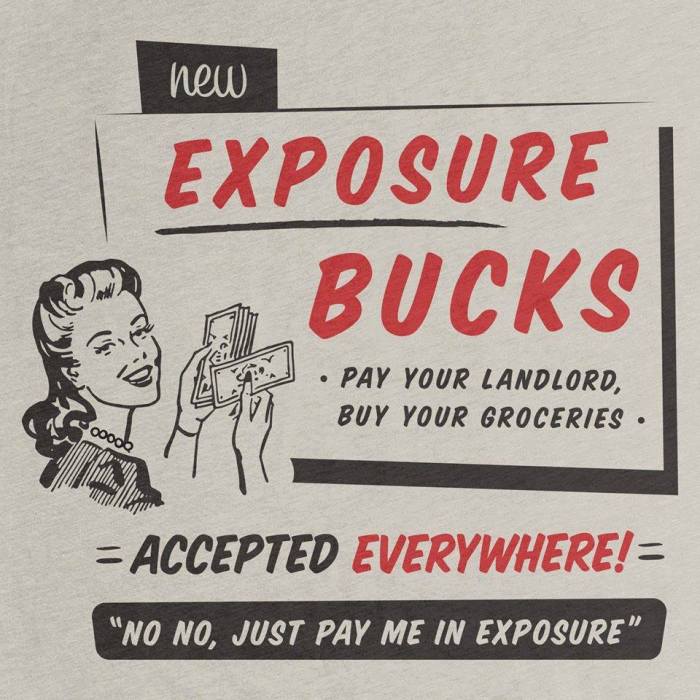
Note to Mr. TikTok and his PR bagmen, that “exposure” angle is not a winner. Not to mention that artists drive their fans to TikTok in huge numbers which is the real “free” promotion as in “uncompensated”. Also, newsflash, there is no free lunch so don’t embarrass yourself by starting the old “free promotion” okie doke. Mr. Tok needs to go home, think about his priorities and try again.
Also, don’t forget that TikTok has to do “blind check” licenses because it lacks the functionality to track and pay royalties, even the broken market centric royalty deal. Blind check licenses are the rough equivalent of an agreement not to sue TikTok rather than an industry standard royalty deal. Over time, it’s likely that the amount of the blind check must increase to compensate for the blindness.
The Universal episode is revealing, however. If TikTok thought they were going to get away with jamming artists because “exposure”, they need to go home and reconsider their life. The situation is completely out of control for one reason–TikTok underestimated Universal’s resolve. And they broke one of the cardinal rules of Business Affairs.
Never let it get to the point that you can’t just write a check.
@helienne’s Panel with Streamers and Label reps about artist centric, streaming fraud and Spotify’s new free goods
I interview Helienne Lindvall about a panel she was on in Europe with reps from Spotify, Deezer and WMG about artist centric implementation, streaming fraud and the new free goods, aka, Track Monetization Eligibility.
How do you say “Bless your heart” in Mandarin?
If you didn’t watch the Big Tech hearing at the U.S. Senate, you should at least watch Senator Marsha Blackburn’s grilling of Mr. TikTok. Must-see TV.
“Fair Use Industries” is Google’s spin to cover its predatory practices against creators. The SGA joined Chris Castle in filing an amicus brief supporting Oracle which is suing Google over alleged copyright violation stemming from Google's use of Java APIs. #protectcreatorspic.twitter.com/nm1vVAsWb2
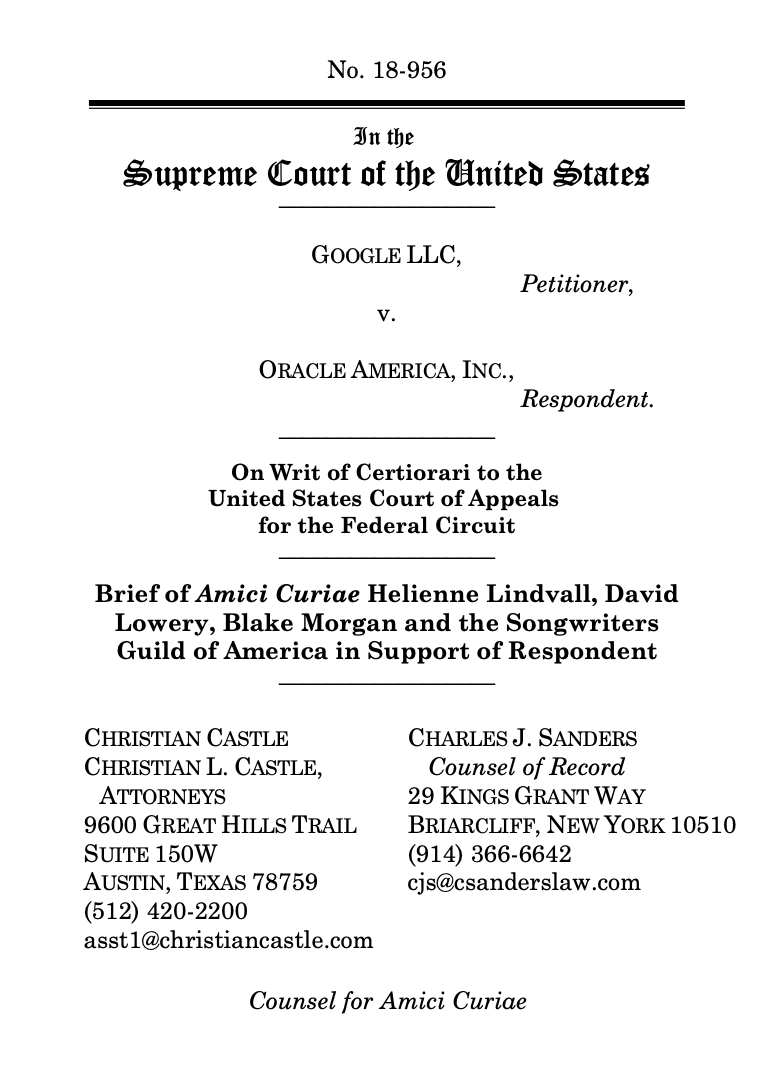
Helienne Lindvall of the Ivors Academy, David Lowery of Cracker and Camper Van Beethoven, Blake Morgan of #irespectmusic and the Songwriters Guild of America joined in a friend of the court brief supporting Oracle in Google’s appeal of its losing argument in a copyright case involving Google’s taking of Oracle’s Java code without a license. Oracle won the case on two different occasions at the Federal Circuit, but Google appealed to the Supreme Court which of course is their right.
I got to co-write the brief as co-counsel with my friend Charles Sanders, long time counsel for SGA. You can read it here.
There will also be numerous Amicus Briefs filed shortly on the side of strong copyright protection for expressive and creative works including computer software. One brief, filed by the Songwriters Guild will state: “There are untold riches in running the Internet of other people’s things.” Only a songwriter could so eloquently capture the essence of this case, and Google’s business practices. We wish we would have thought of that line ourselves, but we didn’t, so we repeat it here (with credit and permission).
One of the accomplishments in our brief was that we were able to bring the words of artists and songwriters like Zoë Keating, Kerry Muzzey and the indefatigable artist advocate and five-time Grammy winner Maria Schneider before the Court. All of them have written eloquently of the reality of being an independent up against the biggest corporations in the world. We were happy to put their voices before the highest court in an important copyright case.
Stay tuned. Google’s reply brief is coming soon and oral argument is scheduled for March 24.
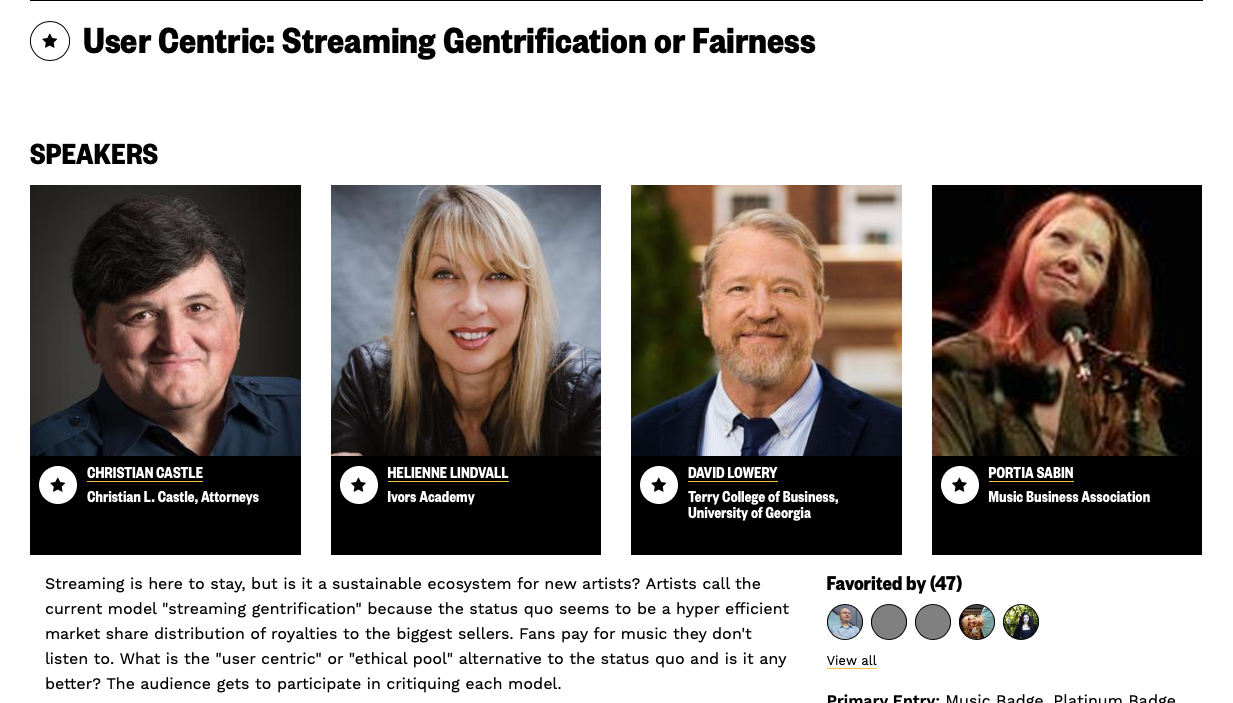
I’m pleased to be moderating a panel on user-centric streaming royalties with some of the smartest people in the music business at SXSW on Thursday, March 19 at 3:30. Helienne Lindvall from Ivors Academy, David Lowery of Cracker and Camper Van Beethoven and Portia Sabin from the Music Business Association will join me in a discussion of this important topic that seems to pick up support daily.
Please put us on your calendar if you’re coming to Austin for the conference! We really want this one to be collaborative with the audience. Watch this space for further updates. If you are new to the topic, a good place to start is the “ethical pool” post from last year.
Small business people dealing with big business people always have the same fear–what if they just stiff me. You know going in that there are some big businesses that simply factor into their financials that the businesses will get away with stiffing a percentage of their contractors with claims of unsatisfactory work daring the small business to sue. Claims that may be trumped up, so to speak.
Some–not all surely, but some–Silicon Valley companies have taken this “pay them when they sue” mentality to it’s logical conclusion under the guise of the faux “DMCA license” based on sheer bargaining power. At least the real estate developer stiffing contractors on trumped up claims did actually hire the contractor with a promise to pay.
The Silicon Valley version of “pay them if they sue” is wrapped in the cant of Valley Boy catechism and the leap of faith to “the machines made me do it” or “disruption” resulting in the gospel of “permissionless innovation”. That’s the trumped up theory that allows the “disruptor” to just take the contractor’s labor and materials without negotiating a contract or paying a dime and then saying “so sue me” and my $20 billion valuation.
UK artist Kate Nash recently called out Snapchat in a viral tweet for profiting themselves from a trumped up license
Hi @Snapchat Do you pay ppl for the use of their work? Been off a record label now for 5 years. Is this legal? I should be paid PLS RETWEET pic.twitter.com/9qq9iKltFG
David Lowery called out Facebook for essentially doing the same thing starting the “#F*CKTHEZUCK” hashtag.
Remember–Snapchat and Facebook, two massive Silicon Valley darlings, have NO licenses and REFUSE to negotiate. (Google does get licenses for some of its platforms like YouTube but is also busily serving millions of NOIs on the Copyright Office to use songs without paying royalties and also gaslighting the UK music industry with yet another meaningless “voluntary” code of conduct for the billions of takedown notices Google receives for search that Google refuses to fix.)
Kate Nash has put her finger on the key factor in the greatest income transfer of all time–it’s not that the music is free because it is without value, it is free because it is stolen using a trumped up legal theory based on loophole seeking behavior in a legacy statutory construct. Nobody ever intended for the “safe harbors” to be used to trump up a nonexistent “license held in place by unequal bargaining power.
[An] imbalance I want to talk about is the safe harbour provisions, and similar terms in other countries. They were introduced, with some foresight, by the legislators in the USA framing the DMCA, to provide a notice and take down procedure for unlicensed content. But the legislation has been distorted into a protective wall behind which cyberlockers and torrent sites, and companies such as YouTube and Grooveshark, operate.
The original intent was to protect reasonable people acting reasonably from falling foul of the law, to enable the digital economy to grow without “ gotcha “ law suits against ISP’s who had no idea that their networks were being used for infringement. They were not intended to provide fortress walls behind which companies could build billion dollar businesses on content that had not been cleared. They were never intended to become a de facto “ licence “.
Kate Nash said it best: “But where’s my paycheck?”
 Music Tech Solutions