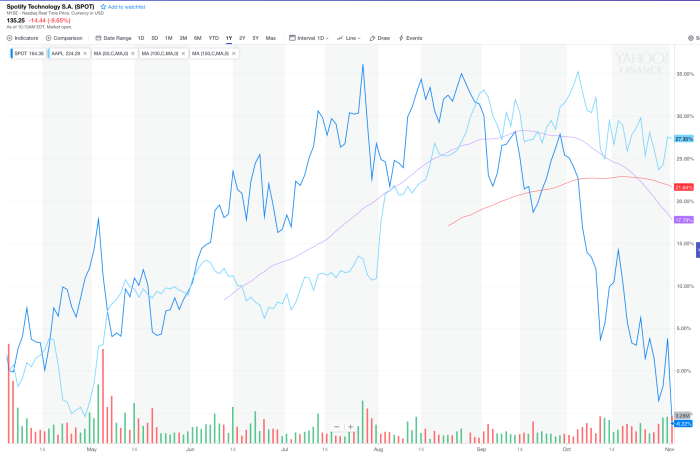
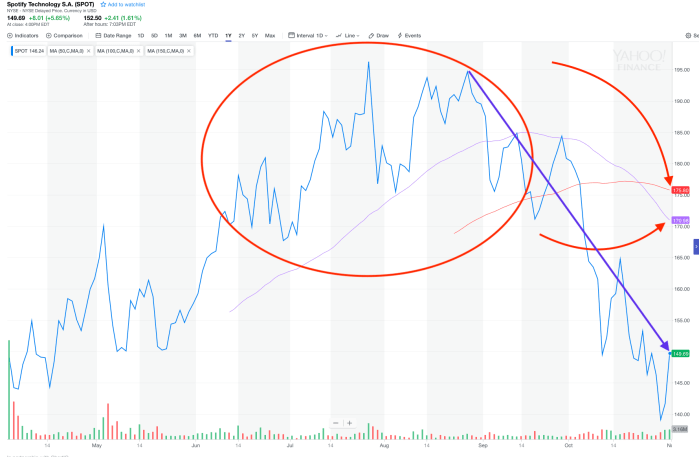
Is Tencent a Cautionary Tale for Spotify?

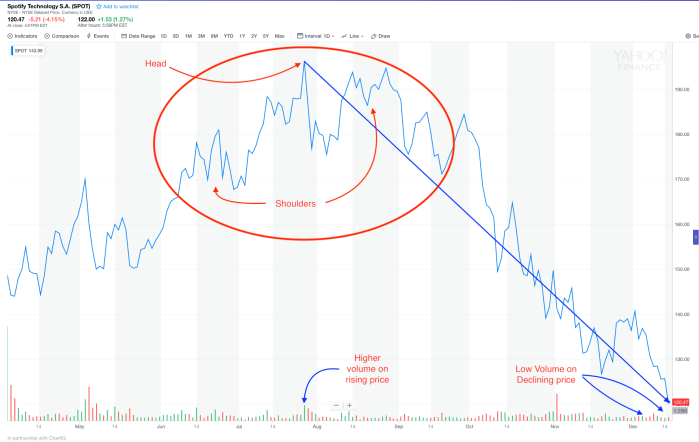
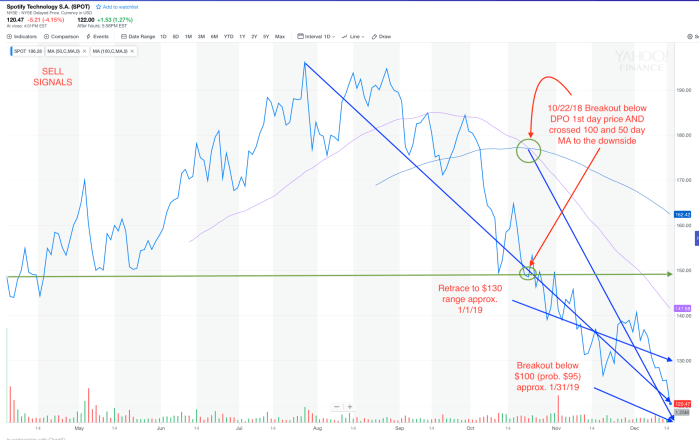
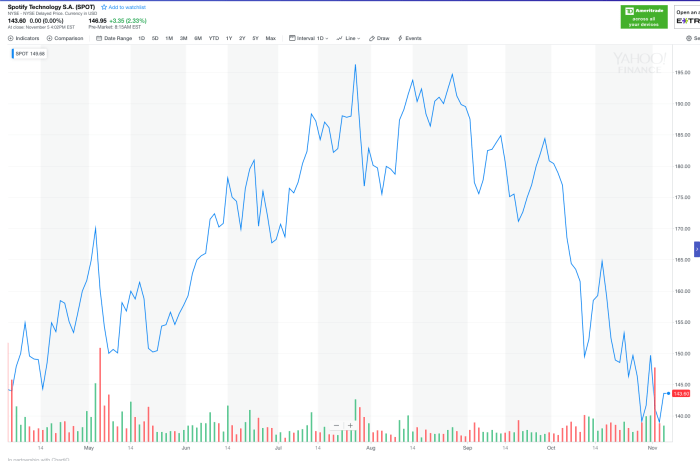
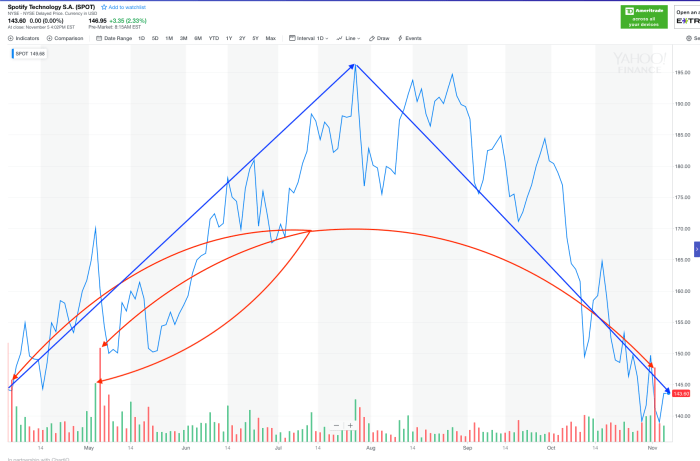
If you’ve ever asked yourself why Spotify has such a large market cap, I’d suggest there are a couple reasons.  (One we can eliminate right away is that the company is actually worth today’s $34,880,000,000 valuation.)

We can discount as a correctable market distortion the fact that Spotify manipulated the SEC into allowing the company to take its private market sale price as an indicator of what its public shares should trade at (discounting that most of the private stock was likely sold by insiders on the private market who had an interest in propping up the valuation).  We can also discount that the “direct public offering” resulted in shares being sold by insiders on the public market who had an interest in propping up the stock price and the implied valuation.

One cannot underestimate the role that Chinese darling Tencent played in the dance that was Spotify’s stock market valuation and resulted in Spotify and Tencent holding 10% of each other, Dot Bomb Style.

The only problem is that while the Peoples Republic of China can command a lot of stuff in their economy (if you can call it that), one thing Xi Jinping (who is General Secretary for Life of the Communist Party of China,  President for Life of the People’s Republic of China, and Chairman for Life of the Central Military Commission) cannot control is the stock market.  And the stock market is sending a signal about Tencent that Spotify would do well to pay attention to given the chunk of Spotify owned by Tencent.  (Check quickly to see if any recordings of the Tibetan Freedom Concert are available on Spotify.)

Tencent is down 17% on the year and dropped a bunch yesterday from its first profit cut   in 13 years because “it did not know when it would get Chinese approval to make money from its most popular game” according to Reuters.

That’s a good reminder of the facts on the ground for Chinese companies–if President for Life Xi Xinping doesn’t want you to make money, it can ruin your whole day.  Read the Tencent earnings call transcript.  And a squeeze on Tencent can also create some international or regional index fund torque that affects other big Chinese companies.

But the tale of the tape tells us that the problems started for Tencent quite some time ago–in January Tencent had a $575 billion market cap compared to $403 billion today, a lopping of some $170 billion–that’s billion with a “B”–off of its market cap.  Which is indicative of the problems with the Chinese economy as a whole–not to mention that there’s a lot of domestic retail investing on margin in China and short selling.

And when the margin calls come in, that stuff is nasty no matter what geographical economy you live in (see The Big Short.)

Tencent 8-16-18

So at the moment, it looks as if Tencent’s shares of Spotify are doing better for Tencent than Spotify’s shares of Tencent are doing for Spotify.

HFA is Getting Blamed Unfairly


afriendinneed
A Friend In Need

When you’ve been around as long as the Harry Fox Agency, you’re going to make some enemies, screw some things up, over react and over reach.  You’re also going to do a lot of things right, make some friends and do some good.  But most of all, you’re going to be the whipping boy for your client’s enemies, screwups, overreacting and over reaching.

From one whipping boy to another, that’s just not fair and anyone who has ever tried to do anything really hard with data in the music business knows it.  So pish and pshaw on those who gang up on HFA in the debate on the Music Modernization Act.  Let’s look at the facts.

When HFA developed the first digital download mechanical license in the late 1990s, the current crop of critics were nowhere to be seen.  Was it a perfect solution?  Not entirely, no.  But it did work and business got done and songwriters made money.  We were all feeling our way along the digital precipice and making it up as we went along.

I will go out on a limb here and say that if it weren’t for people like HFA’s Ed Murphy, it’s entirely possible that there would be no “streaming mechanical” at all.  That would be the same Ed Murphy who stepped up and licensed Napster’s effort at a p2p subscription service in 2001.  Again, the current crop of critics were nowhere to be seen.

Here’s another fact that you won’t hear about.  When it came time to mete out justice to a massive infringer record company who had been ripping off Texas singer-songwriters for years and years, it was HFA who stood with us.  Not because they made money, not because there was some pot of gold for them–there wasn’t and they didn’t.

They did it because it was the right thing to do.

They may not be choir boys, but they have their moments.  When we really needed them, they showed up for Texas songwriters.  And that’s how we measure friendship in my part of the world.

HFA is often blamed for the Spotify meltdown which in its own way led directly to the controversial safe harbor in the Music Modernization Act.  You can tell that’s true because the MMA’s proponents never talk about the safe harbor except to say that they negotiated away the rights of all the world’s songwriters in some “grand bargain,” the grandness of which elludes me almost as much as the legitimacy of consent.

The fact that Spotify chose to go forward without all the rights necessary to do business is not HFA’s fault.  It is Spotify’s fault.  If Spotify has an issue with HFA, that’s between them.  Ultimately, Spotify knew what it was doing and I seriously, seriously doubt that HFA told them otherwise.  I won’t believe it without both pictures and tapes.

Another fact is that the clearance problems that Spotify and some other HFA clients have were set in motion well before SESAC’s acquisition of HFA in 2015.   If anything, HFA’s been doing it better and cleaner after the acquisition in my opinion.  So if there is blame to go around, then the blame should go all the way around.

You may hear some pretty nasty comments about HFA now that its parent’s parent company is lobbying for a seat at the table on the Music Modernization Act.  Pay them no mind.  If SESAC and HFA had been dealt in at the beginning of the MMA process–which it sounds like they were not along with a lot of other people who should have been there, too–then there’d be some actual evidence that they were reneging on a commitment instead of no evidence that a commitment was ever made.  If you’re going to bet the farm, don’t take silence as consent.

Bashing HFA won’t fix the failure to include them, and I for one think it’s really unfair.  The solution isn’t dealing them out, the solution is embracing SESAC and HFA by respecting their efforts to make MMA a better bill that will have a greater chance of flourishing.

@alibhamed: Pre-Seed Investing is Not About Check Size

[Interesting post by Ali Hamed about the goals of a pre-seed investment round]

Pre-Seed Investing, in my view, should not be defined by check size. I think a lot of people are tempted to describe a pre-seed investment as a “sub $1M investment,” or a ~$500k investment. And while directionally correct, or associated with seed rounds, likely isn’t their definition.

To me, a pre-seed round is a round of capital used for proving whether or not a product can be valuable to a customer.

One thing that has always bothered me is when seed investors, or pre-seed investors ask super cookie-cutter questions, like:

  • What is your monthly revenue?
  • What is your MoM growth?

To many investors, these are almost formulaic questions that define if they will take a meeting or not.

Read the post on Medium

Justice Department Antitrust Division Starts Terminating Legacy Antitrust Judgments–What Next for ASCAP, BMI and MMA

We’ve noted a few times that there’s a limited benefit to ASCAP and BMI from being involved with the Music Modernization Act (although fans of the bill have been dining out on their support for quite a while).  All of those benefits involve relief from the oppressive government control over songwriters through the ancient consent decrees that now mostly protect the MIC Coalition.

We’ve also pointed out that the new head of the Antitrust Division of the Department of Justice announced his plan to terminate the some 1,500 consent decrees that the DOJ uses to regulate commerce–more properly the role of the Congress, not the Justice Department.  Assistant Attorney General Makan Delrahim, the head of the Antitrust Division, has already said that he would review the ASCAP and BMI consent decrees, so this isn’t idle speculation.

This week, the AAG Delrahim put that plan in motion.  According to a DOJ press release, the Antitrust Division is terminating 19 consent decrees that are like the PRO consent decrees, more regulatory in nature than enforcement oriented.  Here’s the press release:

The Department of Justice’s Antitrust Division today filed a motion and supporting papers, seeking to terminate 19 “legacy” judgments in the District Court for the District of Columbia.  Today’s court filing is part of the Antitrust Division’s effort to terminate decades-old antitrust judgments that no longer serve their original purpose.

“Today we have taken an important next step toward eliminating antitrust judgments that no longer protect competition,” said Assistant Attorney General for Antitrust, Makan Delrahim.  “Today’s filing is the first of many that we will make in courts around the country in our effort to terminate obsolete judgments.”

In its motion filed today, the Antitrust Division explained that perpetual judgments rarely continue to protect competition, and those that are more than ten years old should be terminated absent compelling circumstances.  Other reasons for terminating the judgments include that essential terms of the judgment have been satisfied, most defendants likely no longer exist, the judgment largely prohibits that which the antitrust laws already prohibit, and market conditions likely have changed.  Each of these reasons suggests the judgments no longer serve to protect competition.

The Antitrust Division announced in April its initiative to terminate legacy antitrust judgments, stating that it would review all such judgments to identify those that no longer serve to protect competition.  In its prior announcement, the Antitrust Division set forth the process by which it would seek the termination of outdated judgments.  It also established a new public website (https://www.justice.gov/atr/JudgmentTermination) to serve as the primary source of information for the public regarding the initiative.

At the time that the Antitrust Division announced the initiative, it posted on its public website the legacy judgments in federal district court in Washington, D.C. and in Alexandria, Virginia.  After a 30-day public comment period, the Antitrust Division concluded that termination of these 19 judgments is appropriate.

Since the announcement of its initiative, the Antitrust Division has posted for public comment judgments in 19 additional federal district courts.  It will continue to post judgments periodically as review of those judgments by Antitrust Division attorneys is completed.

Members of the public are encouraged regularly to check the Antitrust Division’s Judgment Termination page on its website, www.justice.gov/atr/JudgmentTermination, for updates.  Members of the public also may subscribe to the mailing list (https://public.govdelivery.com/accounts/USDOJ/subscriber/new(link is external)) to receive notice of new postings to the website, including judgments that the Division has identified as appropriate for termination.

This is important because the latest version of the Music Modernization Act requires the DOJ to notify Congress if they intend to terminate the ASCAP and BMI consent decrees.  Just the ones that relate to songwriters, no others.

So once again, the Congress–which should be regulating songwriters in the first place if anyone is going to engage in that worthless task–isn’t requiring the DOJ to notify them of any of the hundreds and hundreds of other consent decrees that AAG Delrahim proposes to terminate.

The irony of this amendment should not be overlooked–if the DOJ stops improperly regulating songwriters beyond its enforcement powers, oh, no!  Congress must step in to defend the MIC Coalition’s multi trillion dollar market cap from those pesky anticompetitive songwriters.

Why should Congress butt in where it has been afraid to tread since before World War II?  The same body that “forgot” to raise the statutory mechanical royalty for 70 years?

What should happen is the DOJ should terminate the ASCAP and BMI consent decrees and continue in its oversight role for enforcement of the antitrust laws.  Surely this is not controversial.  We don’t need another amendment to the Music Modernization Act to slow down “modernization.”


The Music Modernization Act’s New Burdens for Labels Identifying Unmatched Songs

The Music Modernization Act is definitely the gift that keeps on giving.  It seems like every time I read it, a new toad jumps out from under a rock.

The latest one I found is a new burden the MMA places on all sound recording owners, large and small, to help the digital services comply with their obligation to locate song copyright owners in order for the services to keep the new “reachback” safe harbor also referred to as the “Limitation on Liability”.  This is the retroactive safe harbor given effect on January 1, 2018 regardless of when the bill actually is passed by both houses of Congress and signed by the President.

Here’s the relevant clause (at pages 100-101 of the House bill):

REQUIREMENTS FOR LIMITATION ON LIABILITY.—The following requirements shall apply on the enactment date and through the end of the period that expires 90 days after the license availability date to digital music providers seeking to avail themselves of the [reachback safe harbor]:

‘(i) No later than 30 calendar days after first making a particular sound recording of a musical work available through its service via one or more covered activities, or 30 calendar days after the enactment date, whichever occurs later, a digital music provider shall engage in good-faith, commercially reasonable efforts to identify and locate each copyright owner of such musical work (or share thereof). Such required matching efforts shall include the following:

(I) Good-faith, commercially reasonable efforts to obtain from the owner of the corresponding sound recording made available through the digital music provider’s service the following information:

(aa) Sound recording name, featured artist, sound recording copyright owner, producer, international standard recording code, and other information commonly used in the industry to identify sound recordings and match them to the musical works they embody.

(bb) Any available musical work ownership information, including each songwriter and publisher name, percentage ownership share, and international standard musical work code.

And yes, that is a double “good-faith, commercially reasonable” predicate–a drafting bugaboo of mine.  I guess it means really, really, really good faith and absolutely positively commercially reasonable since they said it twice.

So what this means is that labels are required to provide to digital services a lot of song ownership information that they may or may not have.  For example, if the label licenses in a sound recording and puts the publishing payments on the licensor (very common practice) the information might be “available” but it is just not available to them.

Note that despite the fact that “good faith” and “commercially reasonable” are repeated twice for emphasis, those concepts modify the efforts of the digital service and not the efforts of the label to respond.  (Not surprising, if you believe as I do that the MMA was largely written by the lobbyists for the services and not the publishers or songwriters.)

At a minimum, the clause should be revised to extend the “good faith” and “commercially reasonable” modifiers to the label’s efforts to provide song information.  Having said it twice, why not three times?

There’s also no procedure for how this request is to be made or responded to, nor is there reimbursement of the costs incurred by the label in complying.  There’s also no limitation on liability for the label if it provides the service what turns out to be incorrect information.

Of course, what should really happen is that the entire paragraph (bb) should simply be struck.  It has long been the practice of record companies to refuse to provide publisher information to digital services and it has long been the practice of digital services to not ask for it.

In all likelihood, the services will engage a third party to do their song research, which is covered in the very next clause:

(II) Employment of one or more bulk electronic matching processes that are available to the digital music provider through a third-party vendor on commercially reasonable terms, but a digital music provider may rely on its own bulk electronic matching process if it has capabilities comparable to or better than those available from a third-party vendor on commercially reasonable terms.

Taking a long look at the clause, it seems reasonable to simply strike the entire clause (I) and keep the labels out of it as has long been the practice, and require the services to either use their own systems or hire a vendor.  And that’s where there should be some criteria for what constitutes a proper vendor.  If there’s going to be any work done by the labels, then–as advertised–the digital services should pay the label’s cost of compliance as part of the assessment and the label should have no liability if they happen to not have the song information “available”–in a commercially reasonable manner.

We all want the MMA to work, but we also all want to avoid unfunded mandates imposed by the federal government that create unintended consequences.

Five Reasons Why Apple Could Succeed as a Music Publisher

Music Business Worldwide reports in a fairly detailed article that Apple is launching a music publishing division–crucially based in both London and the US run by Elena Segal (recently of my old alma mater, Mitchell Silberberg).  This doesn’t necessarily mean that Apple will be competing with publishers to acquire catalogs or for songwriter talent just yet, but that is something worth thinking about.

Personally, I don’t see a catalog buy in Apple’s future.  They don’t need the money or the headache–Apple is in the Benjamin business not the Lincoln business.  If Apple moves into publishing my bet is that it will be strategic and not tactical.

But I could see a world in which Apple leveraged their creative staff and audio recording toolshed to attract developing writers.  Even a $1 million investment in a stable of developing songwriters could go a long way.

Here’s five reasons why Apple has a strategic advantage over almost everyone in getting into the creative side of the business:

1.  History:  Largely due to Steve Jobs’ genius, Apple has always attracted musicians and artists to the company’s products.  When I attended the “Hell Has Frozen Over” launch of iTunes for Windows, even a blind man could see how much the artists who Facetimed with Steve on stage really enjoyed the guy.  Remember that iTunes for Windows launched with a whole bunch of exclusive tracks from top artists–all of whom were happy to participate.  How much happier would they be to actually include Apple in their creative careers?

2.  Trust:  Apple has never been sued by songwriters or artists.  They give a straight count for iTunes.  Not to say they shouldn’t be audited, trust but verify, etc., but on balance most people trust their Apple statement not to be shady.  That is definitely not true for Spotify, or…ahem…others.  Plus, Apple doesn’t hand out stock to lower royalties for everyone.

3.  Fairness:  As an old Apple lawyer once said to me, we decide what’s fair and then we jam it down your throat.  Which sounds harsh, but remember that Apple Music’s long-time honcho Eddie Cue made a huge change in Apple Music’s launch strategy because Taylor Swift tweeted that she thought the free period was too long.  One tweet and that was that.

Eddie Cue

Contrast this exchange with billionaire Daniel Ek’s tone deaf mansplaining to the same Taylor Swift over windowing.

4.  Longevity:  In a time of ups and mostly downs in the music industry, Apple isn’t going anywhere.  There’s no fear that key executives are going to pump and dump their Apple stock on a get-rich-quick scheme that benefits everyone except the creators.  So the long term interests are aligned.

5.  Playlists:  You don’t get the impression that Apple is going to use the 21st century algorithmic equivalent of Top 40 to create a version of George Orwell’s versificator that bears about as much resemblance to a Ponzi scheme as it does to a listening experience.  Apple smartly engaged Zane Lowe & Co to keep the human element in a kind of global Radio One.  Artists don’t like to feel that they are simply part of the background music–who can get excited about being on the “Sleep” playlist?  It’s like asking artists if they’d like to sign to Muzak.

I personally find the idea of Apple in the creative side of publishing very attractive because it allows Apple to distinguish itself on values that many creators find compelling:  Transparency, integrity and trustworthiness.

Frankly, we could all do well to promote those values in our business instead of passing laws that try to make the indelible sleaze disappear.

@TXMusicOffice: Music Industry Economic Impact Study Quoted by Sen. @JohnCornyn

The good news is the bad news is wrong.  And someone has the data to prove it.

If you watched Smokey Robinson’s riviting testimony before the U.S. Senate Judiciary Committee this week, you may recall that Senator John Cornyn read some statistics from the Texas Music Office Economic Impact study on the benefits to the State of Texas from the music industry.

This one exchange should give the lie to the usual cant we hear from lobbyists both in and outside the music business that we will never win against the broadcasters on terrestrial royalties because there’s a radio station in every Congressional district.  There’s music industry in every state at least, if not every Congressional district.

The economic impact study concluded:

Combined, music business and music education directly account for over 95,000 permanent jobs, $3.6 billion in annual earnings, and just over $8.5 billion in annual economic activity, up from 92,000 jobs and about $7.5 billion in annual activity during 2015.

  • The ripple effects associated with the direct injection related to music business and music education bring the total impact (including the direct effects) to over 178,000 permanent jobs, $6.5 billion in earnings, and $19.8 billion in annual economic activity. The State of Texas also realizes over $323 million in tax revenue from these impacts.

In addition to the TMO economic impact study, you should also read Titan Music Group’s Austin Music Census that really drills down deep on the local impacts and has become a rally point for Austin musicians.

The Texas Music Office sets the gold standard for providing federal lawmakers with the information they need to defend the music industry as important job creators rather than an afterthought.

Senator Cornyn’s exchange should debunk forever the idea that there’s no support for music industry initiatives outside of New York, Nashville and Los Angeles, so nobody bothers to explain themselves to residents of flyover states.

@hypebot: @SoundExchange Launches Music Data Exchange To Connect Label, Publisher Metadata

SoundExchange’s new Music Data Exchange (MDX) is a promising idea that gets at a big part of the real problem with mass infringement of songs by digital services.  It also gives some hope of actually reducing the “pending and unmatched” (or “black box” in the vernacular) at the source–before the songs are infringed.

Regardless of what the Music Modernization Act’s proposed blanket license and new retroactive safe harbor for infringing services may do, if the song ownership data isn’t available pre-release, it is unlikely that the proposed Music Licensing Collective will result in more efficient payments to songwriters subject to the blanket license.

When I worked at A&M Records, I established a policy of enforcing requirements in producer and artist agreements that writer and publisher information (including splits) be delivered to A&R Administration along with every new recording as part of the larger label copy process.  A&R Administration then was able to send the full publisher and song metadata for the recording to the Copyright Department so that there was no need (or much less need) for them to chase down the information on new releases.  That’s not only extremely inefficient, it also makes their job exceptionally frustrating and Kafka-esque.

This required putting some sensitive English on the ball, so to speak, about enforcing our contracts with the most important people on the label–the artists and producers.  But it was a simple pitch–let’s get this right so that songwriters get paid properly.  That resonated.

This policy resulted in A&M having the lowest pending and unmatched in the industry–to the point that on audit some people thought we were hiding something.

On balance, the downside of denying the black box slush fund just didn’t compare to the upside of making sure our songwriters got paid (many of whom also were our artists).  While I’m glad that the plan worked for A&M at the time, what’s really needed in an era of massive infringement by digital services is an industry-wide solution that takes away that excuse.

Nobody likes litigation, but it has become a last resort when faced with people who just don’t seem to care and would rather buy themselves a new safe harbor than do the right thing.  MDX may offer that opportunity and solution.

Hypebot recently published an interview with SoundExchange’s Jonathan Bender that gives a clear explanation of the goals and functionality of the service.  I think it’s a solution that everyone should support.

And use.

…[I]t occurred to us that we were addressing a problem after it happened. We said, “Isn’t there a way to address the problem before it happens? Before you get to the point where you have settlements and lawsuits and unhappy writers and publishers?”

That was the core idea of Music Data Exchange – to create a centralized, rational process for labels to request publishing data and for the publishers to respond to those requests on a central site…

In one of my first meetings with one label’s copyright department I asked, “How do you get the publishing data?” They said they generate a report of all their new releases each week, typically hundreds of recordings, hand it to their copyright people, and then they commence to email publishers they know asking “is this your song?”

That’s just one label. Add hundreds of labels and hundreds of publishers to that, and thousands of recordings a week. It’s no surprise that it’s a mess.

Read the post on Hypebot.


Will DOJ Consent Decree Review Obviate Any Rationale for the Music Modernization Act?

Let’s be clear–one reason why there are problems with mechanical licensing in the US is the loophole created by the government consent decrees that block ASCAP and BMI from issuing a “unilicense” for both performances and streaming mechanicals.  I have argued for years that PROs should be allowed to administer existing statutory mechanical licenses for services that they already license on the performance side of the song.  Personally, I think it is the main reason for creating the situation (such as the mass address unknown NOIs) that gets abused by the services like other loopholes.

I’m not alone in making this argument for “bundling” rights to be administered by PROs: According to the Copyright Office Music Licensing Study (pp. 103-104):

“NSAI, for example, opined that ‘[t]he most efficient path to digital service providers obtaining necessary licenses would be to allow the PRO’s to license and collect mechanical royalties;’” “NMPA suggested that bundled rights could be sought directly from the music publishers that own and administer the song in question.   But the PROs suggested that their existing structures could be leveraged to facilitate bundled licensing on a blanket basis, if only the consent decrees were amended.”

My view is that bundling should occur at the pubisher level and also at the PRO level for all publishers who do not license directly.

Remember–streaming mechanicals track the exact same song, the exact same use, the exact same copyright owners, the exact same transactions and the exact same services as the PROs already license on the performances.  The PROs already have the most comprehensive ownership databases for songs and those databases are immediately accessible.  This is likely to remain true for a long time.

The ASCAP and BMI consent decrees have been in place for decades.  We accept them as a fact of life, something of an immovable object.  For example, the only part of the Music Modernization Act that affects ASCAP and BMI relates to changes that these PROs evidently would like to make to the consent decrees but cannot get the Justice Department to address.  (“Part” may be overstated–it’s about 1-1/2 pages out of the 151 page bill.)

But–what we were told at the outset of the MMA is that legislation to sunset the consent decrees would never pass due to the lobbying power of the digital media companies, the broadcasters, and the general business establishments.  The MIC Coalition, in other words.  And supposedly we can’t beat them, so we need to give up on that idea and take what we’re given and like it.  (Good thing that guy was not at the Alamo, the Edmund Pettus Bridge, Thermopylae or the Battle of Britain.  Horatius he ain’t.)  This is, of course, entirely the wrong approach–if that thinking is not the ennui of learned helplessness, what is?  As the Reverend Martin Luther King, Jr. said, “Ultimately a genuine leader is not a searcher for consensus, but a molder of consensus.”

No one considered what would happen if the consent decrees actually went away either entirely or substantially because the DOJ wanted them to.  If that happy event came to pass, I would suggest that there would be little to nothing in the Music Modernization Act of any value or relevance to ASCAP and BMI.  If anything, the collective established by the MMA is or could easily become a direct competitor of all the PROs which is likely why the broadcasters are “positively neutral” on the bill.  I seriously doubt that any of them anticipated the consent decrees might go away.

Makan Delrahim, the new head of the Department of Justice Antitrust Division, may have just obviated any reason why the PROs should support the MMA or perhaps whether the MMA is even relevant.

During a speaking engagement on March 27 at Vanderbilt Law School, Mr. Delrahim gave us some insights into his plans for the ASCAP and BMI consent decrees in a discussion with Professor Rebecca Allensworth.  As reported in Broadcasting & Cable he said:

“As public agencies we need to take a look and see if those consent decrees are still relevant in the marketplace,” which he was clearly signaling was up for debate. “If they have solved the competitive problem,” he said, “they could become anticompetitive tools over time[.   I]f they were not necessarily the best ideas at the time, it doesn’t make a whole lot of sense for them to stay.”

Mr. Delrahim has put his finger right on the problem.  In my view, the consent decrees have become weaponized–for example, the last head of the Antitrust Division was closely linked to Google and after an ostensible review of the consent decrees, suddenly launched into the absurd “100% licensing” episode to the great–albeit short lived–satisfaction of the MIC Coalition.

Not only is there serious competition in the PRO marketplace unlike it was in 1941 when the ASCAP consent decree started, the 2015 SESAC acquisition of the Harry Fox Agency actually demonstrates that if left alone, the marketplace will close the mechanical license loophole that the MMA purports to solve.   There is no longer a need for the consent decrees, rate courts, none of it.

This isn’t to say that the PROs should get an exemption from the antitrust laws, far from it.  But it does mean that the broadcasters, the MIC Coalition and the Digital Media Association should not be allowed to play with the “anticompetitive tools” of the entire consent decree apparatus.

hesse

So it appears that Mr. Delrahim thinks there’s actually a chance that the consent decrees could go away.  If that happens, the PROs will have a golden opportunity to close the mechanical licensing loophole without all of the apparatus of the MMA.  In that new world, the major publishers would possibly not have to continue to use pretzel logic to administer the rights in their catalogs and the PROs could provide coverage on everything else.

And unlike the MMA, that world would actually be getting the government further out of the lives of songwriters.  It would avoid songwriters being beholden to the DiMA fox that would at least financially control the collective’s chicken coop.

It would also put to rest the ridiculous premise that the biggest corporations in commercial history need the government to protect them from songwriters–corporations that are themselves subject to antitrust enforcement, at least in Europe.  And that may be the other shoe Mr. Delrahim could be dropping.

alice_par_john_tenniel_04


Spotify IPO Watch: Buy High, Sell Low

Is Spotify’s unusual “DPO” approach and bizarre $132 selling price simply a way for insiders to short the stock? See SPOT run! Run SPOT run!

Here’s an interesting anecdote about that imminent Spotify stock offering.  Remember, Spotify is rumored to price at $132 per share based on private market trades (on a split adjusted basis, I guess).

If the Spotify “DPO” actually does trade at $132, it will probably be the highest valued IPO stock ever.  Dropbox, for example, priced at $21 and closed at $28.48 on its first day of trading.  Facebook priced at $38, Google at $85, Alibaba $68, Amazon was $18.  So Spotify will have to be pretty special to actually trade at $132 on the public market.

It’s good to remember that most of these comparisons had what’s called a “full commitment underwriting” where the company issues new shares that are purchased by an underwriting syndicate and then resold to the public.  Spotify will issue no new shares.  So–one would surmise that the only ones selling will be those who already hold Spotify shares that have been allowed to be sold on the public exchange.  That appears to mean the shares that will be trading will be the insiders (or mostly the insiders), with no restrictions on which of those insiders can sell on the first day of trading.  (Most IPOs have a restriction (called “lockup agreements”) on when employees can sell their shares to avoid a rush for the exits.)

I happened to be chatting with two sophisticated investors in recent days, one from a hedge fund and the other an entrepreneur who has taken a couple companies public.  Both of them had the same reaction after we talked through Spotify’s competitive position and some of the disclosures in Spotify’s SEC Form “F-1”.

Let’s start with Spotify’s description of who it counts as a subscriber:’

We define Premium Subscribers as Users that have completed registration with Spotify and have activated a payment method for Premium Service. Our Premium Subscribers include all registered accounts in our Family Plan. Our Family Plan consists of one primary subscriber and up to five additional sub-accounts, allowing up to six Premium Subscribers per Family Plan subscription. Premium Subscribers includes subscribers who are within a grace period of up to 30 days after failing to pay their subscription fee.

If you think that a paid subscriber means a subscriber who paid, you’re probably not wild about this definition, and both my friends thought it was not only a meaningless number but also was deceptive.  My guess is that it conservatively overstates “Premium Subscribers” by about 20% given the number of freebies that Spotify hands out.  We were all actually surprised that the Securities and Exchange Commission allowed Spotify to get away with this kind of disclosure as the definition is buried in a footnote.  Neither friend had noticed it, and these were people who are too smart to miss these things normally.

Then there was a discussion about that New York real estate–Pandora is certainly learning its lesson about sky high overhead and is migrating gradually to Atlanta.  I’ve always been mystified why money losing companies like Spotify get away with locating in some of the highest priced real estate in the world–San Francisco and Manhattan.  And also get away with complaining about royalties instead of rents.  Rather than the labels rewarding them based on subscribers, why not reward them based on subscribers if and only if they also lower their overhead (called SG&A) by a certain percentage.

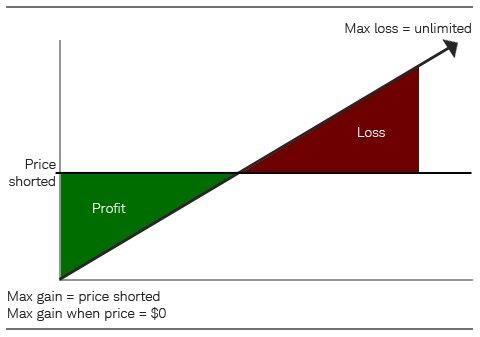
Both conversations ended with a discussion of the 10 second MBA–buy low, sell high.  This is what you do with a long position in a stock.  In Spotify’s case, we were discussing another kind of position, a short position.  Short selling reverses the equation–buy high, sell low.

This is because the short seller is betting that the stock will trade lower, and usually considerably lower, than the price at the beginning of the short seller’s round trip.  In brief, what happens with short selling is that you borrow the shares from someone who holds them.  You get to borrow them for a fixed period of time.  You then sell those borrowed shares at the then-current market price.

short_sell_example

Because your bet with “directional” short selling is that the shares will decline in value over time after that initial sale of the borrowed shares, you then essentially use the proceeds from the sale of the borrowed stock to purchase the shares before your short period expires.  You then return the borrowed shares after you buy them back.

Sometimes you can make a fortune selling short (which doesn’t require shorting stocks, see George Soros shorting the UK pound stirling and The Big Short).  Of course, it can go the other way, too, and result in a short squeeze if the price of the shorted stock increases and short sellers have to “cover” at a higher price than they sold the borrowed shares so they can return the borrowed shares and not default.

“Short interest” is a published number and can be used as a measurement of market sentiment about a particular stock.  It’s the aggregated number of shares of a stock that have been sold short but haven’t been closed out or “covered.”  (Similar to the “put to call” ratio in options trading.)  So it was a bit remarkable to me that both these friends said they’d probably short Spotify as soon as they could.

That’s an interesting question–when could the Spotify stock be shorted.  In order to short, there must be some inventory of shares available to borrow and trade such as from a brokerage house (who can lend the shares from clients’ margin accounts, for example).  Typically, underwriters of an IPO are not allowed to short their IPO stock for 30 days or so.  However, there is no such restriction on retail investors–and Spotify has no underwriters.

Therefore, there may be no restriction on when the Spotify insiders can short Spotify stock.

And if my anecdotes are any guide, it certainly does look like there will be a market for short sellers.  One could even say that insiders seeking to short Spotify shares are simply acting prudently to protect their downside, not unlike a “collar” or other hedging transaction.  This will be particularly true if there is a real run on the exits and early investors or other holders (like the senior management team) start selling right away given they have none of the usual lockup agreements or restrictions on trading as far as I know.

In the words of one of the friends, the shorting will begin at 9:31 on the first day of trading.  As someone who knows the importance of a few seconds in the world of automated trading, I believe him.