The AI Subsidy Is Over. Or Maybe It’s Just Beginning.


The current narrative says the “AI subsidy era” is ending. Prices are rising. Rate limits are tightening. Ads are creeping in. Enterprise tiers are replacing all-you-can-eat plans. In short: users will finally start paying what AI actually costs.

Haydon Field writing in The Verge tells us:

Earlier this month, millions of OpenClaw users woke up to a sweeping mandate: The viral AI agent tool, which this year took the worldwide tech industry by storm, had been severely restricted by Anthropic.

Anthropic, like other leading AI labs, was under immense pressure to lessen the strain on its systems and start turning a profit. So if the users wanted its Claude AI to power their popular agents, they’d have to start paying handsomely for the privilege.

“Our subscriptions weren’t built for the usage patterns of these third-party tools,” wrote Boris Cherny, head of Claude Code, on X. “We want to be intentional in managing our growth to continue to serve our customers sustainably long-term. This change is a step toward that.”

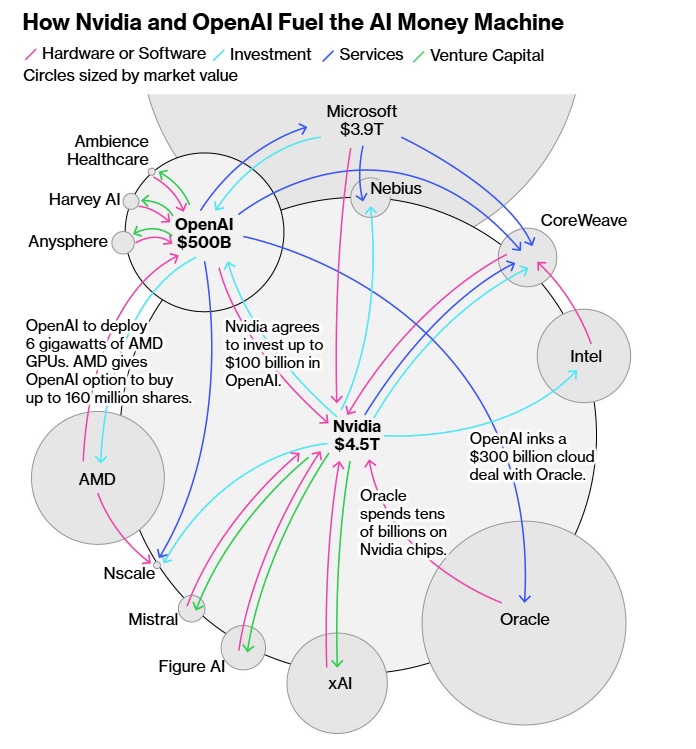
The announcement was a sign of the times. Investors have poured hundreds of billions of dollars into companies like OpenAI and Anthropic to help them scale and build out their compute. Now, they’re expecting returns. After years of offering cheap or totally free access to advanced AI systems, the bill is starting to come due — and downstream, users are beginning to feel the pinch.

That’s true but it’s leaving out a lot.

Yes, the consumer subsidy—venture-backed underpricing of inference—may be winding down. But the broader subsidy system that made AI possible isn’t going away. It’s expanding. Just ask President Trump.

To understand why, you have to go back to the last great digital disruption.

From P2P to Streaming to AI

Start with Napster.

P2P didn’t just enable infringement. It rewired expectations. It taught users that all music should be available, instantly, for free. Why? Because there was gold in them long tails. Forget about supply and demand, we had infinite supply so demand would take care of itself.

It’s for sale

Every artist, songwriter, label and publisher in the history of recorded music were not compensated for this shift. They were its involuntary financiers. Their catalogs created the demand, the network effects, and the user adoption that built the early internet music economy.

Streaming—think Spotify—didn’t reverse that logic. It formalized it. (Remember, streaming saved us from piracy and we should all be so grateful.) It actually transferred that involuntary financing from the p2p balance sheet to Spotify’s, and took it public.


Streaming platforms accepted a new baseline: the entire world’s repertoire must be available at all times, regardless of demand. That is a costly and structurally inefficient mandate, but it became the price of competing in a market shaped by P2P expectations. Licensing systems like the Mechanical Licensing Collective (MLC) were built to support that scale, but the underlying premise remained: total availability first, compensation second.

AI changes the game again.

AI Doesn’t Just Distribute Works. It Consumes Them.

P2P distributed music. Streaming licensed it. AI models ingest it.

That’s the critical difference.

Generative AI systems are trained on massive corpora that include copyrighted works, performances, and what we might call personhood signals—voice, style, tone, phrasing, and creative identity. These inputs are not just indexed or streamed. They are transmogrified (see what I did there) into model weights that can generate new outputs that compete with, mimic, or substitute for the originals.

So the role of the artist evolves:
    •    In P2P: unpaid distributor subsidy
    •    In streaming: underpaid inventory supplier
    •    In AI: uncompensated production input
That is not a marginal shift. It is a structural one.

The Real Subsidy Stack

When people say the “AI subsidy era is over,” they are usually talking about one thing: cheap access to compute.
But AI has always depended on a multi-layered subsidy stack:

    Creators – supply training data, cultural value, and identity signals without compensation or consent
    Users – supply prompts, feedback, and behavioral data that improve the models
    Communities – absorb land use, water consumption, and environmental costs
    Ratepayers – fund grid upgrades, transmission, and reliability for data center demand
    Venture capital – underwrites early losses to drive adoption and scale

The shift we are seeing now is not the end of subsidies. It’s a reallocation. Or as a cynic might say, it’s rearranging the deck chairs to hide the lifeboats.

Users may start paying more. But creators still aren’t being paid for training. Communities are still being asked to host infrastructure. And the physical footprint of AI is accelerating. Just ask President Trump.

The World Turned Upside Down

What makes this moment different is the scale of the buildout.
We are not just talking about apps anymore. We are talking about an industrial transformation:
    •    New data centers the size of small cities
    •    High-voltage transmission lines
    •    Water-intensive cooling systems
    •    Semiconductor supply chains
    •    And even discussions of new nuclear capacity to support compute demand

This is infrastructure on the scale of a national project, or more like national mobilization. But it is being built on top of a premise that has not been resolved: the uncompensated use of human creative work as training input.

That is the inversion: We are building power plants for systems that depend on not paying the people whose work makes those systems possible.

A Better Frame

The cleanest way to understand this is as a continuum:

P2P turned infringement into consumer expectation.
Streaming turned that expectation into platform infrastructure.
AI turns uncompensated authorship into industrial feedstock.

Or more bluntly:
The AI free ride is not ending. It is being re-invoiced. Users may now see higher prices. But the deeper subsidies—creative, environmental, and civic—remain off the books.

What Comes Next

If the industry is serious about “pricing AI correctly,” it cannot stop at compute.

It has to address:
    •    Compensation frameworks for training data
    •    Attribution and provenance standards
    •    Licensing models for style and voice
    •    Infrastructure cost allocation (who pays for the grid?)
    •    Governance of large-scale compute deployment

Otherwise, we are not exiting the subsidy era. We are doing what Big Tech lives for.

We are scaling it.

And this time, instead of a few server racks in a dorm room, we are building an global energy system around it.


Phonorecords V and the “39 Steps” Problem: Time for the CRB to Fix Streaming Mechanicals

As we head back into the next Phonorecords proceeding, there is an issue hiding in plain sight inside the existing and ancient streaming mechanical royalty rate structure that we fondly call “the 39 steps” in honor of John Buchan, Alfred Hitchcock and Richard Hannay. Despite the blood lust for complexity from the ancien régime that clings to its one sided royalty pool, there is one part of this unfair business practice that the Copyright Royalty Board (CRB) can and should address this time around.

Start with the basics. The part 385 streaming mechanical formula—the so-called “39 steps”—is built on a simple premise: we are calculating royalties for the use of musical works protected by the Copyright Act. The inputs and deductions in that formula are not abstract accounting categories. They are supposed to reflect real payments for real statutory rights.

That premise is now under pressure.

The rise of generative AI has introduced a new category of output that does not fit neatly within the Copyright Act. The U.S. Copyright Office has made clear that works generated entirely by AI are not copyrightable, and that protection exists only to the extent of meaningful human authorship in a proportion yet to be determined. Courts have moved in the same direction, and the Supreme Court’s denial of cert in Thaler v. Perlmutter leaves that framework intact.

Yet the part 385 formula has no explicit mechanism to deal with this category of material. That creates a risk on two fronts.

We have to consider the royalty pool itself. Section 115 applies when the exclusive rights of a copyright owner in a musical work are implicated. If a so-called “AI track” is not a protected musical work, then there is a serious question whether it belongs in the section 115 system at all. Treating non-copyrightable output as if it were a statutory musical work risks diluting the pool for actual rightsholders.

And then, of course, we have the Step 2 deduction for performance royalties. The regulation allows services to subtract payments for the public performance of musical works before calculating the payable pool. But what happens if a service characterizes payments to a platform like AIMPRO as “performance royalties”? If those payments are not, in fact, for the public performance of a protected musical work, they should not reduce the pool. Otherwise, the formula becomes a vector for leakage.

Moreover, if the U.S. Copyright Office ultimately articulates a workable “human authorship” framework for AI-assisted works during the Phonorecords V rate period, the downstream impact on the section 115 system could be profound: for the first time, the part 385 “39 steps” calculation may have to accommodate fractional copyrightability within a single work. Instead of treating a musical work as a binary input (in or out), services and the MLC could be forced to parse which portions of a track are attributable to human authorship and therefore eligible for royalties, and which are not. That would introduce a new layer of allocation on top of an already complex formula—effectively embedding micro-level authorship determinations into macro-level royalty calculations—and raising the administrative, evidentiary, and dispute-resolution burdens across the entire system.

The key point is that the CRB does not need to resolve all questions of AI copyrightability to act here for purposes of the 39 Steps. It can simply clarify what is already in the statute and the regulation: The part 385 formula applies only to payments that correspond to rights in nondramatic musical works, and deductions are limited to payments that genuinely compensate the public performance of such works. That is not a policy innovation. It is a classification rule.

If there is doubt about whether a category of material such as purely generative AI output qualifies as a “musical work” for these purposes, that is a question the CRB can refer to the Register of Copyrights in a pinch. But the CRB should not leave the door open for the mechanical royalty pool to be diluted by payments for things that fall outside the Copyright Act altogether.

This may also be the moment to ask a more fundamental question: whether the industry should abandon the “39 steps” construct altogether. Whatever its historical justification—particularly in Phonorecords I, where publishers were trying to shield early services like MusicNet from crushing retroactive exposure—the current formula has outlived its usefulness. Today, it functions less as a fair pricing mechanism and more as a constraint, allowing services to use their complementary oligopoly power to effectively cap mechanical royalties by anchoring them to total content costs. The result is a structurally odd feedback loop in which sound recording deals influence the value of adjacent musical works. A cleaner alternative would be a flat, escalating penny-rate framework, akin to what the Judges adopted for both Subpart B mechanical royalties (physical and downloads) as well as section 114 royalties—simpler, more transparent, and far less susceptible to strategic manipulation.

We have been here before. The history of section 115 is, in many ways, the history of closing gaps between statutory language and market behavior.

Phonorecords V presents another such moment.

The CRB should take it.

Same Popcorn, Different Wrapper

In ancient Rome, Marcus Licinius Crassus was the wealthiest man alive. And he had a system. He owned real estate and he also owned the fire brigades. When a house caught fire, Crassus sent his men to the scene. But they didn’t rush in with water.

First, he made the owner an offer. Sell me your house for pennies. The house that is literally on fire. Agree to the price, and the fire would be put out. Refuse… and his fire brigade would simply watch it burn.

Some even whispered that Crassus’s men set fires themselves, just to create new ‘opportunities.’ Ya think?

It was ruthless. Ingenious. And it gave him his own kind of safe harbor. If you controlled the fire brigade… there was no liability. No regulator. No competition. Just profit. Because Crassus set the valuation.

Now—fast forward two thousand years. AI hyperscalers haven’t just rediscovered Crassus’s model. They’ve reimagined it.

The Valuation is the Thing

There is a moment in every cycle when the story stops even pretending to line up with the business. That moment usually shows up quietly at first, almost as a joke, and then all at once everyone realizes the joke is being taken seriously.

We may be there again.

Allbirds, a company that built its brand selling wool sneakers to a very specific kind of customer, is now pivoting into AI compute infrastructure. Not adjacent. Not evolutionary. Just a clean jump into GPUs and datacenters. The rebrand writes itself. NewBird AI.

If that sounds absurd, it should. But it should also feel familiar. The mistake is to focus on the technology. The technology is always real. The internet was real. AI is real. The mistake is to assume the valuation attached to that technology has anything to do with the underlying business. That part is almost always where things go sideways. The people. The ones who set the fires.

Fire Good, Valuations Bad

Look at the comps. Spotify sits around a one hundred billion dollar market cap. Universal Music Group is closer to thirty eight. Warner Music Group is around fifteen. The companies that own the music, the actual asset, the thing that endures, are worth a fraction of the company that packages and distributes it and will one day be replaced, just like streaming replaced CDs.

That is not a story about innovation. It is a story about what the market chooses to value.

Once you see that, the Allbirds pivot stops looking irrational. It starts looking like one of the only logical moves available. If the market assigns higher multiples to infrastructure, to platforms, to anything that can be described as scalable, then the rational response is to become that thing. Not because the company has any particular advantage in doing so, but because the category itself carries the valuation.

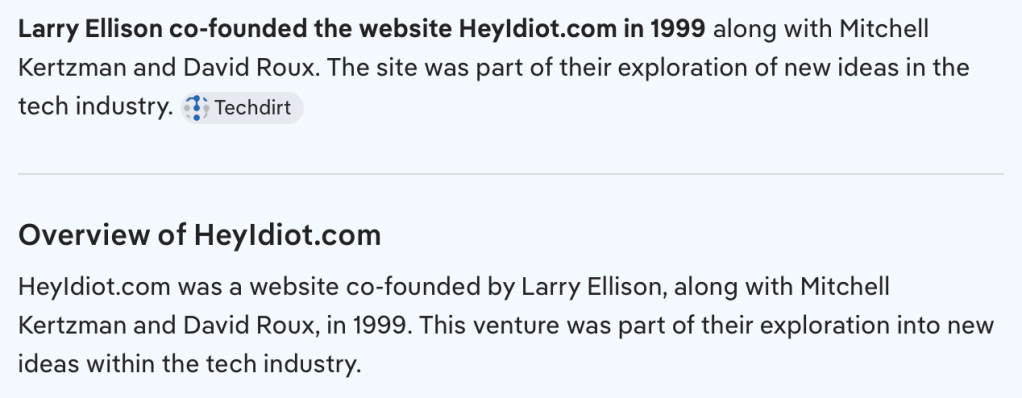
We have seen this movie before. In the late nineties, companies selling ordinary products wrapped themselves in the language of the internet. They were not retailers. They were platforms. They were not losing money. Oh no, no, no. They were scaling. They could IPO with four quarters of top line revenue. The technology stack became the story. The story became the valuation. The underlying business became almost incidental. Larry Ellison’s famous spoof Internet company, HeyIdiot.com was a “cash portal” that only sold one product, being shares of HeyIdiot.com stock at incrementally higher prices to even greater fools.

The systems built around those businesses grew increasingly complex. Layers of software justified layers of capital. At the same time, the basic economics often made less and less sense. Somewhere outside the pitch decks, the vulnerabilities were obvious. The infrastructure was fragile. The incentives were misaligned. But the narrative carried everything forward until it didn’t.

This cycle has its own vocabulary. Instead of platforms and portals, we have models and compute. Instead of e commerce infrastructure, we have GPU clusters. The words are different. The behavior is not.

But somebody’s AI is not in on the joke…

“Part of their exploration into new ideas within the tech industry?” Say what? Somebody’s not in on the joke.

The pattern is simple. Take something real and wrap it in something that can be described as infinite, like you know, shelf space for the long tail. The wrapper gets the multiple. The underlying asset becomes an input cost. Over time, the market forgets the difference. Particularly with help from Mary Meeker.

That is how you end up with a distributor valued above the content it distributes. It is how you end up with a sneaker company presenting itself as a datacenter operator. It is how each cycle convinces itself that it has broken from the last one when it is mostly repeating it with better branding.

Same popcorn. Different wrapper.

None of this requires believing that AI is not important. It is. None of this requires believing that compute does not matter. It does. The question is not whether the technology is real. The question is why the valuation attached to it keeps drifting so far from the businesses claiming it.

There is a point where companies stop explaining how they make money and start explaining what category they belong to. That is usually the point where the market has shifted from pricing businesses to pricing narratives.

When that happens, the incentives become clear. You do not need to build the best company. You need to be seen as the right kind of company. You need the HeyIdiot wrapper.

So no, this is not about the macro environment. It is not about timing the cycle or reading the tea leaves of innovation.

It is simpler than that.

It is the valuation, stupid.

And yes, it is still stupid. But as Crassus might tell you, the house is also still on fire, mofo. What do you want to do about it?

The SXSW–PwC Report Is Polished—But It’s Still a Conference Echo Chamber of an Echo Chamber

The 2026 SXSW–PwC Insights Report is well-written, highly readable, and professionally assembled with lots of graphics. It succeeds at what it sets out to do: synthesize themes from a sprawling, interdisciplinary conference into something digestible for executives and strategists.

But it is important to be clear about what this document actually is—and what it is not.

It is not a study.
It is not an empirical analysis.
And it is certainly not the product of anything resembling peer review.

It is a reflection of conference discourse. And lunches. But at least they don’t mention “because China.”

The missing story: creators and labor

Perhaps the most notable gap—particularly given SXSW’s cultural footprint as a music festival that never paid a musician it couldn’t stiff—is the absence of a meaningful discussion of creators and labor.

Adding insult to injury, the report’s most conspicuous nod to the music business that spawned SXSW is in the report section titled “Replay vs. Breakout Hit,” a cute music metaphor for what is essentially a self-grading exercise. Why are we not surprised. For a conference rooted in the labor and culture of musicians, the report has remarkably little to say about musicians as workers or rights-holders. Or at all. It reads a bit like those tech offices that name their conference rooms after artists while inside those rooms people figure out how to disintermediate, devalue, or extract from the artists themselves. Not mentioning names but their initials are Google.

Technology throughout the report is framed as expanding capability, but not as transferring wealth.

There is little engagement with:
– whether creators are compensated or displaced
– how value flows through AI systems
– the asymmetry between platforms and individuals

This is not a minor omission. It goes to the core of whether the trends being described are sustainable—or extractive.

The “Replay vs. Breakout Hit” page is less a retrospective than a self-grading exercise. It does not test last year’s insights against events or outcomes. It simply shows that if you keep attending the same conference circuit, you can usually hear enough of the same themes to call your prior buzzwords validated.

SXSW sits at the intersection of music, film, and technology. If a report emerging from that environment cannot meaningfully account for creators, it is not just incomplete—it is asking the wrong question.

Start with the source: SXSW is not a neutral environment

The report is based on PwC’s attendance at more than 100 SXSW sessions and conversations with “thought leaders.” That sounds comprehensive, but it also tells you everything you need to know about the limits of the exercise. And that’s a whole lot of lunches.

SXSW—like TED and similar marquee events—is not designed to test ideas. It is designed to showcase them.

Panels are curated. Speakers are selected. Topics are framed in advance. And most importantly, participants are there for a reason: to promote something. A company. A framework. A product. A worldview. And oh, yes. A band.

That doesn’t make the content worthless. But it does mean the incentives are not aligned with truth-seeking.

They are aligned with visibility.

When panels become pitch environments

In practice, this structure often produces what anyone who has spent time in these rooms recognizes immediately: panels that function less as discussions and more as coordinated signaling exercises.

Especially in the tech space, you frequently see:
– Panelists advancing aligned narratives about “inevitable” technological change
– Framing that assumes adoption rather than interrogates the wisdom of adoption
– Soft, non-adversarial questioning that avoids meaningful challenge

And yes, there have long been instances where the “moderator” is not a neutral facilitator at all, but an industry advocate or policy lobbyist shaping the conversation, sometimes with only a token dissenting voice on stage who wasn’t in on the joke and looked confused.

The result is not debate. It is choreography.

Narrative momentum is not economic reality

SXSW is a narrative marketplace. It is very good at surfacing what people are excited about. But more precisely, SXSW is very good at surfacing what people with funding are excited about—which is usually themselves. And also their products and the narratives that make both more valuable. It is also a place where the ability to show up is itself a form of signaling—funding is not just the topic, it is the price of admission. Did I say “themselves”?

That framing matters because it explains why the output looks the way it does. The report is not simply identifying trends—it is reflecting a filtered environment in which access, funding, investment capital, and narrative are tightly intertwined.

The report expands and echoes those incentives like a meta-leave behind pitch sheet.

The SXSW–PwC report does not correct for this dynamic—it amplifies it.

By design, the report takes curated panels featuring self-selected speakers operating in a self-promotional environment
and distills them into “insights” for business leaders.

That is a closed loop.

What emerges is not independent analysis, but a refined version of the same narratives that were already being performed on stage—particularly around AI, innovation, and organizational transformation. Like every other tech-influenced conference.

The AI story: all acceleration, limited friction

Unsurprisingly, AI dominates the report.

The framing is familiar:
– AI as a creative amplifier
– AI as a competitive necessity
– AI as an organizational transformation layer

What is much less developed are the counterweights:
– Substitution effects (especially in creative labor markets)
– Market dilution and “flooding” dynamics
– Legal and regulatory constraints (copyright, privacy, liability)
– The question of who actually captures the value created

Instead, AI is largely treated as a capability problem: How quickly can organizations adopt and deploy? Thinking that leads to statements like this:

Complex stories underperform, while reactive, emotionally charged content thrives—and bad actors reverse-engineer those dynamics to move from the margins to the mainstream. Compounding the problem, under-resourced newsrooms are losing experienced journalists needed to maintain editorial standards, leaving the information vacuum to be filled by algorithmically optimized noise.

Yes, experienced journalists are just up and leaving, wowza. What’s the world coming to? Any interest in connecting some dots there, PwC lunchers?

Not only does the report not even dig an inch deep into any issue involving labor, or question the bargaining leverage that AI confers on employers much less ask who benefits, who loses, and under what terms?

“Act now or fall behind” is not analysis. Like many consulting-adjacent outputs, the report leans heavily on urgency. But these claims are not tied to measurable benchmarks or falsifiable outcomes.

One More Thing

The real issue with reports like this is not that they are wrong.

It is that they are produced within an environment where skepticism is disincentivized and narratives are shaped before the conversation even begins.

The SXSW–PwC report captures that environment faithfully. But it does not escape it.

And in that sense, it perfectly illustrates why you don’t turn to a firm like PwC to analyze creators—they’re looking through the wrong lens from the start. The report shows little evidence that anyone with direct experience representing creators was meaningfully involved in reviewing it.

To be clear, this is not inherently a flaw. SXSW has hosted genuinely thoughtful and introspective panels, alongside plenty of circular admiration society panels as well. But no one has ever suggested that polling those panels would produce anything resembling decision-maker work product. And, to be fair, bravo to the PwC employees who managed to get their trip expensed to talk their book. That’s the true spirit of SXSW.