In ancient Rome, Marcus Licinius Crassus was the wealthiest man alive. And he had a system. He owned real estate and he also owned the fire brigades. When a house caught fire, Crassus sent his men to the scene. But they didn’t rush in with water.

First, he made the owner an offer. Sell me your house for pennies. The house that is literally on fire. Agree to the price, and the fire would be put out. Refuse… and his fire brigade would simply watch it burn.
Some even whispered that Crassus’s men set fires themselves, just to create new ‘opportunities.’ Ya think?
It was ruthless. Ingenious. And it gave him his own kind of safe harbor. If you controlled the fire brigade… there was no liability. No regulator. No competition. Just profit. Because Crassus set the valuation.
Now—fast forward two thousand years. AI hyperscalers haven’t just rediscovered Crassus’s model. They’ve reimagined it.
The Valuation is the Thing
There is a moment in every cycle when the story stops even pretending to line up with the business. That moment usually shows up quietly at first, almost as a joke, and then all at once everyone realizes the joke is being taken seriously.
We may be there again.
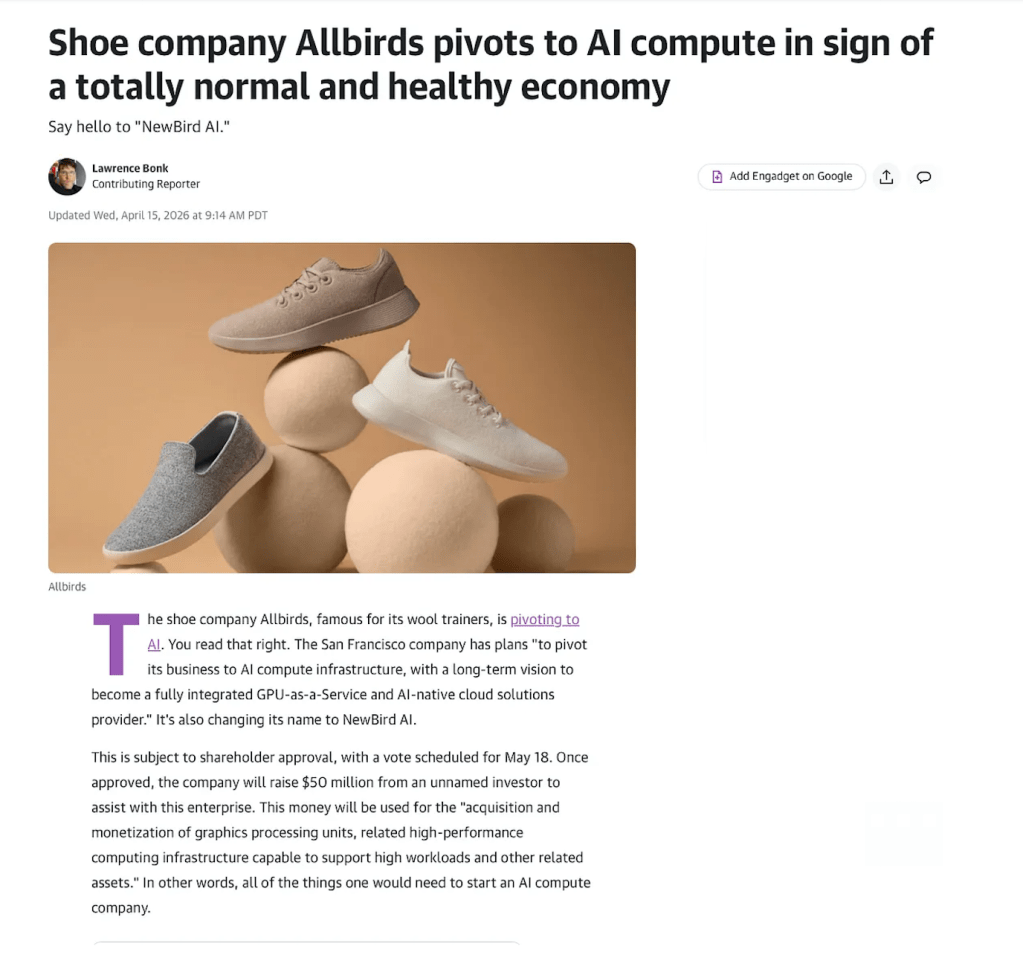
Allbirds, a company that built its brand selling wool sneakers to a very specific kind of customer, is now pivoting into AI compute infrastructure. Not adjacent. Not evolutionary. Just a clean jump into GPUs and datacenters. The rebrand writes itself. NewBird AI.
If that sounds absurd, it should. But it should also feel familiar. The mistake is to focus on the technology. The technology is always real. The internet was real. AI is real. The mistake is to assume the valuation attached to that technology has anything to do with the underlying business. That part is almost always where things go sideways. The people. The ones who set the fires.
Fire Good, Valuations Bad
Look at the comps. Spotify sits around a one hundred billion dollar market cap. Universal Music Group is closer to thirty eight. Warner Music Group is around fifteen. The companies that own the music, the actual asset, the thing that endures, are worth a fraction of the company that packages and distributes it and will one day be replaced, just like streaming replaced CDs.
That is not a story about innovation. It is a story about what the market chooses to value.
Once you see that, the Allbirds pivot stops looking irrational. It starts looking like one of the only logical moves available. If the market assigns higher multiples to infrastructure, to platforms, to anything that can be described as scalable, then the rational response is to become that thing. Not because the company has any particular advantage in doing so, but because the category itself carries the valuation.
We have seen this movie before. In the late nineties, companies selling ordinary products wrapped themselves in the language of the internet. They were not retailers. They were platforms. They were not losing money. Oh no, no, no. They were scaling. They could IPO with four quarters of top line revenue. The technology stack became the story. The story became the valuation. The underlying business became almost incidental. Larry Ellison’s famous spoof Internet company, HeyIdiot.com was a “cash portal” that only sold one product, being shares of HeyIdiot.com stock at incrementally higher prices to even greater fools.
The systems built around those businesses grew increasingly complex. Layers of software justified layers of capital. At the same time, the basic economics often made less and less sense. Somewhere outside the pitch decks, the vulnerabilities were obvious. The infrastructure was fragile. The incentives were misaligned. But the narrative carried everything forward until it didn’t.
This cycle has its own vocabulary. Instead of platforms and portals, we have models and compute. Instead of e commerce infrastructure, we have GPU clusters. The words are different. The behavior is not.
But somebody’s AI is not in on the joke…
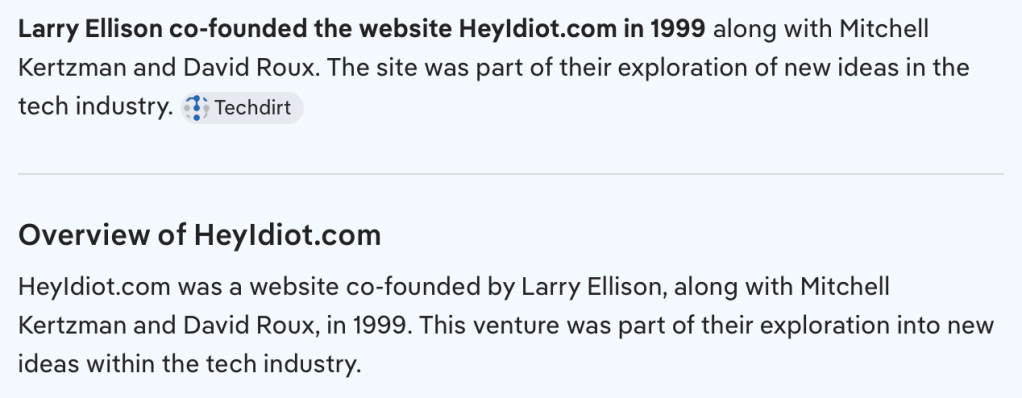
“Part of their exploration into new ideas within the tech industry?” Say what? Somebody’s not in on the joke.
The pattern is simple. Take something real and wrap it in something that can be described as infinite, like you know, shelf space for the long tail. The wrapper gets the multiple. The underlying asset becomes an input cost. Over time, the market forgets the difference. Particularly with help from Mary Meeker.
That is how you end up with a distributor valued above the content it distributes. It is how you end up with a sneaker company presenting itself as a datacenter operator. It is how each cycle convinces itself that it has broken from the last one when it is mostly repeating it with better branding.
Same popcorn. Different wrapper.
None of this requires believing that AI is not important. It is. None of this requires believing that compute does not matter. It does. The question is not whether the technology is real. The question is why the valuation attached to it keeps drifting so far from the businesses claiming it.
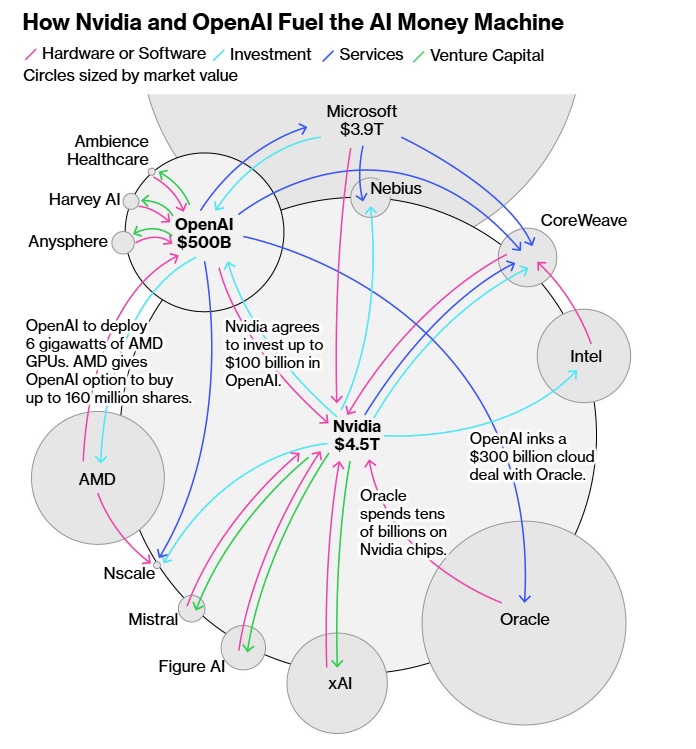
There is a point where companies stop explaining how they make money and start explaining what category they belong to. That is usually the point where the market has shifted from pricing businesses to pricing narratives.
When that happens, the incentives become clear. You do not need to build the best company. You need to be seen as the right kind of company. You need the HeyIdiot wrapper.
So no, this is not about the macro environment. It is not about timing the cycle or reading the tea leaves of innovation.
It is simpler than that.
It is the valuation, stupid.
And yes, it is still stupid. But as Crassus might tell you, the house is also still on fire, mofo. What do you want to do about it?

