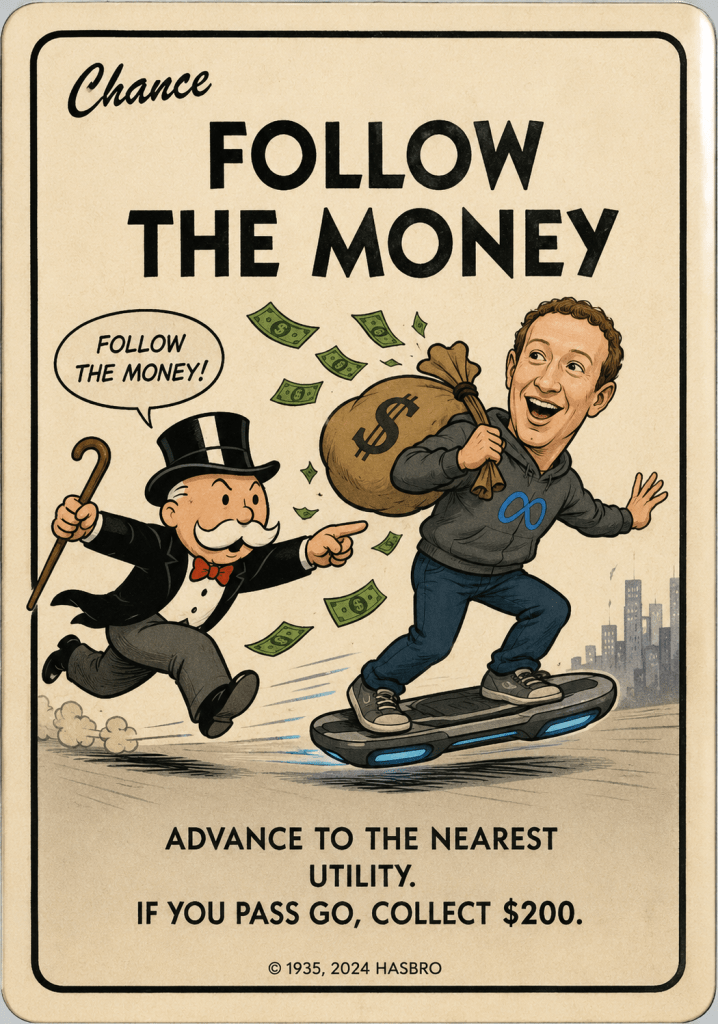
AI training litigation is moving from copyright pleadings to governance pleadings. The next discovery fight should follow the money all the way to the C-suite and if necessary, to the board room.
The complaint in Elsevier Inc. v. Meta Platforms, Inc., No. 1:26-cv-03689 (S.D.N.Y. filed May 5, 2026) (the “Elsevier complaint”), alleges that Meta and Mark Zuckerberg personally illegally torrented millions of copyrighted books and journal articles from notorious pirate sites, copied those works repeatedly to train Llama, and did so with knowledge that the conduct violated copyright law.
Alternatively, the shareholder derivative complaint in SEIU Pension Plan Master Trust v. Narayen, No. 3:26-cv-03521 (N.D. Cal. filed Apr. 24, 2026) (the “SEIU complaint”), shows the same issue also moving into the boardroom: it alleges that Adobe’s officers and directors adopted and implemented an unlawful AI business strategy by using copyrighted material to develop Adobe’s AI services, exposing Adobe to litigation, reputational harm, and corporate loss.
Both cases suggest a practical discovery vector for plaintiffs in AI-training cases: if the defendant used Anna’s Archive, LibGen, Z-Library, Sci-Hub, Books3, RedPajama, SlimPajama, or any similar pirate-derived source, plaintiffs should investigate whether the defendant merely downloaded available files or also paid for bulk access, priority access, SFTP credentials, “membership” tiers, “donations,” vendor pass-through datasets, or intermediary transfers.
The discovery question: was there a payment trail?
The current Elsevier complaint is framed principally as a copyright and DMCA case, not as a wire-fraud or shareholder derivative complaint. But its allegations make the payment question worth asking because it alleges that Meta downloaded Anna’s Archive, understood Anna’s Archive to be “essentially a bigger libgen” and “a pretty shady website,” acquired more than 81 terabytes of data through Anna’s Archive, and did not disable BitTorrent’s default distribution settings when torrenting from pirate sites. The complaint further alleges that Meta’s logs showed 134.6 TB downloaded and 40.42 TB uploaded through torrenting between April and July 2024.
It also alleges that Meta considered licensing literary works from major publishers in the training data market, discussed increasing its dataset licensing budget from $17 million to $200 million, then stopped licensing efforts after the license-versus-pirate question was escalated to Zuckerberg. Those allegations support discovery into whether Meta, its employees, contractors, affiliates, or data vendors ever communicated with, paid, negotiated with, or obtained credentials from Anna’s Archive or a similar bulk pirate-data provider.
The public record concerning Anna’s Archive gives that discovery question additional force. As we covered before on MTP, Anna’s Archive reportedly charged tiered “membership” fees for faster download speeds, accepted cryptocurrency or gift cards, and offered AI companies “enterprise-level” high-speed SFTP transfers of a full 1.1-petabyte collection for a reported $200,000 in cryptocurrency. The complaint in Apress Media, LLC et al. v. Anna’s Archive et al., No. 1:26-cv-01850 (S.D.N.Y. filed Mar. 6, 2026) (the “Apress complaint”), similarly alleges that Anna’s Archive invited LLM developers to copy the entire collection for free or make a “donation” for faster download speeds. Publishers Weekly’s account of the Apress complaint states that Anna’s Archive publicly claimed to have provided high-speed access to its illegal collection to companies in China, Russia, and elsewhere, many of them LLMs, and that an email exchange quoted in the complaint offered premium access for $200,000 with payment suggested in cryptocurrency. It is important to note that as much as we may believe that these people are all scumbags, these allegations do not prove that any particular AI defendant paid Anna’s Archive, but they do make paid-access discovery reasonable where a defendant is already alleged to have used Anna’s Archive or comparable pirate repositories. As usual, facts matter.
Why payment alone is not wire fraud
The conditional nature of the theory also matters. Wire fraud is not “copyright infringement plus the internet,” and it is not “payment to a bad actor plus wires.” 18 U.S.C. § 1343 requires a scheme or artifice to defraud, or a scheme to obtain money or property by false or fraudulent pretenses, representations, or promises, plus interstate or foreign wire communications used for the purpose of executing that scheme. DOJ’s formulation similarly requires voluntary and intentional participation in a scheme to defraud, intent to defraud, reasonably foreseeable use of interstate wire communications, and actual use of interstate wire communications. DOJ also explains that the fraudulent aspect of a scheme to defraud is measured by nontechnical standards and generally involves wrongdoing in property rights by dishonest methods, trick, chicane, or overreaching.
That is why a payment to a pirate site is not automatically wire fraud in a formal sense. A company may knowingly pay for unlawful access to copyrighted content, and that payment may be powerful evidence of willfulness, commercial purpose, knowledge, damages, or fiduciary misconduct. But if the buyer and seller both understand that the transaction is a purchase of illicit access and no materially false representation is used to obtain money, data, payment processing, procurement approval, compliance clearance, tax treatment, or concealment from a relevant victim or gatekeeper, the payment itself may not satisfy the fraud element. The discovery target should therefore likely be the deceptive aspect and proves up whether the payment was disguised as a “donation,” “membership,” “research access,” “preservation support,” “lawful dataset,” “vendor service,” “data license,” or other label that misrepresented the transaction’s purpose, legality, source, recipient, or quid pro quo. And given who we’re dealing with, could even be designed to deceive internal accountants and co-signers depending on corporate check-writing policies.
Deceptive labeling can supply the fraud layer that ordinary infringement lacks. As we covered before on MTP, Anna’s Archive’s alleged “donation” model can be characterized as a commercial SFTP pipeline for stolen works, and the Apress complaint alleges that Anna’s Archive invited LLM developers to make a “donation” for faster download speeds. If discovery in a particular AI case shows that an AI developer, contractor, or data broker used wires, emails, SFTP credentials, cryptocurrency transactions, payment processors, invoices, procurement records, or vendor documentation to disguise a purchase of pirate training data as something lawful or altruistic, the facts may support a wire-fraud predicate theory. If discovery shows only an infringing download or torrent, the same evidence may still matter enormously to copyright liability, willfulness, damages, concealment, and fiduciary duty, but it should not be overstated as wire fraud without proof of deception and, of course, all the wire fraud elements.
The Potential Civil RICO Angle
Civil RICO is a possible overlay, but not a shortcut and proving it up may be adjacent but separate to other claims. 18 U.S.C. § 1962(c) makes it unlawful for a person associated with an enterprise engaged in or affecting interstate commerce to conduct or participate in the conduct of the enterprise’s affairs through a pattern of racketeering activity (or collection of unlawful debt). DOJ summarizes an 18 U.S.C. § 1962(c) violation as requiring conduct, of an enterprise, through a pattern, of racketeering activity. RICO’s definition of racketeering activity includes wire fraud under 18 U.S.C. § 1343 and criminal copyright infringement under 18 U.S.C. § 2319. Criminal copyright infringement requires a valid copyright, infringement, willfulness, and commercial advantage or private financial gain. 18 U.S.C. § 2319 provides felony penalties for certain offenses involving reproduction or distribution, including by electronic means, of at least ten copies or phonorecords of one or more copyrighted works with a total retail value of more than $2,500 during a 180-day period. Although criminal copyright infringement cases are not common, one has to ask if AI scraping of millions and millions of works is not criminal infringement, what is?
But RICO also requires relationship and continuity. A “pattern of racketeering activity” requires at least two predicate acts, but the Supreme Court has held that two predicates are not necessarily sufficient because a plaintiff or prosecutor must show that the predicates are related and amount to, or threaten, continued criminal activity. H.J. Inc. v. Northwestern Bell Telephone Co., 492 U.S. 229, 237–39 (1989). Relatedness can be shown where the acts share similar purposes, results, participants, victims, or methods of commission, or are otherwise interrelated and not isolated events. Continuity can be closed-ended or open-ended, and the DOJ RICO guidance describes continuity as either a closed period of repeated conduct or past conduct that by its nature projects into the future with a threat of repetition. A civil RICO plaintiff must also show injury to business or property by reason of a violation of 18 U.S.C. § 1962, and 18 U.S.C. § 1964(c) provides treble damages, costs, and attorney’s fees for such injury.
Judge Mark C. Scarsi’s ruling in Perry v. Shein Distribution Corp. is useful because Judge Scarsi rejected the idea that large-scale copying must be treated as ordinary copyright infringement only. The court allowed independent designers’ civil RICO claims against the “fast fashion” Chinese retailer Shein to proceed, reportedly finding that the plaintiffs plausibly alleged a coordinated enterprise using copyright infringement and mail/wire fraud predicates as part of a broader scheme. The case later settled, so it is valuable as a pleading-stage roadmap.
The connection to Elsevier v. Meta is straightforward. Elsevier and other publishers allege that Meta copied millions of books and journal articles, used pirated libraries and web-scraped datasets, trained Llama on those works, and removed copyright-management information. If plaintiffs can show this was not ad hoc infringement but a coordinated corporate program approved at senior levels including Zuckerberg as they allege, using piracy, concealment, distribution, and monetization, the Shein ruling on RICO supports the argument that the conduct resembles an enterprise scheme rather than isolated copyright violations. The theory is when infringement is systematic, repeated, operationalized, concealed, and tied to enterprise monetization, RICO should not be dismissed merely because copyright is also involved in the defendant’s bad behavior.
Shareholder Derivative Action
A derivative claim does not need to prove that a payment to a pirate site was wire fraud; it can focus on whether fiduciaries knowingly caused or permitted the company to pursue AI profits through unlawful or legally reckless data acquisition. Delaware law does not charter lawbreakers because the DGCL authorizes Delaware corporations to pursue lawful business and lawful acts, 8 Del. C. §§ 101(b), 102(a)(3), and Delaware courts have stated that a fiduciary cannot be loyal to a Delaware corporation by knowingly causing it to seek profit by violating the law. In re Massey Energy Co. Derivative & Class Action Litigation, 2011 WL 2176479, at *20 (Del. Ch. May 31, 2011); see also Metro Communication Corp. BVI v. Advanced Mobilecomm Technologies Inc., 854 A.2d 121, 131, 163–64 (Del. Ch. 2004); Guttman v. Huang, 823 A.2d 492, 506 (Del. Ch. 2003).
The same payment evidence may be even more immediately useful in shareholder derivative litigation. (Although the derivative theory is not a claim to be stapled onto a copyright-owner complaint. It is a separate governance claim for a different plaintiff and a different injury.). Under Delaware law, the board manages the corporation’s business and affairs, 8 Del. C. § 141(a), and a stockholder derivative action seeks to assert a corporate claim when demand is excused or wrongfully refused. See United Food & Commercial Workers Union & Participating Food Industry Employers Tri-State Pension Fund v. Zuckerberg, 262 A.3d 1034, 1047, 1059 (Del. 2021).
Delaware courts have also explained that directors must make a good-faith effort to implement and monitor systems that keep the board informed about legal-compliance risks, and that personal liability may follow when fiduciaries act in bad faith by utterly failing to implement such systems or consciously failing to monitor them. Stone v. Ritter, 911 A.2d 362, 370 (Del. 2006); Marchand v. Barnhill, 212 A.3d 805, 820–21 (Del. 2019). Delaware officers also owe context-specific oversight duties within their corporate remit. In re McDonald’s Corp. Stockholder Derivative Litigation, 289 A.3d 343, 359–61, 369–70 (Del. Ch. 2023). In that framework, a payment trail to a pirate repository may support allegations of knowing illegality, bad faith, internal-control failure, waste, disclosure failure, or conscious disregard of red flags.
The SEIU complaint illustrates how quickly AI copyright allegations can become governance allegations. It alleges that Adobe is a Delaware corporation and that the defendants owed Adobe fiduciary duties of care, loyalty, good faith, diligence, fair dealing, and supervision. The complaint alleges that Adobe used the SlimPajama dataset, which was derived from RedPajama, and that the dataset contained copyrighted works not authorized or approved by authors and copyright holders. It alleges that Adobe told the market that Firefly was commercially safe, trained on licensed content, trained on data Adobe had rights to use, and designed to respect creator rights and avoid infringing third-party intellectual property. It then alleges that those statements were false or misleading because Adobe’s AI products allegedly depended on SlimLM datasets that included pirated materials.
The SEIU complaint also pleads the red-flag story in governance terms. It alleges that Adobe’s officers were personally involved in Adobe’s AI strategy and dataset choices, that multiple AI copyright lawsuits against competitors put all defendants on notice, and that Adobe was using datasets associated with Books3, RedPajama, the Pile, and SlimPajama. It alleges that copyright holders filed two class actions against Adobe, that Adobe’s stock dropped by more than 25% after those filings, and that Adobe faces litigation costs, potential liability, reputational harm, lost customers, and other corporate injuries. It also alleges that Adobe wasted corporate assets by paying compensation and bonuses, repurchasing shares at allegedly inflated prices, and incurring legal liability and costs associated with the copyright class actions.
That is exactly why payment discovery matters to derivative plaintiffs. If corporate funds, procurement systems, crypto wallets, reimbursement requests, vendor invoices, or contractor payments were used to purchase pirate datasets, then the derivative theory becomes less abstract. The evidence would speak not only to whether copyrighted works were used, but to who approved the acquisition, how it was booked, what compliance review occurred, what the board or audit committee was told, whether the source was concealed, and whether public statements about “licensed,” “commercially safe,” or “rights-cleared” AI products were misleading. If a payment was mislabeled as a donation, membership, research support, vendor service, or lawful data license, that same fact could support both a fraud-oriented discovery path and a fiduciary-duty theory focused on bad faith, oversight failure, disclosure controls, and corporate waste.
What plaintiffs could ask for
Plaintiffs should ask for all communications with Anna’s Archive, LibGen, Z-Library, Sci-Hub, Books3 distributors, shadow-library mirrors, dataset curators, data brokers, contractors, and AI-training data vendors. They should ask for payment records, cryptocurrency wallet addresses, exchange records, gift-card purchases, reimbursement requests, procurement records, vendor invoices, purchase orders, data-source approvals, security reviews, legal-risk memoranda, audit-committee materials, board presentations, and employee messages about “donations,” “memberships,” “enterprise access,” “SFTP,” “fast downloads,” “bulk transfer,” “shadow libraries,” “pirate datasets,” or “rights-cleared” alternatives. They should also ask for logs showing whether data was received by torrent, direct download, SFTP, cloud transfer, physical drive shipment, contractor delivery, or a repackaged dataset from an intermediary.
In a copyright case, those materials may bear on copying, distribution, willfulness, CMI removal, concealment, damages, and market substitution. In a wire-fraud/RICO overlay, those materials may bear on whether any payment was part of a deceptive scheme executed through wires, whether the alleged predicates are related and continuous, and whether the plaintiff can show injury to business or property by reason of a RICO violation. In a derivative suit, those materials may bear on whether officers or directors knowingly caused the company to violate law, ignored red flags, failed to maintain adequate reporting and compliance systems, approved misleading disclosures, or wasted corporate assets. See 8 Del. C. §§ 141(a), 102(b)(7); Stone v. Ritter, 911 A.2d 362, 370 (Del. 2006); Marchand v. Barnhill, 212 A.3d 805, 820–21 (Del. 2019); In re Massey Energy Co. Derivative & Class Action Litigation, 2011 WL 2176479, at *20–22 (Del. Ch. May 31, 2011); In re McDonald’s Corp. Stockholder Derivative Litigation, 289 A.3d 343, 359–61, 369–70 (Del. Ch. 2023).
The boardroom point
AI malfeasance claims are no longer confined to the question whether a model copied books, music, code, images, or articles. The Elsevier complaint alleges a top-down AI-training strategy in which Zuckerberg, as founder, chairman, CEO, and controlling shareholder, had ultimate control over Llama development and allegedly authorized, directed, and participated in torrenting pirate collections after employees raised legal and ethical concerns. The SEIU complaint alleges that directors and officers allowed an unlawful AI business strategy, made or approved statements about commercially safe AI, ignored red flags from other AI copyright litigation, and exposed Adobe to litigation costs, stock-price decline, reputational harm, and corporate waste. Together, those pleadings suggest that plaintiffs should treat pirate-data acquisition as both an infringement issue and a governance issue. And both state and federal prosecutors should treat it as a potential RICO issue.
The practical takeaway is simple: follow the data, but also follow the money. If a defendant merely downloaded pirate data, the case may remain principally a copyright, DMCA, and fiduciary-duty case. If discovery shows that the defendant or its agents paid for bulk pirate access, the evidence may sharpen willfulness, commercial-purpose, damages, knowledge, and governance theories.
If discovery further shows that the payment was deceptively labeled or concealed through wires, invoices, cryptocurrency, credentials, procurement records, or vendor channels, plaintiffs may have reason to evaluate wire fraud as a potential RICO predicate, subject to all the other statutory requirements.
And even where wire fraud cannot be pleaded, the same payment trail may still be highly relevant to a shareholder derivative theory that corporate fiduciaries knowingly used corporate machinery to build AI products through unlawful data acquisition while representing to investors and customers that those AI products were trained lawfully, safely, and with licensed or rights-cleared data.
Following the money achieves different ends to different plaintiffs. Copyright plaintiffs should use that trail to prove copying, distribution, willfulness, CMI removal, concealment, damages, and, where the evidence supports deception, continuity, enterprise participation, causation, and injury, potential wire-fraud and RICO theories. Stockholders should use the same trail differently: not to staple a derivative count onto a copyright-owner complaint, but to bring a separate governance action if the facts show that corporate fiduciaries used corporate machinery to acquire unlawful training data, ignored red flags, concealed or mislabeled the payments, or represented to investors and customers that AI products were trained lawfully, safely, and with licensed or rights-cleared data.
The point is not to turn every AI-training case into RICO or every copyright case into a derivative suit. The point is that pirate-data acquisition is no longer just a back-end engineering fact; when the data was bought, disguised, approved, ignored, or monetized at scale, it becomes a roadmap to intent, control, concealment, enterprise conduct, and boardroom accountability.
To paraphrase Deep Throat, forget the myths the media has created about Silicon Valley. The truth is these are not very bright guys and things got out of hand. Follow the money.

