The Delay’s The Thing: Anthropic Leapfrogs Its Own November Valuation Despite Litigation from Authors and Songwriters in the Heart of Darkness

If you’ve read Joseph Conrad’s Heart of Darkness, you’ll be familiar with the Congo Free State, a private colony of Belgian King Leopold II that is today largely the Democratic Republic of the Congo. When I say “private” I mean literally privately owned by his Leopoldness. Why would old King Leo be so interested in owning a private colony in Africa? Why for the money, of course. Leo had to move some pieces around the board and get other countries to allow him to get away with essentially “buying” the place, if “buying” is the right description.

So Leo held an international conference in Berlin to discuss the idea and get international buy-in, kind of like the World Economic Forum with worse food and no skiing. Rather than acknowledging his very for-profit intention to ravage the Congo for ivory (aka slaughtering elephants) and rubber (the grisly extraction of which was accomplished by uncompensated slave labor) with brutal treatment of all concerned, Leo convinced the assembled nations that his intentions were humanitarian and philanthropic. You know, don’t be evil. Just lie.

Of course, however much King Leopold may have foreshadowed our sociopathic overlords from Silicon Valley, it must be said that Leo’s real envy won’t so much be the money as what he could have done with AI himself had he only known. Oh well, he just had to make do with Kurtz.

Which bring us to AI in general and Anthropic in particular. Anthropic’s corporate slogan is equally humanitarian and philanthropic: “Anthropic is an AI research company that focuses on the safety and alignment of AI systems with human values.” Oh yes, all very jolly.

All very innocent and high minded, until you get punched in the face (to coin a phrase). It turns out–quelle horreur–that Anthropic stands accused of massive copyright infringement rather than lauded for its humanitarianism. Even more shocking? The company’s valuation is going through the stratosphere! These innocents surely must be falsely accused! The VC’s are voting with their bucks, so they wouldn’t put their shareholders’ money or limiteds money on the line for a–RACKETEER INFLUENCED CORRUPT ORGANIZATION?!?

Not only have authors brought this class action against Anthropic which is both Google’s stalking horse and cats paw to mix a metaphor, but the songwriters and music publishers have sued them as well. Led by Concord and Universal, the publishers have sued for largely the same reasons as the authors but for their quite distinct copyrights.

So let’s understand the game that’s being played here–as the Artist Rights Institute submitted in a comment to the UK Intellectual Property Office in the IPO’s current consultation on AI and copyright, the delay is the thing. And thanks to Anthropic, we can now put a valuation on the delay since the $4,000,000,000 the company raised in November 2024: $3,500,000,000. This one company is valued at $61.5 billion, roughly half of the entire creative industries in the UK and roughly equal to the entire U.S. music industry. No wonder delay is their business model.

However antithetical, copyright and AI must be discussed together for a very specific reason:  Artificial intelligence platforms operated by Google, Microsoft/OpenAI, Meta and the like have scraped and ingested works of authorship from baby pictures to Sir Paul McCartney as fast and as secretly as possible.  And the AI platforms know that the longer they can delay accountability, the more of the world’s culture they will have devoured—or as they might say, the more data they will have ingested.  And Not to mention the billions in venture capital they will have raised, just like Anthropic. For the good of humanity, of course, just like old King Leo.

As the Hon. Alison Hume, MP recently told Parliament, this theft is massive and has already happened, another example of why any “opt out” scheme (as had been suggested by the UK government) has failed before it starts:

This week, I discovered that the subtitles from one of my episodes of New Tricks have been scraped and are being used to create learning materials for artificial intelligence.  Along with thousands of other films and television shows, my original work is being used by generative AI to write scripts which one day may replace versions produced by mere humans like me.

This is theft, and it’s happening on an industrial scale.  As the law stands, artificial intelligence companies don’t have to be transparent about what they are stealing.[1]

Any delay[2] in prosecuting AI platforms simply increases their de facto “text and data mining” safe harbor while they scrape ever more of world culture.  As Ms. Hume states, this massive “training” has transferred value to these data-hungry mechanical beasts to a degree that confounds human understanding of its industrial scale infringement.  This theft dwarfs even the Internet piracy that drove broadband penetration, Internet advertising and search platforms in the 1999-2010 period.  It must be said that for Big Tech, commerce and copyright are once again inherently linked for even greater profit.

As the Right Honourable Baroness Kidron said in her successful opposition to the UK Government’s AI legislation in the House of Lords:

The Government are doing this not because the current law does not protect intellectual property rights, nor because they do not understand the devastation it will cause, but because they are hooked on the delusion that the UK’s best interests and economic future align with those of Silicon Valley.[3]  

Baroness Kidron identifies a question of central importance that mankind is forced to consider by the sheer political brute force of the AI lobbying steamroller:  What if AI is another bubble like the Dot Com bubble?  AI is, to a large extent, a black box utterly lacking in transparency much less recordkeeping or performance metrics.  As Baroness Kidron suggests, governments and the people who elect them are making a very big bet that AI is not pursuing an ephemeral bubble like the last time.

Indeed, the AI hype has the earmarks of a bubble, just as the Dot Com bubble did.  Baroness Kidron also reminds us of these fallacious economic arguments surrounding AI:

The Prime Minister cited an IMF report that claimed that, if fully realised, the gains from AI could be worth up to an average of £47 billion to the UK each year over a decade. He did not say that the very same report suggested that unemployment would increase by 5.5% over the same period. This is a big number—a lot of jobs and a very significant cost to the taxpayer. Nor does that £47 billion account for the transfer of funds from one sector to another. The creative industries contribute £126 billion per year to the economy. I do not understand the excitement about £47 billion when you are giving up £126 billion.[4]  

As Hon. Chris Kane, MP said in Parliament,  the Government runs the risk of enabling a wealth transfer that itself is not producing new value but would make old King Leo feel right at home: 

Copyright protections are not a barrier to AI innovation and competition, but they are a safeguard for the work of an industry worth £125 billion per year, employing over two million people.  We can enable a world where much of this value  is transferred to a handful of big tech firms or we can enable a win-win situation for the creative industries and AI developers, one where they work together based on licensed relationships with remuneration and transparency at its heart.


[1] Paul Revoir, AI companies are committing ‘theft’ on an ‘industrial scale’, claims Labour MP – who has written for TV series including New Tricks, Daily Mail (Feb. 12, 2025) available at https://www.dailymail.co.uk/news/article-14391519/AI-companies-committing-theft-industrial-scale-claims-Labour-MP-wrote-TV-shows-including-New-Tricks.html

[2] See, e.g., Kerry Muzzey, [YouTube Delay Tactics with DMCA Notices], Twitter (Feb. 13, 2020) available at https://twitter.com/kerrymuzzey/status/1228128311181578240  (Film composer with Content ID account notes “I have a takedown pending against a heavily-monetized YouTube channel w/a music asset that’s been fine & in use for 7 yrs & 6 days. Suddenly today, in making this takedown, YT decides “there’s a problem w/my metadata on this piece.” There’s no problem w/my metadata tho. This is the exact same delay tactic they threw in my way every single time I applied takedowns against broadcast networks w/monetized YT channels….And I attached a copy of my copyright registration as proof that it’s just fine.”); Zoë Keating, [Content ID secret rules], Twitter (Feb. 6. 2020) available at https://twitter.com/zoecello/status/1225497449269284864  (Independent artist with Content ID account states “[YouTube’s Content ID] doesn’t find every video, or maybe it does but then it has selective, secret rules about what it ultimately claims for me.”).

[3] The Rt. Hon. Baroness Kidron, Speech regarding Data (Use and Access) Bill [HL] Amendment 44A, House of Lords (Jan. 28, 2025) available at https://hansard.parliament.uk/Lords%E2%80%8F/2025-01-28/debates/9BEB4E59-CAB1-4AD3-BF66-FE32173F971D/Data(UseAndAccess)Bill(HL)#contribution-9A4614F3-3860-4E8E-BA1E-53E932589CBF 

[4] Id. 

UK Government’s AI Legislation is Defeated in the House of Lords

The new-ish UK government led by Labour Prime Minister Sir Keir Starmer faced a defeat in the House of Lords regarding their AI bill. The defeat was specifically about measures to protect copyrighted material from being used to train AI models without permission or compensation. Members of the House of Lords (known as “Peers”) voted 145 to 126 in favor of amendments to the UK Government’s Data (Use and Access) Bill, proposed by film director Beeban Tania Kidron, the Baroness Kidron (a “cross bench peer”) which aim to safeguard the intellectual property of creatives. Lady Kidron said:

There is a role in our economy for AI… and there is an opportunity for growth in the combination of AI and creative industries, but this forced marriage on slave terms is not it.

So there’s that. We need a film director in the Senate, don’t you think? Yes, let’s have one of those, please.

Bill Dies With Amendments

The amendments proposed by Baroness Kidron received cross-party support (what would be called “bi-partisan” in the US, but the UK has more than two political parties represented in Parliament). The amendments include provisions to ensure, among other things, that AI companies comply with UK copyright law, disclose the names and owners of web crawlers doing their dastardly deeds in the dark of the recesses of the Internet, and allow copyright owners to know when and how their work is used. It might even protect users of Microsoft or Google products from having their drafts crawled and scraped for AI training.

This defeat highlights the growing concerns within Parliament about the unregulated use of copyrighted material by major tech firms. Starmer’s Data (Use and Access) Bill was proposed by the UK government to excuse the use of copyrighted material by AI models. However, thanks in part to Lady Kidron it faced significant opposition in the House of Lords, leading to its defeat.

Here’s a summary of why it failed:

  1. Cross-Party Support for Amendments: The amendments proposed by Baroness Kidron received strong support from both Labour and Conservative peers. They argued that the bill needed stronger measures to protect the intellectual property of creatives.
  2. Transparency and Redress: The amendments aimed to improve transparency by requiring AI companies to disclose the names and owners of web crawlers and allowing copyright owners to know when and how their work is used.
  3. Government’s Preferred Option: The government suggested an “opt-out” system for text and data mining, which would allow AI developers to scrape copyrighted content unless rights holders actively opted out. This approach was heavily criticized as it would lead to widespread unauthorized use of intellectual property, or as we might say in Texas, that’s bullshit for starters.
  4. Economic Impact: Supporters of the amendments argued that the bill, in its original form, would transfer wealth from individual creatives and small businesses to big tech companies, undermining the sustainability of the UK’s creative industries. Because just like Google’s products, it was a thinly disguised wealth transfer.

The defeat highlights the growing concerns within Parliament about the unregulated use of copyrighted material by major tech firms and the need for stronger protections for creatives. several prominent artists voiced their opposition to the UK government’s AI bill. Sir Elton John and Sir Paul McCartney were among the most prominent critics. They argued that the government’s proposed changes would allow AI companies to use copyrighted material without proper compensation, which could threaten the livelihoods of artists, especially emerging ones.

Elton John expressed concerns that the bill would enable big tech companies to “ride roughshod over traditional copyright laws,” potentially diluting and threatening young artists’ earnings. As a fellow former member of Long John Baldry’s back up band, I say well done, Reg. Paul McCartney echoed these sentiments, emphasizing that the new laws would allow AI to rip off creators and hinder younger artists who might not have the means to protect their work–and frankly, the older artists don’t either when going up against Google and Microsoft, with backing by Softbank and freaking countries.

Their opposition highlights the broader concerns within the creative community like Ivors Academy and ECSA about the potential impact of AI on artists’ rights and earnings.

Role of the House of Lords

The House of Lords is one of the two houses of the UK Parliament, the other being the House of Commons. It plays a crucial role in the legislative process and functions as a revising chamber. Here are some key aspects of the House of Lords:

Functions of the House of Lords

  1. Scrutiny and Revision of Legislation:
    • The House of Lords reviews and scrutinizes bills passed by the House of Commons.
    • It can suggest amendments and revisions to bills, although it cannot ultimately block legislation.
  2. Debate and Deliberation:
    • The Lords engage in detailed debates on a wide range of issues, contributing their expertise and experience.
    • These debates can influence public opinion and policy-making.
  3. Committees:
    • The House of Lords has several committees that investigate specific issues, scrutinize government policies, and produce detailed reports.
    • Committees play a vital role in examining the impact of proposed legislation and holding the government to account.
  4. Checks and Balances:
    • The House of Lords acts as a check on the power of the House of Commons and the executive branch of the government.
    • It ensures that legislation is thoroughly examined and that diverse perspectives are considered.

Composition of the House of Lords

  • Life Peers: Appointed by the King on the advice of the Prime Minister, these members serve for life but do not pass on their titles.
  • Bishops: A number of senior bishops from the Church of England have seats in the House of Lords.
  • Hereditary Peers: A limited number of hereditary peers remain, but most hereditary peerages no longer carry the right to sit in the House of Lords.
  • Law Lords: Senior judges who used to sit in the House of Lords as the highest court of appeal, a function now transferred to the Supreme Court of the United Kingdom.

Limitations

While the House of Lords can delay legislation and suggest amendments, it does not have the power to prevent the House of Commons from passing laws. Its role is more about providing expertise, revising, and advising rather than blocking legislation.

Now What?

Following the defeat in the House of Lords, the government’s Data (Use and Access) Bill will need to be reconsidered by the UK government. They will have to decide whether to accept the amendments proposed by the Lords or to push back and attempt to pass the bill in its original form.

It’s not entirely unusual for Labour peers to vote against a Labour government, especially on issues where they have strong differing opinions or concerns. The House of Lords operates with a degree of independence of the House of Commons, where I would say it would be highly unusual for the government to lose a vote on something as visible at the AI issue.

The AI bill would no doubt be a “triple whip vote”, a strict instruction issued by a political party to its members usually in the House of Commons (in this case the Labour Party), requiring them to attend a vote and vote according to the party’s official stance to support the Government. It’s the most serious form of voting instruction, indicating that the vote is crucial and that party discipline must be strictly enforced. Despite the sadomasochistic overtones of a “triple whip” familiar as caning to British public school boys, peers in the Lords often vote based on their own judgment and expertise rather than strict party lines. This can lead to situations where Labour peers might oppose government proposals if they believe it is in the best interest of the public or aligns with their principles. Imagine that!

So, while it’s not the norm, it’s also not entirely unexpected for Labour peers to vote against a Labour government when significant issues are at stake like, oh say the destruction of the British creative industries.

Crucially, the government is currently consulting on the issue of text and data mining through the Intellectual Property Office. The IPO is accepting public comments on the AI proposals with a deadline of February 25, 2025. This feedback will likely influence their next steps. Did I say that the IPO is accepting public comments, even from Americans? Hint, hint. Read all about the IPO consultation here.

Big Tech’s Misapprehensions About the AI Appropriation Invasion: Artist Rights are Not “Regulation”

It was a rough morning. I ran across both reports from Davos where they are busy blowing AI bubbles yet again and also read about a leading Silicon Valley apologist discussing the current crop of AI litigation. That was nauseating. But once the bile settled down, I had a realization: This is all straight out of the Woodrow Wilson rule-by-technocrats playbook.

Wilson believed that experts and intellectuals, rather than the voting public, should guide the creation and implementation of public policy. The very model of a modern technocrat. The present day technocrats and their enablers in the legal profession are heirs to Wilsonian rule by experts. They view copyright and other human rights of artists as regulation impeding innovation. Innovation is the godhead to which all mankind must–emphasis on must–aspire, whether mankind likes it or not.

Not human rights–artist rights are human rights, so that proposition cannot be allowed. The technocrats want to normalize “innovation” as the superior value that need not be humanized or even explained. Artist rights must yield and even be shattered in the advance of “innovation”. The risible Lessig is already talking about “the right to train” for AI, a human rights exception you can drive a tank through as is his want in the coin-operated policy laundry. In Wilsonian tradition, we are asked to believe that public policy must be the handmaiden to appropriation by technology even if by doing so the experts destroy culture.

We went through this before with Internet piracy. There are many familiar faces in the legal profession showing up on AI cases who were just getting warmed up on the piracy cases of the 1999-2015 period that did their best to grind artist rights into bits. AI is far beyond the massive theft and wealth transfer that put a generation of acolyte children through prep school and higher education. AI takes extracting profit from cultural appropriation to a whole new level–it’s like shoplifting compared to carpet bombing.

“I got the shotgun, you got the brief case…”

And since the AI lawyers are fascinated by Nazi metaphors, let me give you one myself: Internet piracy is to Guernica what AI is to Warsaw. The Luftwaffe was essentially on a training run when they bombed Guernica during the Spanish Civil War. Guernica was a warm up act; the main event was carpet bombing a culture out of existence in Warsaw and after. It was all about the Luftwaffe testing and refining their aerial bombing tactics that opened the door to hell and allowed Satan to walk the Earth swishing his tail as he does to this day. But in the words of Stefan Starzyński, the Mayor of Warsaw who broadcast through the German attack, “We are fighting for our freedom, for our honor, and for our future. We will not surrender.”

This is what these crusader technocrats do not seem to understand no matter how they enrich themselves from the wealth transfer of cultural appropriation. AI litigation and policy confrontation is not about the money–there is no license fee big enough and nobody trusts Silicon Valley to give a straight count in any event.

Artists, songwriters, authors and other creators have nowhere to go. The battle of human rights against the AI appropriation invasion may well be humanity’s last stand.

@FTC: AI (and other) Companies: Quietly Changing Your Terms of Service Could Be Unfair or Deceptive

An important position paper from the Federal Trade Commission about AI (emphasis mine where indicated):

You may have heard that “data is the new oil”—in other words, data is the critical raw material that drives innovation in tech and business, and like oil, it must be collected at a massive scale and then refined in order to be useful. And there is perhaps no data refinery as large-capacity and as data-hungry as AI.

Companies developing AI products, as we have noted, possess a continuous appetite for more and newer data, and they may find that the readiest source of crude data are their own userbases. But many of these companies also have privacy and data security policies in place to protect users’ information. These companies now face a potential conflict of interest: they have powerful business incentives to turn the abundant flow of user data into more fuel for their AI products, but they also have existing commitments to protect their users’ privacy….

It may be unfair or deceptive for a company to adopt more permissive data practices—for example, to start sharing consumers’ data with third parties or using that data for AI training—and to only inform consumers of this change through a surreptitious, retroactive amendment to its terms of service or privacy policy. (emphasis in original)…

The FTC will continue to bring actions against companies that engage in unfair or deceptive practices—including those that try to switch up the “rules of the game” on consumers by surreptitiously re-writing their privacy policies or terms of service to allow themselves free rein to use consumer data for product development. Ultimately, there’s nothing intelligent about obtaining artificial consent.

Read the post on FTC

What the Algocrats Want You to Believe

There are five key assumptions that support the streamer narrative and we will look at them each in turn. Today we’ll assess assumption #1–streamers are not in the music business but they want you to believe the opposite.

Assumption 1:  Streamers Are In the Music Business

Streamers like Spotify, TikTok and YouTube are not in the music business.  They are in the data business.  Why?  So they can monetize your fans that you drive to them.

These companies make extensive use of algorithms and artificial intelligence in their business, especially to sell targeted advertising.  This has a direct impact on your ability to compete with enterprise playlists and fake tracks–or what you might call “decoy footprints”–as identified by Liz Pelly’s exceptional journalism in her new book (did I say it’s on sale now?).

Signally, while Spotify artificially capped its subscription rates for over ten years in order to convince Wall Street of its growth story, the company definitely did not cap its advertising rates which are based on an auction model like YouTube.  Like YouTube, Spotify collects emotional data (analyzing a user social media posts), demographics (age, gender, location, geofencing), behavioral data (listening habits, interests), and contextual data (serving ads in relevant moments like breakfast, lunch, dinner).  They also use geofencing to target users by regions, cities, postal codes, and even Designated Market Areas (DMAs). My bet is that they can tell if you’re looking at men’s suits in ML Liddy’s (San Angelo or Ft. Worth).

Why the snooping? They do this to monetize your fans.  Sometimes they break the law, such as Spotify’s $5.5 million fine by Swedish authorities for violating Europe’s data protection laws.

They’ll also tell you that streamers are all up in introducing fans to new music or what they call “discovery.” The truth is that they could just as easily be introducing you to a new brand of Spam. “Discovery” is just a data application for the thousands of employees of these companies who form the algocracy who make far more money on average than any songwriter or musician does on average.  As Maria Schneider anointed the algocracy in her eponymous Pulitzer Prize finalist album, these are the Data Lords.  And I gather from Liz Pelly’s book that it’s starting to look like “discovery” is just another form of payola behind the scenes.

It also must be said that these algocrats tend to run together which makes any bright line between the companies harder to define.  For example, Spotify has phased out owning data centers and migrated its extensive data operations to the Google Cloud Platform which means Spotify is arguably entirely dependent on Google for a significant part of its data business.  Yes, the dominant music streaming platform Spotify collaborates with the adjudicated monopolist Google for its data monetization operations.  Not to mention the Meta pixel class action controversy—”It’s believed that Spotify may have installed a tracking tool on its website called the Meta pixel that can be used to gather data about website visitors and share it with Meta. Specifically, [attorneys] suspect that Spotify may have used the Meta pixel to track which videos its users have watched on Spotify.com and send that information to Meta along with each person’s Facebook ID.”

And remember, Spotify doesn’t allow AI training on the music and metadata on its platform.  

Right. That’s the good news.

Now with added retroactive acrobatics: @DamianCollins calls on UK Prime Minister to stop Google’s “Text and Data Mining” Circus

Damian Collins (former chair of the UK Parliament’s Digital Culture Media and Sport Select Committee) warns of Google’s latest AI shenanigans in a must-read opinion piece in the Daily Mail that highlights Google’s attempt to lobby its way into what is essentially a retroactive safe harbor to protect Google and its confederates in the AI land grab. While Mr. Collins writes about Google’s efforts to rewrite the laws of the UK to free ride in his home country which is egregious bullying, the episode he documents is instructive for all of us. If Google & Co. will do it to the Mother of Parliaments, it’s only a matter of time until Google & Co. do the same everywhere or know the reason why. Their goal is to hoover up all the world’s culture that the AI platforms have not scraped already and–crucially–to get away with it. And as Guy Forsyth says, “…nothing says freedom like getting away with it.”

The timeline of AI’s appropriation of all the world’s culture is a critical understanding to appreciate just how depraved Big Tech’s unbridled greed really is. The important thing to remember is that AI platforms like Google have been scraping the Internet to train their AI for some time now, possibly many years. This apparently includes social media platforms they control. My theory is that Google Books was an early effort at digitization for large language models to support products like corpus machine translation as a predecessor to Gemini (“your twin”) and other Google AI products. We should ask Ray Kurzweil.

There is starting to be increasing evidence that this is exactly what these people are up to.

The New York Times Uncovers the Crimes

According to an extensive long-form report in the New York Times by a team of very highly respected journalists, it turns out that Google has been planning this “Text and Data Mining” land grab for some time. At the very moment YouTube was issuing press releases about their Music AI Incubator and their “partners”–Google was stealing anything that was not nailed down that anyone had hosted on their massive platforms, including Google Docs, Google Maps, and…YouTube. The Times tells us:

Google transcribed YouTube videos to harvest text for its A.I. models, five people with knowledge of the company’s practices said. That potentially violated the copyrights to the videos, which belong to their creators….Google said that its A.I. models “are trained on some YouTube content,” which was allowed under agreements with YouTube creators, and that the company did not use data from office apps outside of an experimental program. 

I find it hard to believe that YouTube was both allowed to transcribe and scrape under all its content deals, or that they parsed through all videos to find the unprotected ones subject to their interpretation of the YouTube terms of use. So as we say in Texas, that sounds like bullshit for starters.

How does this relate to the Text and Data Mining exception that Mr. Collins warns of? Note that the NYT tells us “Google transcribed YouTube videos to harvest text.” That’s a clue.

As Mr. Collins tells us:

Google [recently] published a policy paper entitled: Unlocking The UK’s AI Potential.

What’s not to like?, you might ask. Artificial intelligence has the potential to revolutionise our economy and we don’t want to be left behind as the rest of the world embraces its benefits.

But buried in Google’s report is a call for a ‘text and data mining’ (TDM) exception to copyright.

This TDM exception would allow Google to scrape the entire history of human creativity from the internet without permission and without payment.

And, of course, Mr. Collins is exactly correct, that’s exactly what Google have in mind.

The Conspiracy of Dunces and the YouTube Fraud

In fairness, it wasn’t just Google ripping us off, but Google didn’t do anything to stop it as far as I can tell. One thing to remember is that YouTube was, and I think still is, not very crawlable by outsiders. It is almost certainly the case that Google would know who was crawling youtube.com, such as Bingbot, DuckDuckBot, Yandex Bot, or Yahoo Slurp if for no other reason that those spiders were not googlebot. With that understanding, the Times also tells us:

OpenAI researchers created a speech recognition tool called Whisper. It could transcribe the audio from YouTube videos, yielding new conversational text that would make an A.I. system smarter.

Some OpenAI employees discussed how such a move might go against YouTube’s rules, three people with knowledge of the conversations said. YouTube, which is owned by Google, prohibits use of its videos for applications that are “independent” of the video platform. [Whatever “independent” means.]

Ultimately, an OpenAI team transcribed more than one million hours of YouTube videos, the people said. The team included Greg Brockman, OpenAI’s president, who personally helped collect the videos, two of the people said. The texts were then fed into a system called GPT-4, which was widely considered one of the world’s most powerful A.I. models and was the basis of the latest version of the ChatGPT chatbot….

OpenAI eventually made Whisper, the speech recognition tool, to transcribe YouTube videos and podcasts, six people said. But YouTube prohibits people from not only using its videos for “independent” applications, but also accessing its videos by “any automated means (such as robots, botnets or scrapers).”

OpenAI employees knew they were wading into a legal gray area, the people said, but believed that training A.I. with the videos was fair use. 

And strangely enough, many of the AI platforms sued by creators raise “fair use” as a defense (if not all of the cases) which is strangely reminiscent of the kind of crap we have been hearing from these people since 1999.

Now why might Google have permitted OpenAI to crawl YouTube and transcribe videos (and who knows what else)? Probably because Google was doing the same thing. In fact, the Times tells us:

Some Google employees were aware that OpenAI had harvested YouTube videos for data, two people with knowledge of the companies said. But they didn’t stop OpenAI because Google had also used transcripts of YouTube videos to train its A.I. models, the people said. That practice may have violated the copyrights of YouTube creators. So if Google made a fuss about OpenAI, there might be a public outcry against its own methods, the people said.

So Google and its confederate OpenAI may well have conspired to commit massive copyright infringement against the owner of a valid copyright, did so willingly, and for purposes of commercial advantage and private financial gain. (Attempts to infringe are prohibited to the same extent as the completed act). The acts of these confederates vastly exceed the limits for criminal prosecution for both infringement and conspiracy.

But to Mr. Collins’ concern, the big AI platforms transcribed likely billions of hours of YouTube videos to manipulate text and data–you know, TDM.

The New Retroactive Safe Harbor: The Flying Googles Bring their TDM Circus Act to the Big Tent With Retroactive Acrobatics

But also realize the effect of the new TDM exception that Google and their Big Tech confederates are trying to slip past the UK government (and our own for that matter). A lot of the discussion about AI rulemaking acts as if new rules would be for future AI data scraping. Au contraire mes amis–on the contrary, the bad acts have already happened and they happened on an unimaginable scale.

So what Google is actually trying to do is get the UK to pass a retroactive safe harbor that would deprive citizens of valuable property rights–and also pass a prospective safe harbor so they can keep doing the bad acts with impunity.

Fortunately for UK citizens, the UK Parliament has not passed idiotic retroactive safe harbor legislation like the U.S. Congress has. I am, of course, thinking of the vaunted Music Modernization Act (MMA) that drooled its way to a retroactive safe harbor for copyright infringement, a shining example of the triumph of corruption that has yet to be properly challenged in the US on Constitutional grounds.

There’s nothing like the MMA absurdity in the UK, at least not yet. However, that retroactive safe harbor was not lost on Google, who benefited directly from it. They loved it. They hung it over the mantle next to their other Big Game trophy, the DMCA. And now they’d like to do it again for the triptych of legislative taxidermy.

Because make no mistake–a retroactive safe harbor would be exactly the effect of Google’s TDM exception. Not to mention it would also be a form of retroactive eminent domain, or what the UK analogously might call the compulsory purchase of property under the Compulsory Purchase of Property Act. Well…”purchase” might be too strong a word, more like “transfer” because these people don’t intend to pay for a thing.

The effect of passing Google’s TDM exception would be to take property rights and other personal rights from UK citizens without anything like the level of process or compensation required under the Compulsory Purchase of Property–even when the government requires the sale of private property to another private entity (such as a railroad right of way or a utility easement).

The government is on very shaky ground with a TDM exception imposed by the government for the benefit of a private company, indeed foreign private companies who can well afford to pay for it. It would be missing government oversight on a case-by-base basis, no proper valuation, and for entirely commercial purposes with no public benefit. In the US, it would likely violate the Takings Clause of our Constitution, among other things.

It’s Not Just the Artists

Mr. Collins also makes a very important point that might get lost among the stars–it’s not just the stars that AI is ripping off–it is everyone. As the New York Times story points out (and it seems that there’s more whistleblowers on this point every day), the AI platforms are hoovering up EVERYTHING that is on the Internet, especially on their affiliated platforms. That includes baby videos, influencers, everything.

This is why it is cultural appropriation on a grand scale, indeed a scale of depravity that we haven’t seen since the Nurenberg Trials. A TDM exception would harm all Britons in one massive offshoring of British culture.

Open the Pod Bay Doors, HAL: Why Eric Schmidt is Insane in his own words

In the GAI, no one can hear you scream. Let’s remember that this man has already stolen world culture–twice. It will be a dark kind of fun watching Schmidt get the World Economic Forum, Lawrence Lessig and Greta Thunberg to do a 180 on climate change. Don’t laugh–if anyone can do it, he can. You watch, the Berkman Center and EFF will lead the charge.

Chronology: The Week in Review: Search is Ripping Us Off Again, this time for AI; #FreeJimmyLai; the MLC loves the MLC almost as much as the NMPA

In case you think that infringement of copyrights in AI training happens only to rock stars, photographers, record companies or movie studios, let me give you a personal anecdote that might cause you to reconsider. I asked Bing’s Copilot AI tool to list the deal points in a record producer agreement, and this is what I got back:

Copilot

Certainly! When negotiating a producer agreement, several key points should be considered. Here are some common negotiation points from the artist’s perspective:

  1. Scope of Engagement:
    1. The producer is generally engaged for one album project at a time.
    1. Clarify the scope of work, including the number of songs or recordings to be produced.
  2. Budget and Compensation:
    1. Determine the budget for the project (e.g., $10,000 in your case).
    1. Agree on the producer’s compensation, which may include an upfront fee, points on sales, or a combination.
  3. Ownership and Rights:
    1. Address ownership of the master recordings:
      1. Will the artist own and control the masters?
      1. Does the producer retain any rights?
  4. Credits and Royalties:
    1. Specify how the producer will be credited on releases.
    1. Discuss any royalties or backend points for the producer.
  5. Recording Schedule:
    1. Set a timeline for recording sessions.
    1. Define the two-week period for your project.
  6. Logistics:
    1. Determine where the recordings will take place.
    1. Outline the artist’s approval process.
    1. Define the producer’s deliverables.
  7. Termination Clause:
    1. Include provisions for termination if either party breaches the agreement.
    1. Address payment for work completed up to that point.

Remember that each negotiation is unique, and it’s essential to tailor the agreement to your specific needs and circumstances. Legal advice is recommended to ensure compliance with local laws and industry standards1 3 4.

Source(s)

1. An Artist’s Guide to Negotiating Record Producer Agreements – Medium

2. Negotiating a Music Producer Agreement: 7 Key Issues

3. 5 Things to Look for in a Music Producer Agreement – Lawyer Drummer

4. How to Negotiate: Steps, Phrases & Tips to Win the Deal – Selling Signals

Notice that Copilot lists “Source(s)” and that source #1 is an article from Medium.

My article.

I’ve written a number of articles about negotiating producer agreements and I can categorically say I haven’t given permission or been asked to give permission for any of those articles to be scraped and used to train AI. So how did it come to be in Copilot’s training materials?

My guess is that Medium (and probably a lot of other sites) were crawled by Bing’s spider and that copies of Medium pages were stored in Bing’s (or Microsoft’s) data centers. When Microsoft launched its Copilot AI tool, one could imagine that the temptation would have been strong to use those copies as part of the training tools for Copilot. In fact, the Verge reports that “companies around the web are using your site and its data to build massive sets of training data, in order to build models and products that may not acknowledge your existence at all.”

Are you surprised then that two of the biggest operators in the AI space are the search engine operators Google and Microsoft? This is another example of how Big Tech helps itself to your data and work product without you even knowing it’s happening. So now what? Now I know I’m being ripped off, and I’m wondering if Medium is in on it.

The Verge tells us:

The ability to download, store, organize, and query the modern internet gives any company or developer something like the world’s accumulated knowledge to work with. In the last year or so, the rise of AI products like ChatGPT, and the large language models underlying them, have made high-quality training data one of the internet’s most valuable commodities. That has caused internet providers of all sorts to reconsider the value of the data on their servers, and rethink who gets access to what. 

Ya think?

#FreeJimmyLai

In case you were wondering if the Chinese Communist Party is serious about using TikTok to collect data as they please, Hong Kong publisher Jimmy Lai is a perfect example of what happens when a company refuses to cooperate. The CCP took over Jimmy’s Apple Daily newspaper and arrested him. Jimmy has been in prison for three years and has still not come to “trial” (whatever that means under the CCP).

Blake Morgan sounds off in Hypebot on how TikTok uses music as a honeypot to hook innocent users

The MLC Reup

The MLC gets a five year review of how they are doing. The Copyright Office conducts that review of both the MLC and the DLC. The public (that’s you) gets a chance to weigh in now because the MLC and the DLC filed their respective written statements about their respective awesomeness.

One of the most interesting exchanges happened between Graham Davies (who essentially is the public face of the DLC and is the head of the Digital Media Association) and the NMPA. Graham offered muted criticism of the MLC which irked the easily irked NMPA who offered a rather scathing response.

The most interesting thing about the exchange was that it was the NMPA–not the MLC–that responded to Graham. Tell you anything?

AI is Using Forks and Knives to Eat Your Bacon…and then there’s the political clout

The Internet is an extraordinary electricity hog. You know this intuitively even if you’ve never studied the question of just how big a hog it really is. AI has already taken that electricity use to exponentially extraordinary new levels. These hogs will ultimately consume the farm if that herd is not thinned out.

This is nothing new. Consider YouTube. First of all, YouTube has long been the second largest search engine in the world. So there’s that. Reportedly, YouTube’s aggregate audience watches over 1 billion viewing hours per day.

To put that in context, the electricity burned by YouTubers works out to approximately 600 terawatt-hours (TWh) per year. (A terawatt hour (TWh) is a unit of energy that represents the amount of work done by one terawatt of power in one hour. The prefix ‘tera’ signifies 10^12. Therefore, one terawatt equals one trillion (1,000,000,000,000 or 10^12) watts.)

600 TWh is roughly 2.5% of global electricity use, exceeds the combined consumption of all data centers and data transmission networks worldwide, and “could power an American household for about 2 billion years. Or all 127 million U.S. households for about 8 years.”

And that’s just YouTube.

AI’s electricity consumption is a growing concern. Data centers worldwide, which store the information required for online interactions, account for about 1 to 1.5 percent of global electricity use. The AI boom could potentially increase this figure significantly.

A study by Alex de Vries, a data scientist at the central bank of the Netherlands, estimates that by 2027, NVIDIA could be shipping 1.5 million AI server units per year. These servers, running at full capacity, would consume at least 85.4 terawatt-hours (TWh) of electricity annually. This consumption is more than what many countries use in a year.

AI’s energy footprint does not end with training–after training comes users or the “inference” phase. When an AI is put to work generating data based on prompts in the inference phase, it also uses a significant amount of computing power and thus electricity. For example, generative AI like ChatGPT could cost 564 megawatt-hours (MWh) of electricity a day to run.

According to de Vries, “In 2021, Google’s total electricity consumption was 18.3 TWh, with AI accounting for 10%–15% of this total. The worst-case scenario suggests Google’s AI alone could consume as much electricity as a country such as Ireland (29.3 TWh per year), which is a significant increase compared to its historical AI-related energy consumption.” Remember, that’s just Google.

And then there’s bitcoin mining. Bitcoin mining involves computers across the globe racing to complete a computation that creates a 64-digit hexadecimal number, or hash, for each Bitcoin transaction. This hash goes into a public ledger so anyone can confirm that the transaction for that particular bitcoin happened. The computer that solves the computation first gets a reward of 6.2 bitcoins.

Bitcoin mining consumes a significant amount of electricity. In May 2023, Bitcoin mining was estimated to consume around 95.58 terawatt-hours of electricity. It reached its highest annual electricity consumption in 2022, peaking at 204.5 terawatt-hours, surpassing the power consumption of Finland.

By some estimates, a single Bitcoin transaction can spend up to 1,200 kWh of energy, which is equivalent to almost 100,000 VISA transactions. Another estimate is that Bitcoin uses more than 7 times as much electricity as all of Google’s global operations.

Back to AI, remember that Big Tech requires big data centers. According to Bloomberg, AI is currently–no pun intended–currently using so much electrical power that coal plants that utilities planned to shut down for climate sustainability are either staying online or being brought back online if they had been shut down. For example, Virginia has been suffering from this surge in usage:

In a 30-square-mile patch of northern Virginia that’s been dubbed “data center alley,” the boom in artificial intelligence is turbocharging electricity use. Struggling to keep up, the power company that serves the area temporarily paused new data center connections at one point in 2022. Virginia’s environmental regulators considered a plan to allow data centers to run diesel generators during power shortages, but backed off after it drew strong community opposition.

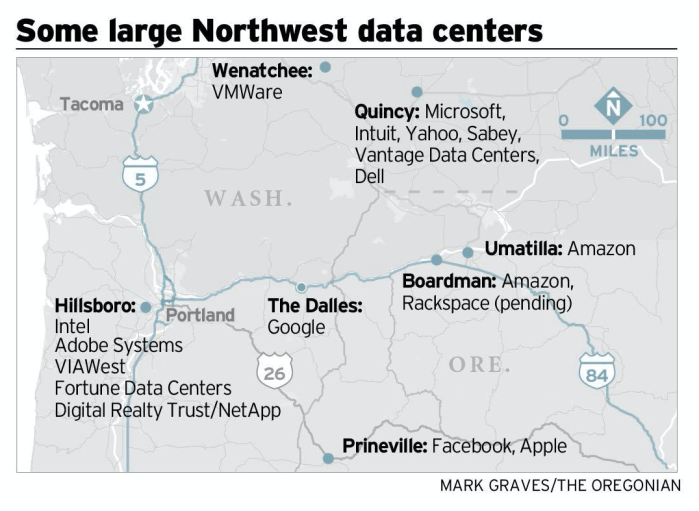
It’s also important to realize that building data centers in states that are far flung from the Silicon Valley heartland also increases Big Tech’s political clout. This explains why Oregon Senator Ron Wyden is the confederate of the worst of Big Tech’s excesses like child exploitation and of course, copyright. Copyright never had a worse enemy, all because of the huge presence in Oregon of Big Tech’s data centers–not their headquarters or anything obvious.

Wyden with his hand in his own pocket.

A terawatt here and a terawatt there and pretty soon you’re talking about a lot of electricity. So if you’re interested in climate change, there’s a lot of material here to work with. Maybe we do this before we slaughter the cattle, just sayin’.

Chronology: The Week in Review: TikTok has a Napster Problem; @Helienne on Spotify’s new free goods; @MarshaBlackburn’s tour de force

When Universal withdrew from TikTok, the social media company was suddenly thrown back to its pirate-site roots, at least for the Universal catalog of all sound recordings and many, many songs. The eponymous TikTok is now on the clock to take down or mute Universal’s entire catalog. So tick tock baby.

Universal head Lucian Grainge made the case for the company’s approach to terminating its TikTok license because his negotiators were unable to reach a meeting of the minds with the other side. Pretty simple, really. This is not a big deal, it happens every day. Because in a free market capitalist system, “fair” is where we end up. Which means you have to end up somewhere, including nowhere.

Lucian made that case in an open letter to artists and songwriters as a community. There are some great nuggets in that letter, but I like this section to explain the casus belli:

The terms of our relationship with TikTok are set by contract, which expires January 31, 2024. In our contract renewal discussions, we have been pressing them on three critical issues—appropriate compensation for our artists and songwriters, protecting human artists from the harmful effects of AI, and online safety for TikTok’s users.

We have been working to address these and related issues with our other platform partners.  For example, our Artist-Centric initiative is designed to update streaming’s remuneration model and better reward artists for the value they deliver to platforms.  In the months since its inception, we’re proud that this initiative has been received so positively and taken up by a range of partners, including the largest music platform in the world.  We’ve also moved aggressively to embrace the promise of AI while fighting to ensure artists’ rights and interests are protected now and far into the future.  In addition, we’ve engaged a number of our platform partners to try to drive positive change for their users and by extension, our artists, by addressing online safety issues, and we are recognized as the industry leader in focusing on music’s broader impact on health and wellness.

With respect to the issue of artist and songwriter compensation, TikTok proposed paying our artists and songwriters at a rate that is a fraction of the rate that similarly situated major social platforms pay.  Today, as an indication of how little TikTok compensates artists and songwriters, despite its massive and growing user base, rapidly rising advertising revenue and increasing reliance on music-based content, TikTok accounts for only about 1% of our total revenue.

Let’s not forget that TikTok does not have some statutory or other legal or theoretical right to use Universal’s recordings or songs.  Their rights come from one place–their contract with Universal. No Universal contract, no Universal content. (Sorry copyright infringer apologists in the professoriate.).

Contracts have a duration, and when contracts end you negotiate an extension. If you can’t get an extension or a new agreement, remember the clock is ticking and time is running out–fair is where we end up, so one place to end up is nowhere. Stuff happens. Contracts frequently address what happens when the contract is over and the relationship must be unwound, sometimes called post-termination conditions which are just as much of a promise as anything else in the contract even if the duration (or the “term”) of the agreement is over.

The answer to what happened with Universal is simple: TikTok couldn’t close. Mr. TikTok may be a lot of things, but he’s no Blake.

Now that TikTok allowed their Universal deal to spin out of control, the termination clause(s) of their agreement no doubt become effective. If I had to guess, I would guess that TikTok must immediately stop any new uses of Universal content. Then it would not surprise me if TikTok has about 30 days to take it all down so they are on the clock…so to speak. I would also guess (or hope) that Universal has some post term conditions that will protect them from having to take TikTok’s rube deal on DMCA takedowns. The difference between a post term DMCA take down and a bald take down with no pre-existing contract should be that TikTok has a unilateral obligation to police their network for at least a period of time after termination. Failing to do so could leave them open to breach of contract for failing to satisfy post-termination conditions. Or something like that.

Let’s not forget that TikTok started out as a pirate social media site that got retroactive and prospective licenses in settlement of potential copyright infringement lawsuits. If licenses terminate, TikTok is essentially in the same position as it was before the license–at least as to the content that is covered by the terminating license. 

But of course TikTok won’t be in exactly the same position as the status quo ante, because the company is dependent on passing itself off as this inevitable legitimate company, i.e., a licensed platform. That was not the case when TikTok began licensing to avoid mammoth copyright infringement lawsuits. And therein lies the rub. 

TikTok may have a Napster problem. Once you let unlicensed material into a platform, it’s deuced hard to get it out, even if you have license. And as Judge Patel said in granting an injunction against Napster, “I’m sure that anyone as clever as the people who wrote the software in the case are clever enough, as there are plenty or those minds in Silicon Valley to do it, [to] come up with a program that will help to identify infringing items as well.”  

Thank God for the smart people.

So what happens now? Looking to recent history, Spotify was in a similar pre-IPO position when David Lowery and Melissa Ferrick sued the company for massive use of unlicensed songs. This led Spotify to go to Congress to rewrite the copyright laws in order to stop future litigation (called the “Music Modernization Act” with its probably unconstitutional retroactive reach back safe harbor). They were able to do that because of compliant lobbyists and the hunger among the elites for cash money from a Spotify IPO (or more precisely DPO). Plus Congress got to hang out with famous people and generally felt good about it because dissenting views were strangely absent in the mainstream media.

What do you think will happen if TikTok also goes to Congress to change the law to protect their cash cow and undermine artists and songwriters like Spotify did? They may send lobbyists to Capitol Hill with some walking around money, but if you haven’t picked up on it yet, at least half of the Congress despises TikTok. How does TikTok thread that needle?

TikTok’s response reads like it was written by the editorial staff at the People’s Daily:

“It is sad and disappointing that Universal Music Group has put their own greed above the interests of their artists and songwriters.

Despite Universal’s false narrative and rhetoric, the fact is they have chosen to walk away from the powerful support of a platform with well over a billion users that serves as a free promotional and discovery vehicle for their talent.

TikTok has been able to reach ‘artist-first’ agreements with every other label and publisher. Clearly, Universal’s self-serving actions are not in the best interests of artists, songwriters and fans.”

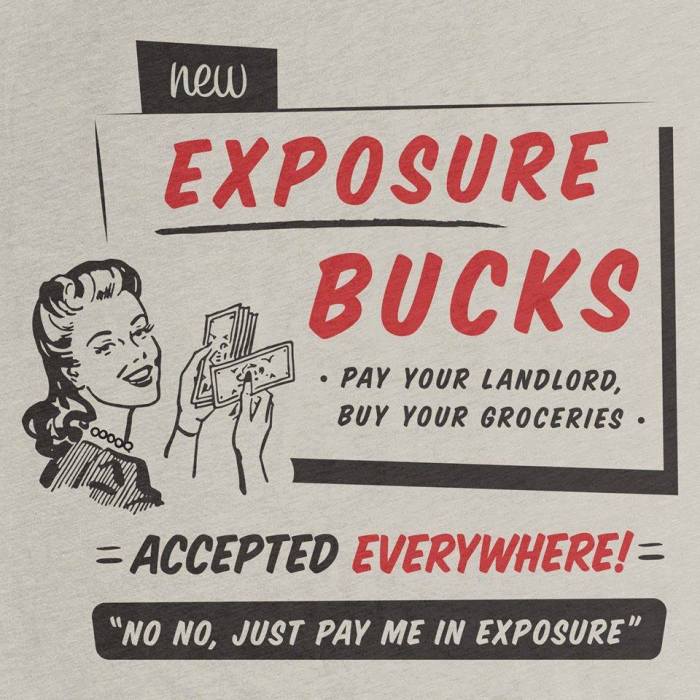
Note to Mr. TikTok and his PR bagmen, that “exposure” angle is not a winner. Not to mention that artists drive their fans to TikTok in huge numbers which is the real “free” promotion as in “uncompensated”. Also, newsflash, there is no free lunch so don’t embarrass yourself by starting the old “free promotion” okie doke. Mr. Tok needs to go home, think about his priorities and try again.

Also, don’t forget that TikTok has to do “blind check” licenses because it lacks the functionality to track and pay royalties, even the broken market centric royalty deal. Blind check licenses are the rough equivalent of an agreement not to sue TikTok rather than an industry standard royalty deal. Over time, it’s likely that the amount of the blind check must increase to compensate for the blindness.

The Universal episode is revealing, however. If TikTok thought they were going to get away with jamming artists because “exposure”, they need to go home and reconsider their life. The situation is completely out of control for one reason–TikTok underestimated Universal’s resolve. And they broke one of the cardinal rules of Business Affairs.

Never let it get to the point that you can’t just write a check.

@helienne’s Panel with Streamers and Label reps about artist centric, streaming fraud and Spotify’s new free goods

I interview Helienne Lindvall about a panel she was on in Europe with reps from Spotify, Deezer and WMG about artist centric implementation, streaming fraud and the new free goods, aka, Track Monetization Eligibility. 

How do you say “Bless your heart” in Mandarin?

If you didn’t watch the Big Tech hearing at the U.S. Senate, you should at least watch Senator Marsha Blackburn’s grilling of Mr. TikTok. Must-see TV.